Photo: Wikipedia
Demographics of Dickson County
Affluence Level in Dickson County
A middle-class area roughly in line with national averages across income, home values, education, and employment.
People of Dickson County
Dickson County, Tennessee, today is home to roughly 55,200 residents, a population that is overwhelmingly native-born (98.9%) and white (87.5%), with a small Hispanic minority (4.9%) and a Black population of 3.5%. The county’s character is deeply shaped by its rural-suburban blend, centered on the county seat of Dickson and historic settlements like Charlotte, Burns, and White Bluff. Despite proximity to Nashville, the county has retained a distinctly homogenous, conservative cultural identity, with just 21.4% of adults holding a college degree and almost no foreign-born presence from any major world region.
Settlement & growth (pre-1960)
Before American settlement, the area now comprising Dickson County was part of the hunting grounds of the Cherokee and Chickasaw nations, with occasional French traders using the Cumberland River corridor and the Natchez Trace. The first permanent Euro-American settlers arrived in the late 1780s and 1790s, primarily Scots-Irish and English farmers from Virginia and North Carolina, drawn by land grants for Revolutionary War service. Dickson County itself was formed in 1803 from parts of Montgomery and Robertson counties, named after a prominent state legislator.
Early population centers included Charlotte, the original county seat (1804), and the crossroads that became Dickson (originally Dickson Station, named after the railroad depot). Small farming communities such as Burns, White Bluff, Vanleer, and Slayden emerged along creeks and stage routes. By the 1840s, the region’s iron industry grew at Cumberland Furnace, attracting some English and Welsh ironworkers, but the foreign-born population remained negligible. After the Civil War, the county’s economy shifted entirely to tobacco and subsistence farming, and the population stayed overwhelmingly native-born white. A small Black community (descendants of enslaved people) lived mainly in rural pockets and near Dickson, but the county never developed large African American settlements. The railroad expansion in the late 1800s reinforced Dickson as the commercial hub, but no era of mass immigration occurred. By 1960, the county’s population was roughly 23,000, almost entirely white U.S.-born, with the same small-town pattern persisting.
Modern era (post-1965)
The Hart-Cellar Act of 1965 fundamentally reshaped U.S. immigration, but Dickson County saw virtually no impact. The foreign-born share today stands at just 1.1%, and the combined population of East/Southeast Asian (0.1%) and Indian subcontinent (0.0%) is statistically invisible. The principal demographic change since the 1970s has been domestic in-migration: first from rural Tennessee and, after 1990, from Nashville’s expanding suburban ring. Interstate 40, completed through the county in the 1960s, enabled commuters to move to land in Dickson, Burns, and White Bluff. This inflow consisted almost entirely of white families from other parts of the South and, increasingly, from Rust Belt states such as Ohio and Michigan, seeking lower taxes and larger properties.
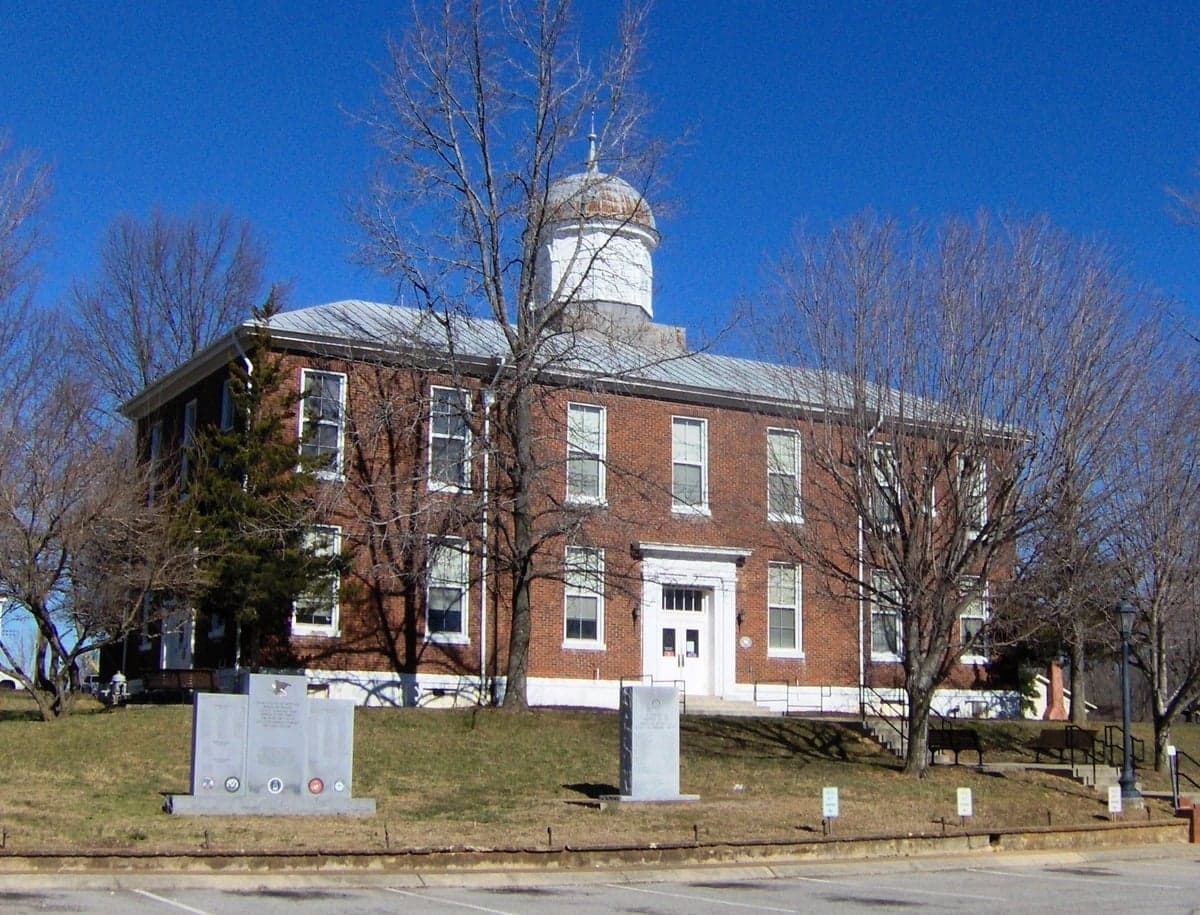
The Hispanic population grew from near zero in 1990 to 4.9% by 2025, drawn primarily to construction, landscaping, and agricultural work, but it remains scattered rather than concentrated in any single enclave. The Black share (3.5%) has actually declined from its mid-20th-century peak, as younger generations left for urban centers. No significant ethnic neighborhoods have formed; the few immigrant residents blend into the broader white-dominant landscape. Suburban subdivisions in Dickson have expanded the built environment, while older towns like Charlotte and Vanleer have seen minimal growth and retain their historic courthouse squares and slow-paced character.
The future
Dickson County is headed toward continued modest growth, primarily through white domestic migration from Nashville and other parts of Tennessee. The Hispanic share may slowly rise to around 7–8% by 2040 due to natural increase and labor demand, but the county’s extremely low foreign-born baseline means it will remain one of the least diverse counties in the Nashville region. No enclave formation is underway; new Hispanic residents are dispersed and culturally assimilated. The Black and Asian shares are likely to remain flat or decline slightly. The county’s cultural identity—conservative, rural-influenced, with an emphasis on independence and low taxes—is being reinforced rather than diluted by newcomers, who often cite those very qualities as reasons for moving. The college education rate will gradually inch upward as more telecommuters and professionals arrive, but will stay well below the state average.
For a relocating individual or family, Dickson County offers a demographically stable, overwhelmingly white and native-born environment with little cultural flux, low crime, and a strong sense of local tradition. Those seeking diversity or international influences will not find them here; those wanting a predictable, low-density community with easy access to Nashville’s economy will find the county well-suited to their needs.

* Values derived from national, state, county, city and local statistics and may differ in a specific area. Last updated: 2026-06-01T11:45:33.000Z
Narrative content on this page is AI-generated and may contain mistakes. Verify any details that matter before acting on them.
ReloMaps may earn a commission from affiliate links at no extra cost to you.

