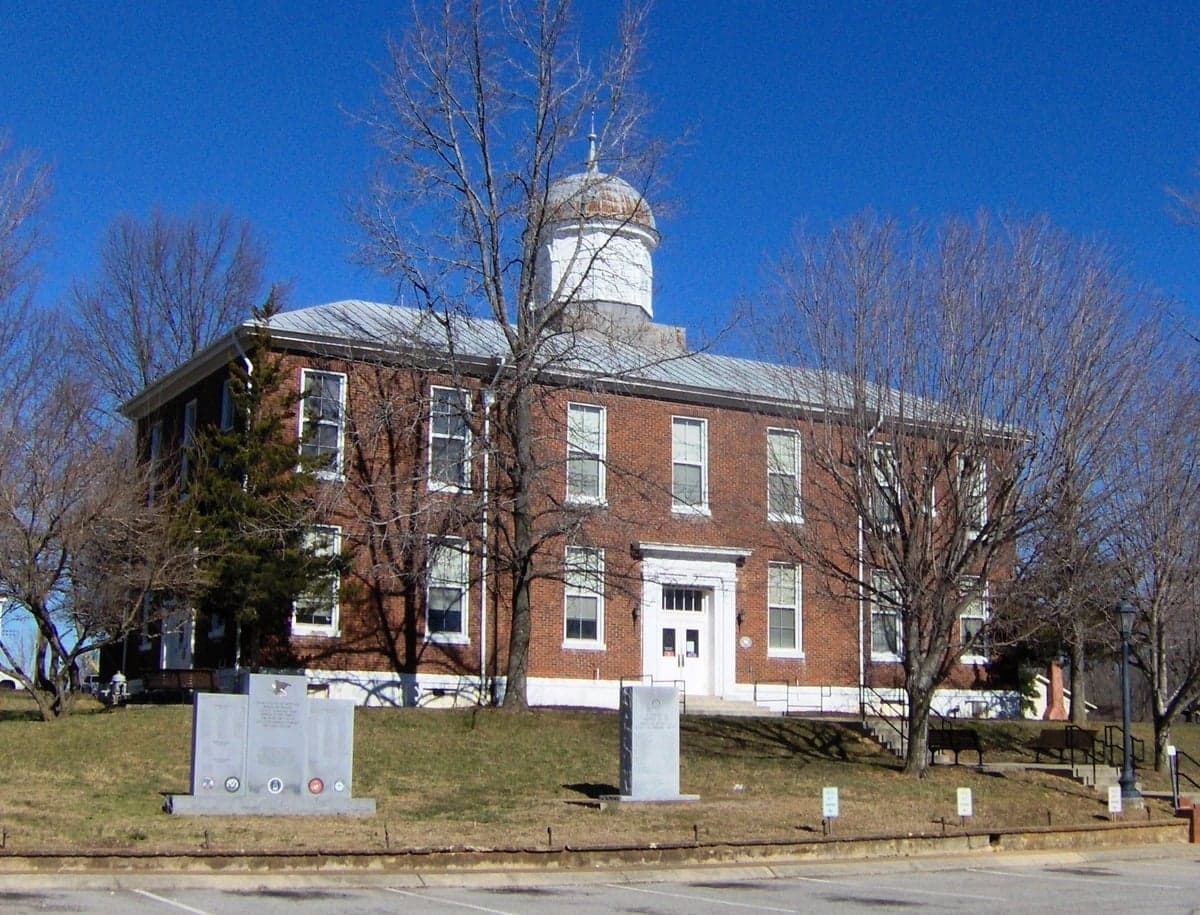
Photo: Wikipedia
Personal Sovereignty in Dickson County
Viable for self-reliance. Generally workable, though some barriers may limit total independence.
What does Personal Sovereignty tell us?
Personal Sovereignty measures your capacity for self-reliance and independence with minimal government friction. Higher scores mean fewer barriers between you and the way you want to live... but it assumes you have the space you need and good neighbors.
What does this tell us?
Personal Sovereignty measures your capacity for self-reliance and independence with minimal government friction. Higher scores mean fewer barriers between you and the way you want to live... but it assumes you have the space you need and good neighbors.
State Policy
Energy independence: Importer (25% of energy produced in-state)
Personal Liberty
Homesteading

Personal Liberty Analysis
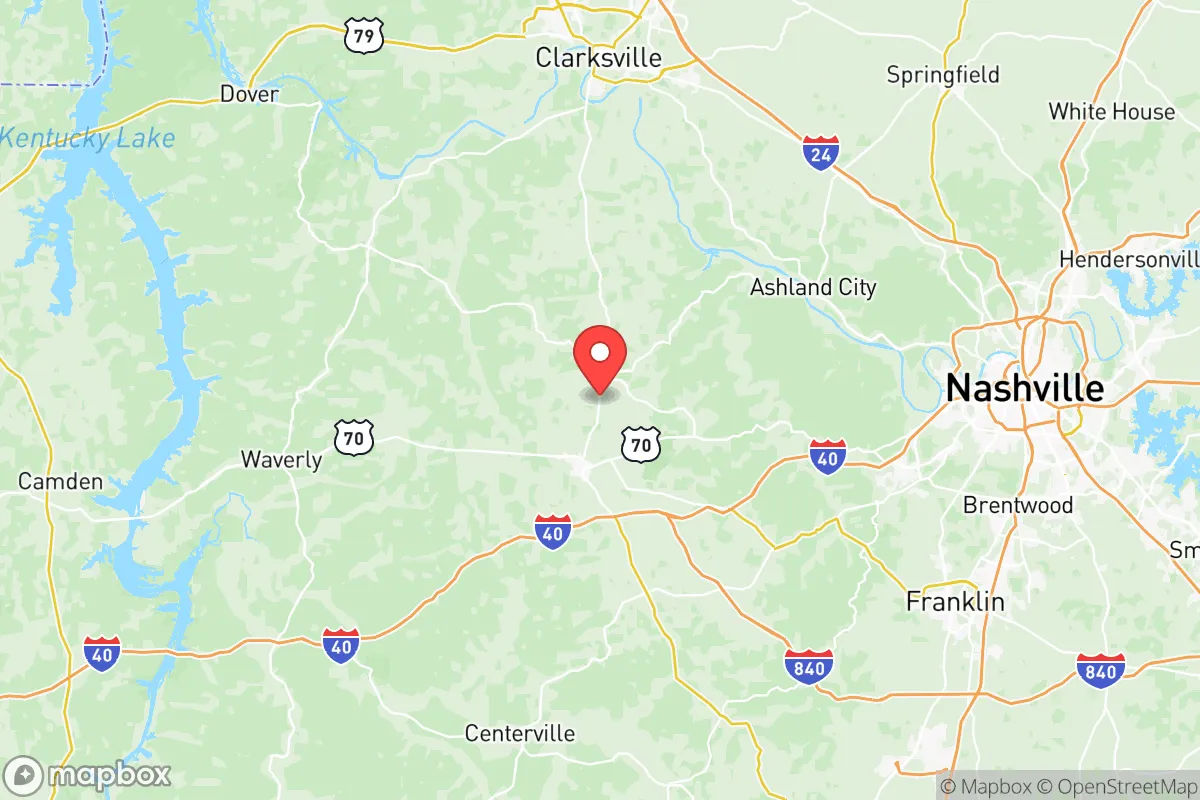
Dickson County, Tennessee, offers a notably high degree of personal sovereignty compared to much of the urbanizing Southeast, driven by a combination of low taxes, permissive gun laws, and a regulatory environment that largely leaves individuals to manage their own affairs. Located about 40 miles west of Nashville, the county provides a buffer from the more restrictive policies of Davidson County while still offering access to regional employment. For those prioritizing autonomy—whether in self-defense, medical choices, or homesteading—Dickson County presents a strategic balance of rural freedom and practical proximity to infrastructure, though specific liberties vary by municipality.
Tax burden and regulatory posture in Dickson County
Tennessee’s lack of a state income tax is the foundation of fiscal sovereignty here, and Dickson County keeps the local burden manageable. The county’s property tax rate sits at approximately $2.34 per $100 of assessed value (2025-2026), which is moderate for Middle Tennessee and significantly lower than Davidson County’s $3.15+. The city of Dickson itself adds a municipal rate of about $0.85, while smaller towns like Burns and Charlotte impose lower or no additional city property taxes. Regulatory posture is generally light: there is no county-wide zoning outside incorporated areas, meaning unincorporated parcels—common in communities like Vanleer and White Bluff—face minimal permitting for structures, fences, or home-based businesses. The county does enforce basic building codes for new construction, but there is no onerous business licensing for most small-scale operations. This stands in stark contrast to Nashville’s complex permitting and high fees, making Dickson County a clear choice for those seeking to minimize government entanglement in their property and livelihood.
Self-defense and gun law specifics in Dickson County
Tennessee is a constitutional carry state, and Dickson County fully reflects that posture. Since 2021, any law-abiding adult 21 or older can carry a handgun openly or concealed without a permit. The county sheriff’s office issues enhanced handgun carry permits for reciprocity with other states, but there is no local push for additional restrictions. Dickson County is also a Second Amendment Sanctuary county, with a 2020 resolution affirming that local resources will not be used to enforce federal gun bans or confiscation orders. Gun ranges are accessible: the Dickson County Shooting Complex near Charlotte offers public rifle and pistol ranges, and private land in areas like Vanleer allows for personal shooting ranges with reasonable setback compliance. The only notable restriction is that discharging a firearm within the Dickson city limits is prohibited except at approved ranges, so those wanting unrestricted practice should look to unincorporated parcels or the Burns/Charlotte areas. For preppers, this means you can maintain a well-armed household without bureaucratic hurdles, and the local culture strongly supports that right.
Self-reliance and homesteading viability in Dickson County
Homesteading and off-grid living are genuinely viable here, especially outside the city limits of Dickson. Minimum lot sizes in unincorporated areas are typically 1 acre for a single-family home with a septic system, though many rural parcels—particularly around Charlotte and Vanleer—are sold in 5- to 20-acre tracts that allow for substantial gardening, livestock, and timber management. Zoning is minimal: there are no county-wide restrictions on chickens, goats, or even larger livestock like cattle, provided you meet basic animal cruelty standards. Off-grid feasibility is strong: well water is common (typical depth 150-300 feet, cost $5,000-$10,000), and solar panels are unregulated at the county level. The Tennessee Valley Authority (TVA) is the regional power provider, but there is no mandate to connect to the grid. Composting toilets and rainwater collection are permitted under state health guidelines, though a septic system is required for any permanent dwelling. The town of White Bluff has slightly stricter setback rules for accessory structures, but overall, Dickson County is one of the more permissive areas in Middle Tennessee for those wanting to reduce reliance on municipal utilities and supply chains.
Personal liberties in Dickson County
Parental rights are strongly protected in Tennessee law, and Dickson County schools generally defer to parents on medical decisions, curriculum objections, and opt-outs. The county school board has not adopted controversial health or sex education materials, and parents can easily review all instructional materials. Medical autonomy is similarly robust: Tennessee has no state-level vaccine mandate for adults, and Dickson County has no local health orders that override personal choice. The county’s health department does not enforce mask mandates or business closures, and the local hospital—TriStar Horizon Medical Center in Dickson—respects patient-directed care within legal limits. Speech and property rights are well-guarded: there are no county noise ordinances that restrict political or religious expression, and property use is largely unrestricted as long as it doesn’t create a public nuisance. The city of Dickson does have a noise ordinance (10 p.m. to 7 a.m.), but it is rarely enforced against private gatherings. For those concerned about government overreach, Dickson County’s elected officials—including the county commission and sheriff—consistently run on platforms of limited government and individual liberty, and the local political culture reflects that.
Overall, Dickson County ranks among the top tier of Tennessee counties for personal sovereignty, particularly when compared to the Nashville metro area or even neighboring Williamson County, which has higher taxes and more restrictive zoning. The combination of no income tax, constitutional carry, minimal land-use regulation, and a culture that values self-reliance makes it a strong candidate for preppers, homesteaders, and those seeking to minimize government involvement in daily life. The main trade-off is proximity to urban amenities: you’ll drive 40-50 minutes to Nashville for specialized services, but for many, that distance is the price of freedom. If you’re looking at Middle Tennessee, Dickson County—especially the unincorporated areas around Charlotte, Vanleer, and Burns—offers a sovereignty profile that is hard to beat in the region.

* Values derived from national, state, county, city and local statistics and may differ in a specific area. Last updated: 2026-06-01T11:45:33.000Z
Narrative content on this page is AI-generated and may contain mistakes. Verify any details that matter before acting on them.
ReloMaps may earn a commission from affiliate links at no extra cost to you.

