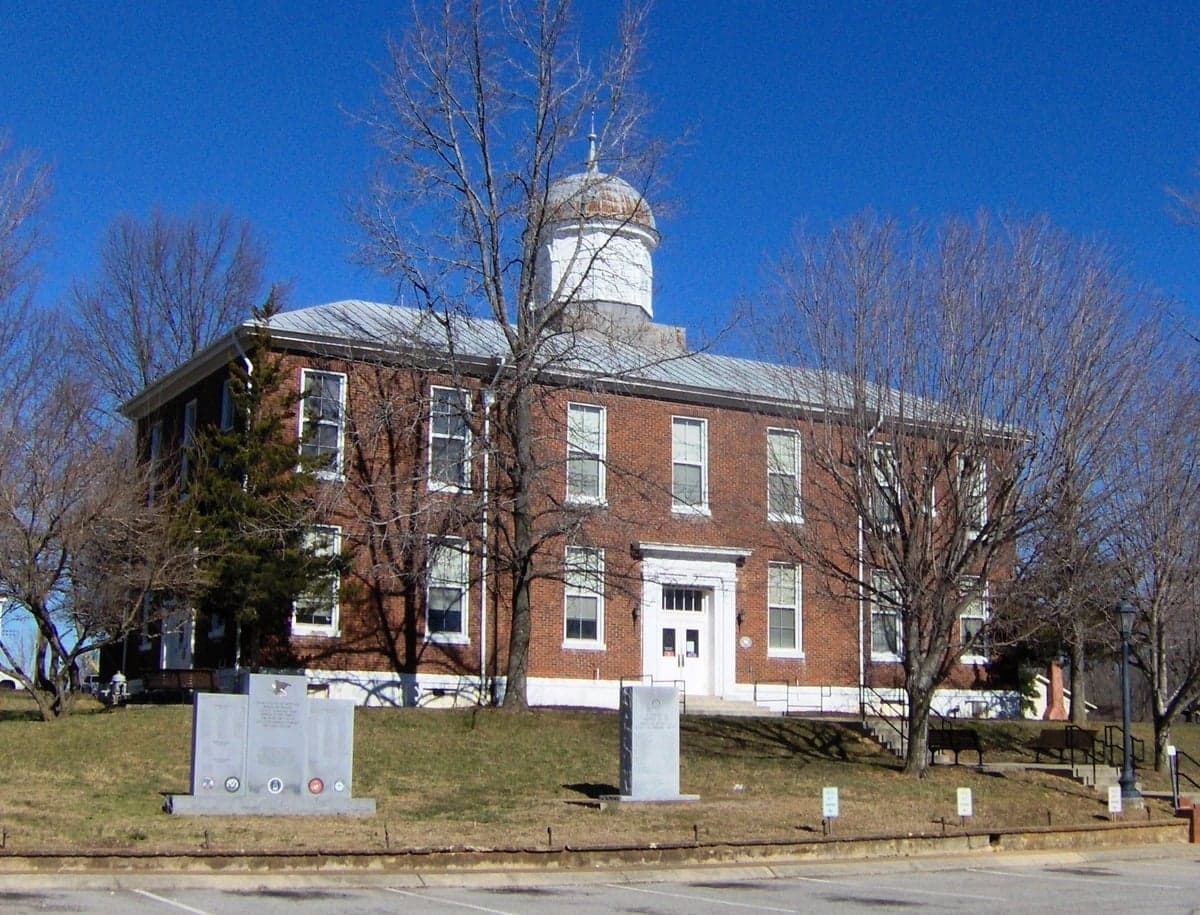
Photo: Wikipedia
Strategic Assessment of Dickson County
Workable tactical position. Some exposure to population density or targets, but generally defensible in a crisis.
What does the Strategic Assessment tell us?
Our Strategic Assessment grades tactical survivability of an area. Major population centers, military targets, fallout zones, natural disasters, and border exposure all drive risk — lower exposure means a more defensible position in a crisis.
This is heavily inspired by Joel Skousen's Strategic Relocation book. Highly recommended you checkout the book ($)What does this tell us?
Our Strategic Assessment grades tactical survivability of an area. Major population centers, military targets, fallout zones, natural disasters, and border exposure all drive risk — lower exposure means a more defensible position in a crisis.
This is heavily inspired by Joel Skousen's Strategic Relocation book. Highly recommended you checkout the book ($)Strategic Pillars

Key Distances
Strategic Assessment Analysis
Dickson County, Tennessee, sits in a sweet spot that few relocation analysts fully appreciate: close enough to Nashville’s economic engine to keep your career alive, but far enough into the rolling hills of Middle Tennessee to offer genuine strategic depth. The county’s resilience isn’t theoretical—it’s baked into the geography, the infrastructure, and the cultural temperament of its roughly 55,000 residents. For a conservative-leaning individual or family thinking about where to plant roots when things get shaky, Dickson County checks boxes that suburban sprawl and coastal metros simply cannot.
Geographic position and natural advantages for long-term stability
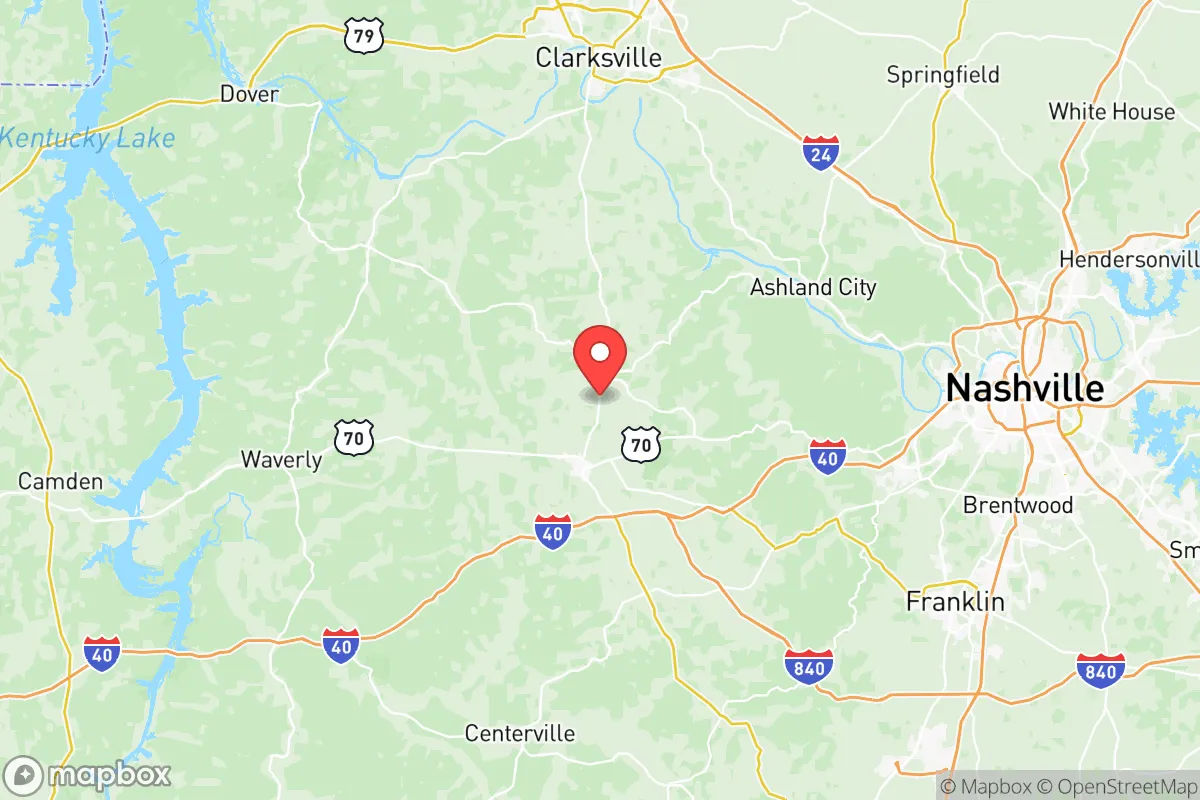
Dickson County anchors the western edge of the Nashville metropolitan area, roughly 40 miles from downtown Nashville. That distance is critical: close enough for a commute if you work in the city, but far enough that a major event in Nashville—civil unrest, a grid-down scenario, or a mass casualty incident—won’t immediately wash over your front porch. The county sits along Interstate 40, which gives you east-west mobility, but the real advantage is the terrain. The area is characterized by rolling hills, hardwood forests, and limestone bluffs, with the Piney River and the Harpeth River cutting through. These natural features provide cover, water sources, and defensible positions that flat farmland or dense suburbs simply lack. The county seat, Charlotte, is a tiny town of about 1,800 people—quiet, overlooked, and far from the kind of targets that draw attention. Burns and Vanleer are similarly low-profile communities where a family can keep their head down and their supplies secure.
Risks, exposures, and proximity to fallout-relevant landmarks
No place is a fortress, and Dickson County has its vulnerabilities. The biggest exposure is its proximity to Nashville’s infrastructure: the city’s major hospitals, the Nashville International Airport (BNA), and the Tennessee Valley Authority’s Cumberland Fossil Plant (about 50 miles northwest) are all within a 60-mile radius. A coordinated attack or a major industrial accident at the TVA plant could send fallout or supply-chain disruptions rippling outward. Closer to home, the county is bisected by I-40, which in a crisis becomes a double-edged sword—it’s your evacuation route, but it’s also a funnel for refugees fleeing Nashville. The county’s population has grown rapidly since 2020 (up roughly 12%), which means new subdivisions are creeping into formerly rural areas, reducing the buffer between you and potential chaos. There are no major military bases inside Dickson County, but Fort Campbell (home of the 101st Airborne) is about 70 miles northwest, and the Tennessee Army National Guard’s 278th Armored Cavalry Regiment has elements in the region. In a worst-case scenario, those assets could be a stabilizing force—or they could draw hostile attention. The county’s two small airports, Dickson Municipal and Burns Field, are low-profile but could become choke points if the federal government starts moving assets around.
Practical resilience for a relocator: food, water, energy, and defensibility
For a family serious about self-sufficiency, Dickson County offers a workable baseline. The water situation is solid: the Harpeth River and Piney River are perennial streams, and the county sits atop the Knox Dolomite aquifer, which means private wells are viable in most areas. The Dickson County Utility District provides municipal water to the towns, but a well with a hand pump or a solar-powered pump is a smart backup. Food production is realistic here—the growing season runs about 200 days, and the soil in the river bottoms is decent for gardens. The county has a strong agricultural heritage, with cattle, hay, and row crops still common. You can buy land with a well and septic for under $10,000 an acre in the more remote parts, which is cheap by Tennessee standards. Energy is where you need to plan ahead. The local electric cooperative, Meriwether Lewis Electric Cooperative, serves most of the county, but grid reliability in rural areas is average at best—ice storms in winter and thunderstorms in summer can knock out power for days. Solar panels with battery storage are a wise investment, and wood heat is practical given the abundant timber. Defensibility varies by location. The hilly terrain around Charlotte and Vanleer offers natural chokepoints and good lines of sight. The flatter areas near I-40 are harder to secure. A property with a long driveway, a creek or pond, and tree cover is worth paying a premium for. The county’s sheriff’s office is professional but small—about 40 sworn deputies for the whole county. In a prolonged crisis, you cannot count on rapid response. Neighbors matter here. The culture is still rural and self-reliant, with a strong church presence and a “mind your own business but help when asked” ethic. That’s a strategic asset you cannot buy.
The overall picture for Dickson County is one of calculated trade-offs. It is not a remote bunker in the Rockies—it is a working, growing county within striking distance of a major American city. That proximity brings economic opportunity and access to medical care, but it also brings risk. For a conservative family that wants to stay engaged with the world while maintaining the ability to disconnect and survive, Dickson County offers a realistic middle ground. The land is affordable, the water is available, and the people are not looking for a fight. But you need to be intentional: buy away from the interstate, invest in off-grid energy, and build relationships with your neighbors before the crisis hits. Done right, this county can be a solid base for weathering whatever comes next.

* Values derived from national, state, county, city and local statistics and may differ in a specific area. Last updated: 2026-06-01T11:45:33.000Z
Narrative content on this page is AI-generated and may contain mistakes. Verify any details that matter before acting on them.
ReloMaps may earn a commission from affiliate links at no extra cost to you.

