Photo: Wikipedia
Political ClimatePolitical Climate in Dickson County
Showing district-level results — no local-only data available.
Local Political AnalysisPolitical Analysis of Dickson County
Dickson County has long been a reliably red corner of Middle Tennessee, but it's worth understanding the nuances behind that broad label. The county carries a Cook PVI of R+10, which is solidly Republican but notably three points less red than the state of Tennessee as a whole (R+13). That gap might sound small on paper, but it reflects real shifts I've watched unfold over the past decade, especially as Nashville's suburban sprawl pushes further west along I-40. The county isn't in danger of flipping anytime soon, but some precincts are showing cracks in the old firewall.
How it compares
Statewide, Tennessee remains deeply Republican, but Dickson County's R+10 PVI means it tracks closer to a purple-leaning-red district than the deep-red strongholds you find in East Tennessee or the rural western counties. The difference shows up most clearly in local precinct-level results. The city of Dickson itself has trended more competitive in recent cycles, with the downtown area and neighborhoods around the courthouse sometimes only going Republican by 5 to 8 points. Burns and Charlotte still vote like the old reliable engine rooms of the county—solidly red, often by 25 points or more. The swing precincts are the newer subdivisions along Highway 46 and the area around White Bluff, where transplants from Nashville are settling. Those neighborhoods are pulling the county's numbers closer to the state's suburban battlegrounds, not the rural baseline you'd find in neighboring Hickman or Perry counties.
What this means for residents
For folks who moved here to escape the property tax hikes and zoning creep of Williamson and Davidson counties, the direction of Dickson County politics is a live concern. The county commission and school board have held the line on most tax increases and have kept land-use regulations relatively light, but the pressure is mounting as more residents from blue-leaning areas bring their expectations with them. School board races in 2024 saw more contested seats than in any election since the early 2000s, with candidates pushing for expanded DEI programs and gender-inclusive policies. Those efforts have been beaten back so far, but the fact they're getting on the ballot at all is a sign of the demographic drift. The bigger worry for a conservative resident is the long-term trajectory: as the county adds population at roughly 2% annually, the political center of gravity inches toward the same progressive policies that priced people out of Nashville and Franklin in the first place.
Local culture and policy distinctions
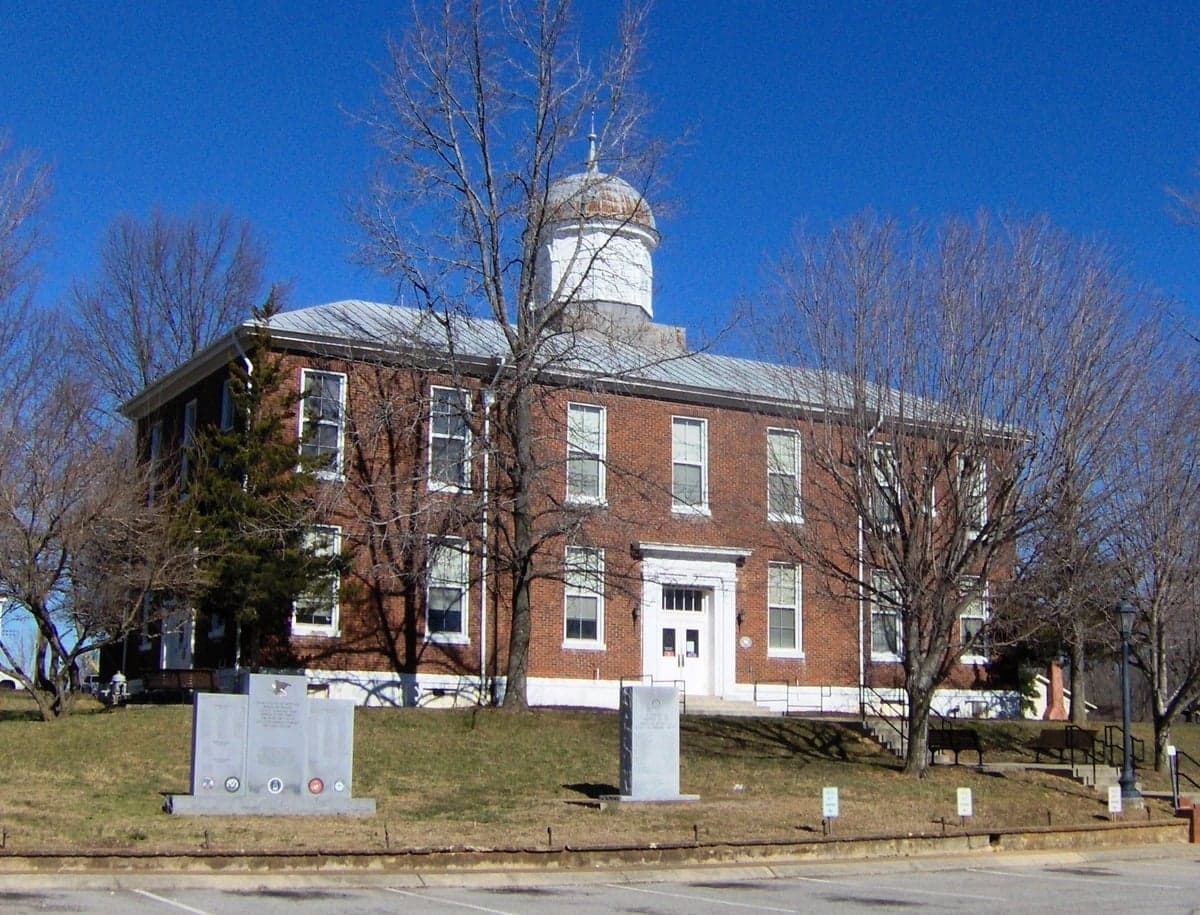
The cultural character of Dickson County still leans heavily on its rural roots and family-owned farms, but the I-40 corridor is reshaping things faster than many locals realize. The county has no mask mandates, no sanctuary city resolutions, and the sheriff's office openly states it will not enforce federal firearm restrictions—positions that differentiate it from the more progressive townships closer to Nashville. The courthouse in Charlotte still flies the Tennessee flag full-time, and the county has a standing resolution opposing federal overreach on land use and environmental regulations. Those are the kinds of policies that make the area attractive to people who feel the state government in Nashville has already grown too willing to accommodate urban interests. But the real test will come in the next census cycle, when redistricting redraws commission lines around the new subdivisions. If the transplants organize, the old guard will have to fight to keep the county's character intact.

State Political ClimatePolitical Climate in Tennessee
State Political AnalysisPolitical Environment in the State
Tennessee sits at a rock-solid R+13 according to the Cook Partisan Voting Index, making it one of the most reliably Republican states in the country. Republicans hold supermajorities in both chambers of the General Assembly, the governor's office, and both US Senate seats. Over the past 20 years, the state has shifted decisively rightward — driven by out-migration from deep-blue metros elsewhere and a steady suburban realignment that turned places like Williamson County and Rutherford County into GOP strongholds, while the rural vote hardened even further. The state hasn't voted for a Democratic presidential candidate since 2006 (Al Gore's home-state miss), and the trajectory has only steepened since.
Urban vs. rural divide
The political map breaks into three distinct zones. Nashville (Davidson County) and Memphis (Shelby County) are the only reliably blue anchors, with Davidson voting +29 D in 2024 and Shelby voting +17 D. But these two counties are increasingly isolated islands. Knoxville and surrounding Knox County used to be a swing area — it voted for Obama in 2008 — but has since moved solidly red, voting +14 R in 2024. Chattanooga (Hamilton County) is purple-leaning-red, with the city core trending left while the booming suburbs like Collegedale and Ooltewah pull the county right. The real story is the suburban explosion: Williamson County (Franklin) votes +37 R, and Rutherford County (Murfreesboro) votes +28 R. These are among the fastest-growing counties in the nation, and they're overwhelmingly conservative families fleeing blue-state policies. The rural Appalachian east — think Johnson City, Kingsport, Bristol — votes +40 to +50 R, with cultural conservatism and gun-rights support baked into daily life. West Tennessee outside Memphis, including Jackson and the rural Delta counties, votes even more heavily Republican. The urban-rural divide is less a divide and more a dominant rural-suburban coalition that easily overpowers the two urban cores.
Policy environment
Tennessee's policy environment is designed to maximize personal freedom and minimize government overreach in the conservative sense. No state income tax on wages is the headline — Tennessee has no personal income tax and only a 6.5% flat tax on dividends and interest (Hall Tax), which is being phased out and will be fully eliminated by 2027. Sales tax is high at 7% state plus local add-ons (can hit 9.75% in Nashville), but that's the trade-off for zero income tax. Education policy has shifted hard toward school choice: Tennessee expanded its Education Savings Account program in 2023 to cover up to 20,000 students in Shelby, Davidson, and Hamilton counties, and the 2024 session saw a push for universal ESA eligibility — likely to pass soon. Parental rights in education were codified with the 2022 "Parental Bill of Rights," requiring schools to notify parents of any curriculum involving human sexuality and giving parents the right to inspect instructional materials. Healthcare: Tennessee refused Medicaid expansion under Obamacare, and the TennCare program remains tightly limited to the poorest residents. The state passed a near-total abortion ban in 2019 (trigger law) that took effect June 2022 with no exceptions for rape or incest — only to save the mother's life or prevent permanent injury. Election laws require photo ID to vote, absentee ballots require an excuse, and the state purged over 1,000 non-citizens from voter rolls in 2024.
Trajectory & freedom
On the freedom front, Tennessee is moving decisively in the conservative direction — but not uniformly. Constitutional carry (permitless carry) was signed into law in 2021, allowing any adult who can legally possess a firearm to carry openly or concealed without a permit. That was a major expansion of Second Amendment rights. In 2024, the legislature passed a bill requiring schools to allow armed teachers (with some training), overriding local school board opposition. Property rights: Tennessee passed a sweeping "private property rights" bill in 2023 limiting eminent domain for economic development and requiring just compensation for regulatory takings. Medical autonomy: the state banned all forms of gender-affirming care for minors in 2023 (SB 1), overriding parental authority — this is where the line gets fuzzy for some conservatives who typically oppose government telling parents what to do. The same bill allowed providers to decline care based on conscience. On speech and religion: the state passed a law requiring public schools to post the Ten Commandments in 2023 (currently tied up in court), and it has record-high support for religious freedom restoration acts. The concerning trend for conservatives is that state government is growing: Tennessee's budget has more than doubled since 2019, from $38 billion to over $62 billion, with much of that increase going to education and health care even after tax cuts.
Civil unrest & political movements
Tennessee has been relatively quiet compared to states with larger progressive militancy, but there have been flashpoints. Nashville saw significant protest activity in 2020 after the killing of Tyre Nichols (a Memphis-native incident) and again in 2023 after the Covenant School shooting, with gun-control activists occupying the state capitol for several days. Three Democratic state representatives — Justin Jones, Justin Pearson, and Gloria Johnson — were expelled by the GOP supermajority for breaking decorum during those protests (Jones and Pearson were quickly reappointed). That expulsion became a national flashpoint and energized progressive activist networks, particularly in Memphis and Nashville. Immigration politics: Tennessee passed a law in 2024 requiring local law enforcement to cooperate with ICE and imposing criminal penalties on sanctuary policies — Chattanooga briefly considered a sanctuary designation in 2023 but backed down under legal pressure. Election integrity: the state conducted a forensic audit of the 2020 election in Shelby County — which found no systemic fraud, but did uncover administrative irregularities, leading to tighter chain-of-custody procedures. Nullification rhetoric exists at the fringe but hasn't gained mainstream traction. The most visible ongoing movement is the "Mom's for Liberty" and parental rights groups, which are highly active in Williamson, Rutherford, and Hamilton counties and have influenced school board elections and curriculum decisions.
Projection
Over the next 5-10 years, Tennessee will likely get more conservative, not less. Domestic migration patterns are overwhelmingly conservative: the fastest-growing parts of the state — Williamson, Rutherford, Montgomery, and Wilson counties — are all voting +25 to +40 R. Nashville's blue core is growing too, but the city is rapidly annexing more land and its liberal voters are being diluted by the sheer scale of suburban Republican growth. The state's Republican majority is likely to become even more solid, with the possiblity of a unified GOP government lasting another decade. The biggest wildcard is fiscal: if the budget continues to inflate, pressure for a state income tax may rise — though it would require a constitutional amendment, which is extremely unlikely. Education: expect a statewide universal ESA within 2-3 years, fundamentally reshaping public schools. On Second Amendment: further expansion, likely including campus carry and restaurant carry (already passed in 2024). The Covenant shooting may lead to some pressure for "red flag" laws, but the GOP supermajority has blocked all such proposals. The real concern for liberty-minded residents: the state is becoming more powerful even as it leans right, and that concentration of power — even by friendly hands — is something to watch.
For someone moving to Tennessee now, the takeaway is straightforward: you're choosing a state that is firmly conservative, actively becoming more so, and where your personal freedoms (tax, gun, education, speech) are broadly protected. But the protection comes with a trade — the same government that keeps taxes low also limits healthcare access, restricts abortion tightly, and demands cooperation with federal immigration enforcement. If you're a conservative-leaning individual or parent, you'll find the policy environment welcoming. If you're looking for a place where the state stays out of your life entirely, keep an eye on the budget growth and the expanding reach of the General Assembly. The trajectory is clear, but freedom requires vigilance anywhere.
* Values derived from national, state, county, city and local statistics and may differ in a specific area. Last updated: 2026-06-01T11:45:33.000Z
Narrative content on this page is AI-generated and may contain mistakes. Verify any details that matter before acting on them.
ReloMaps may earn a commission from affiliate links at no extra cost to you.

