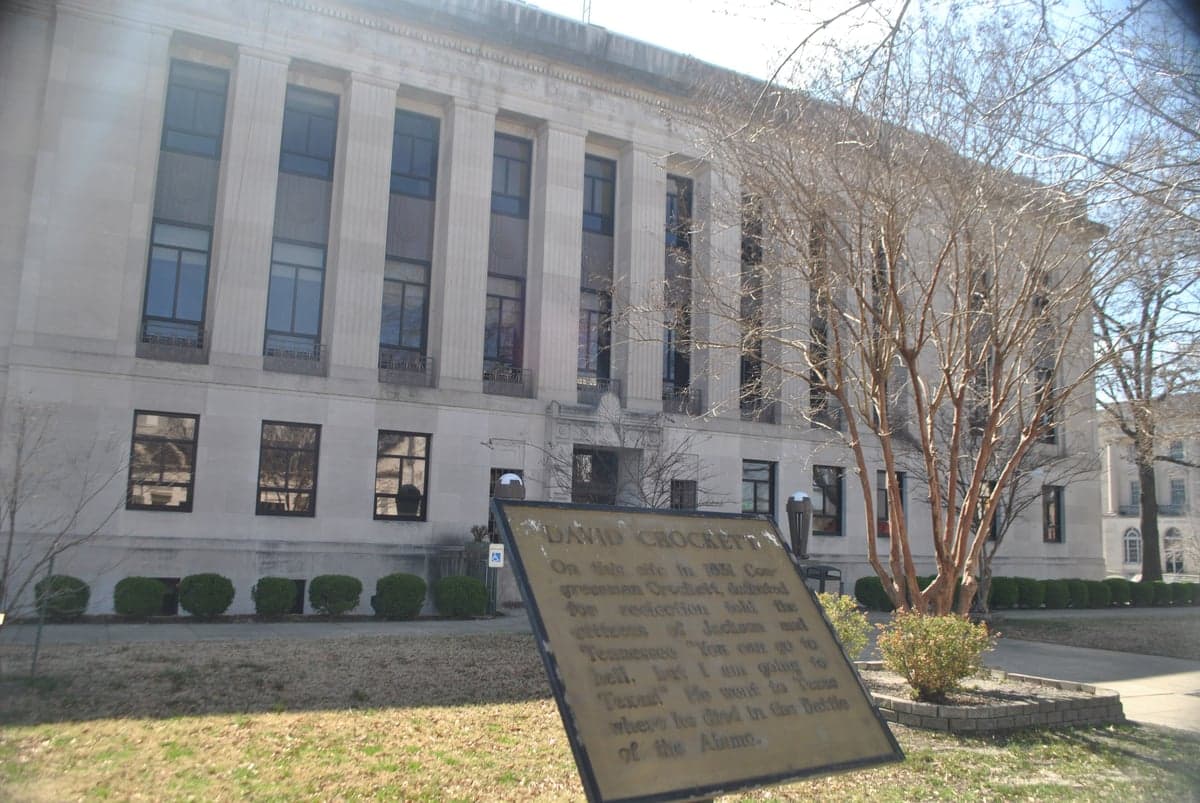
Photo: Wikipedia
Political ClimatePolitical Climate in Madison County
Showing district-level results — no local-only data available.
Local Political AnalysisPolitical Analysis of Madison County
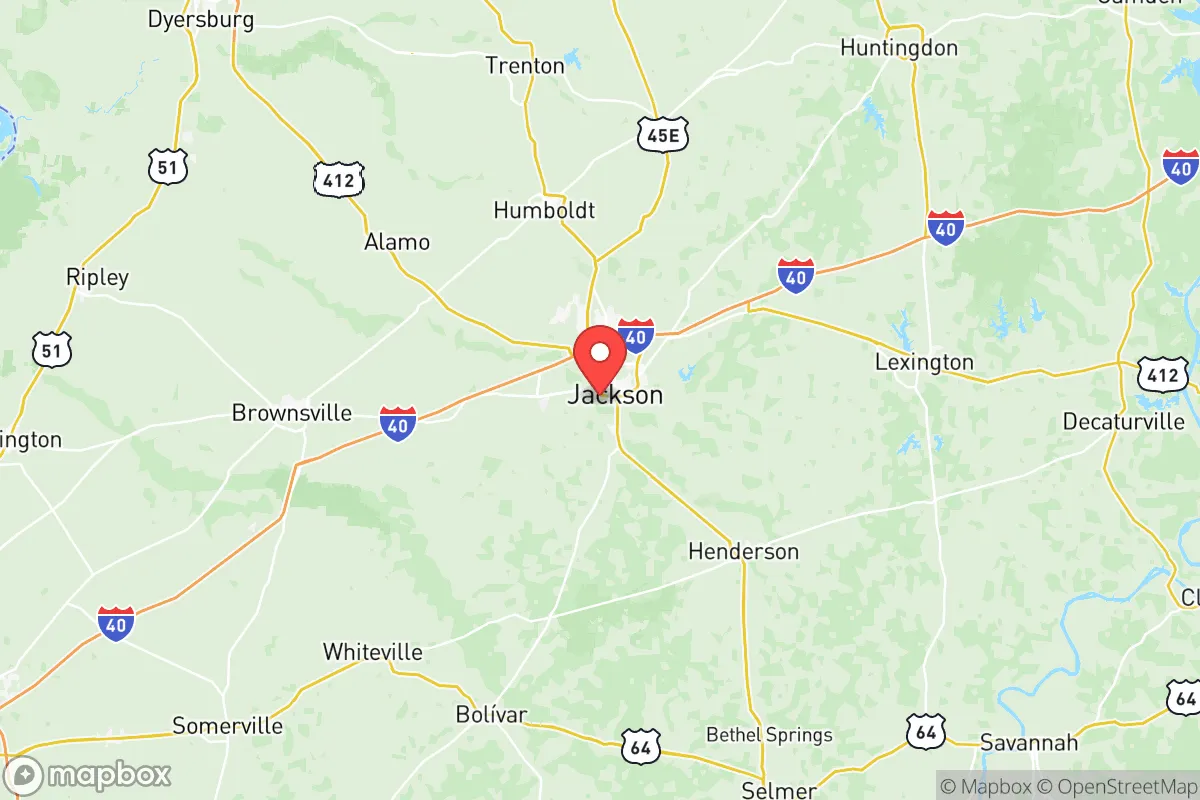
Madison County, Tennessee, is a reliably conservative stronghold, with a Cook PVI of R+21 that puts it well to the right of the state as a whole (R+13). This isn't a recent shift—it's been a deeply Republican area for decades, and the trend has only solidified in the last few election cycles. The county seat, Jackson, is the main population center and does show some blue-leaning precincts, particularly around the downtown core and near Lane College, but those pockets are easily overwhelmed by the surrounding rural and suburban areas. Towns like Medon, Mercer, and the communities along the Highway 70 corridor vote overwhelmingly red, and that's where the real political weight of the county lies.
How it compares
Compared to Tennessee as a whole, Madison County is about 8 points more conservative, which is a significant gap. The state's R+13 rating already reflects a solidly Republican electorate, but Madison County's R+21 puts it in the same league as the most conservative counties in the state, like those in the northeastern corner. What's interesting is that this isn't a product of recent polarization—it's been a consistent pattern for at least the last 20 years. While Tennessee has seen some suburban areas drift slightly toward the center (think Williamson County or parts of Knoxville), Madison County has held firm. The local GOP is well-organized, and there's little appetite for the kind of progressive policy shifts you see in Nashville or Memphis. The 2024 presidential results here were a good example: the county went for Trump by a margin that was nearly double the state average.
What this means for residents
For folks living here, this political climate means a government that generally stays out of your business. Property taxes are low, there's no city income tax, and the county commission is dominated by people who believe in limited government and personal responsibility. You won't see the kind of overreach you hear about in other parts of the country—no mask mandates that drag on for months, no heavy-handed business closures, and no push to defund the police. The local sheriff's office is well-funded and respected, and the school board focuses on core academics rather than social experiments. That said, if you're worried about the direction of the state or country, you can take some comfort in knowing that Madison County is a bulwark against those trends. The local representatives in the state legislature are reliably conservative, and they've been effective at blocking bills that would expand government control over things like gun rights, school choice, or property use.
Culturally, there's a strong sense of community and self-reliance here that matches the politics. People look out for each other, but they don't expect the government to solve every problem. The biggest distinction from the rest of Tennessee is the lack of a major urban center pushing progressive policies. Jackson is a small city with a small-city mindset, and the rural areas are even more traditional. If you're looking for a place where your rights are respected and the government keeps its nose out of your life, Madison County is about as good as it gets in Tennessee. The long-term outlook is stable—the county's demographics aren't shifting dramatically, and the political culture is deeply ingrained. You can expect it to remain a conservative anchor for the region for the foreseeable future.

State Political ClimatePolitical Climate in Tennessee
State Political AnalysisPolitical Environment in the State
Tennessee is a solidly red state with a Cook PVI of R+13, meaning it votes about 13 points more Republican than the national average in presidential elections. The dominant coalition is a mix of rural and suburban conservatives, with the GOP holding supermajorities in both the state House and Senate. Over the last 10-20 years, the state has shifted decisively rightward, driven by in-migration from blue states and a backlash against federal overreach, though the Nashville metro area has become a notable blue island that keeps things interesting.
Urban vs. rural divide
The political map of Tennessee is a study in contrasts. The major metros—Nashville (Davidson County) and Memphis (Shelby County)—are deep blue, with Nashville voting over 60% Democrat in recent cycles and Memphis even higher. These cities drive the state's Democratic base, fueled by younger transplants, university populations, and a growing service economy. Meanwhile, the rest of the state is overwhelmingly red. Knoxville (Knox County) leans Republican but has a purple streak, while Chattanooga (Hamilton County) is more reliably conservative. The rural counties in Middle and East Tennessee—places like Lincoln County (Fayetteville) and Greene County (Greeneville)—routinely vote 70-80% Republican. The suburban ring around Nashville, particularly Williamson County (Franklin) and Rutherford County (Murfreesboro), is where the real action is: these fast-growing areas are solidly red but have seen some suburban drift toward the center, though they still lean heavily GOP. The 2020 election saw Wilson County (Lebanon) flip from purple to solid red, reflecting the broader trend of rural and exurban areas consolidating behind the GOP.
Policy environment
Tennessee's policy environment is aggressively conservative, with a focus on limiting government overreach. The state has no income tax on wages, a major draw for relocators, and a relatively low sales tax rate of 7% (with local add-ons). Property taxes are among the lowest in the nation, especially in rural counties. On education, the state passed a universal school voucher program in 2023 (the Education Freedom Scholarship Act), allowing families to use public funds for private or homeschool expenses—a huge win for parental rights. Healthcare policy is hands-off: no Medicaid expansion under the Affordable Care Act, and the state has strict abortion laws (a near-total ban after six weeks, with no exceptions for rape or incest, following the 2022 trigger law). Election laws are secure: voter ID is required, and the state has purged inactive voter rolls regularly. The regulatory climate is business-friendly, with right-to-work laws and minimal zoning restrictions outside major cities. However, the state's heavy reliance on sales tax can be regressive, and some conservatives grumble about the lack of a homestead exemption for property taxes.
Trajectory & freedom
Tennessee is trending more free in several key areas, which is a positive sign for those fleeing high-tax, high-regulation states. The 2021 permitless carry law (Tennessee Constitutional Carry Act) allows any law-abiding adult to carry a concealed handgun without a permit, a major expansion of Second Amendment rights. The 2023 "Tennessee Promise" scholarship program expanded to cover more technical schools, promoting educational freedom. On medical autonomy, the state passed a law in 2023 banning COVID-19 vaccine mandates by private employers, a direct rebuke to federal overreach. Parental rights were strengthened with the 2022 "Parental Bill of Rights," requiring schools to notify parents about curriculum changes and medical services. However, there are concerns: the state's strict abortion ban has led to legal uncertainty for doctors, and some property rights advocates worry about the use of eminent domain for private development, particularly in fast-growing areas like Spring Hill. The 2023 "Drag Show Ban" (SB 3) was struck down by a federal judge as unconstitutional, but the legislature is expected to revisit it—a sign that cultural battles are far from over.
Civil unrest & political movements
Tennessee has seen its share of political flashpoints. The 2023 Nashville Covenant School shooting sparked massive protests at the state capitol, with thousands of activists demanding gun control measures—a rare show of left-wing organizing in a red state. The "Tennessee Three" (two Democratic state representatives expelled for protesting on the House floor) became national symbols of resistance, though both were quickly reappointed. On the right, the "Moms for Liberty" movement is strong in Williamson and Rutherford counties, pushing for book bans and curriculum oversight. Immigration politics are heated: the state passed a 2024 law requiring local law enforcement to cooperate with ICE (the "Tennessee Anti-Sanctuary Act"), and there have been protests in Morristown over a proposed immigrant detention center. Election integrity remains a live issue: the 2020 audit of Shelby County's election results found no widespread fraud, but the legislature passed stricter voter ID laws in 2021 anyway. Secession rhetoric is mostly fringe, but nullification talk surfaces occasionally over federal gun laws. A new resident would notice the strong presence of "thin blue line" flags and "Don't Tread on Me" decals in rural areas, alongside occasional "Black Lives Matter" signs in Nashville—a visible cultural divide.
Projection
Over the next 5-10 years, Tennessee will likely become more conservative, but with growing internal tension. In-migration from California, Illinois, and New York is accelerating—Nashville alone added over 100,000 new residents between 2020 and 2025—and these newcomers tend to be more moderate or even left-leaning, especially in the suburbs. This could shift Williamson County from solid red to lean red, and may turn Davidson County even bluer. However, the rural and exurban areas are growing faster, and the state's GOP supermajority is unlikely to be threatened. Expect more legislation on parental rights, school choice, and Second Amendment expansion, but also more legal battles over abortion and LGBTQ+ issues. The 2024 election saw Trump win Tennessee by 30 points, and the state will remain a safe red anchor for the GOP. For a new resident, the practical takeaway is that Tennessee will stay a low-tax, high-freedom state for the foreseeable future, but the cultural battles will intensify, especially in the Nashville metro area.
For someone moving to Tennessee, the bottom line is this: you'll enjoy low taxes, strong gun rights, and a government that largely stays out of your personal business. The trade-off is that you'll be living in a state where the political divide is real and visible—rural areas are deeply conservative, cities are liberal, and the suburbs are the battleground. If you're looking for a place where your values align with the majority and you want to escape high-tax blue states, Tennessee is a solid bet. Just be prepared for the occasional protest in Nashville and the ongoing culture war over schools and books. It's a free state, but freedom means you'll have to engage with the fight to keep it that way.
* Values derived from national, state, county, city and local statistics and may differ in a specific area. Last updated: 2026-05-12T14:06:17.000Z
Narrative content on this page is AI-generated and may contain mistakes. Verify any details that matter before acting on them.
ReloMaps may earn a commission from affiliate links at no extra cost to you.

