Photo: Wikipedia
Demographics of Marion County
Affluence Level in Marion County
A below-average socioeconomic profile. Incomes, home values, and educational attainment trail the U.S., with higher poverty and unemployment.
People of Marion County
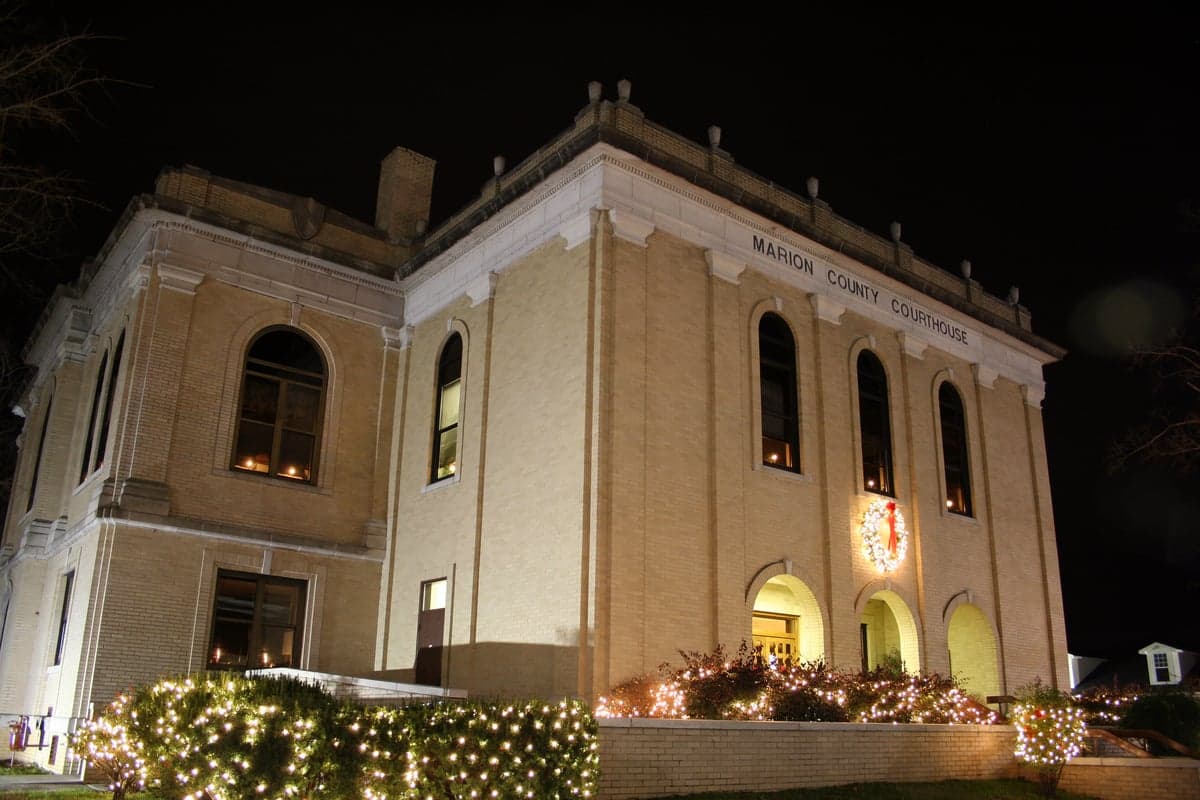
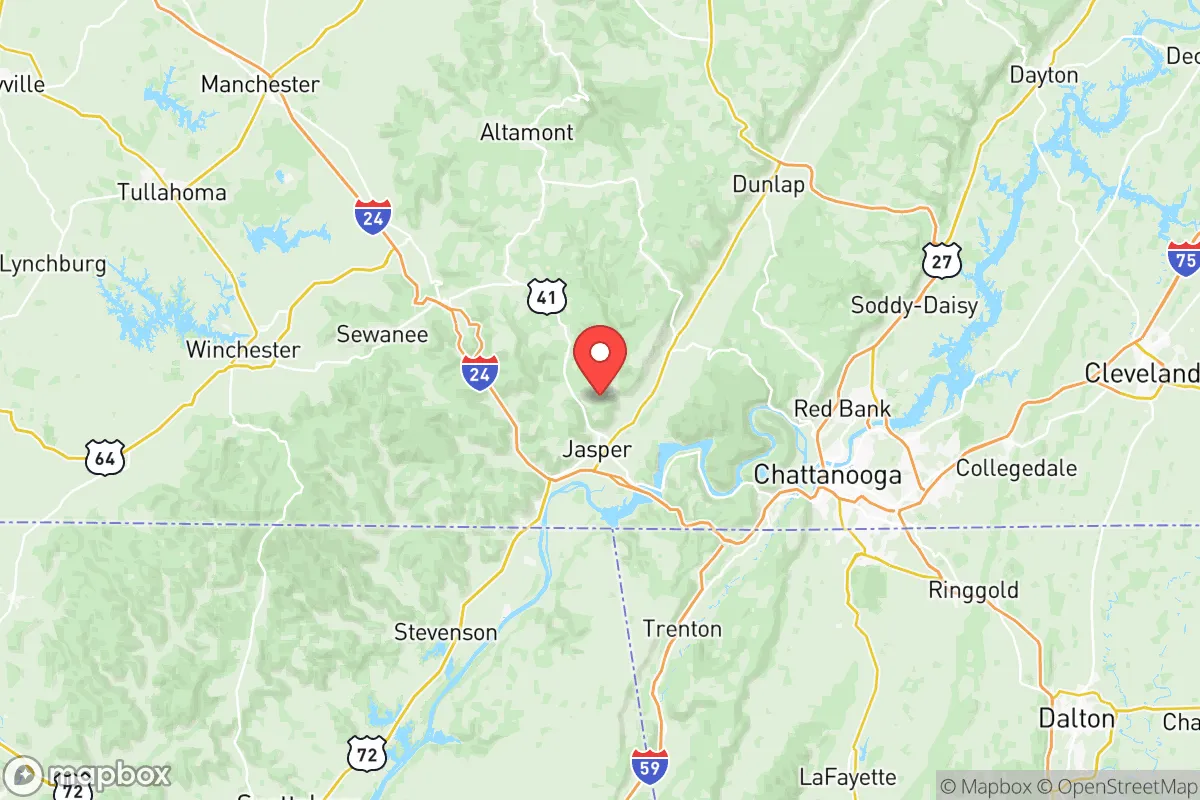
Marion County, Tennessee, is a predominantly white, rural community of 29,010 residents whose identity is rooted in a blend of Appalachian self-reliance and small-town Southern tradition. With a population that is 90.4% white and only 0.8% foreign-born, the county stands as one of the least ethnically diverse in the state, a fact that shapes its distinctive cultural character. The people here are concentrated in the historic county seat of Jasper, the river town of South Pittsburg, and the mountain communities of Whitwell and Kimball, where family ties often stretch back generations.
Settlement & growth (pre-1960)
Long before European settlers arrived, the area now known as Marion County was part of the ancestral homeland of the Cherokee Nation. The Cherokee maintained villages and hunting grounds along the Tennessee River and its tributaries, including the area around what is now Jasper. The first wave of non-Native settlers began arriving in the late 18th and early 19th centuries, primarily Scots-Irish and English pioneers pushing westward from Virginia and North Carolina through the Cumberland Gap. These early settlers were drawn by the promise of cheap, fertile land in the Sequatchie Valley and along the river bottoms near South Pittsburg and Whitwell.
The forced removal of the Cherokee on the Trail of Tears in the 1830s opened the entire county to white settlement. By the 1850s, the population was overwhelmingly of British Isles descent, with small pockets of German and Swiss immigrants arriving to work in the region's nascent mining and timber industries. The discovery of rich coal seams in the Cumberland Plateau foothills around Whitwell and Kimball spurred a second wave of migration in the late 19th century, bringing in Irish laborers and a smaller number of Italian and Polish miners. The founding of the town of South Pittsburg in 1872 as a planned industrial center for iron and coal production attracted skilled workers from the North and Midwest, giving the town a slightly more diverse, working-class character than the surrounding farm communities.
The post-Civil War period also saw the arrival of freed African Americans, who established small communities in and around Jasper and South Pittsburg. By 1900, Black residents made up roughly 10% of the county's population, working primarily as sharecroppers, railroad laborers, and domestic servants. However, the Great Migration of the 1910s through 1940s drew many of these families north to industrial cities like Detroit and Chicago, a trend that accelerated after World War II. The county's population remained overwhelmingly white and native-born through the mid-20th century, with the 1960 census recording a Black population of just 4.5% and virtually no foreign-born residents.
Modern era (post-1965)
The 1965 Hart-Cellar Act, which dramatically reshaped immigration patterns across the United States, had almost no impact on Marion County. The county's foreign-born population today stands at just 0.8%, a figure that has barely budged in six decades. Unlike the booming Sun Belt suburbs of Nashville or Chattanooga, Marion County did not attract significant numbers of immigrants from Latin America, Asia, or the Indian subcontinent. The small Hispanic population (2.3%) is largely composed of families who moved from Texas or Mexico to work in the county's poultry processing plants and construction trades, with a modest concentration in South Pittsburg and Kimball.
The most significant demographic shift of the modern era has been domestic out-migration. From a peak of roughly 24,000 residents in 1950, the county's population declined through the 1960s and 1970s as the coal industry mechanized and the iron furnaces of South Pittsburg closed. The population stabilized in the 1980s and has grown slowly since, driven largely by retirees and remote workers seeking affordable land and a slower pace of life. These newcomers, often from Florida, California, and the Northeast, have concentrated in lakefront developments along Nickajack Lake and in the more scenic areas around Whitwell and the Sequatchie Valley. The county's Black population has continued its slow decline, now at 2.8%, as younger African Americans leave for educational and employment opportunities in Chattanooga and Nashville.
Suburbanization has been modest compared to neighboring Hamilton County. The town of Kimball has seen the most growth, evolving into a bedroom community for commuters who work in Chattanooga, 30 minutes to the east. This has brought a slight increase in college-educated residents (now 16.5%), though the county remains well below the state average. The Asian population (0.2%) and Indian population (0.1%) are negligible, consisting of a handful of professionals employed at the county's largest employers, including the Tennessee Valley Authority's Sequoyah Nuclear Plant and the state prison system.
The future
Marion County is projected to remain one of Tennessee's least diverse counties for the foreseeable future. The foreign-born population is unlikely to rise significantly, as the county lacks the industrial base, university presence, or urban amenities that attract immigrants. The Hispanic population may grow slowly, driven by natural increase and continued demand for labor in agriculture and manufacturing, but it will likely remain a small minority. The most notable demographic trend is the aging of the population: the median age has risen to 44, well above the national average, as younger residents continue to leave for urban job markets.
The county's cultural identity is evolving in subtle ways. The influx of retirees and remote workers from outside the region is introducing more politically moderate and secular perspectives into a historically conservative, church-centered community. However, these newcomers tend to be older and less likely to have school-age children, which means the county's public schools in Jasper and Whitwell remain deeply rooted in local traditions. The population is expected to grow slowly, perhaps reaching 31,000 by 2040, with most new development occurring along the I-24 corridor near Kimball and the lakefront areas around South Pittsburg.
For someone moving in now, Marion County offers a community that is stable, affordable, and culturally cohesive, but also one that is aging and slowly shrinking in its rural core. The people here value self-sufficiency, neighborliness, and a connection to the land that has defined the region since the first Scots-Irish settlers arrived two centuries ago. The county is not becoming more diverse in any meaningful sense, but it is becoming more connected to the broader Chattanooga economy, which will gradually reshape its character from a remote Appalachian outpost to a quieter, greener edge of a growing metropolitan area.

* Values derived from national, state, county, city and local statistics and may differ in a specific area. Last updated: 2026-10-19T03:30:23.000Z
Narrative content on this page is AI-generated and may contain mistakes. Verify any details that matter before acting on them.
ReloMaps may earn a commission from affiliate links at no extra cost to you.

