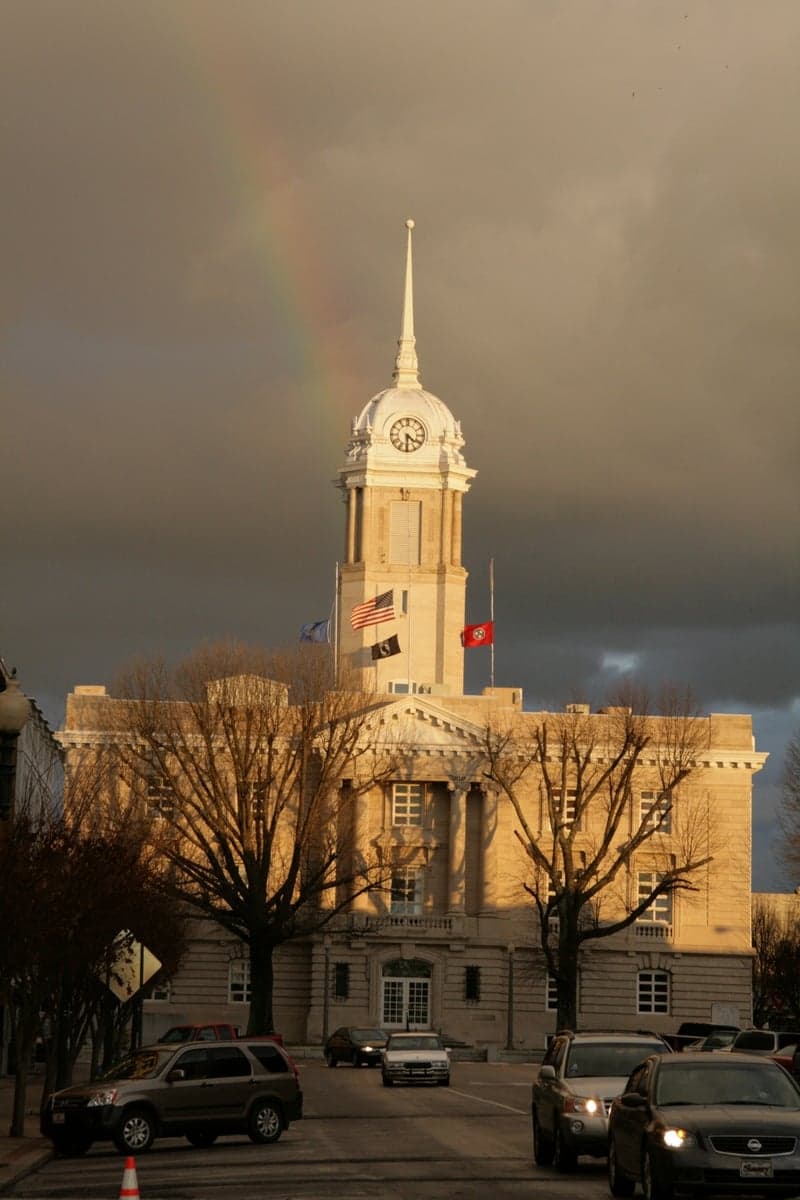
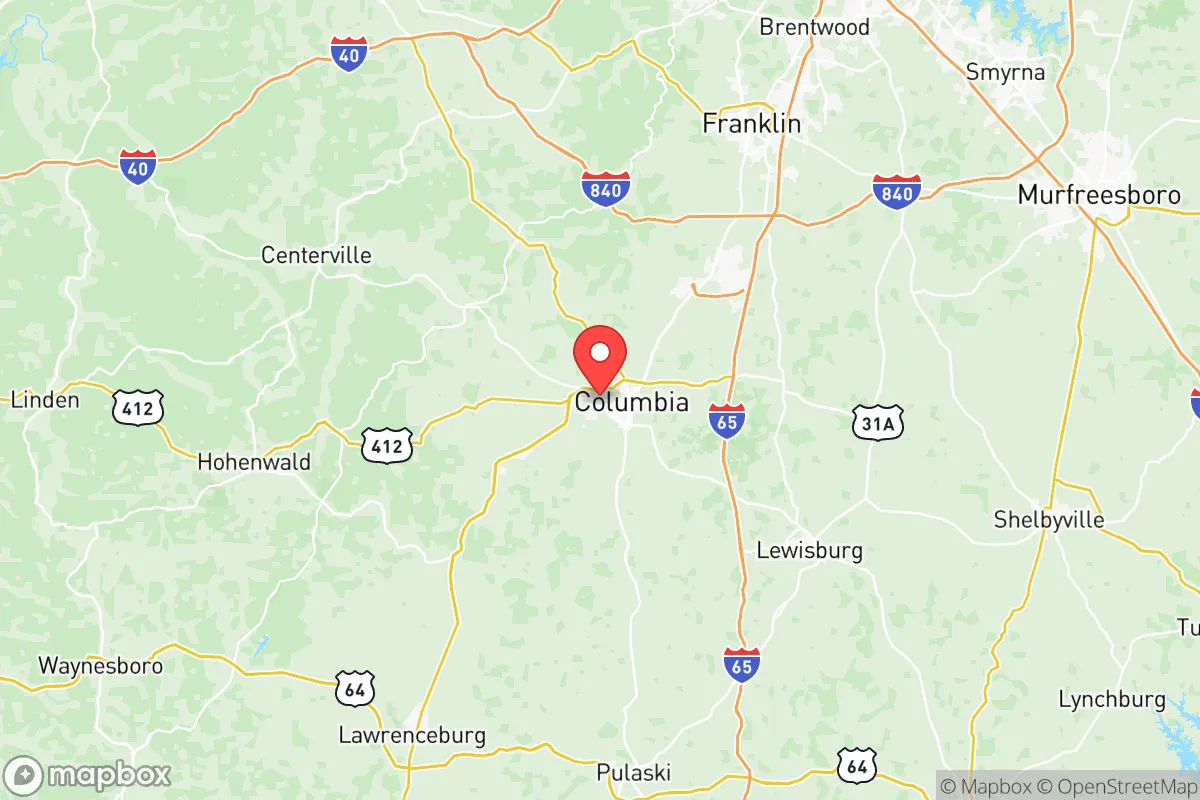
Photo: Wikipedia
Political ClimatePolitical Climate in Maury County
Showing state-level results — no local-only data available.
Local Political AnalysisPolitical Analysis of Maury County
Maury County has long been a reliably conservative stronghold, but it's not quite as deep red as the rest of Tennessee. With a Cook PVI of R+8, it's noticeably less Republican than the state's overall R+13 rating, and that gap has been narrowing in recent cycles. If you've lived here as long as I have, you remember when the county was a lock for any Republican on the ballot, but now you can see the cracks forming, especially in and around Columbia and Spring Hill.
How it compares
The state of Tennessee as a whole is solidly Republican, with a PVI of R+13, meaning it's 13 points more Republican than the national average. Maury County, at R+8, is a full 5 points less conservative. That difference is driven by two main factors: the rapid growth of Spring Hill, which has brought in a wave of younger, more moderate families from Davidson and Williamson counties, and the city of Columbia itself, where you'll find the county's only real pockets of blue-leaning voters. In the 2024 election, precincts in downtown Columbia and around the Columbia State Community College campus swung noticeably toward Democrats, while the rural precincts out toward Culleoka, Hampshire, and Santa Fe held firm for the GOP. The swing precincts are really in the suburban sprawl between Columbia and Spring Hill—places like the new subdivisions off Bear Creek Pike and Highway 31—where you see a lot of split-ticket voting. These folks aren't hard-left by any stretch, but they're not the old-school Reagan Republicans who dominated here for decades.
What this means for residents
For those of us who value limited government and personal freedoms, the trend is a bit concerning. The influx of new residents is slowly shifting the county's political center of gravity, and with it comes pressure for more progressive policies. You're already seeing it in school board meetings and county commission votes, where debates over curriculum transparency, library content, and property tax increases are getting more heated. The old guard—folks who remember when Maury County was a place where the government stayed out of your business and your wallet—is being challenged by a new wave that seems more comfortable with higher taxes and more regulation. If you're looking for a place where conservative values are still the default, the rural parts of the county—like the areas around Mt. Pleasant, Williamsport, and the Duck River valley—are where you'll find the most like-minded neighbors. But even there, you can feel the pressure from the growth corridor along I-65.
One thing that hasn't changed much is the cultural feel. Maury County still has a strong agricultural base, and the annual Mule Day festival in Columbia is a reminder of the county's rural roots. The gun culture is alive and well—you'll see more "Come and Take It" flags than "Coexist" stickers on pickup trucks. But the policy battles are real. The county commission recently debated a resolution opposing state-level vaccine mandates, and it passed, but not without a fight from a vocal minority. That's the kind of thing that would have been a slam dunk ten years ago. Looking ahead, I'd expect the political divide to widen as more development comes in. The long-term trajectory depends on whether the new arrivals assimilate into the local culture or try to change it. For now, Maury County is still a good place for someone who wants conservative governance, but you've got to keep an eye on those county commission races—that's where the real fight is happening.

State Political ClimatePolitical Climate in Tennessee
State Political AnalysisPolitical Environment in the State
Tennessee is a solidly red state with a Cook PVI of R+13, meaning it votes about 13 points more Republican than the national average. The dominant coalition is a mix of rural conservatives, suburban families, and evangelical voters, with the GOP holding supermajorities in both the state House and Senate. Over the last 10-20 years, the state has shifted noticeably rightward, driven by in-migration from blue states and a backlash against federal overreach, though the major metros—Nashville, Memphis, and Knoxville—have become increasingly blue islands in a sea of red.
Urban vs. rural divide
The political map of Tennessee is starkly divided. The three major metros—Nashville (Davidson County), Memphis (Shelby County), and Knoxville (Knox County)—are the Democratic strongholds. Nashville, in particular, has become a progressive hub, with its city council pushing sanctuary city policies and defunding police rhetoric, though actual defunding hasn't stuck. Memphis is reliably blue, driven by a large African American population and union influence. Knoxville is more moderate but still leans left compared to the rest of the state. In contrast, the rest of Tennessee is deeply red. Chattanooga (Hamilton County) is a bellwether—it voted for Trump in 2020 but has a growing suburban moderate wing. Franklin and Brentwood (Williamson County) are affluent, conservative suburbs that are among the fastest-growing areas in the state, attracting families fleeing high-tax states like California and Illinois. Johnson City and Kingsport in the northeast are reliably red, while Clarksville (Montgomery County), home to Fort Campbell, leans conservative but has a transient military population. The rural counties—like Giles, Lincoln, and Fentress—vote 70-80% Republican. The divide is so sharp that in 2024, Davidson County voted 65% for Biden, while surrounding rural counties like Rutherford (Murfreesboro) voted 60% for Trump.
Policy environment
Tennessee’s policy environment is aggressively conservative. There is no state income tax—only a 7% sales tax on most goods and a 9.25% tax on groceries, which is high but offset by the lack of income tax. The state has a right-to-work law, meaning no forced union membership, and it’s a constitutional carry state—no permit needed to carry a handgun openly or concealed. Education policy is a flashpoint: the state passed a universal school voucher program in 2023 (Education Freedom Scholarship Act), allowing families to use public funds for private or homeschool expenses. This was a major win for parental rights advocates. On healthcare, Tennessee refused to expand Medicaid under the ACA, leaving roughly 300,000 residents in the coverage gap. The state also passed one of the strictest abortion bans in the nation in 2020 (the Human Life Protection Act), with no exceptions for rape or incest, only to save the mother’s life. Election laws are tight: voter ID is required, and the state purged over 100,000 inactive voters in 2023. The legislature also passed a law in 2024 banning ranked-choice voting statewide, a preemptive strike against progressive election reforms.
Trajectory & freedom
Tennessee is becoming more free in many respects, but with caveats. On gun rights, the state expanded constitutional carry in 2021, and in 2023, it passed a law allowing teachers to carry firearms on school grounds with training. On parental rights, the 2023 “Don’t Say Gay” style law (HB 1233) bans classroom instruction on sexual orientation or gender identity in K-8, and a 2024 law requires schools to notify parents of any changes in a student’s mental or physical health—a win for parental oversight. On medical autonomy, the state banned gender-affirming care for minors in 2023 (SB 1), overriding a federal court challenge. Property rights are strong: Tennessee is a “right-to-farm” state, protecting agricultural operations from nuisance lawsuits. However, there are concerning trends. The state’s business-friendly posture has led to massive corporate subsidies—like the $500 million package for Ford’s BlueOval City in Stanton—which some conservatives see as crony capitalism. Also, the state’s broadband expansion has been slow, leaving rural areas behind. On speech, the state passed a law in 2024 requiring social media platforms to disclose content moderation policies, but it’s been criticized as a potential First Amendment overreach. Overall, the trajectory is toward more personal liberty on guns, education, and medical choices, but with a heavy hand on corporate welfare and tech regulation.
Civil unrest & political movements
Tennessee has seen its share of political flashpoints. In 2023, the Covenant School shooting in Nashville sparked massive protests at the state capitol, with thousands of activists demanding gun control. The legislature responded by expelling two Democratic representatives (Justin Jones and Justin Pearson) for leading a protest on the House floor—a move that galvanized the left and made national headlines. Both were quickly reappointed by their local councils. The state has a strong MAGA movement, with groups like the Tennessee Firearms Association and the Tennessee Stands organization pushing for nullification of federal gun laws. Immigration politics are heated: the state passed a law in 2024 requiring local law enforcement to cooperate with ICE, and Nashville’s sanctuary city status is a constant source of tension. There have been no major secession movements, but the state’s attorney general has joined multiple lawsuits against the Biden administration on immigration and environmental regulations. Election integrity is a live issue: the 2020 election saw no major fraud in Tennessee, but the legislature passed a law in 2021 banning ballot drop boxes and requiring absentee ballots to be notarized. A new resident would notice the strong presence of “Let’s Go Brandon” flags and Trump merchandise in rural areas, while Nashville’s “Black Lives Matter” murals and Pride flags are a stark contrast.
Projection
Over the next 5-10 years, Tennessee will likely become more red at the state level, but the urban-rural divide will deepen. In-migration from California, Illinois, and New York is accelerating—the state added over 500,000 residents between 2020 and 2024—and these newcomers are mostly conservative-leaning families and retirees, not progressives. This will strengthen the GOP’s supermajorities. However, the Nashville metro will continue to blue, driven by tech transplants and young professionals. The state’s fastest-growing counties—Williamson, Rutherford, and Wilson—are all red, but they’re becoming more moderate as they suburbanize. Expect more fights over school vouchers, transgender rights, and gun laws. The state’s fiscal conservatism will likely hold, but the pressure to fund infrastructure (roads, water, broadband) will grow as the population booms. A new resident moving in now should expect a state that is increasingly conservative on social issues but pragmatic on economic ones, with a growing tension between rural traditionalists and suburban moderates.
For a new resident, the bottom line is this: Tennessee offers a low-tax, high-freedom environment for those who value gun rights, parental control in education, and limited government. But the state is not a monolith—you’ll find deep blue pockets in Nashville and Memphis, and the political battles over culture war issues are constant. If you’re moving for freedom, you’ll find it in the suburbs and rural areas, but expect the urban centers to feel like a different country. The state’s trajectory is solidly conservative, but the in-migration wave could shift the balance if enough blue-state refugees bring their old voting habits. For now, Tennessee is a safe bet for conservatives, but keep an eye on the growing suburban moderate wing—they’re the ones who will decide the next decade.
* Values derived from national, state, county, city and local statistics and may differ in a specific area. Last updated: 2026-05-19T03:33:51.000Z
Narrative content on this page is AI-generated and may contain mistakes. Verify any details that matter before acting on them.
ReloMaps may earn a commission from affiliate links at no extra cost to you.

