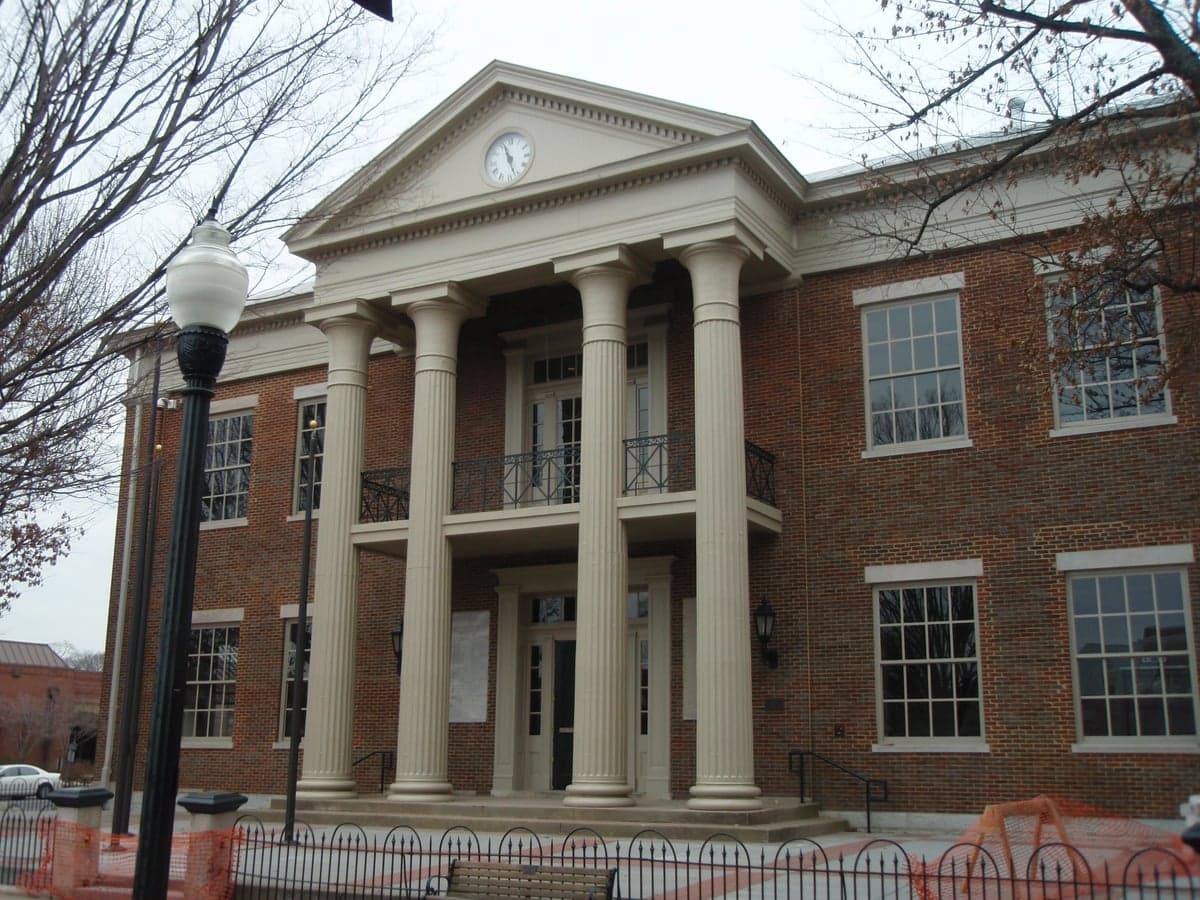
Photo: Wikipedia
Personal Sovereignty in Williamson County
Viable for self-reliance. Generally workable, though some barriers may limit total independence.
What does Personal Sovereignty tell us?
Personal Sovereignty measures your capacity for self-reliance and independence with minimal government friction. Higher scores mean fewer barriers between you and the way you want to live... but it assumes you have the space you need and good neighbors.
What does this tell us?
Personal Sovereignty measures your capacity for self-reliance and independence with minimal government friction. Higher scores mean fewer barriers between you and the way you want to live... but it assumes you have the space you need and good neighbors.
State Policy
Energy independence: Importer (25% of energy produced in-state)
Personal Liberty
Homesteading

Personal Liberty Analysis
Williamson County, Tennessee, offers one of the strongest personal sovereignty environments in the Southeast, particularly for those who view government overreach as a growing threat to individual autonomy. The county’s political culture, rooted in deep-red conservatism and a constitutional sheriff’s office, creates a buffer against the kind of progressive mandates that have eroded freedoms in neighboring Davidson County (Nashville) and other metropolitan areas. For single individuals and parents prioritizing self-reliance, the combination of low taxation, permissive gun laws, and minimal zoning interference makes this region a strategic relocation target, though the degree of sovereignty varies significantly between the urbanized northern corridor and the rural southern expanse.
Tax burden and regulatory posture that preserve personal autonomy
Williamson County’s tax structure is designed to keep government lean and individual wallets full, a critical factor for those who see high taxation as a form of coerced labor. The county imposes no local income tax, and Tennessee’s state income tax was eliminated entirely in 2021, meaning every dollar earned stays in the hands of the individual. Property taxes are among the lowest in the Nashville metro area, with the county rate at roughly $2.05 per $100 of assessed value—about half of what Davidson County residents pay. This fiscal posture extends to regulatory affairs: the county commission has consistently rejected proposals for inclusionary zoning and rent control, viewing them as government overreach into private property rights. In cities like Franklin and Brentwood, homeowners’ associations (HOAs) are common, which can impose covenants that some sovereignty-minded individuals find restrictive. However, in unincorporated areas and towns like Fairview and Thompson’s Station, regulatory interference is minimal, with no county-wide building codes for agricultural structures and a planning department that prioritizes property rights over master plans.
Self-defense and gun law specifics for responsible citizens
Tennessee is a constitutional carry state, and Williamson County’s sheriff’s office interprets the Second Amendment as an individual right, not a privilege granted by the state. No permit is required to carry a handgun, openly or concealed, for any law-abiding citizen 21 or older. This applies across all municipalities in the county, including Franklin, Brentwood, and Spring Hill, though local ordinances prohibit firearms in government buildings and public parks during permitted events. The county’s gun culture is robust: there are multiple indoor and outdoor shooting ranges, including the Stones River Hunter Education Center in nearby Murfreesboro and the private Owl Hollow Gun Club in Arrington. For parents, the legal framework supports teaching children firearm safety without government interference—Tennessee law explicitly allows minors to possess long guns for hunting and target shooting under adult supervision. The sheriff, Dusty Rhoades, has publicly stated his office will not enforce any federal gun control measures he deems unconstitutional, a stance that resonates with those concerned about federal overreach. Stand-your-ground laws are fully in effect, with no duty to retreat in any place where the individual has a legal right to be.
Self-reliance and homesteading viability across the county
Williamson County’s zoning landscape is a patchwork that rewards those who know where to look. The northern half of the county, including Franklin and Brentwood, is dominated by suburban subdivisions with minimum lot sizes of one acre or less, making serious homesteading impractical. However, the southern and western portions—particularly around College Grove, Arrington, and Fairview—offer agricultural zoning that permits minimum lot sizes of five to ten acres for residential use. In these areas, raising livestock, keeping bees, and operating small-scale market gardens are allowed by right, with no county permit required for structures under 200 square feet. Off-grid feasibility is mixed: while Tennessee has no state law prohibiting solar panels or rainwater collection, the county does require electrical permits for grid-tied systems. For those seeking true independence, properties in College Grove often have existing wells and septic systems, and the county allows composting toilets as an alternative to sewer connections. The biggest regulatory hurdle is the county’s building code for primary residences, which mandates compliance with the International Residential Code—a point of friction for those wanting to build with earthbags or straw bale. However, accessory structures like barns and workshops are exempt, allowing for phased self-built living arrangements.
Personal liberties: parental rights, medical autonomy, and free speech
Williamson County is a stronghold for parental rights, with the school board consistently rejecting federal and state curriculum mandates that conflict with local values. The county’s public schools, among the highest-ranked in Tennessee, allow parents to opt their children out of any sex education or health curriculum without penalty, and the board has passed resolutions affirming that parents have the primary right to direct their children’s upbringing. Medical autonomy is protected by Tennessee’s broad conscience clause, which allows individuals to refuse any medical treatment or vaccination without government coercion—a stance that has been tested and upheld during the COVID-19 era. The county health department does not mandate vaccines for school attendance, leaving that decision to parents. Free speech is robust: the county has no noise ordinances that restrict political speech, and public comment periods at commission meetings are open without prior registration. Property rights are further protected by Tennessee’s Private Property Protection Act, which requires the government to compensate landowners for any regulatory taking that reduces property value by more than 20%. This law has been used successfully in Franklin to block eminent domain expansions for a proposed greenway project.
Compared to the regulatory chokeholds found in Austin, Texas, or Portland, Oregon, Williamson County offers a level of personal sovereignty that is increasingly rare in the United States. The combination of constitutional carry, low taxation, agricultural zoning in the southern tier, and a local government that views its role as limited rather than expansive creates an environment where individuals and families can live with minimal state interference. For those willing to trade the cultural amenities of Nashville for the autonomy of College Grove or Fairview, this county represents one of the last strongholds of genuine self-governance in the mid-South. The key is to choose your location carefully—the northern suburbs still carry the scent of HOA covenants and city ordinances, but the southern half remains a place where a person can build a life on their own terms, with the law as a shield rather than a leash.

* Values derived from national, state, county, city and local statistics and may differ in a specific area. Last updated: 2026-05-09T18:49:04.000Z
Narrative content on this page is AI-generated and may contain mistakes. Verify any details that matter before acting on them.
ReloMaps may earn a commission from affiliate links at no extra cost to you.

