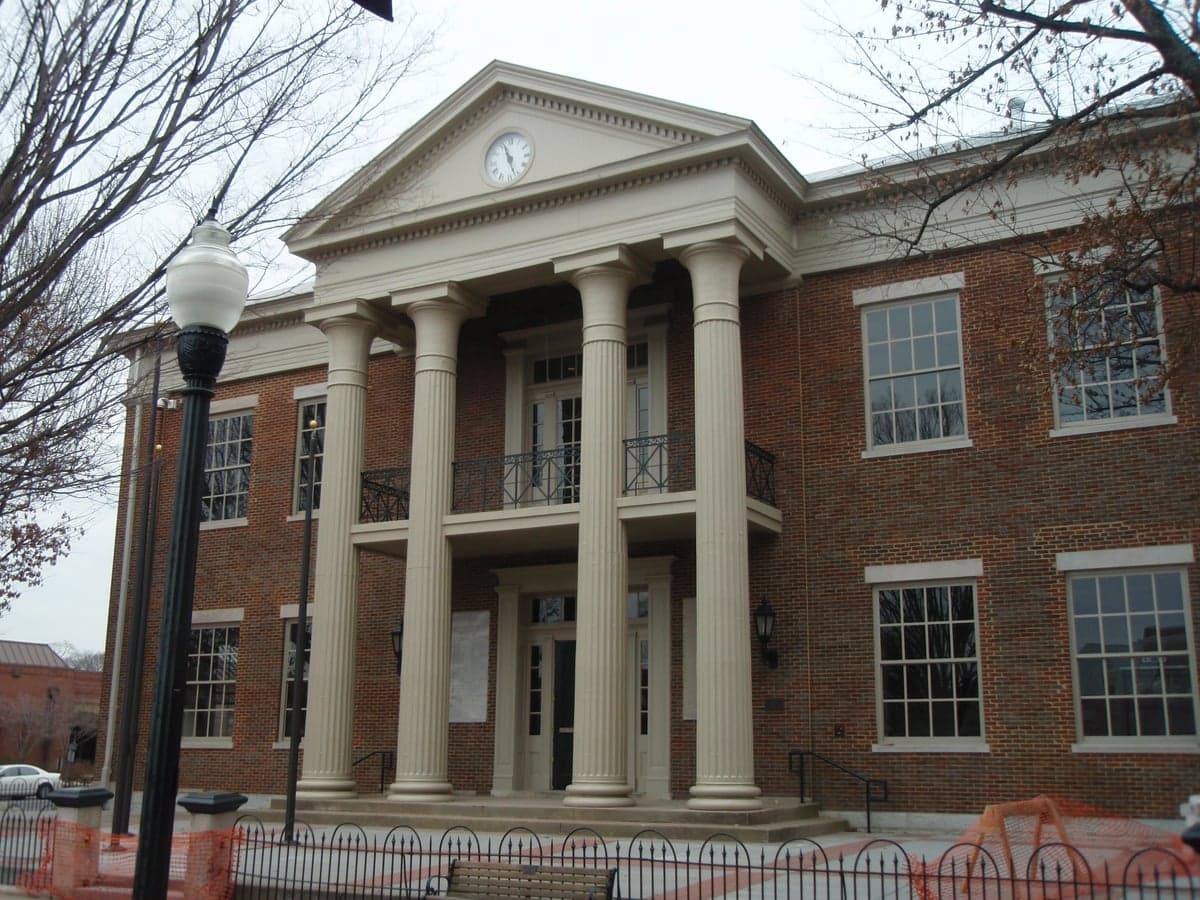
Photo: Wikipedia
Quality of Life in Williamson County
A livable area that tracks near national norms for affordability, walkability, and neighborhood health.
What does Quality of Life tell us?
Quality of Life measures an area by evaluating factors like cost of living, nearby amenities, country club access, airport proximity, socioeconomic signals and neighborhood character. For large states, this is a general average — quality of life can vary dramatically between metro areas, suburbs, and rural communities within the same state.
What does this tell us?
Quality of Life measures an area by evaluating factors like cost of living, nearby amenities, country club access, airport proximity, socioeconomic signals and neighborhood character. For large states, this is a general average — quality of life can vary dramatically between metro areas, suburbs, and rural communities within the same state.
Cost of Living
93% above national average
68%
The Real Cost of Living in Williamson County for 2026
| Tier | Individual | Family (4) |
|---|---|---|
| Survival | $30k | $57k |
| Comfortable | $131k | $192k |
| Luxury | $237k+ | $367k+ |
| Elite (Top 5%) | $285k+ | $442k+ |
Quality-of-Life Analysis
Williamson County, Tennessee, offers a quality-of-life spectrum that ranges from the bustling, amenity-rich city of Franklin to the quiet, rural crossroads of communities like Leiper’s Fork and College Grove, drawing everyone from corporate executives and young families to artists and equestrian enthusiasts. The county’s character shifts noticeably as you move from its dense commercial corridors along I-65 to its rolling, horse-farm-dotted countryside. With a cost-of-living index of 193 (nearly double the national average), a median home value of $673,700, and a median rent of $1,895, Williamson County is among Tennessee’s most expensive areas, but the trade-off is consistently top-ranked schools, low crime rates, and high household incomes. The average commute of 28 minutes reflects the reality that many residents work in Nashville, Brentwood, or Franklin itself, balancing suburban convenience with access to rural retreats.
Largest town(s) & population centers
Franklin is the county seat and its undisputed hub, home to a historic downtown with boutique shopping, nationally recognized restaurants, and the iconic Franklin Theatre. Daily life here revolves around a walkable Main Street, frequent festivals, and a strong sense of community history, particularly around the Civil War sites at Carnton and Carter House. Brentwood, directly north of Franklin along I-65, is a more suburban, family-oriented city known for its excellent Williamson County Schools, large single-family homes on wooded lots, and the popular Hill Center shopping complex. Spring Hill, straddling the Maury County line in the southern part of Williamson, has grown rapidly as a more affordable alternative, with new subdivisions and the General Motors plant anchoring its economy. These three towns form the county’s population core, offering dense retail corridors, multiple grocery options, and a calendar full of community events.
Smaller towns & rural pockets
Venture west of Franklin on Highway 96, and you reach Leiper’s Fork, a tiny unincorporated village that feels like a preserved slice of old Tennessee. It is home to art galleries, a historic general store, and the famous Puckett’s Grocery & Restaurant, drawing visitors and residents who value a slower pace and rural character. College Grove, in the southeastern corner of the county, remains deeply rural, with large farms, horse pastures, and a small cluster of homes around the College Grove Market. Thompson’s Station, a growing town west of I-65, blends new subdivisions with preserved farmland and the historic Homestead Manor property. Fairview, on the county’s western edge, offers a more working-class, small-town feel with its own school system and direct access to the Natchez Trace Parkway. These communities provide a stark contrast to Franklin’s density, with gravel roads, limited commercial development, and a strong emphasis on land ownership and privacy.
Cost & lifestyle range
The cost of living varies dramatically across Williamson County. At the high end, Brentwood and the western parts of Franklin (especially the “Westhaven” and “Fieldstone Farms” neighborhoods) command median home prices well above the county average, often exceeding $800,000, with luxury amenities like golf courses, clubhouses, and gated entries. At the more accessible end, Spring Hill and Fairview offer median home values closer to $500,000–$550,000, though still far above the national median. Renters face a tight market, with median rent at $1,895; a one-bedroom apartment in Franklin or Brentwood often starts around $1,500. Lifestyle follows cost: residents in the expensive suburbs enjoy top-tier schools, extensive parks, and walkable commercial nodes, while those in rural pockets like Leiper’s Fork or College Grove trade some convenience for acreage, quiet, and a stronger connection to the land. The county’s average commute of 28 minutes is manageable, but residents in the far western or southern reaches may face 35–40 minute drives to Nashville or Franklin for work.
Williamson County is best suited for those who prioritize school quality, safety, and community amenities above all else and have the financial means to afford them. Families with children thrive in the suburban towns, while retirees, artists, and equestrian lovers often gravitate to the rural enclaves. Professionals commuting to Nashville or Cool Springs find the balance of space and access appealing, though the high cost of entry and property taxes (among the highest in Tennessee) can be a barrier. For those who can afford it, Williamson County offers a rare blend of historic charm, modern convenience, and preserved countryside that few other Middle Tennessee counties can match.

Crime in Williamson County
Higher crime rates than 58% of comparable U.S. locations.
Violent CrimeViolent Crime Analysis
Property CrimeProperty Crime Analysis
Crime Analysis
Williamson County, Tennessee, consistently ranks among the safest large counties in the state, with violent and property crime rates that fall well below national averages. The county’s overall violent crime rate of 490.5 per 100,000 residents and property crime rate of 1,640.7 per 100,000 reflect a community where proactive law enforcement and conservative judicial leadership help keep serious offenses in check. However, as with any growing suburban region near a major metro area, crime patterns vary significantly between incorporated cities and unincorporated areas, and the influence of progressive judicial policies in nearby Davidson County (Nashville) can create spillover effects that residents should monitor.
Crime in context
Williamson County’s violent crime rate of 490.5 per 100,000 is roughly 30% lower than the national average of 700 per 100,000 and significantly below Tennessee’s state rate of 670 per 100,000. Property crime, at 1,640.7 per 100,000, is about 25% below the U.S. average of 2,200 per 100,000 and well under the Tennessee average of 2,500 per 100,000. These figures place Williamson County among the safest jurisdictions in Middle Tennessee, alongside neighboring Rutherford County. The county’s strong economic base, high median household income (over $120,000), and well-funded sheriff’s office contribute to these favorable numbers. By contrast, Davidson County (Nashville) reports violent crime rates above 1,100 per 100,000, a gap that underscores the importance of local judicial and policing priorities.
What residents experience
In practice, residents of Williamson County’s largest cities—Franklin, Brentwood, and Spring Hill—report feeling very safe, with most crime concentrated in retail corridors and near major highways. Franklin’s Cool Springs area, a dense commercial hub, sees the highest property crime rates in the county, including vehicle break-ins and shoplifting. Brentwood, with a violent crime rate near 200 per 100,000, is one of the safest cities in Tennessee. Spring Hill, straddling the Williamson-Maury county line, has seen a slight uptick in property crime as its population has surged past 50,000, but violent incidents remain rare. The unincorporated areas around Thompson’s Station and Nolensville report even lower crime rates, with many neighborhoods logging zero violent crimes in a given year. Residents consistently cite the county’s conservative district attorney, who prioritizes prosecution of repeat offenders and opposes progressive bail reform, as a key reason for the low recidivism and high clearance rates.
Neighborhood-level variation
While Williamson County as a whole is safe, neighborhood-level disparities exist. The city of Fairview, in the county’s far western corner, has a violent crime rate closer to 600 per 100,000, driven by a smaller police force and proximity to less affluent areas of Hickman County. Conversely, gated communities and newer subdivisions in Brentwood’s 37027 ZIP code and Franklin’s 37064 ZIP code report crime rates 50-70% below the county average. Residents should be aware that the progressive judicial policies in Nashville—such as reduced cash bail and diversion programs for property crimes—can lead to offenders crossing the county line into Williamson County, particularly along the I-65 corridor. The Williamson County Sheriff’s Office maintains a dedicated task force to patrol these border areas, but property crime in Franklin’s downtown and Cool Springs has edged up 5-8% since 2022. For the most current data, the county publishes an online crime map updated weekly, which shows that the vast majority of Williamson County remains a low-risk environment for families and businesses.
* Values derived from national, state, county, city and local statistics and may differ in a specific area. Last updated: 2026-05-09T18:49:04.000Z
Narrative content on this page is AI-generated and may contain mistakes. Verify any details that matter before acting on them.
ReloMaps may earn a commission from affiliate links at no extra cost to you.

