Photo: Wikipedia
Political ClimatePolitical Climate in Williamson County
Showing district-level results — no local-only data available.
Local Political AnalysisPolitical Analysis of Williamson County
Williamson County, Tennessee, has long been a conservative stronghold, but the political landscape is shifting in ways that should give anyone who values personal freedom and limited government pause. The county currently holds a Cook PVI of R+10, meaning it leans Republican by ten points, but that’s a few shades lighter than the state’s overall R+13 rating. For decades, this was a place where folks minded their own business and the government stayed out of the way, but recent trends suggest that’s changing, especially in certain pockets of the county.
How it compares
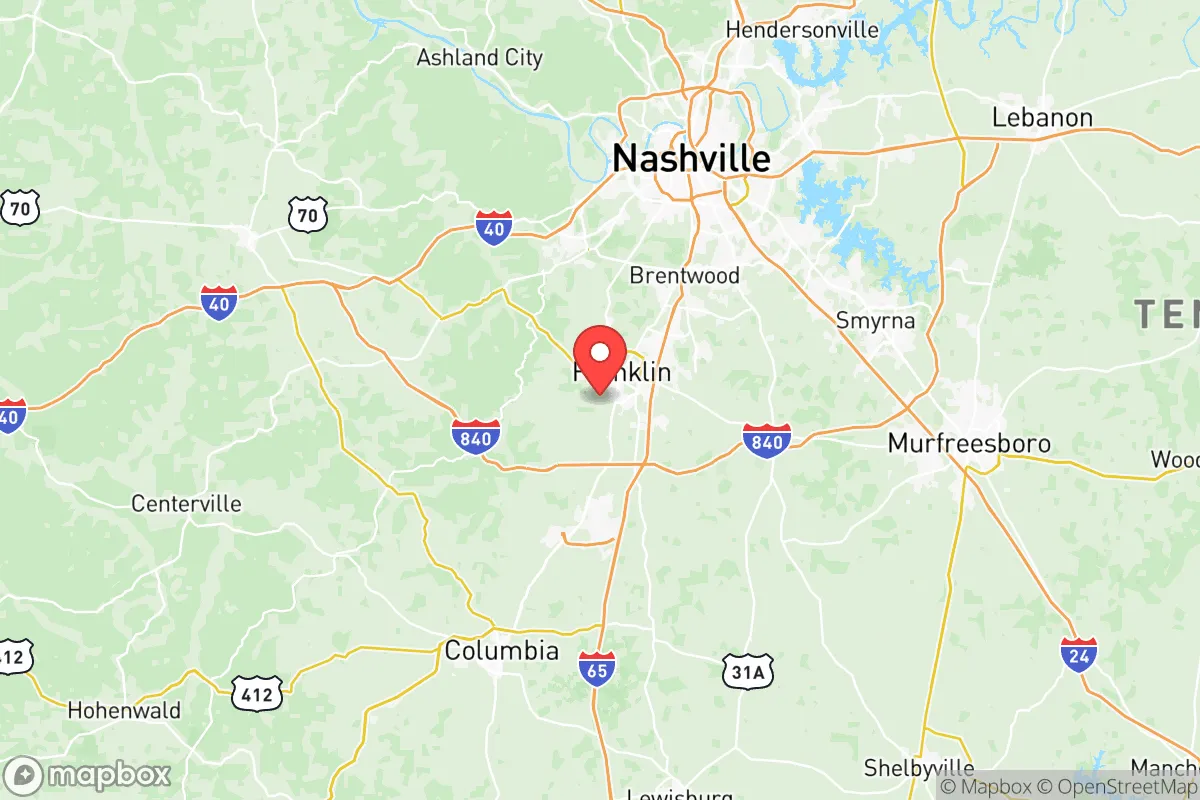
When you stack Williamson County against the rest of Tennessee, the numbers tell a story of a county that’s still red, but not as deep red as it used to be. The state as a whole is R+13, so Williamson is three points less conservative than the statewide average. That gap might sound small, but it’s a real shift from the 2010s, when the county was reliably R+15 or higher. The biggest driver of this change is the influx of new residents from blue states, particularly in the northern and central parts of the county. Franklin and Brentwood are the epicenters of this shift, with precincts near Cool Springs and downtown Franklin showing a noticeable uptick in Democratic votes in the last two cycles. Meanwhile, Spring Hill and Thompson’s Station in the southern part of the county have held the line, staying solidly conservative. Fairview and Nolensville are more mixed, with Fairview leaning red but Nolensville showing some purple tendencies as new subdivisions pop up. The swing precincts are mostly in the urbanizing corridor along I-65, where transplants are bringing their big-government ideas with them.
What this means for residents
For those of us who’ve been here a while, the creeping shift is concerning. It’s not just about election results—it’s about the culture and the policies that follow. In the past, Williamson County was a place where you could build a house, start a business, or send your kids to school without the government breathing down your neck. Now, you’re seeing more talk of zoning restrictions, school board battles over curriculum, and even discussions about “affordable housing” mandates that sound a lot like government overreach. The biggest red flag is the school board, where progressive candidates have made inroads in Franklin and Brentwood, pushing for policies that prioritize equity over excellence. If you’re a parent who wants your child’s education focused on fundamentals, not social engineering, that’s a direct threat to your rights. The county commission is still conservative overall, but the margin is shrinking, and every election brings more candidates who see government as a tool for social change rather than a protector of individual liberty.
On the cultural front, the differences between Williamson County and the rest of Tennessee are becoming more pronounced. The state as a whole is still deeply conservative, with a strong emphasis on gun rights, school choice, and low taxes. Williamson County, however, is starting to see a divide between the rural and suburban areas. The rural parts of the county, like the areas around Arrington and College Grove, still feel like old Tennessee—quiet, independent, and wary of government intrusion. But the suburban core is becoming more like a mini-Nashville, with all the progressive baggage that comes with it. If you’re looking for a place where your personal freedoms are respected and the government stays in its lane, the southern and western parts of the county are still your best bet. But keep an eye on the next few election cycles—if the trend continues, Williamson County could look a lot more like Davidson County in a decade, and that’s a future worth fighting against.

State Political ClimatePolitical Climate in Tennessee
State Political AnalysisPolitical Environment in the State
Tennessee is a solidly conservative state, with a Cook Partisan Voting Index of R+13, meaning it votes about 13 points more Republican than the national average. Over the past 20 years, the state has shifted from a competitive purple state to a deep red stronghold, driven by suburban and exurban growth in the Nashville and Knoxville metros, while rural areas have become even more reliably Republican. The Democratic coalition has largely collapsed outside of Memphis and a few urban pockets, making Tennessee one of the most reliably conservative states in the South for both state and federal elections.
Urban vs. rural divide
The political map of Tennessee is starkly divided between its major cities and everything else. Nashville (Davidson County) is a deep blue urban hub, voting for Joe Biden by over 60% in 2020, but it’s surrounded by a ring of fast-growing, heavily Republican suburbs like Williamson County (Franklin, Brentwood) and Rutherford County (Murfreesboro), which are among the most conservative counties in the state. Memphis (Shelby County) is another Democratic stronghold, but its influence is diluted by the rest of the state. Knoxville (Knox County) has trended redder over the last decade, with its suburbs like Farragut and Oak Ridge voting heavily Republican. The rural areas—places like Dyer County in West Tennessee, Warren County in Middle Tennessee, and Johnson County in East Tennessee—routinely vote 75-80% Republican. The only real swing areas are a handful of suburban counties like Montgomery County (Clarksville), which has a mix of military families and commuters, but even that county has moved right in recent cycles.
Policy environment
Tennessee’s policy environment is aggressively conservative. There is no state income tax on wages, a major draw for relocating families and businesses. The state has a flat 7% corporate income tax and a 9.75% sales tax on most goods, which is high but offset by the lack of income tax. The regulatory posture is business-friendly, with right-to-work laws and minimal zoning restrictions outside of major cities. Education policy has shifted sharply right: in 2021, the state passed a universal school voucher program (the Education Savings Account pilot) for low-income families in Memphis and Nashville, and in 2024 expanded it statewide. The state also passed a law requiring schools to post all curriculum materials online for parental review, and banned the teaching of critical race theory in public schools. Healthcare is a mixed bag: Tennessee did not expand Medicaid under the Affordable Care Act, leaving a coverage gap for low-income adults, but the state has a robust private insurance market. Election laws are strict: voter ID is required, early voting is limited to two weeks, and the state purges inactive voters regularly. The state also passed a law in 2023 making it a felony for election officials to send unsolicited absentee ballot applications.
Trajectory & freedom
Tennessee is becoming more free in many respects, particularly on gun rights, parental rights, and tax policy. In 2021, the state passed permitless carry (constitutional carry) for handguns, allowing any law-abiding adult to carry a concealed firearm without a permit. In 2023, the legislature passed a law banning gender transition procedures for minors, and in 2024, it passed a law requiring schools to notify parents of any changes in a student’s mental or physical health. Property rights were strengthened with a 2022 law limiting the ability of local governments to impose rent control. However, there are concerns about government overreach in other areas: the state has a strict anti-abortion law (trigger law after Dobbs) with no exceptions for rape or incest, and it has aggressively prosecuted protesters under a 2021 anti-rioting law that increased penalties for blocking highways. The state also passed a law in 2023 allowing the death penalty for child rape, which some see as an expansion of state power. On balance, the trajectory is toward more personal liberty on guns, education, and taxes, but with a corresponding increase in government intervention on social issues.
Civil unrest & political movements
Tennessee has seen its share of political flashpoints. In 2023, the expulsion of two Democratic state representatives (Justin Jones and Justin Pearson) from the state house for leading a gun control protest on the floor sparked national attention and large protests at the state capitol. The Tennessee Three became a rallying point for progressive activists, but the backlash from conservatives was muted, and the expulsions were largely supported by the GOP base. Immigration politics are heated: the state passed a law in 2024 requiring local law enforcement to cooperate with federal immigration authorities, and there are no sanctuary cities. There have been small but vocal secessionist movements in East Tennessee, particularly in Blount County and Sevier County, where some residents have called for the creation of a separate state of "Franklin" due to frustration with Nashville’s influence. Election integrity controversies have been minimal, though the state’s 2020 audit found no widespread fraud. The most visible political movement is the Moms for Liberty chapter in Williamson County, which has been active in school board meetings and library book challenges. A new resident would notice a strong sense of civic engagement, with yard signs for local candidates and frequent community meetings on school issues.
Projection
Over the next 5-10 years, Tennessee will likely become even more conservative, driven by in-migration from blue states like California, Illinois, and New York. The Nashville metro is expected to grow by another 500,000 people by 2030, with most of that growth in the conservative suburbs of Williamson, Rutherford, and Wilson counties. This will further dilute the influence of Nashville’s urban core. The state’s Republican supermajority is unlikely to be challenged, as Democrats have no viable path to winning statewide office without a major realignment. The biggest wild card is the growing Hispanic population in rural West Tennessee and the Nashville suburbs, which could shift some counties toward the center over time, but for now, those voters tend to be socially conservative. Expect more legislation on school choice, further tax cuts, and continued resistance to federal mandates on environmental and labor policy. The state will also likely see more fights over local control, as the legislature continues to preempt city ordinances on everything from plastic bag bans to housing density. For a new resident, the political climate will feel stable and predictable, with a strong conservative consensus that shows no signs of cracking.
Bottom line for a new resident: If you’re moving to Tennessee, you’re moving to a state where conservative values are the default, not the exception. You’ll find low taxes, strong gun rights, and a government that actively promotes parental control over education. The trade-off is that you’ll also have limited access to certain social services and a political environment that can feel rigid on social issues. For families and individuals who prioritize freedom from income tax, school choice, and a culture of self-reliance, Tennessee is one of the best bets in the country. Just know that the blue cities of Nashville and Memphis are islands in a red sea, and if you settle in the suburbs or rural areas, you’ll be surrounded by like-minded neighbors who take their politics seriously.
* Values derived from national, state, county, city and local statistics and may differ in a specific area. Last updated: 2026-05-09T18:49:04.000Z
Narrative content on this page is AI-generated and may contain mistakes. Verify any details that matter before acting on them.
ReloMaps may earn a commission from affiliate links at no extra cost to you.

