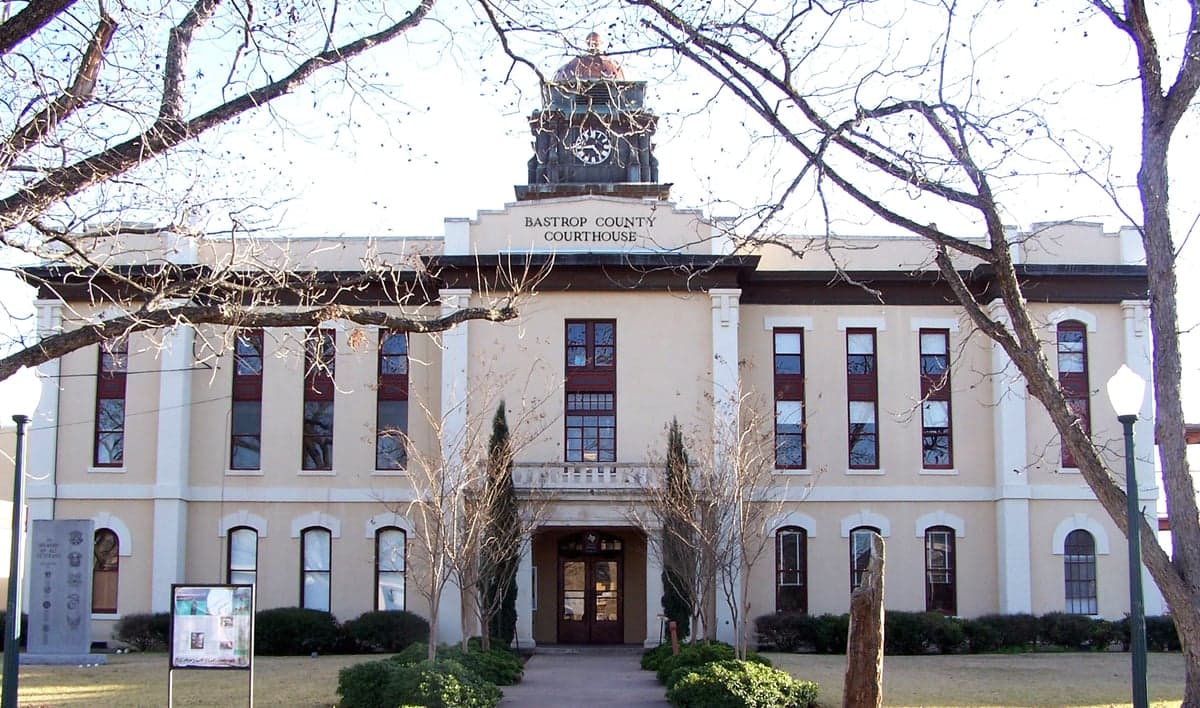
Photo: Wikipedia
Quality of Life in Bastrop County
A livable area that tracks near national norms for affordability, walkability, and neighborhood health.
What does Quality of Life tell us?
Quality of Life measures an area by evaluating factors like cost of living, nearby amenities, country club access, airport proximity, socioeconomic signals and neighborhood character. For large states, this is a general average — quality of life can vary dramatically between metro areas, suburbs, and rural communities within the same state.
What does this tell us?
Quality of Life measures an area by evaluating factors like cost of living, nearby amenities, country club access, airport proximity, socioeconomic signals and neighborhood character. For large states, this is a general average — quality of life can vary dramatically between metro areas, suburbs, and rural communities within the same state.
Cost of Living
7% above national average
107%
The Real Cost of Living in Bastrop County for 2026
| Tier | Individual | Family (4) |
|---|---|---|
| Survival | $21k | $40k |
| Comfortable | $52k | $77k |
| Luxury | $120k+ | $186k+ |
| Elite (Top 5%) | $141k+ | $219k+ |
Quality-of-Life Analysis
Bastrop County offers a genuine spectrum of living environments, from the walkable historic core of its county seat to deep-river rural homesteads, drawing everyone from Austin commuters and weekenders to lifelong ranchers. The county’s character shifts noticeably as you move from the Colorado River corridor and Highway 21 into the piney woods and farmland east of the Lost Pines region. With a cost-of-living index of 107 (just above the national average) and a median commute of roughly 35 minutes, the trade-off between space and access defines daily life here.
Largest town(s) & population centers
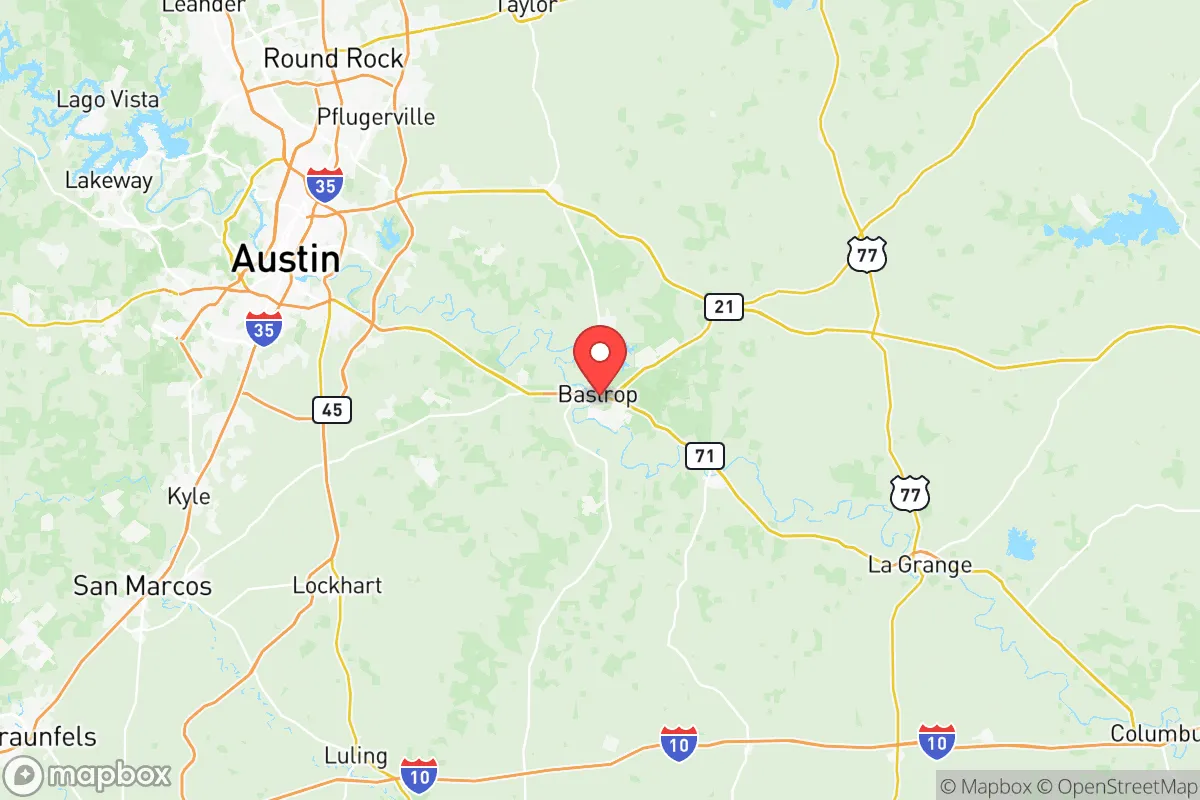
Bastrop, the county seat and largest city, anchors the western side with a population approaching 10,000. Its historic downtown along Main Street features a walkable square with local restaurants, antique shops, and the Bastrop Opera House, while the adjacent Colorado River provides fishing, kayaking, and the popular Bastrop State Park. Daily life here blends small-town walkability with suburban convenience: H-E-B and Walmart anchor the retail corridor on Highway 71, and the school district (Bastrop ISD) serves roughly 11,000 students. Elgin, the second-largest town (pop. ~10,000), sits on the county’s northern edge and is known for its brick-lined downtown, the Elgin Cotton Mill, and its self-proclaimed title as the “Sausage Capital of Texas.” Elgin’s character is more working-class and agricultural than Bastrop’s, with a strong Hispanic cultural presence and a slower pace. Both towns see significant commuter traffic: roughly 40% of employed residents work outside the county, primarily in Austin (25 miles west) or Round Rock.
Smaller towns & rural pockets
East of Bastrop, Smithville (pop. ~4,000) offers a distinctly quieter, artsy-rural vibe along the Colorado River. Its restored railroad depot, antique shops, and the annual Smithville Jamboree attract retirees and creative types seeking a low-cost retreat. Further south, McDade (unincorporated, pop. ~700) is a true crossroads community with a historic general store and a handful of homes spread along FM 696; it is popular among horse owners and small-acreage farmers. Red Rock (unincorporated, pop. ~1,000) sits near the Bastrop-Fayette county line and is dominated by ranchland and the Red Rock Volunteer Fire Department’s annual barbecue. Cedar Creek, a sprawling unincorporated area along Highway 21 between Bastrop and Austin, is less a town than a collection of subdivisions, mobile home parks, and rural homesteads—it offers the cheapest land within a 30-minute drive of downtown Austin. These smaller communities lack municipal services like water and sewer in many areas, relying on wells and septic systems, which keeps property taxes lower but requires more self-sufficiency.
Cost & lifestyle range
The cost-of-living index of 107 masks a wide internal spread. At the high end, newer subdivisions in western Bastrop (e.g., Tahitian Village, Pine Forest) and around Elgin’s newer developments see median home values pushing $300,000–$350,000, with some custom homes on acreage exceeding $500,000. These areas attract professionals who want land but need a reliable commute to Austin. At the low end, older homes in Smithville’s historic district or fixer-uppers in rural McDade and Red Rock can still be found for under $200,000, though inventory is tight. Median rent countywide is $1,342, but in Smithville and rural pockets, two-bedroom rentals often fall below $1,000. The trade-off is clear: western Bastrop and Elgin offer grocery stores, medical clinics, and decent internet (fiber in some subdivisions), while eastern and southern areas may require a 20–30 minute drive to the nearest H-E-B or urgent care. Property taxes vary significantly: Bastrop ISD’s tax rate is roughly 1.2%, but rural volunteer fire districts and county road bonds can add another 0.3–0.5% in unincorporated areas.
Who thrives in Bastrop County? Commuters willing to trade 35 minutes of driving for a house with a yard and lower crime rates than Austin proper. Retirees and artists drawn to Smithville’s quiet riverfront and historic character. Ranchers and homesteaders who value self-reliance and space over convenience. The county’s mix of walkable small towns, suburban subdivisions, and deep rural pockets means there is a genuine lifestyle for nearly every budget—as long as you are comfortable with a car and a well.

Crime in Bastrop County
Crime rates similar to the national median for U.S. locations.
Violent CrimeViolent Crime Analysis
Property CrimeProperty Crime Analysis
Crime Analysis
Bastrop County, situated along the Colorado River between Austin and Houston, reports a violent crime rate of 342.3 per 100,000 residents and a property crime rate of 1,780.9 per 100,000, placing it above the national average for both categories. While the county is not among Texas's most dangerous, its proximity to Austin's rising crime trends and the presence of progressive judicial policies in the broader region create a safety profile that demands careful consideration for potential residents. The county's mix of rural expanses, small towns like Bastrop and Elgin, and growing suburban corridors near the Travis County line means safety varies significantly by location.
Crime in context
Bastrop County's violent crime rate of 342.3 per 100K is roughly 30% higher than the national average of 264 per 100K (2023 FBI data) and significantly above the Texas state average of 284 per 100K. Property crime at 1,780.9 per 100K also exceeds the national benchmark of 1,954 per 100K but remains below the Texas average of 2,100 per 100K. These figures place Bastrop County in a middle tier among Texas counties—safer than urban centers like Travis County (Austin) or Harris County (Houston), but notably more dangerous than rural counties to the east like Lee or Fayette. The county's crime index is heavily influenced by the city of Bastrop itself, which accounts for a disproportionate share of reported incidents, particularly theft and burglary. By contrast, the smaller communities of Smithville and McDade report far lower crime rates, often falling below state averages for both violent and property offenses.
What residents experience
For daily life in Bastrop County, the most pressing safety concern is property crime, especially vehicle burglaries and package theft in suburban subdivisions near the Highway 21 corridor. Violent crime, while less frequent, is concentrated in specific areas: the city of Bastrop's downtown district and the Elgin area near the Travis County line see elevated rates of assault and robbery. The county's District Attorney, elected in 2024, has taken a progressive stance on criminal justice reform, including reduced bond amounts for non-violent offenders and diversion programs for drug-related crimes. While these policies aim to reduce incarceration rates, critics argue they contribute to a revolving-door effect for repeat property offenders. Residents in the Lost Pines area and rural subdivisions near the Colorado River report feeling safe walking at night, but caution is advised in Bastrop's historic downtown after dark, where vagrancy and petty theft have increased since 2022. The Bastrop Police Department maintains a visible presence, but response times in unincorporated areas can exceed 20 minutes due to the county's 900-square-mile footprint.
Neighborhood-level variation is stark. The gated communities of Tahitian Village and the master-planned developments near the Bastrop State Park generally report crime rates 40-60% lower than the county average, thanks to private security and neighborhood watch programs. Conversely, the mobile home parks and older subdivisions along Highway 71 west of Bastrop city limits see elevated property crime, with some blocks reporting theft rates double the county norm. The city of Elgin, straddling the Bastrop-Travis county line, has experienced a 15% increase in auto theft since 2023, attributed to its proximity to Austin's stolen-vehicle market. For those considering relocation, the safest bets are the rural communities of Paige and Red Rock, where violent crime is virtually nonexistent and property crime rates hover near 800 per 100K—less than half the county average. However, these areas lack the amenities and police presence of Bastrop proper, requiring residents to rely on mutual aid and county sheriff patrols. Overall, Bastrop County offers a mixed safety picture: acceptable for those who choose their neighborhood carefully, but with clear red flags for those expecting the low-crime profile of rural Texas counties further from progressive urban influence.
* Values derived from national, state, county, city and local statistics and may differ in a specific area. Last updated: 2026-05-12T20:57:05.000Z
Narrative content on this page is AI-generated and may contain mistakes. Verify any details that matter before acting on them.
ReloMaps may earn a commission from affiliate links at no extra cost to you.

