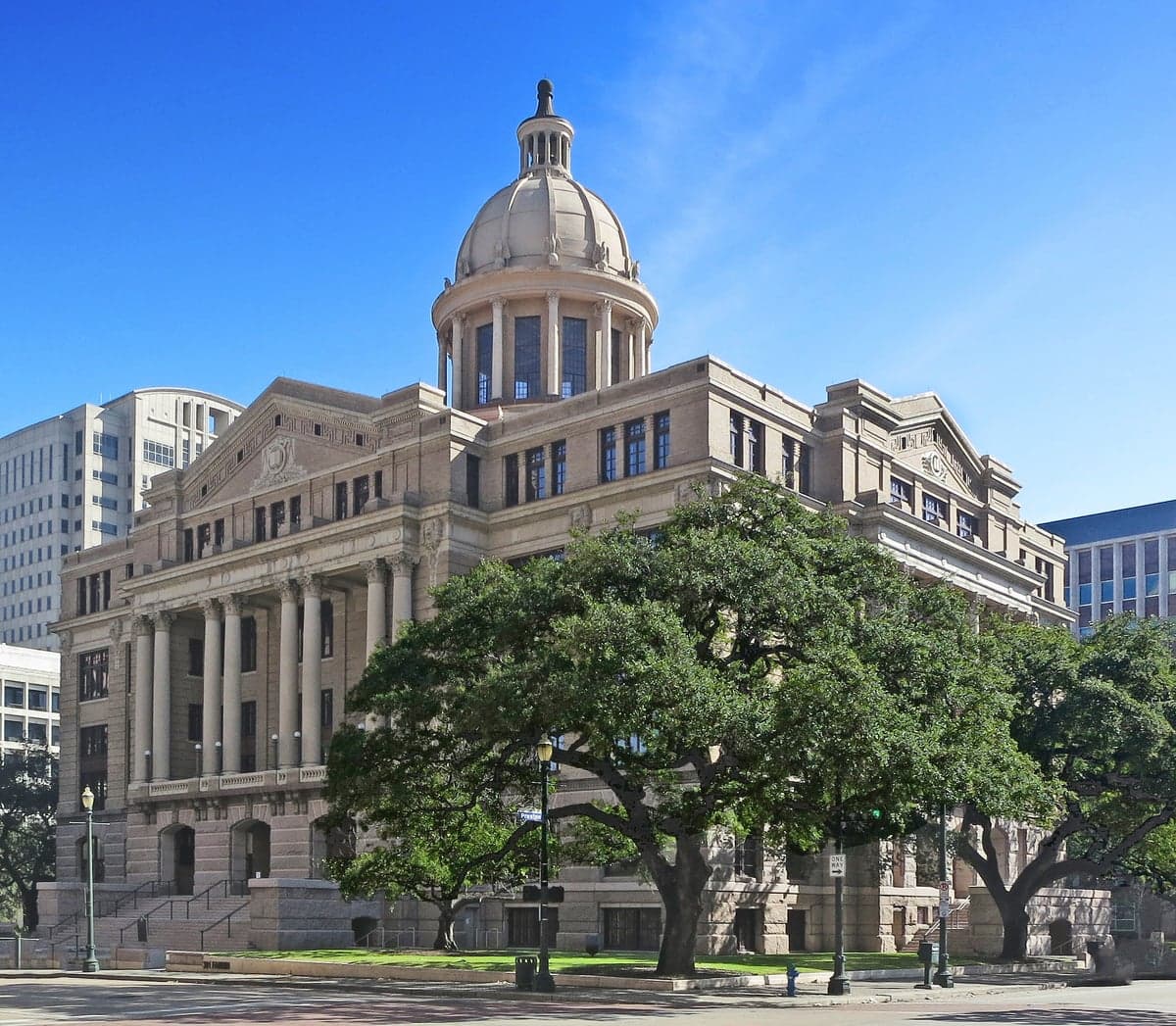
Photo: Wikipedia
Personal Sovereignty in Harris County
Viable for self-reliance. Generally workable, though some barriers may limit total independence.
What does Personal Sovereignty tell us?
Personal Sovereignty measures your capacity for self-reliance and independence with minimal government friction. Higher scores mean fewer barriers between you and the way you want to live... but it assumes you have the space you need and good neighbors.
What does this tell us?
Personal Sovereignty measures your capacity for self-reliance and independence with minimal government friction. Higher scores mean fewer barriers between you and the way you want to live... but it assumes you have the space you need and good neighbors.
State Policy
Energy independence: Net exporter (220% of energy produced in-state)
Personal Liberty
Homesteading

Personal Liberty Analysis
For the liberty-minded individual or family evaluating Harris County, Texas, the personal sovereignty landscape is a study in contrasts: the county offers a strong baseline of state-level protections—no state income tax, broad gun rights, and parental empowerment laws—but its sheer size and urban governance create friction points that vary dramatically depending on where you land. From the dense regulatory environment of Houston to the more permissive rural pockets in the county's northern and western fringes, your actual autonomy depends on your zip code. This analysis breaks down the key sovereignty factors—tax burden, self-defense law, homesteading feasibility, and personal liberties—with specific place names to guide your relocation decision.
Tax burden and regulatory posture: how Harris County compares to surrounding areas
Texas’s lack of a state income tax is a major win for personal sovereignty, but Harris County’s property tax rates are among the highest in the state, with an effective rate around 2.1% of assessed home value—significantly steeper than neighboring counties like Montgomery (1.8%) or Fort Bend (1.9%). The county’s regulatory posture is heavily influenced by Houston’s city government, which imposes strict floodplain development rules, tree preservation ordinances, and building codes that can feel intrusive to those seeking minimal government interference. In contrast, unincorporated areas like Katy (far west Harris County) and Crosby (east) operate under looser county-level regulations, with fewer zoning restrictions and lower permit fees. For a prepper mindset, the city of Houston itself is a regulatory minefield—its mandatory rental registration, noise ordinances, and business licensing requirements can chafe. However, the county’s lack of a comprehensive zoning code (Houston is the only major U.S. city without one) means you can legally run a small home business or keep livestock in many unincorporated areas, a rare flexibility in a metro of this size. The trade-off: you’ll pay more in property taxes than in nearby Conroe (Montgomery County) or Richmond (Fort Bend County), but you avoid the income tax that would otherwise fund state overreach.
Self-defense and gun law specifics: what you can and cannot do in Harris County
Texas’s permitless carry law (effective 2021) applies statewide, meaning any law-abiding adult 21 or older can carry a handgun openly or concealed in Harris County without a license. This is a bedrock sovereignty protection. However, local enforcement attitudes differ: the Harris County Sheriff’s Office (HCSO) under Sheriff Ed Gonzalez has a mixed record on Second Amendment issues, with some gun owners reporting more aggressive questioning during traffic stops compared to deputies in Montgomery County or Liberty County. The city of Houston has a "parking lot law" that prohibits employers from banning firearms in locked vehicles, but private businesses can still post 30.06 (concealed carry) or 30.07 (open carry) signs—and many do, especially in the Energy Corridor and downtown. For those prioritizing self-defense, the suburbs of Tomball and Spring are notably more gun-friendly, with fewer posted restrictions and a stronger culture of personal protection. Stand-your-ground laws apply countywide, but prosecutors in Harris County’s District Attorney’s office (led by Kim Ogg) have historically been less lenient in self-defense cases than their rural counterparts. If you’re a prepper, note that Harris County has no local magazine capacity bans or assault weapon restrictions—state preemption locks those out—but the county does enforce a 48-hour waiting period on handgun purchases for those under 21 (a local ordinance that survived a legal challenge).
Self-reliance and homesteading viability: lot sizes, zoning, and off-grid feasibility
Harris County’s homesteading potential is highly location-dependent. Inside the Houston city limits, minimum lot sizes are typically 5,000 square feet in older subdivisions, but newer developments in Katy and Cypress often require 7,000–10,000 square feet, making small-scale food production feasible. For serious off-grid living—rainwater collection, solar panels, livestock—you need to look to the county’s rural fringe. Huffman (northeast) and Hockley (northwest) offer parcels of 1–5 acres with minimal county oversight; you can legally install a septic system, keep chickens, goats, or even a horse, and set up solar arrays without a permit in unincorporated areas. However, Harris County’s floodplain regulations are strict—any structure in a 100-year flood zone requires elevation certificates and costly mitigation, which can crush a DIY homestead budget. The city of Houston bans rainwater collection as a primary water source for residential use (you must maintain a municipal connection), but unincorporated areas have no such restriction. For the prepper, Magnolia Park (far north) and Addicks (west) are worth scouting for their larger lots (2–5 acres) and lower density. The county’s lack of zoning in unincorporated areas means you can legally build a workshop, greenhouse, or even a small bunker without a variance—but you’ll still need a building permit for any structure over 200 square feet. Compare this to Montgomery County to the north, where 10-acre parcels are common and county code enforcement is less aggressive.
Personal liberties: parental rights, medical autonomy, speech, and property
Texas has strong state-level protections for parental rights, including the 2023 law requiring school districts to notify parents of curriculum changes and medical services offered (HB 900). Harris County’s school districts—like Cy-Fair ISD and Katy ISD—have largely complied, though some parents report pushback on library book content and gender-related policies. Medical autonomy is a mixed bag: Texas bans nearly all abortions (SB 8), which aligns with conservative values, but the state’s vaccine mandate for schoolchildren (including COVID-19 for some healthcare workers) remains in place. Harris County’s public health department has been proactive in vaccine outreach, which some see as overreach. Free speech is protected under the First Amendment, but Houston’s noise ordinances and parade permit requirements can restrict public assembly—a concern for those wanting to protest or hold political rallies. Property rights are generally strong: Texas’s homestead exemption protects your primary residence from most creditors, and Harris County’s appraisal district (HCAD) is known for aggressive property valuations, but you can protest annually. For the survivalist, the county’s lack of rent control and minimal landlord-tenant regulations (no just-cause eviction requirements) mean you can control your property without government interference. However, the city of Houston has a "short-term rental" ordinance that requires permits and limits rentals to 90 days per year—a constraint for those wanting to monetize a bug-out property.
Overall, Harris County offers a solid foundation for personal sovereignty compared to blue-state metros like Los Angeles or Chicago, but it falls short of the libertarian-friendly environments found in rural Texas counties like Loving or King. The key is location: choose Tomball or Hockley for maximum autonomy, avoid Houston’s city limits for regulatory relief, and accept that property taxes will be higher than in Montgomery County. For the strategic relocator, Harris County is a viable option if you’re willing to navigate its urban-rural split—but if total sovereignty is your goal, the Piney Woods of East Texas or the Hill Country offer fewer compromises.

* Values derived from national, state, county, city and local statistics and may differ in a specific area. Last updated: 2026-05-21T13:08:51.000Z
Narrative content on this page is AI-generated and may contain mistakes. Verify any details that matter before acting on them.
ReloMaps may earn a commission from affiliate links at no extra cost to you.

