Photo: Wikipedia
Demographics of Harris County
Affluence Level in Harris County
A middle-class area roughly in line with national averages across income, home values, education, and employment.
People of Harris County
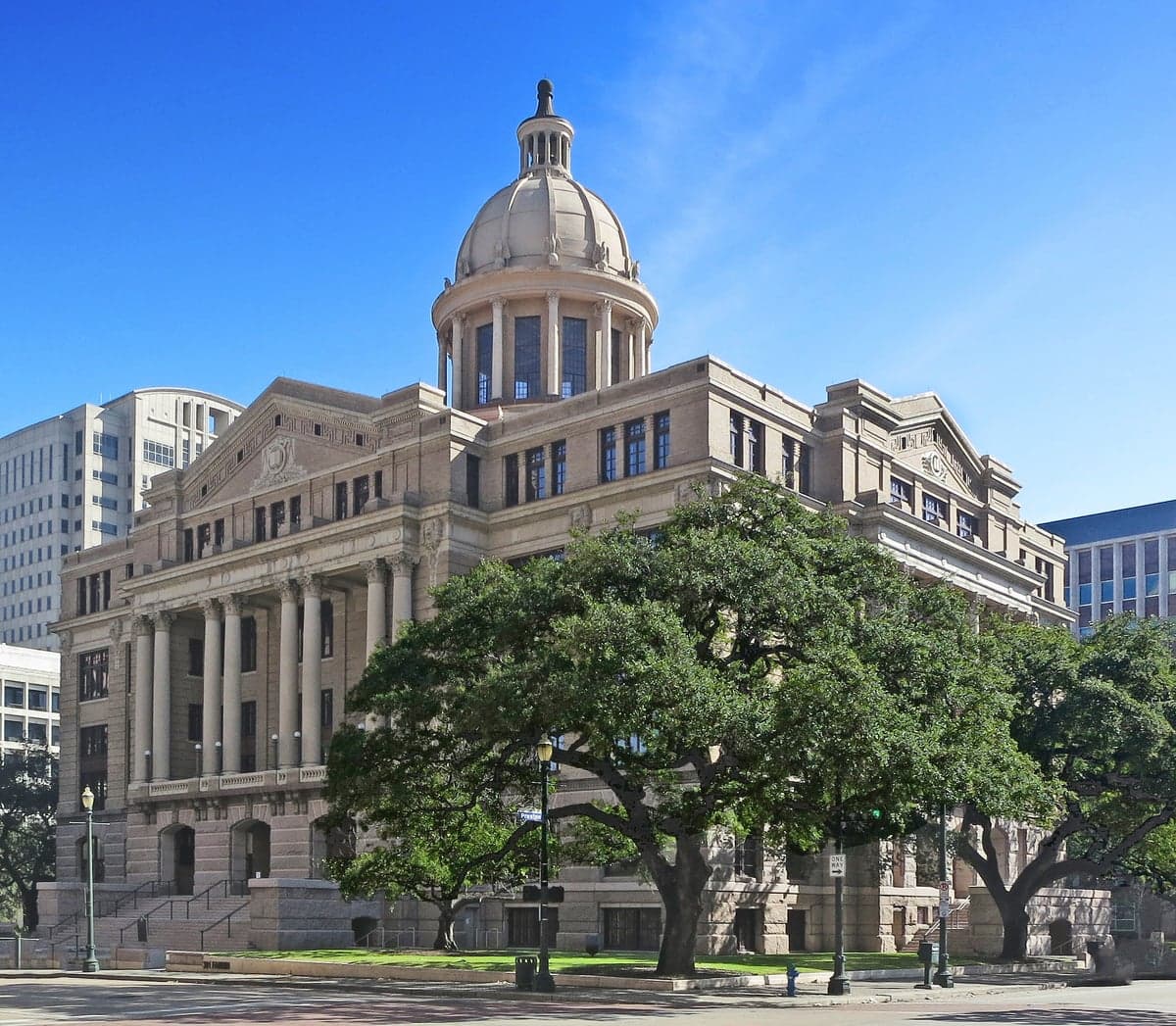
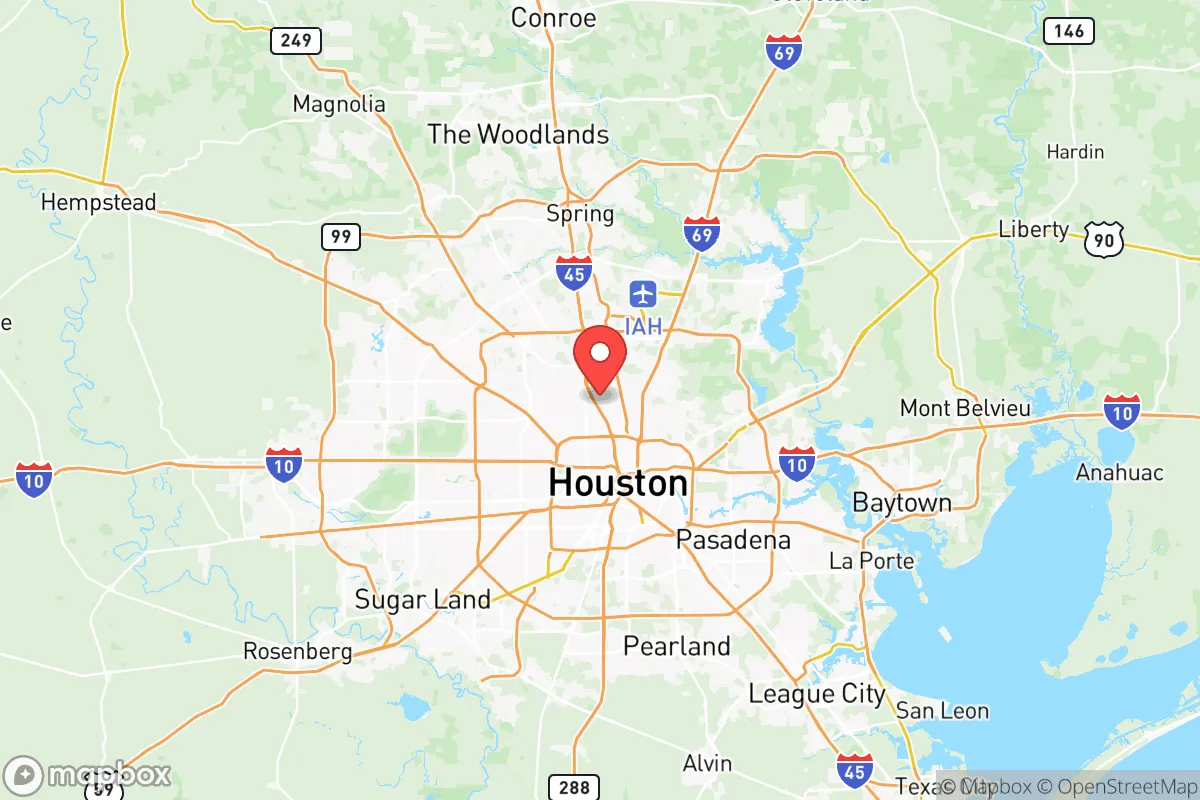
Harris County, Texas, is home to 4.8 million people, making it the third-most populous county in the United States. Its population is a majority-minority mosaic: 43.4% Hispanic, 27.4% non-Hispanic White, 18.7% Black, 5.0% East and Southeast Asian, and 2.1% Indian subcontinent. The county’s identity is defined by rapid, continuous growth, a sprawling suburban landscape, and a deeply rooted conservative-leaning political culture that has been reshaped by successive waves of domestic and international migration.
Settlement & growth (pre-1960)
Before European contact, the area now known as Harris County was inhabited by the Karankawa and Atakapa peoples, coastal tribes who lived along the bayous and Gulf shores. Spanish explorers charted the region in the 16th century, but no permanent Spanish settlement took hold. The first lasting European presence came with Anglo-American colonization under Stephen F. Austin’s Mexican-era land grants in the 1820s. The Allen brothers, real estate speculators from New York, founded the city of Houston in 1836 on the banks of Buffalo Bayou, naming it after Sam Houston and betting that the new Republic of Texas would thrive.
The county’s early population was overwhelmingly Anglo-American, drawn by cheap land and the promise of cotton agriculture. By the 1850s, German and Czech immigrants began arriving, settling in small farming communities like Addicks and Katy, where their descendants remain today. The Civil War and Reconstruction brought little demographic change, but the discovery of oil at Spindletop in 1901 transformed the region. Houston became the epicenter of the Texas oil boom, pulling in migrants from across the South and Midwest. The 1910s and 1920s saw a surge of Mexican immigrants fleeing the Mexican Revolution, who settled in the Second Ward and Magnolia Park neighborhoods of Houston, establishing the foundation of today’s Hispanic community.
The Great Migration brought tens of thousands of Black Americans from the Deep South to Harris County between 1940 and 1970, seeking industrial jobs in the ship channels and oil refineries. They concentrated in Houston’s Third Ward, Fifth Ward, and Independence Heights, creating vibrant, segregated communities. World War II and the subsequent Cold War buildup of the NASA Johnson Space Center in Clear Lake drew a wave of engineers and technicians, many from the Rust Belt and California. By 1960, Harris County’s population had reached 1.2 million, still majority White but with a growing Black and Hispanic presence.
Modern era (post-1965)
The 1965 Hart-Cellar Act fundamentally altered Harris County’s demographic trajectory. Prior to 1965, immigration was overwhelmingly European; afterward, the doors opened to Asia and Latin America. The first major post-1965 wave was Vietnamese refugees after the fall of Saigon in 1975. They established a strong enclave in Midtown Houston and later spread to Alief and Southwest Houston, where the Vietnamese American community now numbers over 100,000 and operates one of the largest Chinatown districts in the South. The 1980s and 1990s saw a surge of Mexican and Central American immigration, both legal and undocumented, driven by Houston’s booming energy and construction sectors. Hispanic neighborhoods expanded from the historic East End into Pasadena, Channelview, and Northside, making Harris County a majority-Hispanic county by 2020.
Domestic migration also reshaped the county. The 1970s oil bust and subsequent boom cycles created a boom-and-bust pattern, but the overall trend was steady in-migration from California, the Northeast, and the Rust Belt. Suburbanization exploded after 1980, with master-planned communities like The Woodlands (in adjacent Montgomery County) and Kingwood (within Harris County) drawing middle-class families seeking good schools and low taxes. The 2000s and 2010s saw a wave of Indian subcontinent professionals, particularly in IT and medicine, settling in West Houston and Katy, where Indian-owned businesses and temples now dot the landscape. East and Southeast Asian communities, including Chinese, Korean, and Filipino immigrants, concentrated in Bellaire and Fort Bend County’s Sugar Land, just south of Harris County.
Today, Harris County is a patchwork of ethnic enclaves and economically diverse suburbs. The White population has declined from 60% in 1980 to 27.4% today, while the Hispanic share has risen from 15% to 43.4%. The Black population has remained stable at around 18-19%, while Asian and Indian communities have grown rapidly from near-zero in 1970 to 7.1% combined. The county is also a magnet for domestic migrants: net domestic migration added roughly 50,000 new residents per year in the 2010s, many from California and the Northeast, drawn by lower housing costs and no state income tax.
The future
Harris County’s population is projected to reach 5.5 million by 2035, driven primarily by natural increase among the Hispanic population and continued international immigration. The county is not homogenizing; instead, it is tribalizing into distinct, self-reinforcing enclaves. Hispanic neighborhoods in the East End and Northside are becoming denser and more politically influential, while White and Asian suburbs in the west and south are growing through in-migration of professionals. The Black population is slowly suburbanizing, moving from historic inner-city wards to Missouri City and Fresno in the southern part of the county.
Immigrant communities are not plateauing. The Indian subcontinent population, currently 2.1%, is growing at 8-10% annually, driven by H-1B visa holders and their families. East and Southeast Asian communities are growing more slowly, at 3-4% annually, as second-generation Vietnamese and Chinese families assimilate and move to outer suburbs. The Hispanic population is the engine of growth: high birth rates and continued immigration from Mexico and Central America mean that Harris County will likely become 50% Hispanic by 2040. The White population is aging and declining in absolute numbers, though it remains dominant in wealthier enclaves like Memorial and West University Place.
Culturally, the county is absorbing its newcomers rather than being transformed by them. The conservative political culture—low taxes, gun rights, and a business-friendly environment—remains dominant, even as the electorate becomes more Democratic. New immigrants, particularly from Asia and Latin America, tend to adopt the county’s existing values over time, especially on economic issues. The next 10-20 years will see a county that is browner, denser, and more suburban, but still recognizably Texan in its emphasis on growth, opportunity, and individual liberty.
For someone moving to Harris County today, the bottom line is this: you are joining a place that is still being built. The county’s identity is not fixed; it is a work in progress, shaped by the millions who have arrived in the last 50 years and the millions more who will come. The opportunities are real—jobs, housing, and space—but so are the challenges of rapid growth, traffic, and cultural change. Harris County rewards those who adapt and participate, and it punishes those who expect it to stand still.

* Values derived from national, state, county, city and local statistics and may differ in a specific area. Last updated: 2026-05-21T13:08:51.000Z
Narrative content on this page is AI-generated and may contain mistakes. Verify any details that matter before acting on them.
ReloMaps may earn a commission from affiliate links at no extra cost to you.

