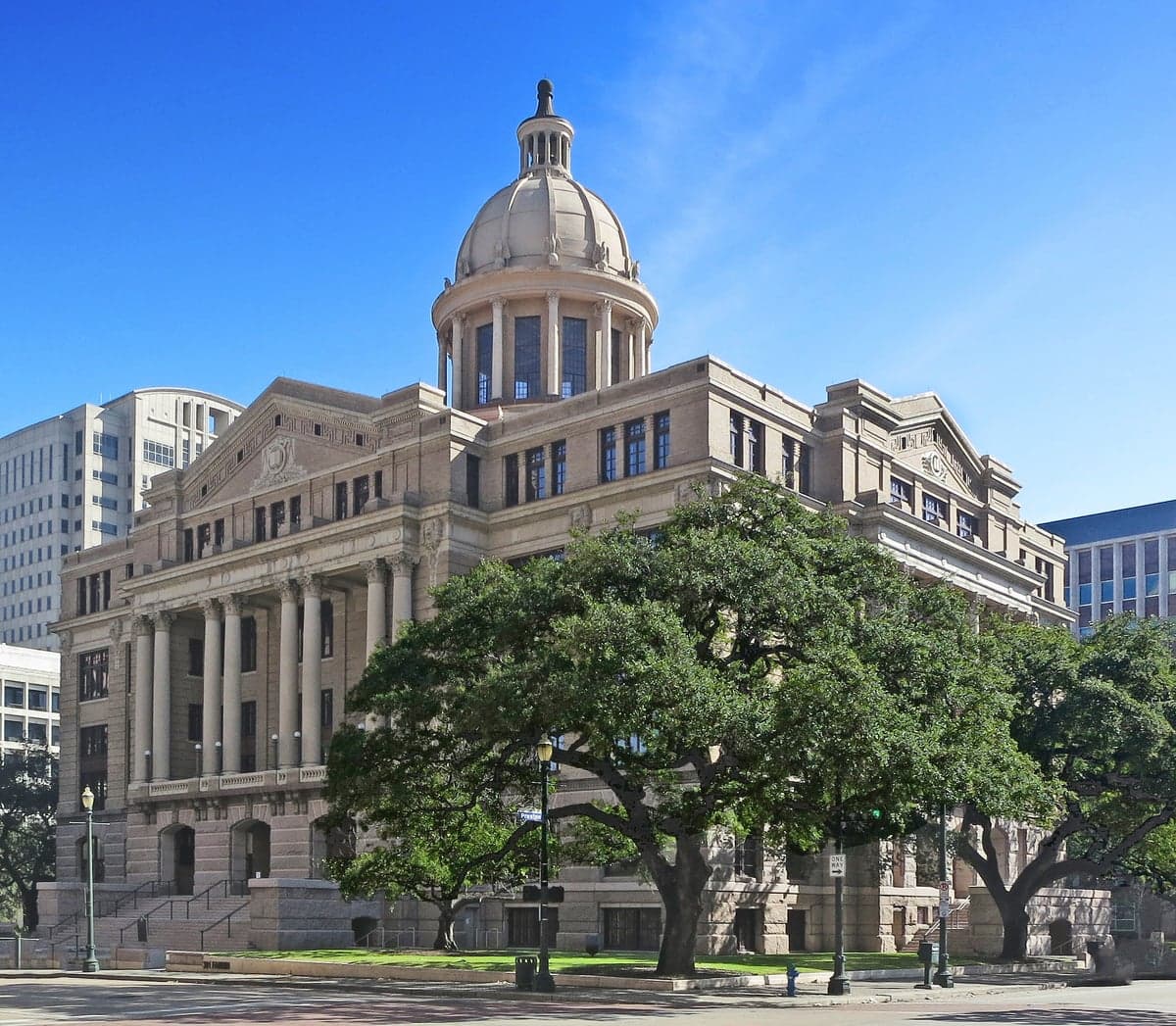
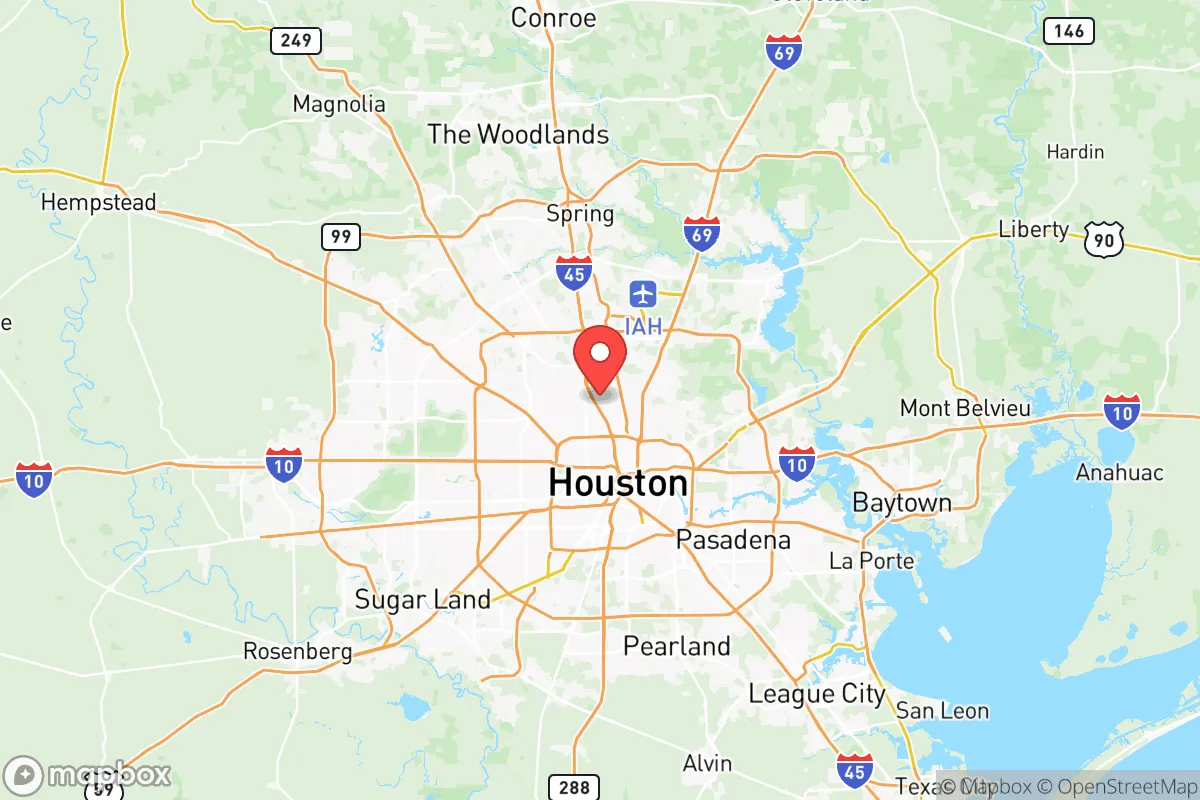
Photo: Wikipedia
Political ClimatePolitical Climate in Harris County
Showing district-level results — no local-only data available.
Local Political AnalysisPolitical Analysis of Harris County
Harris County has shifted hard to the left over the past decade, and if you’ve lived here as long as I have, you’ve felt it in your gut. The Cook PVI now sits at D+12, which means Democrats hold a twelve-point advantage over Republicans in federal elections—a massive swing from where things stood even in the early 2010s. The county as a whole went for Biden by about 13 points in 2020, and while Trump improved his margins in some rural pockets, the overall trend is unmistakable: the urban core and inner-ring suburbs are getting bluer every cycle. Meanwhile, the rest of Texas sits at R+4, meaning the state as a whole still leans Republican, but Harris County is pulling the state’s politics in a very different direction.
How it compares
The gap between Harris County and the rest of Texas is stark and growing. Statewide, Texas voters backed Trump by about 5.5 points in 2020, but Harris County went for Biden by 13 points—a nearly 19-point spread. That’s not just a statistical curiosity; it means the county’s elected officials, from the county judge to the district attorney, are now almost uniformly progressive Democrats. Compare that to the state legislature, which remains firmly under Republican control, and you get a recipe for constant tension. For example, the county’s recent push to decriminalize low-level marijuana possession directly clashed with state law, leading to a legal standoff. If you’re a conservative living in Harris County, you’re essentially living under two governments: one in Austin that respects traditional Texas values, and one in Houston that seems eager to test the limits of personal freedom.
What this means for residents
For those of us who value limited government and personal responsibility, the local shift is concerning. The county’s progressive district attorney, Kim Ogg (who ran as a Democrat but has faced criticism from the left for being too moderate), has overseen policies like no-cash bail for certain nonviolent offenses, which critics argue has led to a rise in property crime. Meanwhile, the county judge, Lina Hidalgo, has pushed for mask mandates and business restrictions that went beyond state guidance—a clear overreach into personal choice. If you live in the western suburbs like Katy or Cypress, you’ll find more like-minded neighbors and a stronger conservative presence at the local level. But if you’re in the city of Houston itself, or in blue-leaning enclaves like Bellaire or the Heights, you’ll feel the weight of a government that seems to think it knows better than you do about how to live your life.
Looking ahead, the trajectory is troubling for conservatives. The county’s population is growing fast, driven by international immigration and domestic moves from blue states, and those new arrivals tend to vote Democratic. The 2024 election saw Trump improve his vote share in some working-class Hispanic precincts in East Harris County, but not enough to flip the overall trend. If you’re thinking of moving here, understand that your vote for limited government will be a minority one, and you’ll need to be active in local politics to have any real say. The cultural divide between Harris County and the rest of Texas is only going to widen, and that means more fights over school curriculum, property taxes, and the role of government in your daily life. It’s still a great place to live—great jobs, diverse communities, world-class food—but the political climate is something you’ll have to navigate carefully.

State Political ClimatePolitical Climate in Texas
State Political AnalysisPolitical Environment in the State
Texas has been a reliably Republican state for decades, with a Cook Partisan Voting Index of R+4, but the political landscape is far more complex than a single number suggests. The dominant coalition remains conservative, anchored by rural voters, suburban families, and a strong business community that prizes low taxes and limited regulation. Over the past 10-20 years, the state has shifted rightward on cultural and economic issues, even as explosive population growth in metros like Austin, Dallas-Fort Worth, and Houston has injected new political energy. The real story isn't a simple red-to-blue flip—it's a battle between a deeply entrenched conservative establishment and a rapidly growing progressive urban core that is reshaping the state's political geography.
Urban vs. rural divide
The political map of Texas is a study in stark contrasts. The vast rural and exurban areas—places like Lubbock, Midland, and the Panhandle—vote Republican by margins of 70-80% or more. These regions are the backbone of the state's conservative identity, driven by oil and gas, agriculture, and a strong gun culture. Meanwhile, the major urban centers are Democratic strongholds. Austin is the most liberal major city in Texas, with Travis County voting for Joe Biden by over 50 points in 2020. El Paso and Houston (Harris County) are also reliably blue, powered by diverse populations and younger voters. The real battleground is the suburbs. Counties like Collin (north of Dallas), Denton, and Williamson (north of Austin) were once reliably red but have been trending purple or even blue in recent cycles. Fort Bend County, southwest of Houston, flipped from red to blue in 2018 and has stayed there, driven by a highly diverse, educated population. This urban-suburban-rural divide is the central tension in Texas politics today.
Policy environment
Texas's policy environment is defined by a deep commitment to limited government, low taxes, and business-friendly regulation. There is no state income tax, and property taxes are high but capped by law. The regulatory posture is famously light-touch, especially for energy, construction, and tech. On education, the state has embraced school choice through charter schools and the recent expansion of Education Savings Accounts (ESAs) under Governor Greg Abbott, allowing parents to use public funds for private or homeschool expenses. Healthcare remains a flashpoint: Texas has refused to expand Medicaid under the Affordable Care Act, leaving roughly 18% of the population uninsured—the highest rate in the nation. Election laws have tightened, with the 2021 passage of SB 1, which banned drive-through voting, added ID requirements for mail ballots, and restricted early voting hours. This is a state that actively resists federal overreach, particularly on environmental and immigration policy, and has sued the Biden administration dozens of times.
Trajectory & freedom
On balance, Texas has become more free in several key areas over the last decade, particularly on gun rights and parental rights. The 2021 permitless carry law (HB 1927) allows most adults to carry a handgun without a license, a major expansion of the Second Amendment. The 2023 passage of the "Parental Bill of Rights" (HB 900) requires public school libraries to get parental consent before students can access sexually explicit material, and it restricts instruction on gender identity and sexual orientation in elementary grades. Medical freedom took a hit with the near-total abortion ban (SB 8, 2021), which prohibits the procedure after roughly six weeks and allows private citizens to sue violators—a novel enforcement mechanism that has survived court challenges. Property rights remain strong, with no statewide zoning and limited eminent domain abuse. However, the state's heavy reliance on property taxes can feel like a hidden burden, and the lack of a state income tax means local governments often raise revenue through fees and assessments. The trajectory is toward more cultural conservatism, but the rapid influx of new residents from blue states is beginning to test that direction.
Civil unrest & political movements
Texas has seen its share of political flashpoints. The 2020 Black Lives Matter protests in Austin were among the largest and most sustained in the country, leading to clashes with police and a subsequent backlash that helped fuel the "defund the police" debate. The state's response was swift: the 2021 passage of HB 1900, which penalizes cities that cut police budgets by more than a certain amount. Immigration politics are a constant source of tension. Governor Abbott's Operation Lone Star has deployed state troopers and National Guard to the border, bused migrants to sanctuary cities like New York and Chicago, and installed razor wire along the Rio Grande—actions that have drawn lawsuits from the Biden administration. There is a vocal secessionist movement, the Texas Nationalist Movement, but it remains fringe. Election integrity remains a hot-button issue: the 2020 election saw no evidence of widespread fraud, but the 2021 voting law (SB 1) was passed in response to perceived vulnerabilities. New residents will notice a palpable sense of political activism on both sides, with yard signs, bumper stickers, and local political events being far more common than in many other states.
Projection
Over the next 5-10 years, Texas is likely to become more politically competitive, but not necessarily blue. The in-migration from California, New York, and Illinois is real—over 300,000 new residents per year—and many of them are moderate or conservative-leaning, not progressive activists. The suburbs will continue to be the key battleground. Places like Kyle and Buda (south of Austin) and Frisco and McKinney (north of Dallas) are growing fast and trending purple. The state's Hispanic population, long assumed to be a Democratic voting bloc, is actually shifting rightward, especially among working-class men and in border communities like Laredo and McAllen. The Republican Party will likely remain dominant at the state level for the next decade, but the margin of control will narrow. A new resident moving in now should expect a state that remains conservative on taxes, guns, and regulation, but where cultural battles over education, immigration, and LGBTQ rights will intensify. The freedom to live as you see fit is still very much intact, but the political temperature is rising.
For a new resident, the bottom line is this: Texas offers a high degree of personal and economic freedom, with low taxes, strong gun rights, and a government that generally stays out of your business. The political climate is conservative but not monolithic—you'll find plenty of like-minded neighbors in the suburbs and rural areas, but you'll also encounter progressive pockets in the cities. If you value limited government, parental control over education, and a culture that respects individual responsibility, Texas is still one of the best bets in the country. Just be prepared for the political noise—it's part of the package.
* Values derived from national, state, county, city and local statistics and may differ in a specific area. Last updated: 2026-05-21T13:08:51.000Z
Narrative content on this page is AI-generated and may contain mistakes. Verify any details that matter before acting on them.
ReloMaps may earn a commission from affiliate links at no extra cost to you.

