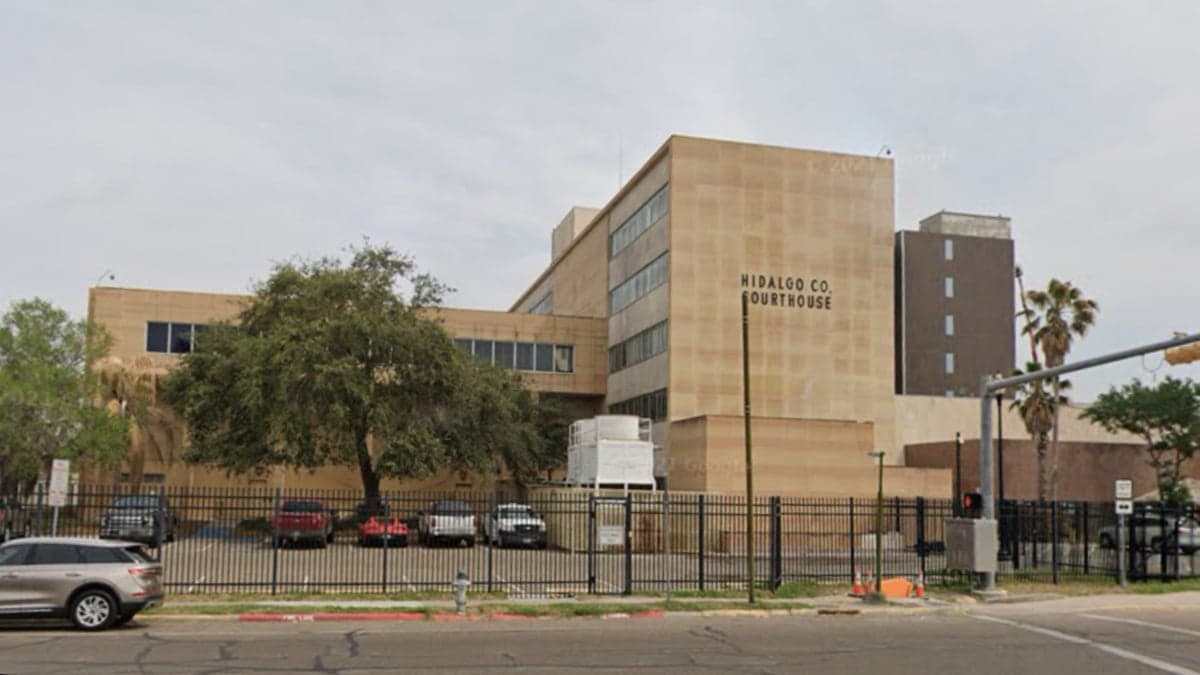
Photo: Wikipedia
Demographics of Hidalgo County
Affluence Level in Hidalgo County
A below-average socioeconomic profile. Incomes, home values, and educational attainment trail the U.S., with higher poverty and unemployment.
People of Hidalgo County
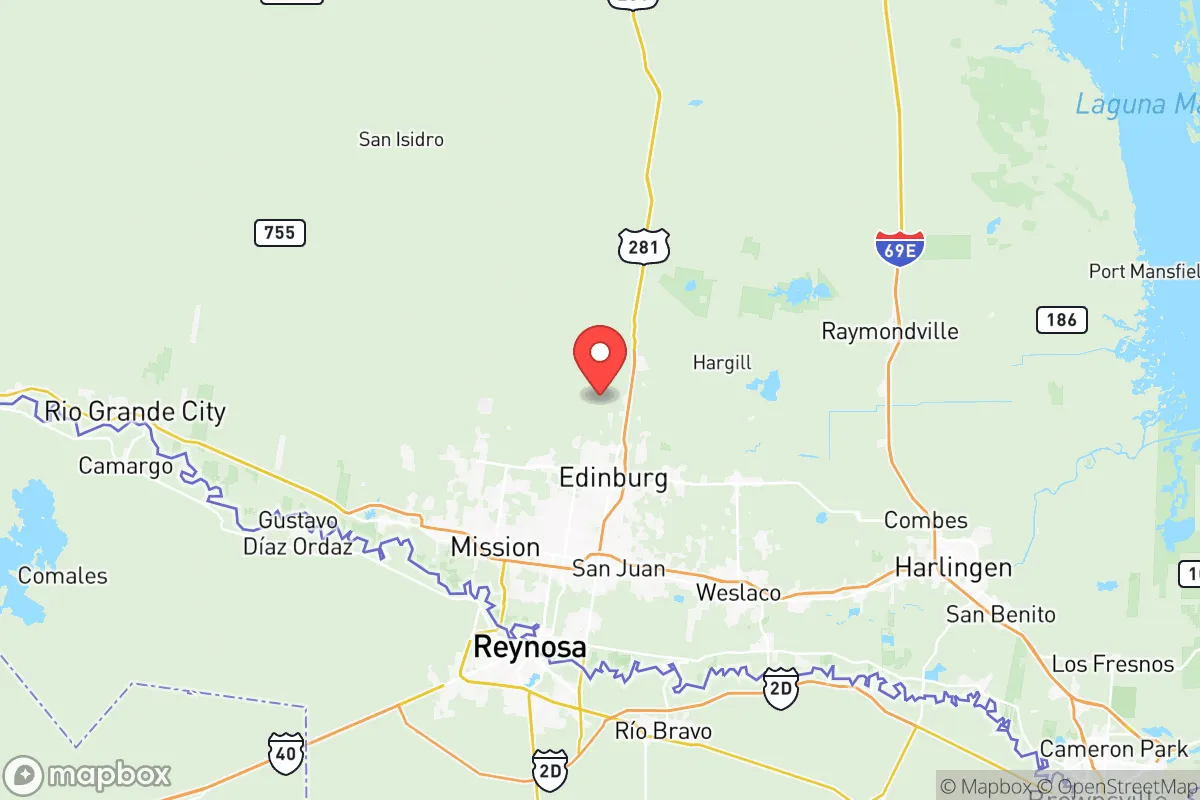
Hidalgo County is home to 880,921 residents, making it one of the most populous counties in Texas, and its identity is overwhelmingly shaped by its deep Hispanic heritage—91.9% of the population identifies as Hispanic or Latino. The county is a dense, binational corridor where Spanish and English blend seamlessly, and where family networks, agricultural roots, and Catholic traditions form the bedrock of daily life. With only 6.1% of residents identifying as non-Hispanic White, 0.5% Black, 0.8% East/Southeast Asian, and 0.2% Indian (subcontinent), Hidalgo County stands apart from much of the rest of Texas as a majority-Hispanic region with a distinct cultural and economic character rooted in the Rio Grande Valley.
Settlement & growth (pre-1960)
Before European contact, the region now known as Hidalgo County was inhabited by nomadic Coahuiltecan peoples, who lived along the Rio Grande and its tributaries. Spanish colonization arrived in the mid-18th century, with expeditions establishing missions and ranchos along the river. The first permanent Spanish settlements in what is now Hidalgo County emerged around Reynosa (founded 1749 on the south bank) and later on the north bank at what became Hidalgo and McAllen. These early communities were built around cattle ranching and subsistence farming, with land grants awarded to Spanish and Mexican families who became the region's first ranchers.
After Texas independence in 1836 and annexation by the United States in 1845, the area remained sparsely populated and largely Mexican in character. The Treaty of Guadalupe Hidalgo (1848) fixed the Rio Grande as the border, leaving many Mexican families on the U.S. side. Hidalgo County was formally created in 1852, but significant Anglo-American settlement did not begin until the arrival of the railroad in the early 20th century. The St. Louis, Brownsville and Mexico Railway reached the area around 1904, sparking the founding of towns like McAllen (1904), Edinburg (1908), and Mission (1908). These new towns were platted by land developers who marketed the region as the "Magic Valley" for its fertile soil and long growing season.
The railroad brought a wave of Midwestern farmers—many of German, Czech, and Anglo descent—who purchased irrigated land for citrus, cotton, and vegetable farming. These newcomers established small agricultural communities such as Weslaco (1919), Pharr (1909), and San Juan (1909). Meanwhile, Mexican laborers crossed the border in large numbers to work the fields, forming the backbone of the agricultural economy. By the 1930s, the county's population was already majority Hispanic, a pattern that intensified with the Bracero Program (1942–1964), which brought hundreds of thousands of Mexican contract laborers to the region. Many braceros settled permanently in colonias—unincorporated, often unincorporated subdivisions lacking basic infrastructure—that still dot the county today, particularly around Alamo, Donna, and Mercedes.
Modern era (post-1965)
The 1965 Hart-Cellar Act fundamentally reshaped U.S. immigration, but its impact on Hidalgo County was less about new source countries and more about accelerating existing patterns. The act ended the national-origins quota system and prioritized family reunification, which allowed Mexican-American families to sponsor relatives from Mexico at unprecedented rates. This drove a sustained wave of immigration that kept the county's Hispanic share high and growing, even as the region's birth rate remained among the highest in the nation.
Domestic migration also shifted after 1965. The decline of Rust Belt manufacturing and the rise of the Sun Belt economy drew some Anglo and Black families to Texas, but Hidalgo County saw relatively little of that influx compared to Dallas-Fort Worth or Houston. Instead, the county's population growth came overwhelmingly from natural increase (high birth rates) and continued immigration from Mexico. The 1970s and 1980s saw the expansion of McAllen as a regional retail and medical hub, drawing residents from smaller towns and colonias. The North American Free Trade Agreement (NAFTA) in 1994 further integrated the local economy with Mexico, boosting cross-border commerce and logistics in cities like Hidalgo and Pharr, which became major ports of entry.
Suburbanization accelerated in the 1990s and 2000s, with new master-planned communities and gated subdivisions sprouting on the outskirts of McAllen and Edinburg. These developments attracted upwardly mobile Hispanic families and a small number of Anglo retirees from the Midwest, but the county's overall racial composition remained remarkably stable. By 2020, the non-Hispanic White share had fallen to just 6.1%, while the Hispanic share rose to 91.9%. The foreign-born population stands at 17.8%, nearly all from Mexico or Central America. The county's Asian and Indian populations remain tiny—0.8% and 0.2% respectively—and are concentrated in professional niches in McAllen's medical and academic sectors. The Black population is similarly small at 0.5%, reflecting the region's historical distance from the Great Migration and later domestic migration patterns.
The future
Hidalgo County's demographic trajectory points toward continued Hispanic dominance, driven by high birth rates and ongoing immigration from Mexico and Central America. The county's population is projected to exceed 1 million by 2035, with the Hispanic share remaining above 90%. The non-Hispanic White population is likely to continue its slow numerical decline as older residents age out and few new Anglo families move in. The Asian and Indian populations may grow modestly as McAllen's medical and technology sectors expand, but they are unlikely to reach even 2% of the total within the next decade.
The most significant demographic shift may be internal: the gradual urbanization of the county's population. Colonias are slowly being annexed and upgraded with water and sewer infrastructure, while younger generations move from rural areas into McAllen, Edinburg, and Mission. This urbanization is accompanied by rising educational attainment—20.3% of adults now hold a college degree, up from 14% in 2000—and a growing professional class. However, the county remains economically bifurcated, with a large working-class population employed in agriculture, retail, and cross-border trade, alongside a smaller but growing cohort of doctors, lawyers, and business owners.
Culturally, the region is not homogenizing into a generic American suburb but rather reinforcing its distinct Mexican-American identity. Spanish remains widely spoken, Catholic traditions are strong, and family networks span the border. The county's politics, once reliably Democratic, have shifted rightward in recent elections, reflecting the conservative social values of many Hispanic voters. For a newcomer—whether single or a parent—moving to Hidalgo County means entering a community where the dominant culture is Hispanic, where English is necessary for professional life but Spanish is the language of daily commerce and family, and where the pace of life is shaped by the rhythms of the border.

* Values derived from national, state, county, city and local statistics and may differ in a specific area. Last updated: 2026-05-09T18:42:44.000Z
Narrative content on this page is AI-generated and may contain mistakes. Verify any details that matter before acting on them.
ReloMaps may earn a commission from affiliate links at no extra cost to you.

