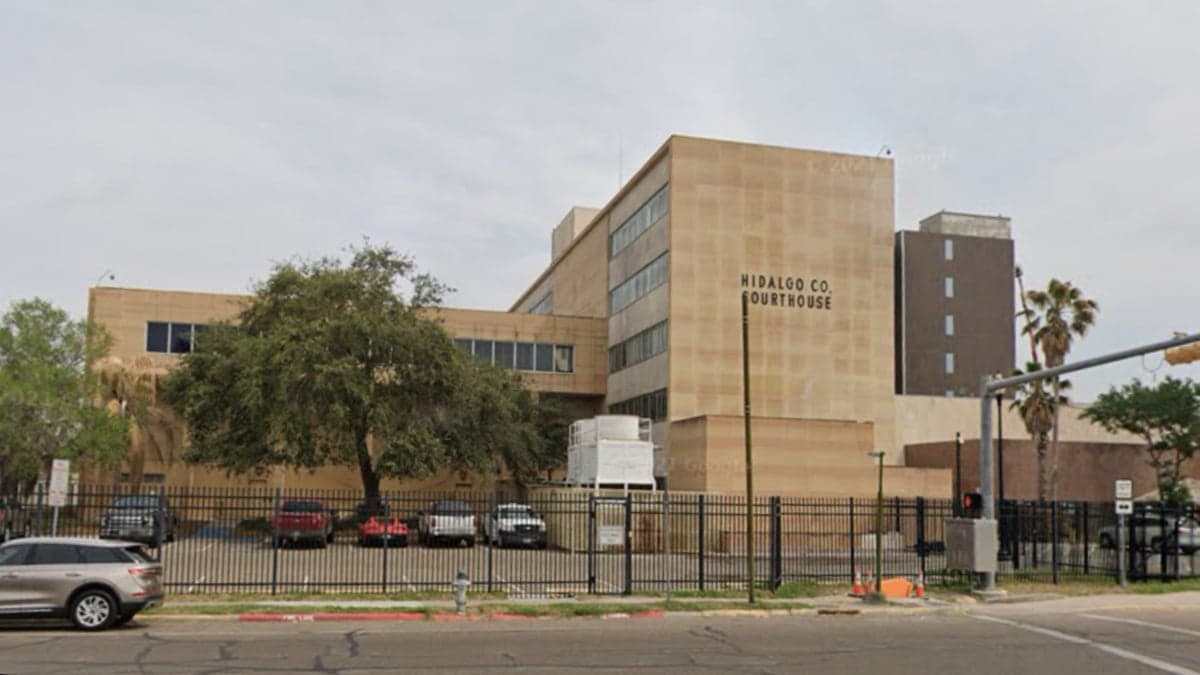
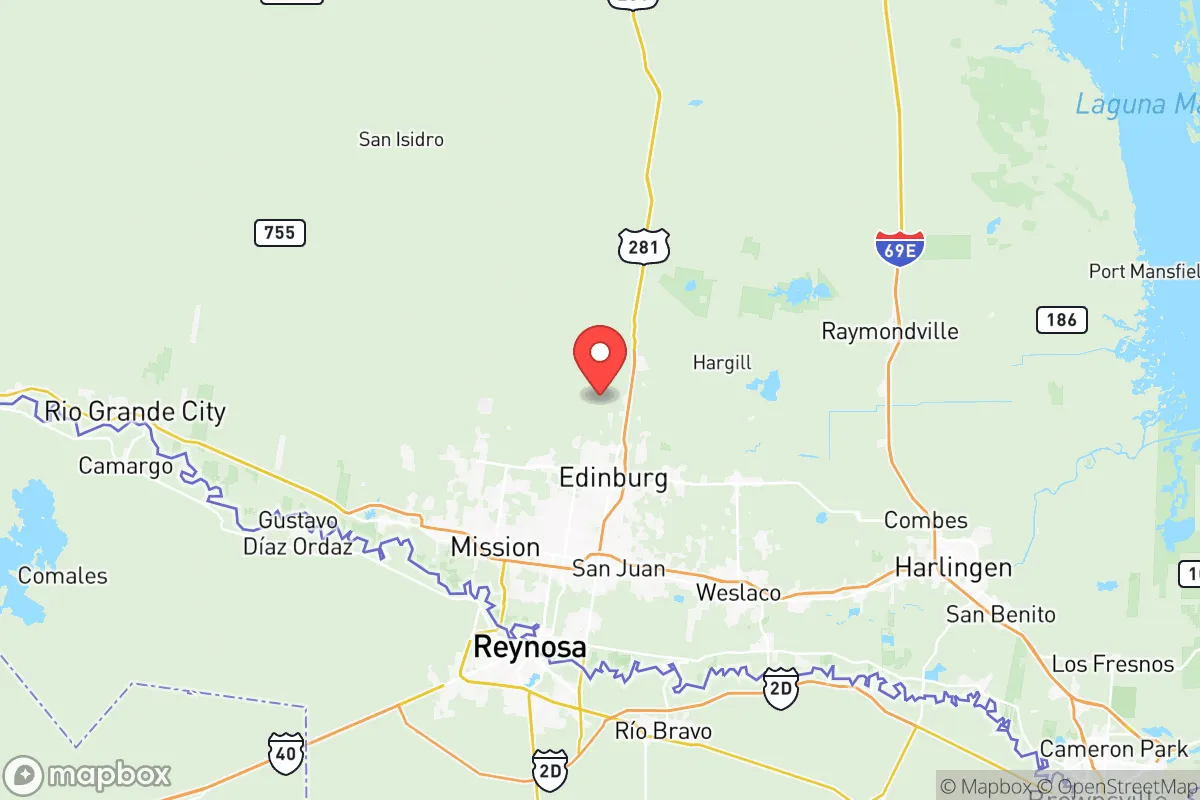

Photo: Wikipedia
Political ClimatePolitical Climate in Hidalgo County
Showing district-level results — no local-only data available.
Local Political AnalysisPolitical Analysis of Hidalgo County
Hidalgo County has long been a Democratic stronghold in South Texas, but the political winds are shifting faster than many folks realize. The Cook Partisan Voting Index (PVI) currently sits at R+7, meaning the county leans about 7 points more Republican than the national average—but that’s a dramatic swing from just a decade ago, when it was a solid blue bastion. In the 2024 election, Donald Trump improved on his 2020 margins here, and down-ballot races are getting tighter. The surrounding state of Texas has a PVI of R+4, so Hidalgo County is actually more Republican-leaning than the state as a whole now, which would have been unthinkable back in the Obama years.
How it compares
Compared to Texas overall, Hidalgo County is a political outlier in transition. The state’s R+4 PVI reflects a broad, suburban-driven red shift, but Hidalgo’s R+7 shows a deeper, more localized realignment. In the 2020 presidential race, Biden won Hidalgo by about 17 points, but by 2024 that margin had shrunk to single digits. Meanwhile, cities like McAllen and Edinburg still lean blue, especially in precincts near the university and downtown areas, where younger, more progressive voters hold sway. But head out to Mission, Alamo, or Donna, and you’ll find precincts that have flipped red in the last two cycles—fueled by concerns over border security, economic freedom, and what many see as government overreach on everything from vaccine mandates to school curriculum. The swing precincts are in the unincorporated areas between these towns, where ranching families and small business owners are fed up with one-size-fits-all policies from Austin or Washington.
What this means for residents
For folks living here, this shift means a growing tension between old-guard Democratic machine politics and a rising conservative grassroots movement. On the ground, you see it in school board meetings where parents push back against critical race theory and gender ideology in classrooms—issues that feel like direct government overreach into family life. Property taxes remain a sore spot, and many residents worry that progressive policies from the county’s larger cities could lead to higher regulations on housing and small businesses. The conservative wave here isn’t just about party labels; it’s about a deep-seated belief that local control and personal freedoms are being eroded. If you’re considering a move, know that the political climate is increasingly competitive, with Republicans gaining ground in county commissioner races and even judicial seats. The old assumption that Hidalgo is a safe blue bet is gone.
Culturally, Hidalgo County remains deeply rooted in family, faith, and tradition—values that often clash with the progressive tilt of larger Texas metros like Austin or Houston. You’ll find a strong Catholic and evangelical presence, with churches playing a visible role in community life. Policy-wise, the county has seen debates over sanctuary city ordinances and local enforcement of immigration laws, with conservative residents pushing for cooperation with federal authorities rather than resistance. The shift toward red isn’t uniform, but it’s real. If you value limited government, lower taxes, and the freedom to raise your kids without state interference, Hidalgo County is becoming a more welcoming place than it was a decade ago—but keep an eye on those local elections, because the fight over the county’s soul is far from over.

State Political ClimatePolitical Climate in Texas
State Political AnalysisPolitical Environment in the State
Texas remains a solidly Republican state at the statewide level, with a Cook PVI of R+4, but that number masks a dramatic 20-year shift. In 2004, George W. Bush carried the state by 23 points; by 2024, the Republican margin had shrunk to roughly 8-9 points in the presidential race, driven by explosive growth in the blue-leaning metros of Austin, Dallas, Houston, and San Antonio. The dominant coalition is still conservative, anchored by rural and exurban voters, but the GOP’s grip is loosening as millions of new residents—many from blue states—reshape the electorate. For a conservative considering relocation, the state is still a redoubt, but the cracks are real and widening.
Urban vs. rural divide
The political map of Texas is a tale of two worlds. The vast rural expanse—from the Panhandle down through West Texas and into the Hill Country—votes Republican by margins of 60-80%. Counties like Lubbock (home to Texas Tech) and Amarillo in the Panhandle are deep red, as are the oil-rich Permian Basin towns like Midland and Odessa. Meanwhile, the state’s four biggest metros—Houston, Dallas-Fort Worth, San Antonio, and Austin—are increasingly Democratic. Harris County (Houston) went blue by 15 points in 2024, Dallas County by 18, and Travis County (Austin) by a staggering 40+. The suburbs are the real battleground: Collin County (north of Dallas) flipped from R+30 in 2004 to R+8 in 2024, while Fort Bend County (southwest of Houston) went from R+10 to D+5 in the same period. The urban-rural split is so stark that a conservative moving to Texas today must choose their county carefully—living in Austin or El Paso means living in a blue bubble, while Lubbock or Midland still feel like the Texas of 20 years ago.
Policy environment
Texas’s policy environment is a mixed bag for conservatives. On the plus side, there is no state income tax—a huge draw for families and single earners alike. Property taxes are high (averaging 1.6-1.8% of home value), but the state’s 2023 property tax reform (SB 2) cut rates by roughly 15% and raised the homestead exemption. The regulatory posture is business-friendly: no state-level minimum wage above the federal $7.25, no state OSHA plan, and a right-to-work law that keeps unions weak. On education, the state has a robust school choice program (the 2023 Education Savings Account bill, HB 3, created ESAs for special needs students, with expansion likely). Healthcare is a sore spot: Texas has the highest uninsured rate in the nation (18%), and the state has refused Medicaid expansion under Obamacare. Election laws tightened after 2020 with SB 1 (2021), which banned 24-hour and drive-through voting, added ID requirements for mail ballots, and empowered poll watchers. For a conservative, the policy environment is largely favorable, but the lack of income tax is offset by high property taxes and a growing state budget that has doubled since 2010.
Trajectory & freedom
On personal liberty, Texas has been a mixed bag over the last decade. The good news for conservatives: the state enacted permitless carry (HB 1927) in 2021, allowing any law-abiding adult to carry a handgun without a license. Parental rights were strengthened with the 2023 “Parental Bill of Rights” (HB 900), which requires school libraries to get parental consent for certain materials and restricts instruction on sexual orientation and gender identity in K-12. The state also passed a near-total abortion ban (SB 8 in 2021, triggered by Roe’s overturn) and a law (SB 14 in 2023) banning gender transition procedures for minors. On the concerning side: property rights took a hit with the 2023 “Texas Eminent Domain” law (HB 591), which expanded the ability of private companies to seize land for carbon capture pipelines. Medical autonomy was also restricted by the 2023 “COVID-19 vaccine mandate” ban (SB 7), which actually prohibited private employers from requiring vaccines—a win for some, but a loss for others who see it as government overreach. The state’s overall trajectory is toward more freedom on guns, family, and speech, but less on property and medical choice. A new resident should expect a state that is still freer than California or New York, but with growing government involvement in private decisions.
Civil unrest & political movements
Texas has seen its share of political flashpoints. The 2020 Black Lives Matter protests in Austin and Houston were large and occasionally violent, leading to the Austin City Council defunding the police by $150 million (later partially restored). On the right, the “Texas Nationalist Movement” (Texit) has gained some traction, with a 2022 poll showing 18% support for secession, though it remains fringe. Immigration politics are front and center: Governor Abbott’s “Operation Lone Star” has bused over 100,000 migrants to blue cities since 2022, and the state’s 2023 law (SB 4) allows state police to arrest illegal border crossers—currently tied up in court. The 2022 Uvalde school shooting sparked a brief push for gun control, but the legislature instead passed a law raising the age to buy assault rifles to 21. Election integrity remains a hot-button issue: the 2020 election saw no major fraud in Texas, but SB 1 was passed anyway, and a 2024 lawsuit by the state against Harris County over ballot drop boxes is ongoing. A new resident will notice the tension at the border, the constant political ads, and the fact that Austin feels like a different country from Lubbock.
Projection
Over the next 5-10 years, Texas is likely to become more purple, not more red. The state is adding roughly 1,000 new residents per day, and the vast majority are moving to the blue-leaning metros of Austin, Dallas, and Houston. The Hispanic population, which leans Democratic by 20-30 points, is growing fast. The 2024 presidential margin was the closest since 1996, and if current trends hold, Texas could be a swing state by 2032. For a conservative moving in now, the practical implication is clear: the state will remain Republican at the statewide level for at least another cycle or two, but local control is slipping. Counties like Collin and Denton (north of Dallas) are still red but fading, while Bexar County (San Antonio) and El Paso County are solidly blue. The legislature will likely stay red through 2030 due to gerrymandering, but the governor’s race in 2026 could be competitive. A new resident should expect a state that is still conservative on taxes and guns, but increasingly divided on culture and immigration.
For a conservative family or single person moving to Texas, the bottom line is this: you’ll find a state that respects your wallet (no income tax) and your Second Amendment rights, but you’ll need to pick your county carefully. The rural and exurban areas—Lubbock, Midland, Amarillo, and the Hill Country—still feel like the Texas of old. The big cities and their inner suburbs are increasingly blue, and the state’s politics are becoming a daily battleground. If you want a place where your vote still counts and your values are the norm, stick to the red counties. If you’re okay with living in a purple or blue bubble, the metros offer jobs and amenities—but be prepared for a culture war that’s only going to intensify.
* Values derived from national, state, county, city and local statistics and may differ in a specific area. Last updated: 2026-05-09T18:42:44.000Z
Narrative content on this page is AI-generated and may contain mistakes. Verify any details that matter before acting on them.
ReloMaps may earn a commission from affiliate links at no extra cost to you.

