
Photo: Wikipedia
Personal Sovereignty in Texas
Strong independent fundamentals that actively favor personal liberty and low regulation.
What does Personal Sovereignty tell us?
Personal Sovereignty measures your capacity for self-reliance and independence with minimal government friction. Higher scores mean fewer barriers between you and the way you want to live... but it assumes you have the space you need and good neighbors.
What does this tell us?
Personal Sovereignty measures your capacity for self-reliance and independence with minimal government friction. Higher scores mean fewer barriers between you and the way you want to live... but it assumes you have the space you need and good neighbors.
State Policy
Energy independence: Net exporter (220% of energy produced in-state)
Personal Liberty
Homesteading

Personal Liberty Analysis
Texas offers one of the strongest personal sovereignty environments in the United States, anchored by a state constitution that explicitly limits government power, no state income tax, and a legal framework that consistently prioritizes individual autonomy over collective mandates. The state’s political culture, shaped by a deep-rooted tradition of self-reliance and limited government, creates a regulatory atmosphere where residents are expected to make their own decisions on everything from healthcare to property use, with minimal interference from Austin or Washington. For relocation researchers evaluating freedom of action, Texas ranks among the top states for personal liberty, though the experience varies significantly between urban centers like Houston and rural strongholds like Alpine or Marble Falls.
Tax burden and regulatory posture: How Texas compares to other states
Texas imposes no personal or corporate income tax, a structural advantage that immediately increases disposable income and reduces the government’s claim on earnings. The state relies instead on property taxes—among the highest in the nation, averaging roughly 1.6% to 2.2% of assessed value depending on the county—and a 6.25% state sales tax, which local jurisdictions can raise to a combined 8.25%. This tax mix means that a family earning $100,000 in Texas keeps roughly $3,000 to $5,000 more annually than a comparable household in California or New York, a direct boost to personal financial sovereignty. Regulatory posture is similarly light: Texas has no state-level occupational licensing for dozens of common trades, no general business license requirement for most small operations, and a right-to-work law that prohibits mandatory union membership. However, the regulatory environment is not uniform—Houston and Dallas impose stricter zoning and building codes than unincorporated areas in Burnet County or Presidio County, where a homeowner can often build a structure without a permit as long as it meets basic septic and electrical safety standards. The state’s regulatory budget per capita is among the lowest in the country, and its “Texas Regulatory Consistency Act” (2023) requires agencies to justify any new rule that exceeds federal minimums, creating a presumption against additional red tape.
Self-defense and gun law specifics: What the Castle Doctrine means for daily life
Texas law provides some of the strongest self-defense protections in the nation, anchored by a Castle Doctrine that eliminates any duty to retreat before using deadly force in a home, vehicle, or workplace. The state’s “Stand Your Ground” statute extends that right to any place where a person is lawfully present, meaning a resident in San Antonio or Amarillo can legally defend themselves without first attempting to flee. Permitless carry, enacted in 2021, allows any law-abiding adult 21 or older to carry a handgun openly or concealed without a license, though a License to Carry (LTC) remains available for reciprocity with other states and for purchase of firearms from licensed dealers without a background check delay. Texas also prohibits local governments from enacting gun-free zones beyond those specified by state law—so Austin cannot ban firearms in city parks, and Houston cannot restrict carry in municipal buildings that lack metal detectors. The legal environment strongly favors the defender in civil and criminal proceedings: a justified use of force grants immunity from prosecution and civil liability, and the state’s “Defense of Life” statute explicitly covers the protection of third parties. For a family prioritizing self-reliance, Texas law effectively treats the individual as the first line of defense, with minimal bureaucratic hurdles to exercising that right.
Self-reliance and homesteading viability: Lot sizes, zoning, and off-grid feasibility
Homesteading and off-grid living are legally viable across much of Texas, but the feasibility depends heavily on location due to county-level zoning and water rights. In unincorporated areas of Burnet County (near Marble Falls) and Llano County, minimum lot sizes for rural residential use are typically 1 to 5 acres, and there are no county-wide building codes for single-family homes—meaning a family can build a tiny house, a straw-bale structure, or a shipping container home without plan review. Off-grid water collection is legal statewide, with no permit required for rainwater harvesting systems under 10,000 gallons, and the Texas Water Development Board actively promotes it. Solar panels face no state-level restrictions, and net metering is available through most rural electric cooperatives, though urban utilities like Austin Energy impose interconnection fees. Septic systems require a permit from the local health department, but the process is straightforward for standard gravity-fed systems. Alpine in Brewster County offers some of the most permissive zoning in the state, with no subdivision regulations for parcels over 10 acres and no county-wide building permits. By contrast, Austin city limits impose strict energy codes, minimum square footage requirements, and prohibitions on composting toilets, making true off-grid living nearly impossible. For a family seeking maximum self-reliance, the rule of thumb is to avoid incorporated cities and focus on counties with populations under 50,000, where the regulatory touch is lightest.
Personal liberties: Parental rights, medical autonomy, speech, and property
Texas law explicitly protects parental rights as fundamental, with a 2023 statute (SB 1925) stating that “a parent has a fundamental right to direct the upbringing, education, health care, and mental health of the parent’s child” and prohibiting government agencies from overriding those decisions without a court order. This extends to medical autonomy: parents can refuse vaccines, opt out of school health screenings, and choose alternative medical treatments without state interference, provided they do not constitute medical neglect. Medical freedom for adults is similarly broad—Texas has no state-level vaccine mandate for employment, no mask mandates since 2021, and a 2023 law prohibiting discrimination against unvaccinated individuals in healthcare access. Speech protections are robust under the Texas Religious Freedom Restoration Act, which requires government to meet strict scrutiny before burdening religious expression, and the state’s “Save Chick-fil-A” law (2019) prohibits government retaliation against businesses or individuals for their political or religious speech. Property rights are reinforced by a 2021 law requiring compensation for any government action that reduces property value by more than 25%, and Texas’s strong eminent domain protections require a public use finding and full market-value compensation. In Wichita Falls or Midland, a homeowner can fly any flag, post any sign, and operate a home business with minimal interference—a stark contrast to the HOA-dominated suburbs of Plano or Frisco, where restrictive covenants can limit everything from paint colors to parking.
Overall, Texas ranks among the top three states for personal sovereignty in the United States, alongside New Hampshire and Alaska, due to its combination of no income tax, strong self-defense laws, permissive homesteading regulations, and explicit protections for parental and medical autonomy. The key variable is location: a family settling in unincorporated Burnet County or Presidio County will experience near-total freedom from government oversight, while a household in Austin or Dallas will encounter more municipal regulation but still benefit from state-level protections that limit local overreach. For a relocation researcher advising a conservative-leaning audience, Texas offers the most consistent and legally durable framework for individual independence of any large state in the country.

Top Cities for Personal Sovereignty in Texas

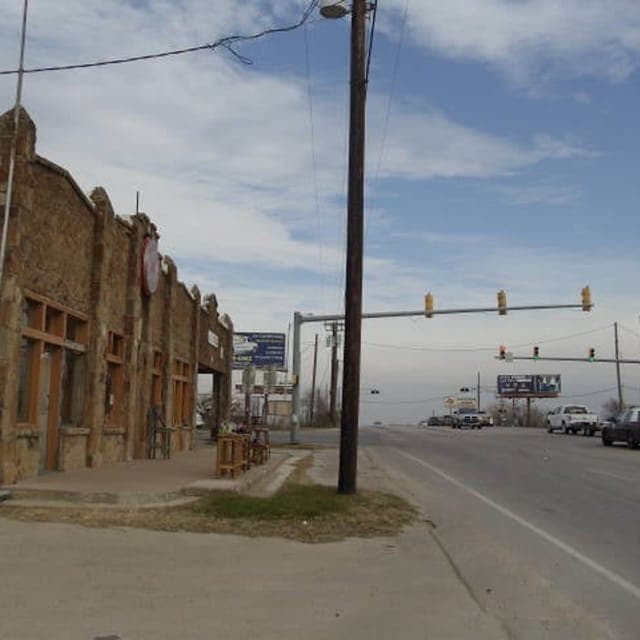


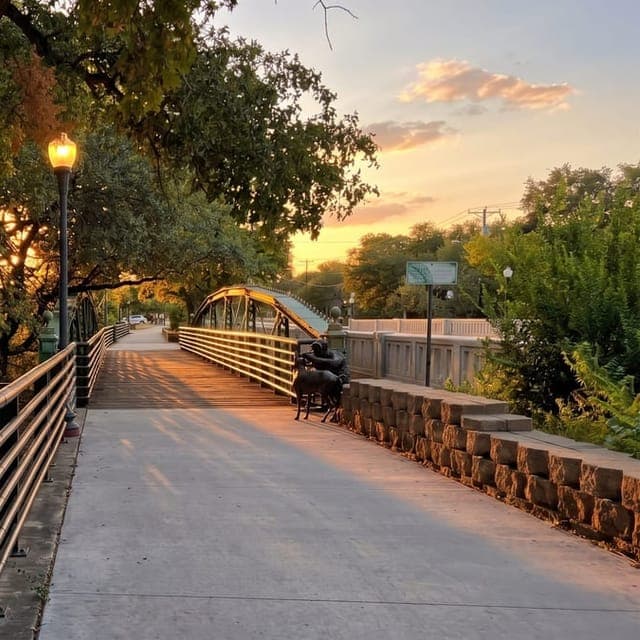
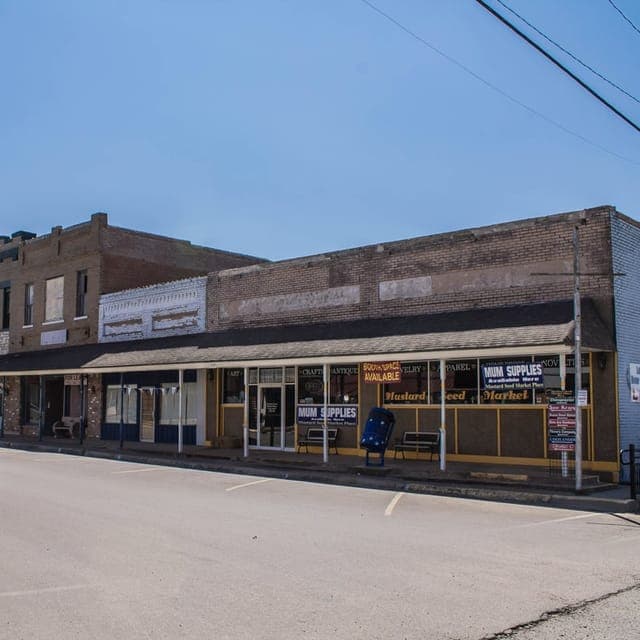
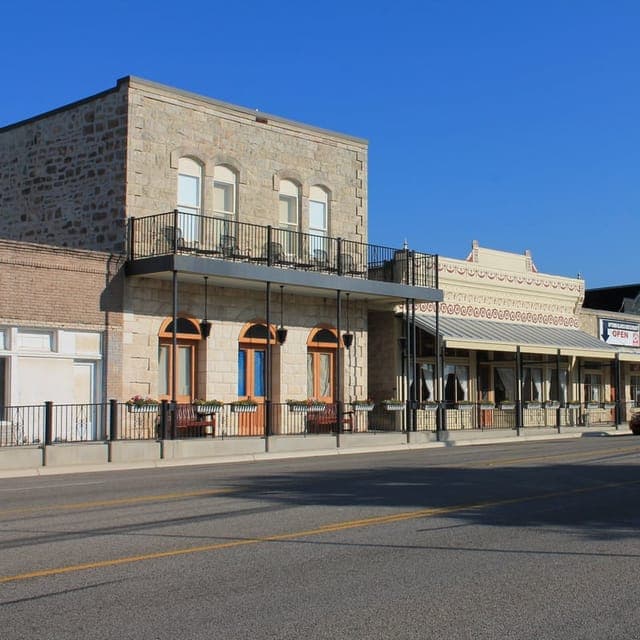

* Values derived from national, state, county, city and local statistics and may differ in a specific area. Last updated: 2026-09-08T17:24:20.000Z
Narrative content on this page is AI-generated and may contain mistakes. Verify any details that matter before acting on them.
ReloMaps may earn a commission from affiliate links at no extra cost to you.

