
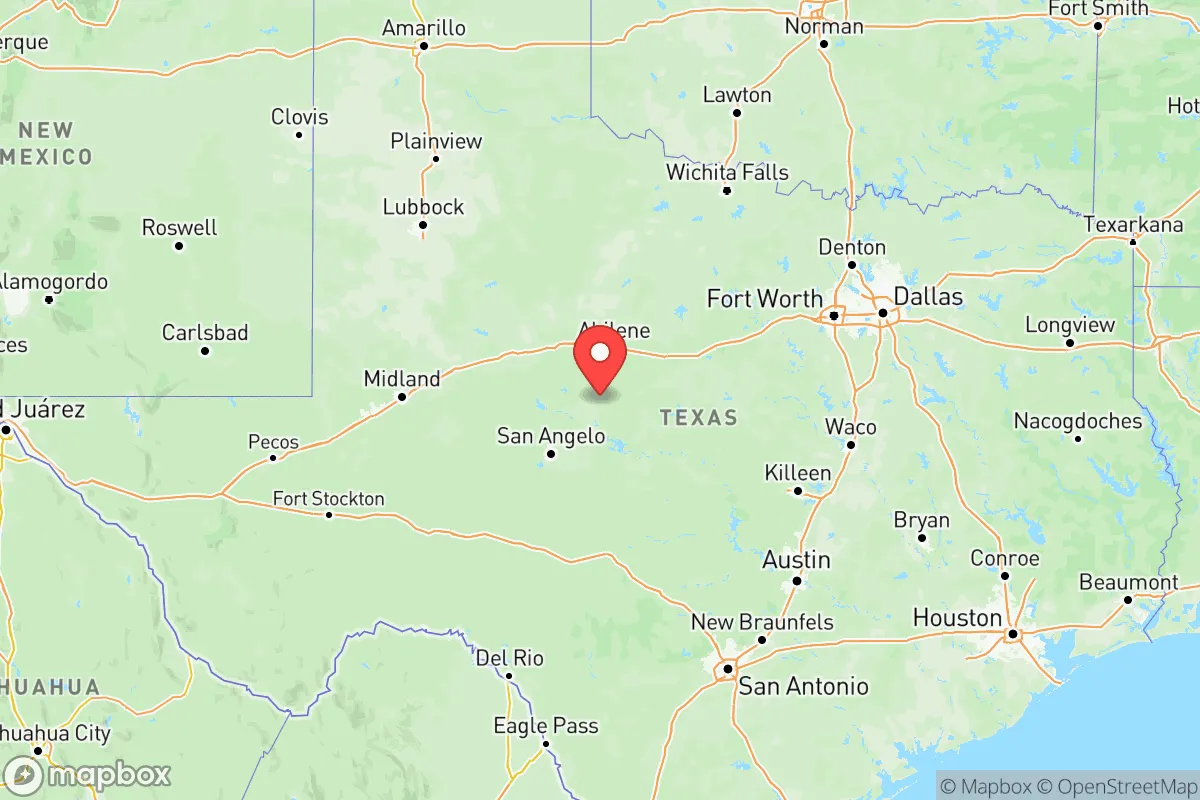
Photo: Wikipedia
Demographics of Texas
Affluence Level in Texas
A wealthy area with high-earning, well-educated households. Incomes, home values, and educational attainment meaningfully outpace national averages.
People of Texas
The people of Texas today number 29,640,343, a population nearly split between White (39.9%) and Hispanic (39.5%) residents, with a Black population of 11.9% and an Asian population of 3.0%, of whom 2.2% trace their roots to the Indian subcontinent. Foreign-born residents account for 10.0% of all Texans, and 33.1% of adults hold a college degree. The state is defined by a strong independent streak, a mix of sprawling metropolitan centers and vast rural expanses, and a capacity to absorb newcomers while preserving a broadly conservative cultural foundation. Density varies dramatically, from the packed freeways of Houston to the silent plains of West Texas, and this diversity of landscape mirrors the diversity of its people.
Settlement & growth (pre-1960)
Before European contact, Texas was home to several distinct Native nations. The Caddo confederacies farmed the pine forests of East Texas, the Coahuiltecan tribes populated south Texas, and Apache held the arid West Texas mountains before the Comanche came into Texas to dominate much of the land. The Spanish were the first Europeans to colonize the region, establishing missions and presidios in the late 1600s and early 1700s. San Antonio, founded in 1718, became the most important Spanish settlement and remains a cultural anchor for Tejano identity. Nacogdoches, founded in 1779 on native settlements, served as an eastern outpost. In the south, many Spanish settlers, such as Blas Maria De La Garza, established ranches in the Rio Grande Valley where many of their descendants still live today.
After Mexico independence in 1821, Anglo-American settlers arrived under empresario contracts, originally made with Spain, most famously those of Stephen F. Austin. The "Old Three Hundred" families settled along the Brazos and Colorado Rivers in the 1820s, establishing communities that became the foundations of Houston and Austin. By 1836, with the establishment of the Republic of Texas, the Anglo population had swelled, and after annexation in 1845, immigration accelerated with Southerners from Tennessee, Kentucky, and the Deep South bringing a culture of cotton farming and frontier individualism. German immigrants began arriving in large numbers in the 1840s, drawn by land grants, and founded Fredericksburg in 1846 and New Braunfels in 1845, building tight-knit Hill Country farming communities. Irish immigrants also came in the 1840s, many settling in Corpus Christi and San Antonio. Polish immigrants founded Panna Maria in 1854, the first Polish settlement in the United States, while Czech communities grew around West, Texas in the 1870s.
African Americans came to Texas as slaves before the Civil War, primarily from the Upper South, and after emancipation built their own communities in cities such as Houston (notably the Third and Fifth Wards) and Dallas (Deep Ellum). During the Great Migration of 1910 to 1970, hundreds of thousands of Black Americans left the rural South for industrial jobs, with Houston and Dallas absorbing the largest numbers. The Mexican Revolution of 1910 sent waves of refugees north, and El Paso became the primary entry point, while San Antonio's West Side grew into a Mexican-American heartland. The Texas oil boom beginning at Spindletop in 1901 drew domestic migrants to Beaumont, Houston, and later Midland and Odessa. Dust Bowl migrants in the 1930s settled in the Panhandle around Amarillo and Lubbock. By 1960, Texas was a majority-white state with a large Hispanic minority and a significant Black population.
Modern era (post-1965)
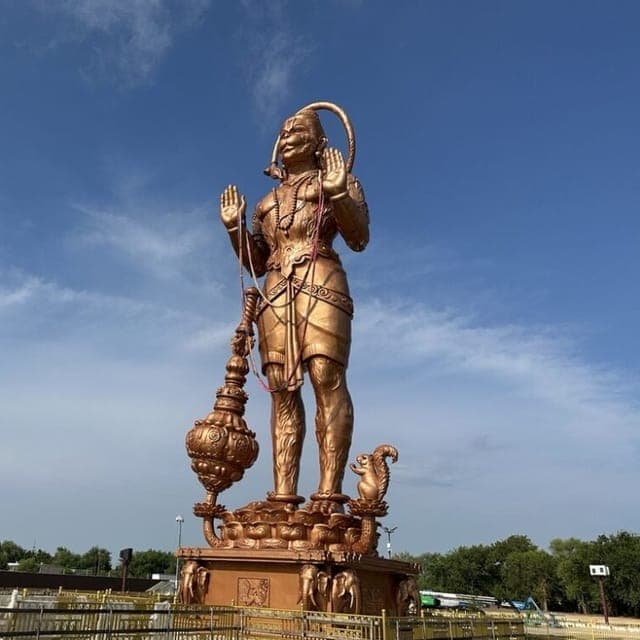
The Immigration and Nationality Act of 1965 fundamentally altered Texas by opening immigration from Asia, Africa, and Latin America. Vietnamese refugees began arriving after 1975, with large concentrations settling in Houston, particularly in the areas around Midtown and Bellaire, and in Dallas in Arlington and Grand Prairie. Indian immigrants began arriving in larger numbers in the 1990s. Today, the Indian population (2.2% of the state total) is heavily concentrated in the suburban cities of Frisco, Sugar Land and Irving, where Indian-owned businesses, temples, and cultural centers have redefined the landscape.
The Hispanic population continues to grow through both high-birth rates, legal and illegal immigration, Texas has always been a mix of Anglo and Tejano (Spanish Texans) cultures. Historic Spanish settlements like San Antonio, El Paso, and Corpus Christi carry deep Spanish and Tejano roots that predates statehood. However, the recent Hispanic migrants (post-2000) are coming from countries not typically associated with Texas, including Venezuala, El Salvador, Guatemala and Colombia. Other than their historical connection to Spain from centuries ago, these recent arrivals share little in common with the descendants of Tejano settlers. Many native Texans of spanish descent report seeing rising conflicts within the Hispanic communities.
Additionally, international Muslim organizations have identified Texas as a priority for establishing Sharia communities which has started legal battles with the state.
Domestic migration reshaped Texas after 1965. The Sun Belt boom drew millions from the Rust Belt, the Northeast, and California, attracted by lower taxes and affordable housing. The Dallas-Fort Worth metroplex grew from 2.4 million in 1970 to 7.6 million in 2020; Houston, Austin, and San Antonio similarly expanded. This in-migration was disproportionately White and Asian but also included African Americans returning from the North. Suburbanization accelerated, with master-planned communities attracting families seeking good schools and safety.
The future
Texas is projected to add roughly 10 million residents by 2050. The Hispanic share will likely rise above 50% within two decades, making Texas a majority-minority state. The White population, while growing in absolute terms, declines as a share. The Asian population, particularly Indian and Vietnamese, will continue growing, while the Black share remains near 12%. The state is not homogenizing; instead, distinct enclaves are solidifying in Indian suburbs north of Dallas, Vietnamese corridors in Houston and Dallas, and Hispanic communities in San Antonio and El Paso. Income segregation and political polarization are increasing, with red exurbs and blue urban cores pulling apart culturally. Immigrant communities show slowing signs of assimilation compared to past waves of immigration. In-migration from California and the Northeast is slowly shifting Texas's cultural norms in urban areas, but the state's overall political structure remains conservative, and many newcomers adapt to existing Texas patterns. The next 10 to 20 years will bring continued suburbanization, rising ethnic diversity, and an ongoing negotiation between tradition and change.
For anyone considering a move to Texas now, the state offers a population that is diverse, growing, and fundamentally shaped by its history as a destination for people seeking opportunity. There's a lot of good that comes from the growth. However, with the growing number of migrant groups creating cultural enclaves, there is much to be concerned about for all Texans and those looking to call Texas home, Increased diversity and political polarization can lead to civil unrest, but the underlying values of independence, hard work, and community remain strong.

Most Diverse Cities in Texas
Most Homogenous Cities in Texas
* Values derived from national, state, county, city and local statistics and may differ in a specific area. Last updated: 2026-09-08T17:24:20.000Z
Narrative content on this page is AI-generated and may contain mistakes. Verify any details that matter before acting on them.
ReloMaps may earn a commission from affiliate links at no extra cost to you.

