
Photo: Wikipedia
Personal Sovereignty in Reeves County
Viable for self-reliance. Generally workable, though some barriers may limit total independence.
What does Personal Sovereignty tell us?
Personal Sovereignty measures your capacity for self-reliance and independence with minimal government friction. Higher scores mean fewer barriers between you and the way you want to live... but it assumes you have the space you need and good neighbors.
What does this tell us?
Personal Sovereignty measures your capacity for self-reliance and independence with minimal government friction. Higher scores mean fewer barriers between you and the way you want to live... but it assumes you have the space you need and good neighbors.
State Policy
Energy independence: Net exporter (220% of energy produced in-state)
Personal Liberty
Homesteading

Personal Liberty Analysis
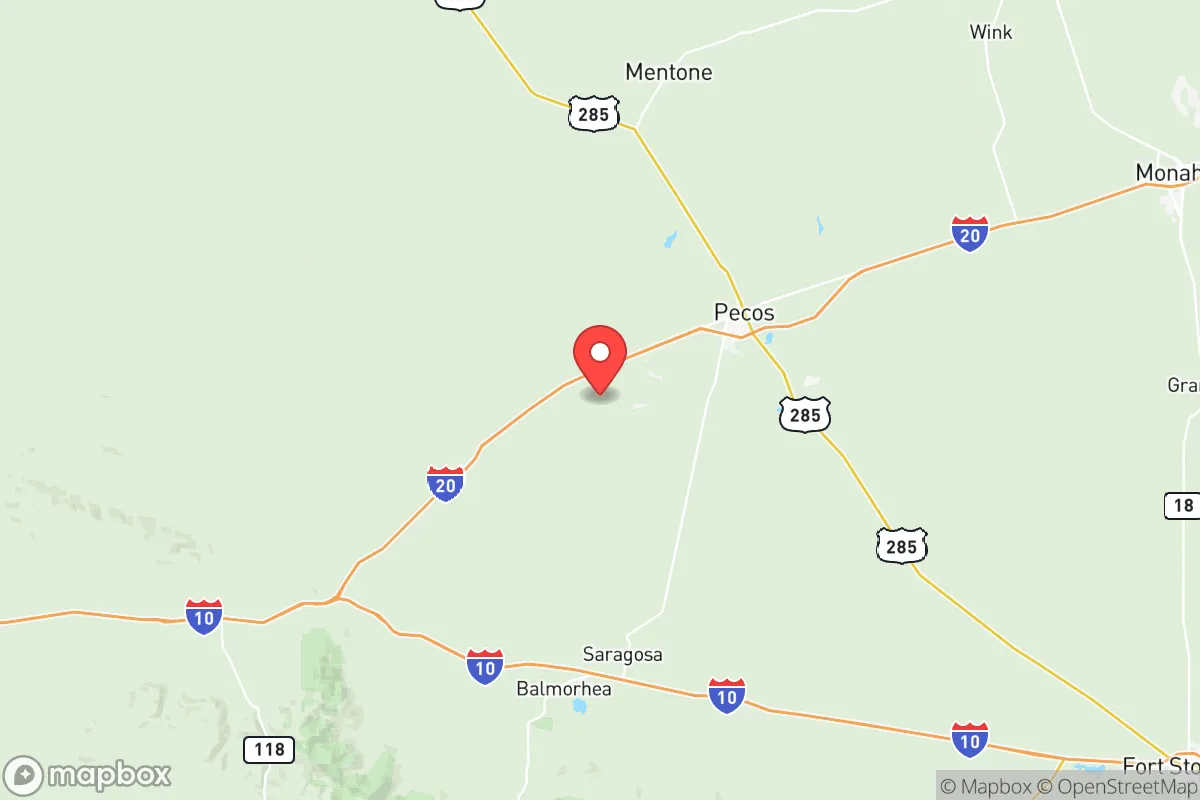
Reeves County, Texas, offers one of the most uncompromising environments for personal sovereignty in the western half of the state, where the ethos of self-reliance isn't just tolerated—it's the default operating system. Unlike the encroaching regulatory regimes found in urban corridors like Austin or Dallas, this vast, arid county stretching from the Pecos River to the Guadalupe Mountains operates with a light governmental touch that appeals directly to those who view autonomy as a non-negotiable priority. For single individuals and parents alike, the question isn't whether you can live on your own terms here, but whether you're prepared for the full weight of that freedom, from tax policy to self-defense law to the practical realities of off-grid existence.
Tax burden and regulatory posture in Reeves County compared to Texas norms
Texas already offers the advantage of no state income tax, but Reeves County takes the fiscal freedom concept further by maintaining a property tax environment that, while not the lowest in the state, remains manageable for those who value keeping more of what they earn. The county's total tax rate hovers around $0.75 per $100 valuation, which is competitive against the Texas average of roughly $1.20, though specific rates vary between the county's incorporated cities like Pecos and Balmorhea. Pecos, as the county seat and economic hub, carries slightly higher municipal levies to support infrastructure for its oil and gas workforce, while unincorporated areas and smaller communities like Toyah or Orla offer near-minimal regulatory overhead. The regulatory posture here is distinctly pro-business and pro-property owner: there are no city-level rental inspection programs, no burdensome business licensing schemes beyond state minimums, and zoning codes are virtually nonexistent outside Pecos's limited commercial districts. For a parent or individual looking to start a home-based enterprise, store supplies, or modify property without government permission slips, this is a landscape where the county government's default answer is "yes, unless there's a clear safety reason for no."
Self-defense and gun law specifics in Reeves County's legal landscape
Texas's constitutional carry law, effective since 2021, is fully operational in Reeves County, meaning any law-abiding adult can carry a handgun openly or concealed without a permit—a baseline that aligns with the county's frontier heritage. What sets Reeves apart from more populated Texas counties is the absence of local ordinances that chip away at that right. In Pecos, you won't find the "gun-free zone" expansions that plague cities like Austin or San Antonio; the local sheriff's office, led by a conservative administration, has publicly stated it will not enforce any state-level red flag laws that might pass in the future, a stance that carries weight in a county where law enforcement is deeply integrated with the community. The county's geography also matters: with vast stretches of private ranchland and BLM-adjacent territories near Orla and Red Bluff, target shooting on your own property is a practical reality, not a legal gray area. For parents, the school district in Pecos maintains a policy that respects the state's authority on firearm storage in vehicles on campus, and there are no local restrictions on magazine capacity or firearm types. The nearest federal firearms dealer wait times are minimal, and private sales between individuals remain unregulated under Texas law—a detail that matters to those who view the Second Amendment as a shield against overreach, not a suggestion.
Self-reliance and homesteading viability across Reeves County's diverse terrain
The viability of a self-reliant lifestyle in Reeves County depends heavily on where you plant your flag, as the county's 2,600 square miles contain dramatically different environments. In the unincorporated areas around Balmorhea, you can find parcels of 5 to 40 acres for under $2,000 per acre, with no homeowner association covenants, no building permit requirements beyond basic septic and electrical safety, and no restrictions on keeping livestock, storing water tanks, or erecting workshops. The county's zoning is so minimal that off-grid solar and wind systems are entirely unregulated at the local level, though you'll need to coordinate with the local electric cooperative if you want to sell back power. Water rights are the critical variable: the county sits atop the Capitan Reef aquifer, but well drilling costs run $15,000 to $30,000 depending on depth, and the county requires a permit for new wells—a reasonable regulatory touch that prevents chaos. For those looking at Pecos proper, city lots are smaller (typically 0.25 to 0.5 acres) and subject to basic nuisance ordinances, but even there, backyard chickens, gardens, and rainwater collection are legal without special permits. The Orla area, near the New Mexico border, offers the most extreme isolation: 20-acre minimum lot sizes in some subdivisions, zero code enforcement, and a climate that demands serious water storage and solar capacity. For a prepper-minded individual or family, the trade-off is clear: you get maximum autonomy in exchange for accepting that you are the first and last line of defense for your own utilities, food production, and security.
Personal liberties in Reeves County: parental rights, medical autonomy, speech, and property
Parental rights in Reeves County are protected by the same state-level laws that have made Texas a battleground for family autonomy, but the local culture amplifies those protections. The Pecos-Barstow-Toyah Independent School District has not adopted any critical race theory or gender ideology curricula, and school board meetings remain civil affairs where parents are heard without the hostility seen in urban districts. Medical autonomy is a mixed bag: Texas law prohibits vaccine mandates by private employers and government entities, and Reeves County's healthcare system—centered on the Reeves County Hospital District in Pecos—does not pressure patients into treatments they decline. However, the county's rural nature means that alternative medicine practitioners are scarce, and telehealth is the primary avenue for those seeking non-mainstream care. Free speech is robust; there are no local noise ordinances that could be weaponized against political speech, and the county's public comment periods at commissioner's court meetings are genuinely open forums. Property rights are the crown jewel: eminent domain abuse is rare here, and the county assessor's office is known for reasonable valuations that don't invite tax protests. The only notable friction point is the presence of oil and gas mineral rights—many surface owners do not own the minerals beneath their land, a legacy of Texas law that can lead to drilling activity near homes. This is a disclosure you must investigate before buying, but it's a known trade-off in a county where energy extraction funds the very low tax rates that make autonomy affordable.
When stacked against other Texas counties, Reeves County offers a sovereignty profile that rivals the most libertarian-leaning areas of the state, such as Loving or Culberson counties, but with better infrastructure and a functional economy. The absence of HOA-dominated subdivisions, the sheriff's pro-Second Amendment posture, and the county commission's hands-off approach to land use create an environment where personal responsibility is not just encouraged but required. For the single individual or parent who views government overreach as the primary threat to their family's future, Reeves County represents a strategic relocation option where the law and the culture align to let you live as you see fit—provided you can handle the heat, the distance to major medical care, and the reality that in a place this free, there is no one to call when things go wrong but yourself.

* Values derived from national, state, county, city and local statistics and may differ in a specific area. Last updated: 2026-04-22T02:10:32.000Z
Narrative content on this page is AI-generated and may contain mistakes. Verify any details that matter before acting on them.
ReloMaps may earn a commission from affiliate links at no extra cost to you.

