Photo: Wikipedia
Political ClimatePolitical Climate in Reeves County
Showing district-level results — no local-only data available.
Local Political AnalysisPolitical Analysis of Reeves County
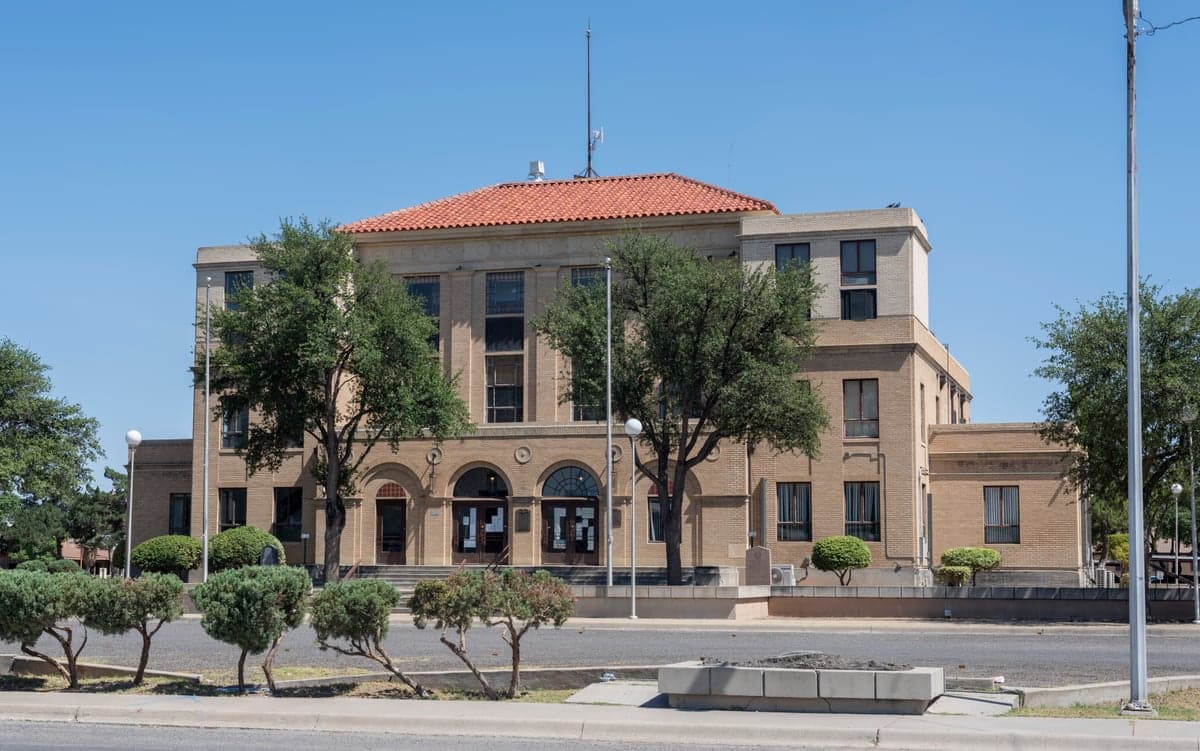
Reeves County, Texas, has long been a solidly conservative stronghold, and that hasn't changed much. The Cook PVI of R+7 tells you the baseline, but the real story is in the trenches. Out here, folks in Pecos, the county seat, and the smaller communities like Toyah and Orla have traditionally voted red because they believe in limited government and personal responsibility. You don't see a lot of hand-wringing over "progressive" ideas here—most people just want to be left alone to work, raise their families, and keep what they earn. That said, there's been a slow, creeping shift in some precincts, especially around the newer housing developments on the outskirts of Pecos, where you'll find a few more folks leaning blue. It's not a wave, but it's a trickle that has some of us watching closely.
How it compares
Compared to the rest of Texas, Reeves County is a bit of a mixed bag. You've got the oil and gas industry anchoring the economy, which naturally pulls the politics right—people here know that government overreach in energy regulation or land use can kill jobs overnight. But then you look at the county's Hispanic majority, which in other parts of the state might lean more Democratic. Here, it's different. In Pecos proper, the older, established neighborhoods near the courthouse and along Highway 17 still vote reliably red. But the newer subdivisions near the Interstate 20 corridor, where younger families and some transplants have settled, have started to show a few more purple streaks. The swing precincts are those around the Pecos High School area and the western edge of town—places where you'll see a mix of longtime ranchers and new folks who work in the Permian Basin. Toyah and Orla? Still deep red, no question. The contrast is real, but the overall trajectory is still conservative, just with a few more cracks in the foundation than there were a decade ago.
What this means for residents
For those of us living here, the political climate means a lot of things, but mostly it means we still have a say in how our lives are run—for now. Local government in Reeves County has historically been hands-off, which is exactly how most residents like it. You don't see a lot of zoning fights or overbearing regulations on small businesses. But there's a growing concern that as more people move in from places like California or the East Coast, they'll bring their ideas about "progress" with them. That could mean more taxes, more rules on how you can use your property, and more pressure to adopt policies that don't fit our way of life. The school board and county commission races are where you really see this tension play out. If you're someone who values personal freedom and doesn't want the government telling you how to live, you're probably keeping a close eye on those elections.
Culturally, Reeves County still feels like old Texas. You'll see American flags flying high, and the local churches are still the center of community life. The biggest policy distinction here is the strong support for the oil and gas industry—any talk of a "green transition" is met with serious skepticism. People remember the busts, and they know that government overreach in energy policy can devastate a town like Pecos overnight. The long-term outlook? If the county can keep its conservative character while managing growth, it'll stay a place where personal freedom and common sense still matter. But if the progressive tide keeps rising, even here, we might see a different Reeves County in 20 years—and that's a future most of us are trying to avoid.

State Political ClimatePolitical Climate in Texas
State Political AnalysisPolitical Environment in the State
Texas has been a reliably Republican state for decades, with the GOP holding every statewide office and both chambers of the legislature since the mid-1990s. The state’s overall partisan lean is roughly R+10 in presidential elections, though that margin has narrowed from double digits to single digits in recent cycles. Over the last 10-20 years, the dominant coalition has been a mix of rural conservatives, suburban moderates, and business-friendly fiscal conservatives, but rapid in-migration from blue states and explosive growth in the urban core are slowly shifting the ground beneath your feet.
Urban vs. rural divide
The political map of Texas is a tale of two worlds. The vast rural expanse—places like Lubbock, Abilene, and the Panhandle—votes overwhelmingly Republican, often by 70-80% margins. Meanwhile, the major metros are trending blue. Austin and El Paso are solidly Democratic, with Harris County (Houston) and Dallas County flipping blue in the 2010s and staying there. The real battleground is the suburban ring around these cities. Collin County (north of Dallas) and Fort Bend County (southwest of Houston) were once GOP strongholds but have shifted purple—Collin went from 58% Romney in 2012 to 51% Trump in 2020. The 2022 midterms saw Democrats flip a state House seat in the Dallas suburbs for the first time in decades. The urban-rural split is now the defining feature of Texas politics, and it’s getting sharper every cycle.
Policy environment
Texas remains a low-tax, low-regulation state by design. There is no state income tax, and property taxes are high but capped at 10% annual growth for homesteads. The regulatory posture is famously business-friendly—permitting is fast, zoning is minimal, and occupational licensing is lighter than most states. On education, the state funds public schools through a Robin Hood system that redistributes property tax revenue from wealthy districts to poor ones, but per-pupil spending still ranks near the bottom nationally. School choice has expanded: the 2023 legislature passed a universal Education Savings Account program for special needs students, and a broader voucher bill is expected in 2025. Healthcare policy is conservative: Texas did not expand Medicaid under the ACA, leaving roughly 1.5 million uninsured adults in the coverage gap. Election laws tightened after 2020—Senate Bill 1 (2021) banned 24-hour and drive-through voting, added ID requirements for mail ballots, and empowered partisan poll watchers. The state also enacted a near-total abortion ban (trigger law) in 2021, with no exceptions for rape or incest, and a six-week ban (SB 8) that relied on private enforcement.
Trajectory & freedom
On balance, Texas has been moving toward more personal freedom in several key areas, but with notable exceptions. Gun rights expanded significantly with permitless carry (HB 1927, 2021), allowing any law-abiding adult to carry a handgun without a license. Parental rights were strengthened by the 2023 law banning gender transition procedures for minors (SB 14) and requiring school districts to notify parents of any changes to a child’s mental health or medical services. Property rights got a boost with the 2023 law limiting the ability of homeowners associations to ban solar panels and rainwater harvesting. On the other hand, medical freedom took a hit with the 2021 ban on vaccine passports (HB 1687) being largely symbolic, while the state’s aggressive COVID-19 response under Governor Abbott included mask mandates and business closures that many conservatives saw as overreach. The 2023 law banning TikTok on government devices was a rare bipartisan move. The biggest freedom concern for many is the growing power of the state government itself—property taxes remain high despite caps, and the legislature has shown a willingness to override local control, particularly in blue cities (e.g., banning sanctuary cities in 2017, preempting local tree ordinances in 2023).
Civil unrest & political movements
Texas has seen its share of political flashpoints. The 2020 Black Lives Matter protests in Austin, Dallas, and Houston were large and occasionally violent, with Austin seeing over $10 million in property damage. The state’s response was a crackdown on “defunding the police” movements—the legislature passed a law in 2021 penalizing cities that cut police budgets. Immigration politics are a constant flashpoint: Governor Abbott’s Operation Lone Star (2021-present) deployed state troopers and National Guard to the border, bused migrants to blue cities like New York and Chicago, and installed razor wire along the Rio Grande. The state is currently in a legal standoff with the Biden administration over border enforcement, with Abbott asserting Texas has a constitutional right to defend itself. Secession rhetoric has grown louder—the Texas Nationalist Movement claims over 400,000 supporters, and a 2022 state GOP platform included a call for a referendum on secession. Election integrity remains a hot-button issue: the 2020 election saw no major fraud in Texas, but the 2021 voting law (SB 1) was passed amid widespread distrust among Republican voters. You’ll see “Stop the Steal” rallies in rural counties and “Protect the Vote” marches in Austin—the divide is real and visible.
Projection
Over the next 5-10 years, Texas is likely to become more competitive at the statewide level, but not flip blue. The in-migration from California and New York is concentrated in the urban core and inner suburbs, which are already blue. The outer suburbs and exurbs—places like Kyle, Buda, and Forney—are growing fast and still lean Republican, but they’re moderating. The rural vote is shrinking as a share of the electorate. The 2024 presidential race saw Trump win Texas by about 8 points, down from 9 in 2020 and 16 in 2016. If current trends hold, the state could be a true battleground by 2032. But the legislature is gerrymandered to protect rural and suburban Republicans, so the statehouse will remain red for the foreseeable future. The biggest wild card is the border crisis: if federal policy doesn’t change, Texas will continue to assert its own authority, which could lead to a constitutional showdown. For a conservative moving in now, expect a state that remains solidly red in policy but increasingly purple in elections, with a growing cultural war between the blue cities and the red state government.
Bottom line for a new resident: Texas is still one of the most freedom-friendly states in the country—no income tax, strong gun rights, parental control over education, and a business climate that rewards risk. But the political landscape is shifting under your feet. The cities are becoming more progressive, the suburbs are up for grabs, and the state government is fighting a rear-guard action to preserve conservative policies. If you’re moving here for freedom, you’ll find it—but you’ll also find a state that’s increasingly divided, and you’ll need to choose your county carefully. The rural areas and outer suburbs are still safe bets; the urban core and inner suburbs are trending blue fast.
* Values derived from national, state, county, city and local statistics and may differ in a specific area. Last updated: 2026-04-22T02:10:32.000Z
Narrative content on this page is AI-generated and may contain mistakes. Verify any details that matter before acting on them.
ReloMaps may earn a commission from affiliate links at no extra cost to you.

