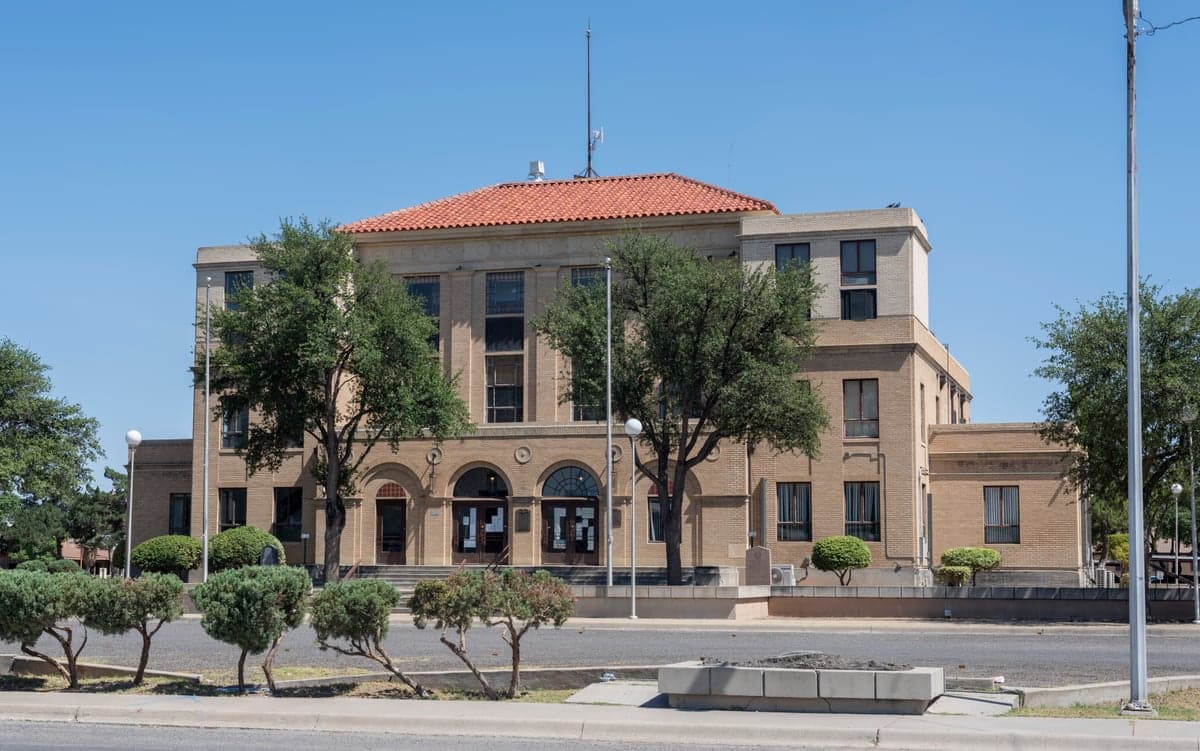
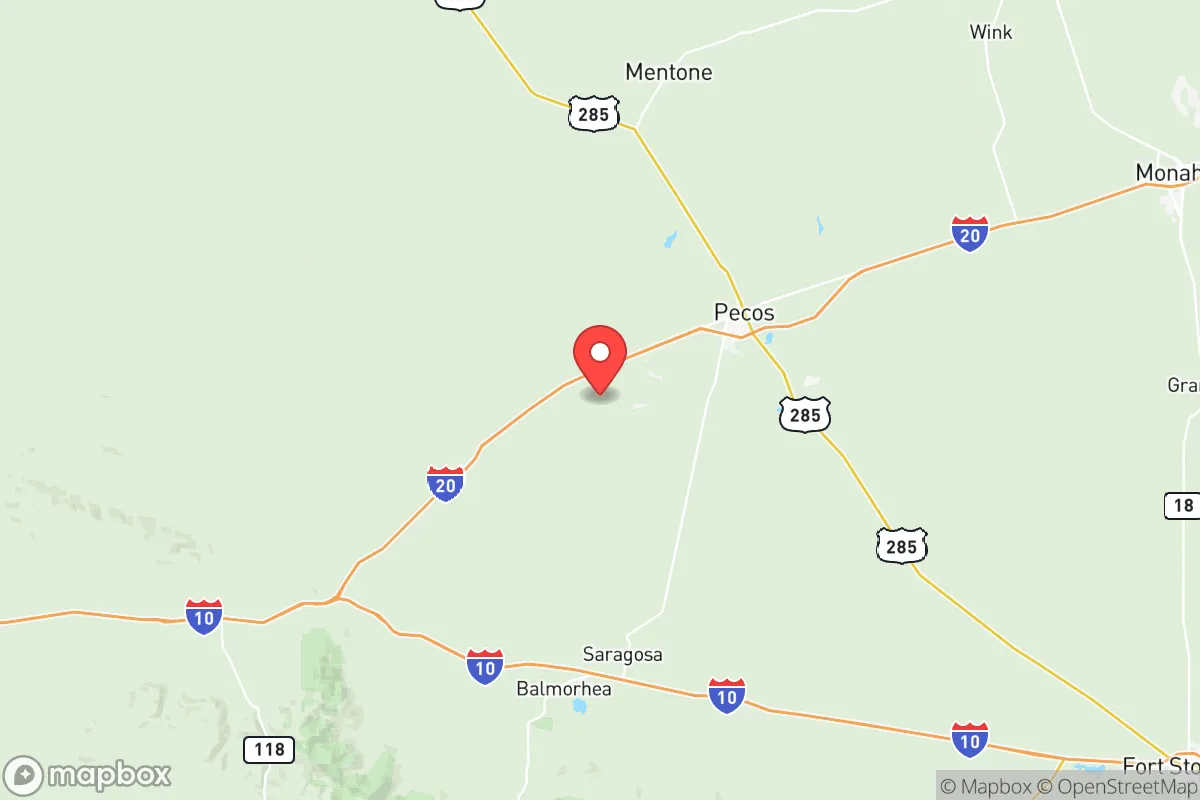
Photo: Wikipedia
Demographics of Reeves County
Affluence Level in Reeves County
A low-income area with significant economic hardship. Household wealth and educational attainment are well below national averages.
People of Reeves County
Reeves County, Texas, is a predominantly Hispanic, rural community of 13,219 residents, where 84.8% of the population identifies as Hispanic or Latino and only 12.2% as non-Hispanic White. The county is characterized by its sparse population density, a strong oil-and-gas and agricultural economic base, and a distinctive borderlands cultural identity shaped by generations of Mexican-American families. With a foreign-born population of 11.3% and a low college attainment rate of 6.9%, Reeves County remains a working-class, family-oriented region where Spanish is widely spoken and traditional values are deeply rooted.
Settlement & growth (pre-1960)
Before American settlement, the area now known as Reeves County was inhabited by the Mescalero Apache and Comanche nations, who used the vast, arid landscape for seasonal hunting and trade routes. Spanish explorers and missionaries passed through as early as the 16th century, but no permanent Spanish or Mexican settlements were established within the county's boundaries. The region remained largely uncolonized until after the Mexican-American War (1846–1848), when the Treaty of Guadalupe Hidalgo brought the area under U.S. control.
The first permanent American settlers arrived in the 1880s, drawn by the arrival of the Texas and Pacific Railway. The railroad established a depot at Pecos, the county seat, which quickly became a cattle-shipping hub. These early settlers were predominantly Anglo-American ranchers and cowboys from the southern United States, many of whom had moved west after the Civil War. The town of Balmorhea was founded shortly after, named after the Balmorhea Springs, which provided a rare water source in the desert. By 1900, the county's population was small—under 1,000—and overwhelmingly Anglo, with a handful of Mexican laborers working on ranches and railroad maintenance.
The first major demographic shift came with the Mexican Revolution (1910–1920), which pushed thousands of refugees north across the Rio Grande. Many settled in Pecos and Balmorhea, finding work on the expanding railroad, in cotton fields, and on cattle ranches. This wave established the foundation of Reeves County's Hispanic community. By 1930, the county's population had grown to roughly 6,000, with Mexican-Americans making up a significant minority—perhaps 30–40%—though official census records from the era often categorized them as "White."
The Dust Bowl and Great Depression of the 1930s brought another wave: Anglo "Okies" and "Arkies" from Oklahoma, Arkansas, and the Texas Panhandle, fleeing failed farms. They found work in Reeves County's newly irrigated cotton fields, particularly around Toyah and Orla. However, this influx was temporary; many left during World War II for defense jobs in California and Texas cities. The post-war oil boom of the 1950s, centered on the Permian Basin, reversed the trend. Drilling crews and service workers—mostly Anglo, but also some Mexican-American—poured into Pecos and the unincorporated community of Pyote, which briefly boasted a major oilfield supply base. By 1960, the county's population peaked at approximately 13,000, with Hispanics now a clear majority, estimated at 55–60%.
Modern era (post-1965)
The 1965 Hart-Cellar Act did not dramatically alter Reeves County's demographics, as the region had never attracted large numbers of immigrants from outside the Western Hemisphere. Instead, the post-1965 period saw the consolidation of the Hispanic majority through natural increase and continued migration from Mexico. The county's Anglo population, which had been the majority until the 1940s, began a slow but steady out-migration starting in the 1970s, as younger Anglos left for college and urban job markets in Midland, Odessa, and Dallas-Fort Worth.
The 1980s oil bust hit Reeves County hard. Pecos lost nearly a third of its population as drilling rigs shut down and service companies folded. The Anglo population, already thinning, dropped further as many families relocated to Houston or the Permian Basin's more resilient cities. Meanwhile, the Hispanic population proved more rooted, anchored by extended family networks and lower mobility. By 1990, the county was 75% Hispanic. The 2000s and 2010s saw a modest rebound driven by the shale oil boom, which brought a new wave of domestic migrants—mostly Anglo and Hispanic workers from other parts of Texas and the Southwest—to Pecos and Balmorhea. However, this boom was cyclical, and many workers were transient, living in man camps and RVs rather than settling permanently.
Today, Reeves County's racial and ethnic makeup reflects this history: 84.8% Hispanic, 12.2% White, 1.4% Black, and negligible shares of East/Southeast Asian (0.1%) and Indian-subcontinent (0.3%) residents. The foreign-born population of 11.3% is almost entirely Mexican-born, concentrated in Pecos and the smaller community of Saragosa. The Black population, though small, has a distinct history: many are descendants of African-American railroad workers and soldiers who settled in Pecos during World War II, when the city hosted a training base. The Asian and Indian populations are tiny and largely tied to the oil industry—engineers and geologists who work on temporary assignments.
The future
Reeves County is likely to remain overwhelmingly Hispanic for the foreseeable future. The Anglo population is aging and not being replaced by younger families; many Anglo retirees stay, but their children leave for college and careers elsewhere. The Hispanic population is younger, with higher birth rates, and shows strong cultural retention—Spanish-language use remains high, and intermarriage with non-Hispanics is relatively uncommon. The foreign-born share, currently 11.3%, may decline slightly as older Mexican immigrants age and fewer new arrivals come due to tighter border enforcement, but the U.S.-born Hispanic population will continue to grow through natural increase.
The county's low college attainment rate (6.9%) and heavy reliance on oil, gas, and agriculture suggest that in-migration will remain tied to commodity cycles. A sustained oil boom could bring a new wave of domestic migrants—mostly Hispanic and Anglo workers from other parts of Texas—but these are likely to be temporary, as housing in Pecos is limited and the area lacks the amenities to retain professionals long-term. The county is not tribalizing into distinct enclaves; rather, it is homogenizing into a single Hispanic-majority culture, with the small Anglo and Black communities gradually assimilating or aging out. The next 10–20 years will likely see a population that is 90%+ Hispanic, with a stable but small Anglo presence in Balmorhea and Toyah.
For someone moving in now, Reeves County offers a tight-knit, family-oriented community where Spanish is the de facto language of daily life, traditional gender roles are common, and the economy is tied to the boom-and-bust cycles of the Permian Basin. It is not a place of rapid demographic change or cultural conflict, but rather a region where the population is slowly becoming more homogeneous, more rooted, and more distinct from the urbanizing, diversifying trends seen elsewhere in Texas.

* Values derived from national, state, county, city and local statistics and may differ in a specific area. Last updated: 2026-04-22T02:10:32.000Z
Narrative content on this page is AI-generated and may contain mistakes. Verify any details that matter before acting on them.
ReloMaps may earn a commission from affiliate links at no extra cost to you.

