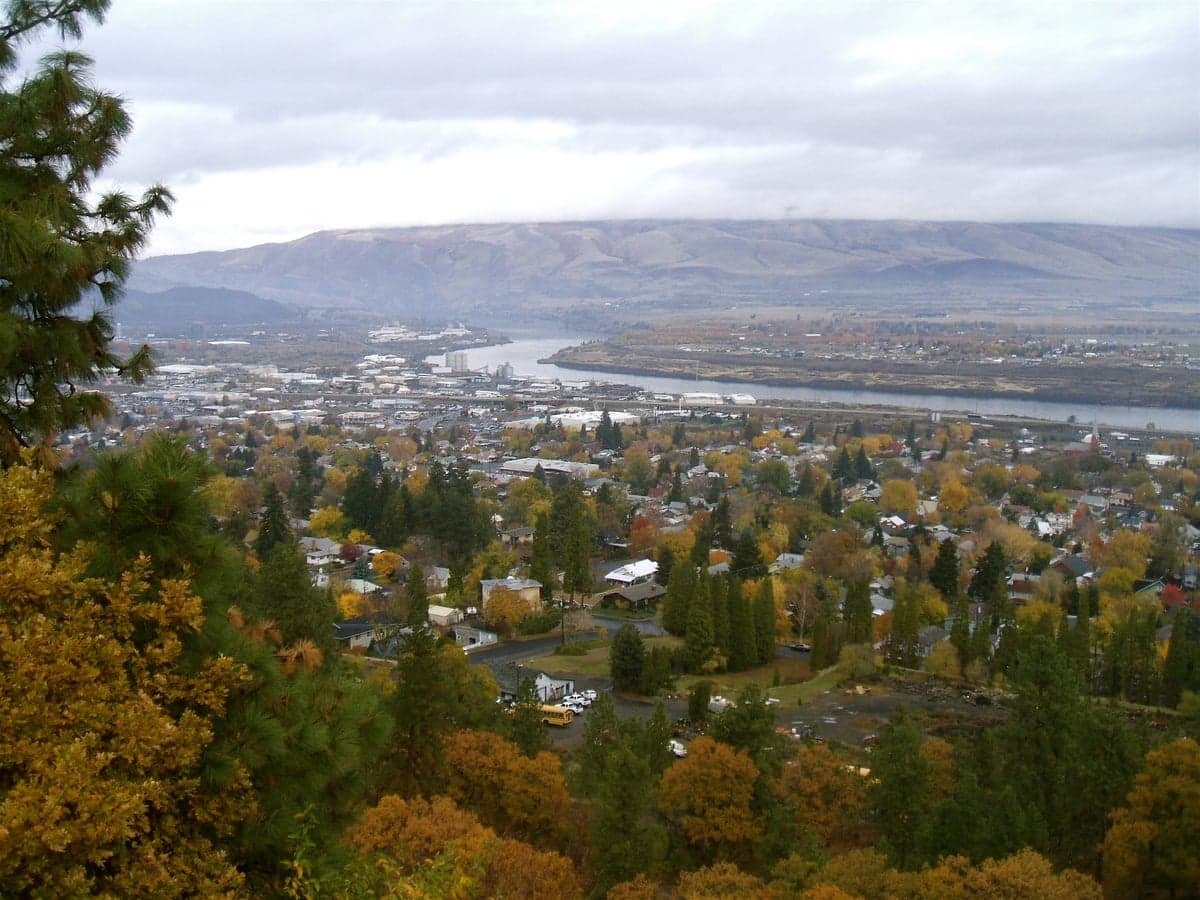
Photo: Wikipedia
Political ClimatePolitical Climate in The Dalles, OR
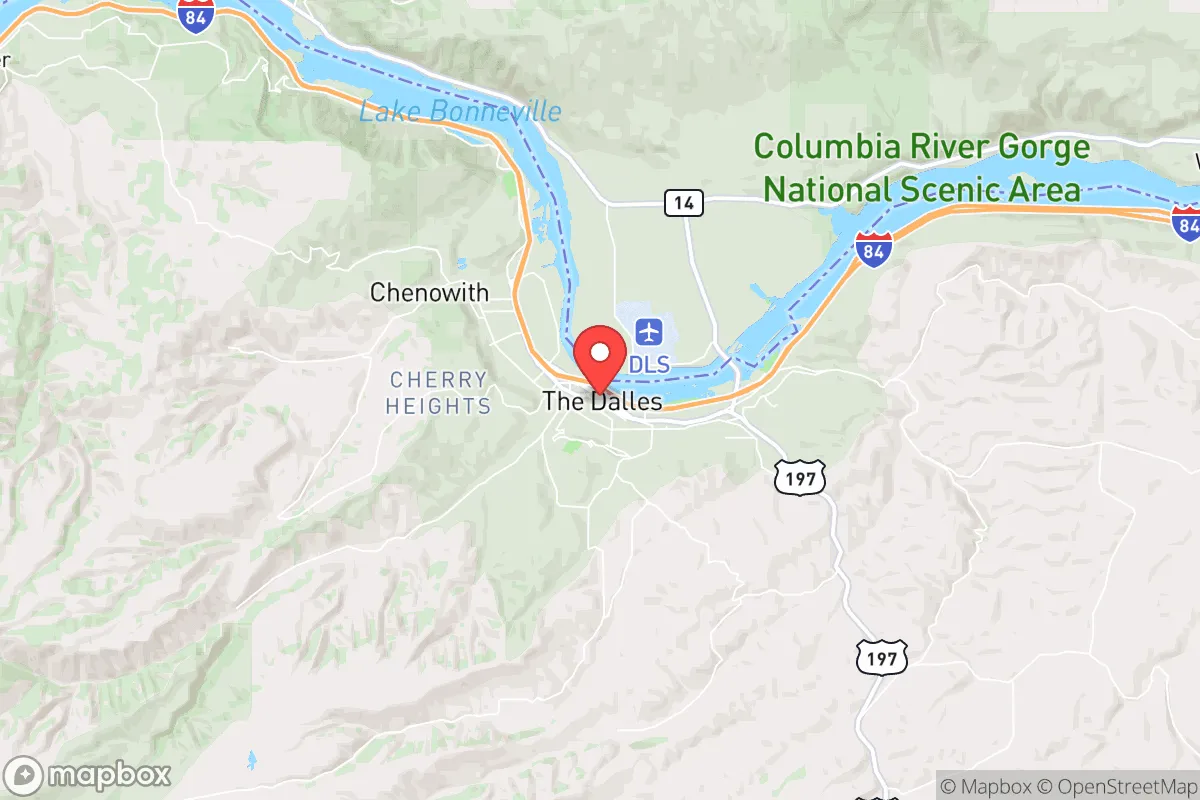
District shown is the primary district for this city’s centroid. Cities may span multiple districts.
Local Political AnalysisPolitical Analysis of The Dalles, OR
The Dalles has long been a solidly conservative stronghold in Oregon, with a Cook PVI of R+14 that puts it firmly in the red column. But if you've lived here as long as I have, you've watched the political winds shift in ways that feel less like a natural evolution and more like a slow creep of outside influence. The town's backbone has always been its working-class roots—farmers, loggers, and folks who run small businesses—and that's still the majority voice. But the trajectory is concerning: every election cycle brings a tighter margin, and the progressive wave washing over Portland and Bend is starting to lap at our shores.
How it compares
Drive 30 minutes west to Hood River, and you're in a completely different world—a liberal enclave where organic farms and windsurfing culture meet tech transplants from California. The contrast is stark. Hood River County went blue by double digits in recent elections, while Wasco County, home to The Dalles, stayed comfortably red. Head east to Boardman or south to Madras, and you'll find communities that share our values: limited government, personal responsibility, and a healthy skepticism of Salem's one-size-fits-all mandates. The Dalles sits at a crossroads, literally and politically, and the pressure from the west is real. I've seen neighbors sell out to developers who then push for higher density zoning and "green" building codes that drive up costs for everyone else.
What this means for residents
For those of us who value personal freedoms, the biggest red flag is how quickly local governance can shift when a few progressive-minded folks get appointed to planning commissions or school boards. We've already seen debates over mask mandates in schools drag on longer than they should have, and there's a growing push for "equity" training in the county that feels more like indoctrination than education. Property taxes are another sore spot—they've risen 12% in the last three years, partly due to state-level spending mandates that Salem forces down on us. If you're a gun owner, you know Oregon's Measure 114 is still a live grenade, and The Dalles is one of the few places where sheriff's deputies have publicly stated they won't enforce unconstitutional parts of it. That's the kind of local backbone we need more of, but it's under constant attack from Portland politicians who see our way of life as backward.
Culturally, The Dalles still feels like a place where your word is your bond and neighbors help without being asked. The annual Cherry Festival and the county fair are still community anchors, not political battlegrounds. But the policy distinctions are growing sharper. We've got a city council that's split 3-2 conservative, and every vote on land use or business licensing feels like a fight to keep the door open for small entrepreneurs rather than big-box chains or out-of-state investors. The long-term outlook depends on whether we can hold the line on local control. If the progressive migration from Portland continues, I worry we'll see the same erosion of property rights and Second Amendment protections that have hollowed out rural communities in California. For now, The Dalles remains a place where common sense still wins most days—but you've got to stay engaged, or you'll wake up one morning and wonder what happened to the town you grew up in.

State Political ClimatePolitical Climate in Oregon
State Political AnalysisPolitical Environment in the State
Oregon has shifted from a purple swing state to a solidly blue stronghold over the past two decades, with Democrats controlling every statewide office and both legislative chambers since 2018. The state’s overall partisan lean is now roughly D+10 in presidential elections, but that number hides a deeply fractured landscape—the liberal Portland metro area and the Willamette Valley drive the statewide results, while vast rural and eastern counties vote Republican by margins of 30 to 50 points. For a conservative considering relocation, the key takeaway is that Oregon’s political trajectory has been defined by a rapid leftward lurch on policy, a growing urban-rural chasm, and a series of laws that have expanded government control over personal freedoms.
Urban vs. rural divide
The political map of Oregon is essentially two states. Multnomah County (Portland) alone casts roughly 20% of the state’s vote and delivers a Democratic margin of 60 points. Washington County (suburban Portland, home to Intel and Nike) and Lane County (Eugene) add another 30-point blue margin. These three counties decide statewide elections before rural Oregon even gets a say. Meanwhile, the rest of the state—from the conservative timber towns of Grants Pass and Roseburg in the south, to the ranching communities of Burns and Lakeview in the east, to the high-desert hub of Bend (which is purple but trending blue as Californians move in)—votes overwhelmingly Republican. The divide is stark: in 2024, Malheur County on the Idaho border voted +54 Republican, while Multnomah County voted +60 Democratic. The rural counties feel politically abandoned, and that resentment fuels ongoing secession movements like the “Greater Idaho” proposal, which would move 13 eastern Oregon counties into Idaho.
Policy environment
Oregon’s policy environment is a case study in progressive governance. The state has no sales tax, but it has one of the highest personal income tax rates in the country—top marginal rate of 9.9%—and property taxes that are moderate but rising. The regulatory posture is heavy: Oregon has some of the strictest land-use laws in the nation, a statewide plastic bag ban, and a 2021 law that decriminalized possession of small amounts of hard drugs (Measure 110), which was partially rolled back in 2024 after a massive public backlash over open-air drug use and overdoses. Education policy is dominated by teachers’ unions, and the state has a “sanctuary” law (ORS 181A.820) that prohibits state and local law enforcement from using resources to enforce federal immigration law. Election laws are among the most progressive: Oregon was the first state to vote entirely by mail (1998), and it automatically registers voters when they get a driver’s license. For a conservative, the policy environment feels like a one-party state where the legislature routinely passes bills that expand government reach into daily life.
Trajectory & freedom
Oregon’s trajectory over the last five years has been a net loss for personal freedom, especially in areas conservatives care about. On gun rights, the state passed Measure 114 in 2022, which requires a permit to purchase a firearm, bans magazines over 10 rounds, and mandates a background check for every sale—even private ones. The law is currently tied up in court, but it signals a clear direction. On parental rights, the 2023 legislative session passed a law (HB 2002) that requires schools to allow students to use facilities matching their gender identity without parental notification, and it expanded access to reproductive health care for minors without parental consent. On medical autonomy, the state’s 2023 “Right to Repair” law for medical devices was a rare win for property rights, but it was overshadowed by the 2021 law that allowed minors to receive gender-affirming care without parental consent. On taxation, the 2023 legislature passed a new corporate activity tax that is expected to be passed on to consumers. The overall trend is clear: Oregon is becoming less free for anyone who values limited government, local control, and individual rights.
Civil unrest & political movements
Oregon has a long history of political activism, but the last five years have been particularly volatile. The 2020 protests in Portland—which lasted for months and included nightly clashes between protesters and federal agents—made international headlines and left a lasting impression of a city in chaos. The “Greater Idaho” movement has gained real traction: in 2024, Crook County and Grant County both voted in favor of moving to Idaho, and the movement now has support from 13 counties. Immigration politics are a flashpoint: Portland’s sanctuary status means local police do not cooperate with ICE, and the state has a law that prevents landlords from asking about immigration status. Election integrity has been a concern for conservatives, especially after the 2020 election saw widespread use of ballot drop boxes and no voter ID requirement—Oregon is one of the few states that does not require a photo ID to vote. The visible flashpoints for a new resident would be the homeless encampments in Portland and Eugene, the frequent protests downtown, and the “Stop the Steal” rallies that still draw crowds in rural counties.
Projection
Over the next 5-10 years, Oregon is likely to continue its leftward drift, but with increasing friction. The demographic trends are clear: the Portland metro area is growing faster than the rest of the state, and in-migration from California and Washington is bringing more progressive voters. However, there is a counter-trend: the “Greater Idaho” movement is gaining legislative attention, and if even one county successfully secedes, it could trigger a cascade. The 2024 partial rollback of Measure 110 shows that even progressive Oregon has limits on how far it will go on drug policy, but the overall direction on taxes, regulation, and social policy remains leftward. A conservative moving to Oregon now should expect to live in a state where their vote is largely irrelevant at the state level, but where local control in rural counties still matters. The best bet for a conservative is to target counties like Deschutes (Bend area, still purple but trending blue), Jackson (Medford, more balanced), or Union (La Grande, solidly red).
Bottom line: Oregon is a beautiful state with a lot to offer, but for a conservative, it’s a tough place to live if you care about having your vote count or your values reflected in state policy. The state government is actively expanding its reach into gun rights, parental rights, and taxation, and the urban-rural divide is only getting wider. If you move here, you’ll need to be prepared to fight for your freedoms at the local level, or accept that the state is moving in a direction you may not agree with. The best advice: pick your county carefully, get involved in local politics, and keep an eye on the secession movement—it might be your only way out.
* Values derived from national, state, county, city and local statistics and may differ in a specific area. Last updated: 2026-04-20T19:12:14.000Z
Narrative content on this page is AI-generated and may contain mistakes. Verify any details that matter before acting on them.
ReloMaps may earn a commission from affiliate links at no extra cost to you.

