Photo: Wikipedia
Demographics of Tinley Park, IL
Affluence Level in Tinley Park, IL
An upper-middle-class area. Household wealth, education levels, and homeownership run ahead of national benchmarks.
People of Tinley Park, IL
Tinley Park, Illinois, is a predominantly white, middle-class suburb of 55,007 residents, characterized by a notably low foreign-born population of just 2.1% and a high homeownership rate. Its residents are overwhelmingly native-born, with a strong concentration of Irish, Polish, and German ancestry, and the city maintains a distinctly family-oriented, suburban character with 38.4% of adults holding a college degree. The population is older and more stable than the national average, with a median age of 43.2, reflecting a community that has largely been built by successive waves of domestic migration rather than recent international immigration.
How the city was settled and grew
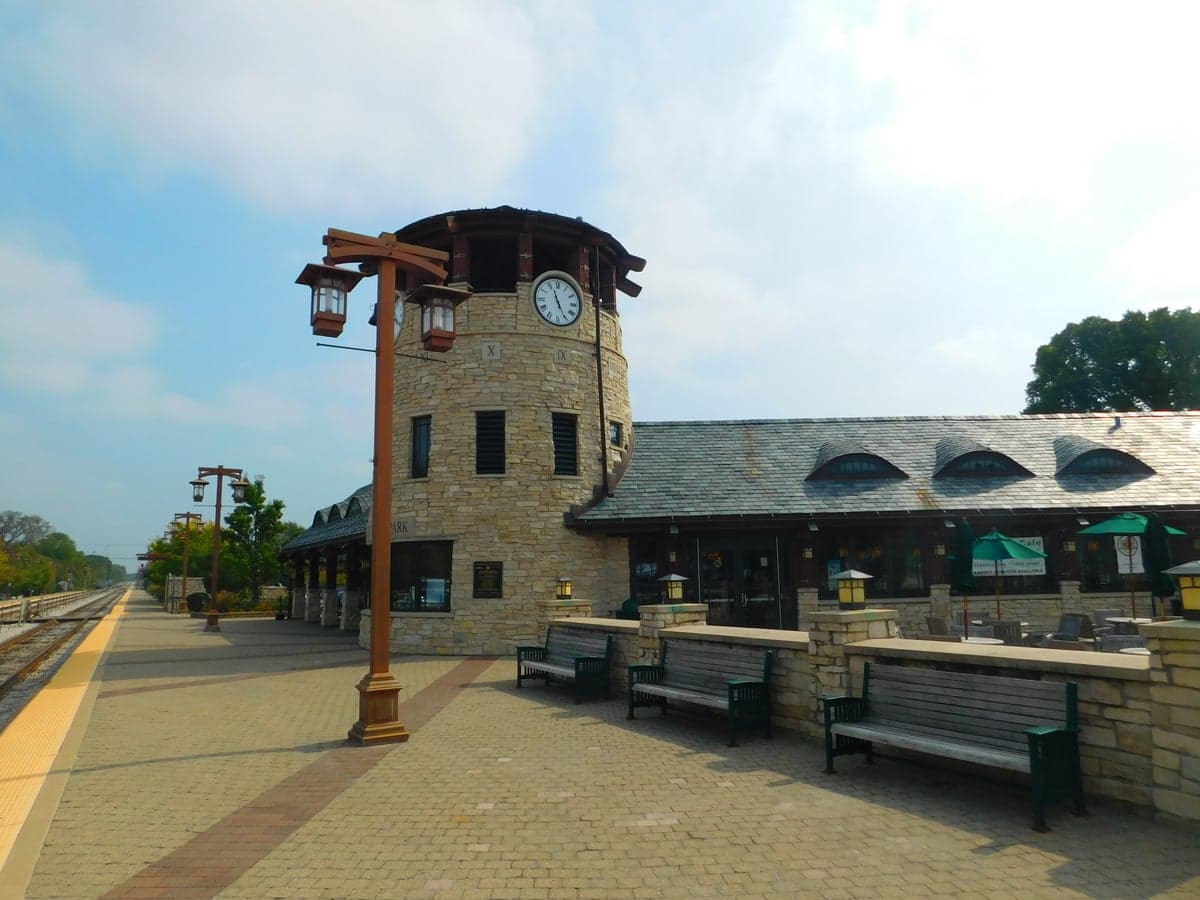
Tinley Park’s human history begins not with colonial settlement but with the railroad. The area was originally part of a larger tract of land settled by German and Dutch farmers in the 1830s and 1840s, but the town itself was platted in 1890 as a stop on the Chicago, Rock Island and Pacific Railroad. The original core, now known as the Historic Downtown Tinley Park district, was built by these German and Dutch families who established small farms and businesses along the rail line. A second early wave came in the 1910s and 1920s, when Irish and Polish immigrants—many of them laborers on the railroad and in nearby limestone quarries—settled in the area around Oak Park Avenue and 171st Street, forming the city’s first ethnic enclaves. These groups built the original St. George Catholic Church and St. Stephen Deacon and Martyr parishes, which remain community anchors. The population remained small—under 2,000—through the 1940s, as the town was essentially a rural rail stop with a few dozen homes and a handful of stores.
Modern era (post-1965)
The post-1965 era transformed Tinley Park from a sleepy village into a booming suburb. The construction of Interstate 80 in the 1960s and the extension of the Metra Rock Island District line made the town accessible to Chicago commuters, triggering a massive wave of domestic in-migration. The dominant group in this period was upwardly mobile white families—many of Irish, Polish, and German descent—moving from Chicago’s South Side and southwest suburbs. These families filled the new subdivisions that sprouted in the 1970s and 1980s, particularly in the Brookside Glen and Timber Creek neighborhoods, which feature large single-family homes on quarter-acre lots. The population surged from 6,000 in 1960 to over 40,000 by 2000. This wave was almost entirely domestic; the foreign-born share remained below 3% throughout the period. A smaller but notable influx of East/Southeast Asian families—primarily of Chinese and Filipino ancestry—arrived in the 1990s and 2000s, settling in the newer developments around Lilac Lane and Brendan Drive. The Indian subcontinent population (1.5%) is a more recent arrival, concentrated in the Millar Crossing subdivision, built in the early 2000s. The Hispanic population (10.6%) has grown steadily since 2000, with many families moving into the Ravinia Glen area and the older housing stock near 171st Street.
The future
Demographic projections suggest Tinley Park is slowly diversifying but will remain a predominantly white, native-born suburb for the foreseeable future. The Hispanic share is the fastest-growing segment, projected to reach 14-16% by 2035, driven by natural increase and continued domestic migration from Chicago’s Southwest Side. The East/Southeast Asian and Indian populations are likely to plateau near current levels, as the city lacks the high-tech employment base that attracts these groups to suburbs like Naperville or Schaumburg. The white population is aging and declining slightly, with younger white families often choosing newer exurbs like Manhattan or Mokena. The city is not tribalizing into distinct ethnic enclaves; rather, newer groups are dispersing across the existing subdivisions, with no single neighborhood exceeding 20% non-white. The foreign-born share is expected to remain below 4%, as Tinley Park does not have the rental housing stock or transit connections that attract recent immigrants. The city is becoming a stable, middle-class community with a slowly diversifying but still overwhelmingly native-born population.
For a conservative-leaning individual or family considering relocation, Tinley Park offers a community that is demographically stable, culturally traditional, and largely insulated from the rapid demographic change seen in closer-in suburbs. The population is aging in place, which means lower turnover but also a well-established social fabric of churches, civic groups, and school activities. The city is not a destination for new immigrants, nor is it experiencing the white flight or rapid ethnic succession seen in some neighboring towns. It is, in short, a place where the population is slowly and quietly diversifying, but the core character—rooted in its Irish, Polish, and German heritage—remains firmly intact.

* Values derived from national, state, county, city and local statistics and may differ in a specific area. Last updated: 2026-04-19T11:40:09.000Z
Narrative content on this page is AI-generated and may contain mistakes. Verify any details that matter before acting on them.
ReloMaps may earn a commission from affiliate links at no extra cost to you.

