
Photo: Wikipedia
Political ClimatePolitical Climate in Tinley Park, IL
District shown is the primary district for this city’s centroid. Cities may span multiple districts.
Local Political AnalysisPolitical Analysis of Tinley Park, IL
Tinley Park sits in a weird political spot, and if you’ve lived here as long as I have, you’ve watched it drift. The village itself leans a little left of center—Cook County’s Partisan Voter Index is D+3, meaning it’s about three points more Democratic than the national average—but that number hides a lot of tension. You’ve got old-school union families, cops, and small business owners who remember when this was a reliably conservative patch of the southwest suburbs, and then you’ve got newer transplants from the city who bring Chicago-style progressive politics with them. The trajectory? It’s been a slow, steady slide leftward since about 2016, and it’s picking up speed.
How it compares
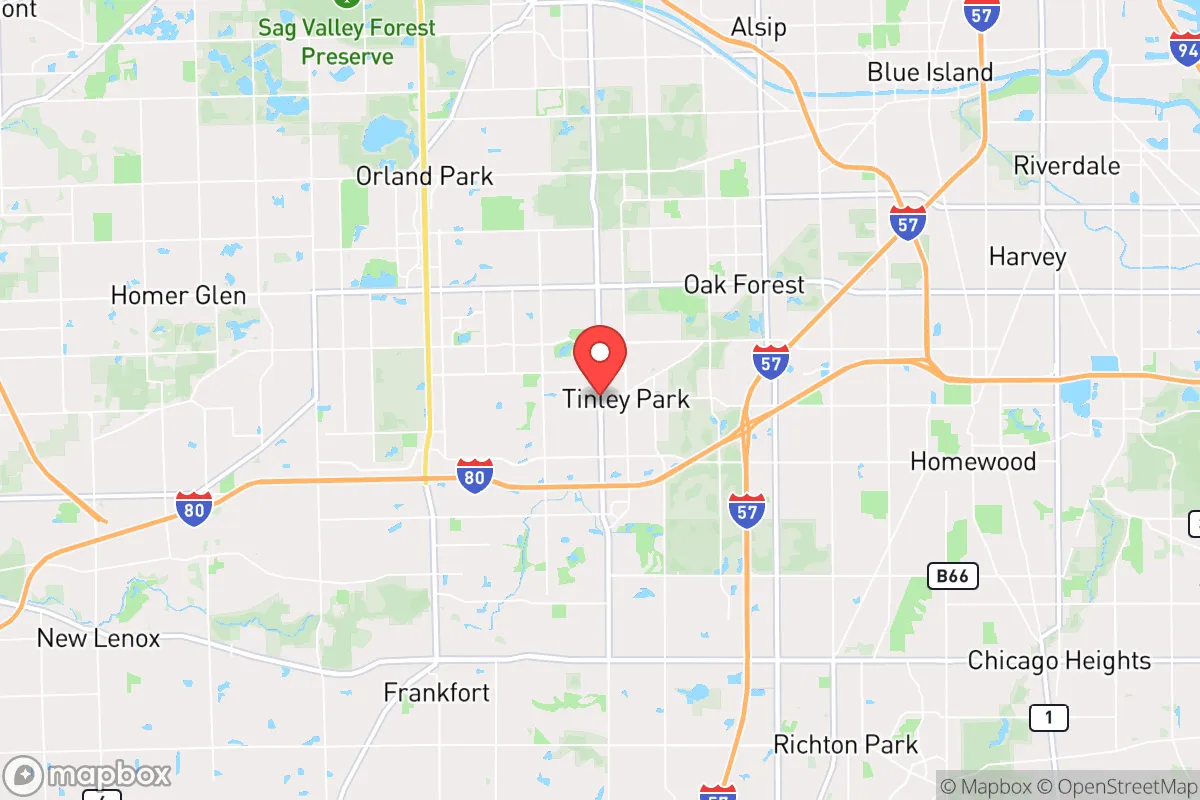
Drive ten minutes west to Orland Park, and you’re in a completely different world—that town’s still got a Republican lean, especially in the more rural pockets south of 143rd Street. Head east toward Oak Forest or south to Mokena, and you’ll find folks who’ll tell you straight up they feel like Tinley’s getting too cozy with Cook County machine politics. The contrast is sharpest when you look at school board races or village trustee elections: Tinley’s candidates are increasingly running on “equity” and “inclusion” platforms that would’ve been laughed out of a town hall meeting twenty years ago. Meanwhile, neighboring Frankfort and New Lenox are still fighting to keep property taxes low and zoning rules loose. It’s like two different Americas separated by a few miles of strip malls.
What this means for residents
For a conservative-leaning family or a small business owner, the warning signs are real. The village council has been quietly pushing more regulations—think stricter rental inspection ordinances, higher fees for home-based businesses, and a growing appetite for “affordable housing” mandates that could mess with property values. The school district, Consolidated High School District 230, has seen a push for critical race theory-adjacent curriculum and gender identity policies that bypass parental input. If you value personal freedom—your right to run a business without a dozen permits, your right to know what your kid is being taught, your right to keep your tax dollars from funding programs you don’t support—Tinley Park is becoming a place where you have to stay vigilant. The local government isn’t hostile yet, but the foundation is shifting.
The cultural distinction that stands out most is the tension between Tinley’s old identity as a family-friendly, blue-collar suburb and its new identity as a “progressive hub” for the southwest suburbs. You still see American flags on front porches, but you also see “In This House We Believe” signs in the same neighborhoods. The annual Irish Parade and the summer concert series at the Performing Arts Center still draw crowds that feel like the old Tinley, but the village’s official social media accounts now push climate action plans and diversity training events. If you’re a conservative who values limited government and local control, you can still live here comfortably—but you’ll need to pay attention to every ballot measure and school board meeting. The next five years will tell us whether Tinley Park stays a place where you can mind your own business, or whether it becomes another suburb where the government’s hand reaches a little too far into your life.

State Political ClimatePolitical Climate in Illinois
State Political AnalysisPolitical Environment in the State
Illinois is a deeply blue state in statewide elections, but its political landscape is far more fractured than the presidential results suggest. Democrats have held the governorship since 2003 and control both legislative chambers by supermajorities, yet this dominance masks a bitter urban-rural war and a steady exodus of conservative-leaning residents. Over the past 20 years, the state has lurched leftward on taxes, gun control, and social policy, while downstate and suburban counties have grown increasingly Republican — a trend that accelerated after the 2020 election and the 2021 passage of a progressive income tax amendment (which voters rejected, but lawmakers later enacted via a flat-rate hike).
Urban vs. rural divide
The political map of Illinois is a tale of two worlds. Cook County, anchored by Chicago, casts roughly 40% of the state’s vote and delivers margins of 70-80% for Democrats. The city itself is a Democratic machine stronghold, with Mayor Brandon Johnson and a city council that has pushed defund-the-police rhetoric and sanctuary city policies. Surrounding collar counties — DuPage, Lake, Kane, Will, and McHenry — have been trending purple to blue, especially in affluent suburbs like Naperville and Arlington Heights, where college-educated voters have shifted left on social issues. Meanwhile, downstate Illinois — everything south of I-80 — is solidly red. Counties like Effingham, Williamson, and Jefferson routinely vote 70%+ Republican. The divide is stark: Chicago and its suburbs produce about 65% of the state’s population, but the rest of Illinois feels like a different country — more rural, more conservative, and increasingly resentful of Springfield’s one-party rule. Places like Peoria, Rockford, and Springfield itself are swing zones, but even they are bleeding population to red-leaning exurbs like Yorkville and Huntley.
Policy environment
Illinois’s policy environment is a case study in progressive governance with a heavy price tag. The state has the second-highest property tax burden in the nation, with effective rates averaging over 2% of home value — a killer for families in places like Lake Forest or Naperville. The flat income tax was raised to 4.95% in 2017, and despite voters rejecting a progressive tax in 2020, lawmakers found a way to hike it anyway. Sales taxes can exceed 10% in Chicago and some suburbs, and the state’s pension debt — over $140 billion — is the worst-funded in the country. On education, Illinois mandates a “culturally responsive” teaching framework and has expanded gender identity protections in schools, including allowing students to use bathrooms matching their identity without parental notification. Healthcare is heavily regulated, with a state-run exchange and Medicaid expansion. Election laws are among the most permissive: no-excuse mail voting, same-day registration, and automatic voter registration. For conservatives, the policy environment feels like a slow squeeze — higher taxes, less local control, and a government that prioritizes progressive social engineering over fiscal sanity.
Trajectory & freedom
On the freedom front, Illinois is moving in the wrong direction for conservatives. The 2023 “Protect Illinois Communities Act” banned the sale of dozens of semi-automatic firearms and standard-capacity magazines, making Illinois one of the strictest gun-control states in the nation — a direct hit on Second Amendment rights. The law is being challenged in court, but for now, it’s the law of the land. On parental rights, the state passed a law in 2023 that prevents schools from notifying parents if a child changes their gender identity or pronouns — a clear erosion of family authority. Medical freedom took a hit with the 2023 expansion of abortion access, including taxpayer funding for out-of-state travel, and a law requiring insurance to cover gender transition procedures. Property rights are under pressure from a 2021 law that limits local zoning control for affordable housing, and from Chicago’s “just cause” eviction ordinance. Tax freedom is a myth here: the state’s pension crisis means taxes will only go up, not down. The only bright spot is that Illinois has no right-to-work law, but unions dominate the public sector, driving up costs. For someone valuing personal liberty, Illinois feels like a state where the government knows best — and isn’t shy about proving it.
Civil unrest & political movements
Illinois has seen its share of civil unrest, particularly in Chicago. The 2020 George Floyd protests turned into widespread looting and arson on the Magnificent Mile, and the city has struggled with a surge in carjackings and retail theft since then. Organized activist movements are powerful: the Chicago Teachers Union is a political juggernaut, and groups like Black Lives Matter Chicago and the Illinois Coalition for Immigrant and Refugee Rights have real sway in Springfield. On the right, the “Illinois Freedom Caucus” in the state legislature has grown, and grassroots groups like “Awake Illinois” and “Parents for Education” have mobilized against mask mandates, critical race theory, and the transgender notification law. Immigration politics are a flashpoint: Illinois is a sanctuary state, with a 2017 law prohibiting local law enforcement from cooperating with ICE. This has led to tensions in suburbs like Elgin and Aurora, where migrant arrivals have strained resources. Election integrity is a hot-button issue: Illinois has no voter ID requirement, and the 2020 election saw widespread use of mail-in ballots without signature verification — a setup that many conservatives view as ripe for fraud. Secession talk is real: several downstate counties, including Effingham and Iroquois, have passed resolutions exploring separation from Cook County, though it’s mostly symbolic. A new resident would notice the political tension in the air — especially if they venture outside the Chicago bubble.
Projection
Over the next 5-10 years, Illinois is likely to become even more polarized and less competitive. Demographic trends are brutal: the state lost population for the 10th straight year in 2023, with net domestic out-migration of over 100,000 people annually — mostly to Florida, Texas, and Tennessee. Those leaving are disproportionately middle-class families and conservatives, which only deepens the Democratic supermajority. The remaining population is older, more urban, and more dependent on government services. Expect more tax hikes to cover the pension debt, more progressive social legislation, and a continued erosion of local control. The one wild card is a potential federal court ruling that strikes down the gun ban, which could energize the right. But realistically, Illinois is on a path to becoming a one-party state like California or New York, where the only real political fights are in Democratic primaries. For a conservative moving in now, the next decade will feel like a slow retreat — higher costs, less freedom, and a government that doesn’t represent your values.
Bottom line for a new resident: Illinois is a beautiful state with great schools, strong infrastructure, and world-class culture, but it comes with a heavy price — both in taxes and in personal freedom. If you’re a conservative, you’ll find like-minded communities in the collar counties or downstate, but you’ll be fighting an uphill battle against a state government that is increasingly hostile to your values. The best advice: come for the job or the family ties, but don’t expect the political climate to improve. Plan your exit strategy before you unpack.
* Values derived from national, state, county, city and local statistics and may differ in a specific area. Last updated: 2026-04-19T11:40:09.000Z
Narrative content on this page is AI-generated and may contain mistakes. Verify any details that matter before acting on them.
ReloMaps may earn a commission from affiliate links at no extra cost to you.

