
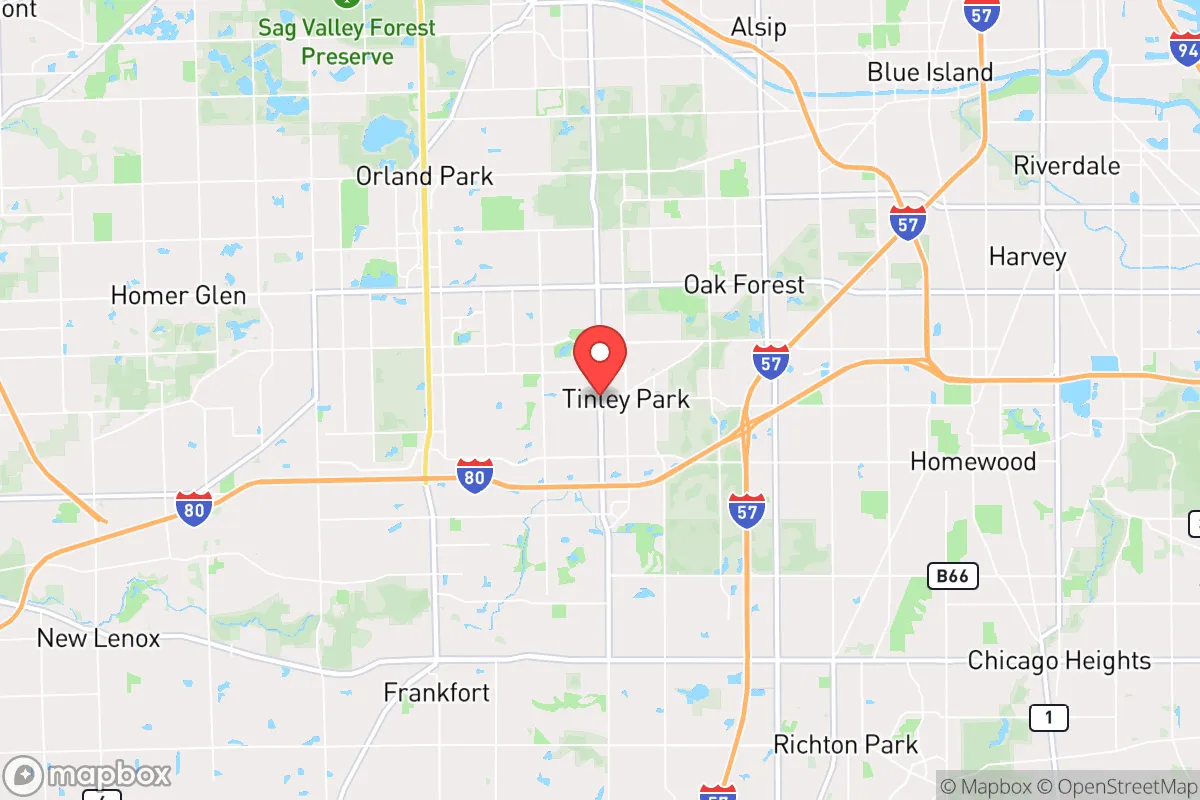
Photo: Wikipedia
Personal Sovereignty in Tinley Park, IL
Viable for self-reliance. Generally workable, though some barriers may limit total independence.
What does Personal Sovereignty tell us?
Personal Sovereignty measures your capacity for self-reliance and independence with minimal government friction. Higher scores mean fewer barriers between you and the way you want to live... but it assumes you have the space you need and good neighbors.
What does this tell us?
Personal Sovereignty measures your capacity for self-reliance and independence with minimal government friction. Higher scores mean fewer barriers between you and the way you want to live... but it assumes you have the space you need and good neighbors.
State Policy
Energy independence: Importer (45% of energy produced in-state)
Personal Liberty
Homesteading

Personal Liberty Analysis
Tinley Park, Illinois, presents a mixed picture for those prioritizing personal sovereignty, where local autonomy is often constrained by state-level policies that many conservative-leaning individuals and preppers view as overreach. While the village itself maintains a relatively quiet, family-oriented atmosphere with some room for self-reliance, residents must navigate Illinois’s broader regulatory environment—characterized by high taxes, restrictive gun laws, and expanding state mandates on medical and educational choices. For single adults and parents evaluating this southwest Chicago suburb, the key question is whether the community’s practical benefits outweigh the erosion of personal freedoms seen at the state capitol. This analysis examines the specific factors that shape autonomy in Tinley Park, from tax burdens to self-defense rights, to help you decide if it aligns with a survivalist or conservative mindset.
Tax burden and regulatory posture in Tinley Park and Illinois
Illinois imposes one of the heaviest tax burdens in the nation, and Tinley Park residents feel it directly. The state’s flat income tax rate of 4.95% combines with property taxes that average around 2.1% of assessed home value in Cook County (where most of Tinley Park sits), though the village’s portion in Will County is slightly lower. For a median-priced home near $350,000, annual property taxes can exceed $7,000—a significant ongoing cost that reduces disposable income for prepping supplies, land improvements, or savings. Sales tax in Tinley Park is 8.0% (Cook County) or 7.25% (Will County), adding to everyday expenses. Regulatory posture at the state level is expansive: Illinois mandates strict building codes, environmental regulations, and business licensing that can frustrate those seeking to operate home-based enterprises or modify property without permits. The state’s progressive income tax structure, though currently flat, has been a recurring legislative target, creating uncertainty for long-term financial planning. For a prepper, this tax and regulatory climate means less financial flexibility and more bureaucratic hurdles—a clear negative for personal sovereignty.
Self-defense and gun law specifics in Tinley Park and Illinois
Illinois’s gun laws are among the most restrictive in the Midwest, directly impacting self-defense rights in Tinley Park. The state requires a Firearm Owner’s Identification (FOID) card for any gun possession, with a waiting period of up to 72 hours for handgun purchases. Carrying a concealed firearm requires a separate Concealed Carry License (CCL), which mandates 16 hours of training and a $150 fee. In 2023, Illinois enacted a ban on so-called “assault weapons” and high-capacity magazines (over 10 rounds for long guns, 15 for handguns), with existing owners required to register them with the state police—a move many conservatives view as government overreach. Tinley Park itself has no additional local gun ordinances beyond state law, but the village’s proximity to Chicago means residents must be aware of Cook County’s stricter regulations, such as a ban on certain firearms in unincorporated areas. For preppers, this means limited options for defensive firearms, potential legal pitfalls if traveling with weapons, and a reliance on state compliance that undermines the principle of self-reliance. The state’s red flag law also allows for temporary firearm seizure based on third-party reports, raising concerns about due process and false accusations.
Self-reliance and homesteading viability in Tinley Park
Tinley Park’s suburban layout offers limited opportunities for serious homesteading or off-grid living. Typical residential lots range from 0.15 to 0.25 acres, with some larger parcels in the village’s older sections reaching 0.5 acres. Zoning regulations in Cook County and Will County generally prohibit livestock (chickens are allowed in some areas with permits, but pigs, goats, or cattle are not), and vegetable gardens are permitted but must be maintained to avoid nuisance complaints. Rainwater collection is legal in Illinois, but the state imposes restrictions on cisterns and requires permits for systems over 1,000 gallons. Off-grid energy—such as solar panels—is allowed but must comply with local building codes and utility interconnection rules; net metering is available but with caps that limit full independence. For a prepper seeking true self-reliance, Tinley Park’s dense suburban environment, homeowners’ association (HOA) restrictions in many subdivisions, and state-level building codes make it challenging. The village’s water and sewer are municipally provided, and reliance on the grid is nearly unavoidable. Those serious about homesteading would find more freedom in rural Will County towns like Peotone or Manteno, where lot sizes of 1-5 acres are common and zoning is less restrictive.
Personal liberties in Tinley Park: parental rights, medical autonomy, speech, and property
Personal liberties in Tinley Park are shaped by Illinois’s progressive state policies, which often clash with conservative values. On parental rights, Illinois mandates comprehensive sex education in public schools (including LGBTQ+ topics) and does not require parental opt-in for many health services—minors can consent to mental health counseling and substance abuse treatment without parental knowledge. The state’s 2023 law expanding abortion access and protecting providers from out-of-state lawsuits further limits parental control over medical decisions for minors. Medical autonomy is constrained by Illinois’s vaccine mandates for school attendance (including COVID-19 for some grades) and a lack of religious or philosophical exemptions for certain immunizations. Free speech is generally protected, but Illinois’s hate crime laws and social media regulations (such as the 2024 law requiring age verification for minors) create potential chilling effects for controversial expression. Property rights are relatively strong at the local level—Tinley Park has no rent control and minimal eminent domain activity—but state-level environmental regulations can restrict land use, such as wetland protections that limit development on private property. For a conservative individual, these policies represent a steady erosion of personal autonomy, particularly in family and medical decisions.
Overall, Tinley Park offers a moderate level of personal sovereignty compared to other Chicago suburbs, but it falls short for those prioritizing a survivalist or prepper lifestyle. The village’s low crime rate, decent schools, and community stability are positives, but they come at the cost of high taxes, restrictive gun laws, limited homesteading potential, and state-level overreach into parental and medical rights. For a single adult or family willing to comply with Illinois’s regulatory framework, Tinley Park can work as a base for suburban self-reliance—stockpiling supplies, maintaining a garden, and building community networks. However, for those seeking true independence—off-grid living, unrestricted firearm ownership, or minimal government interference—rural areas in Indiana or Wisconsin, just a few hours away, offer far greater freedom. In the current national climate, Tinley Park represents a compromise: livable but constrained, where personal sovereignty requires constant vigilance and strategic planning to navigate state mandates.

* Values derived from national, state, county, city and local statistics and may differ in a specific area. Last updated: 2026-04-19T11:40:09.000Z
Narrative content on this page is AI-generated and may contain mistakes. Verify any details that matter before acting on them.
ReloMaps may earn a commission from affiliate links at no extra cost to you.

