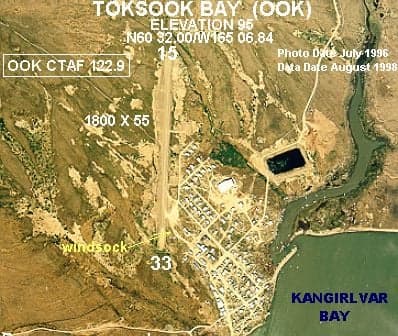
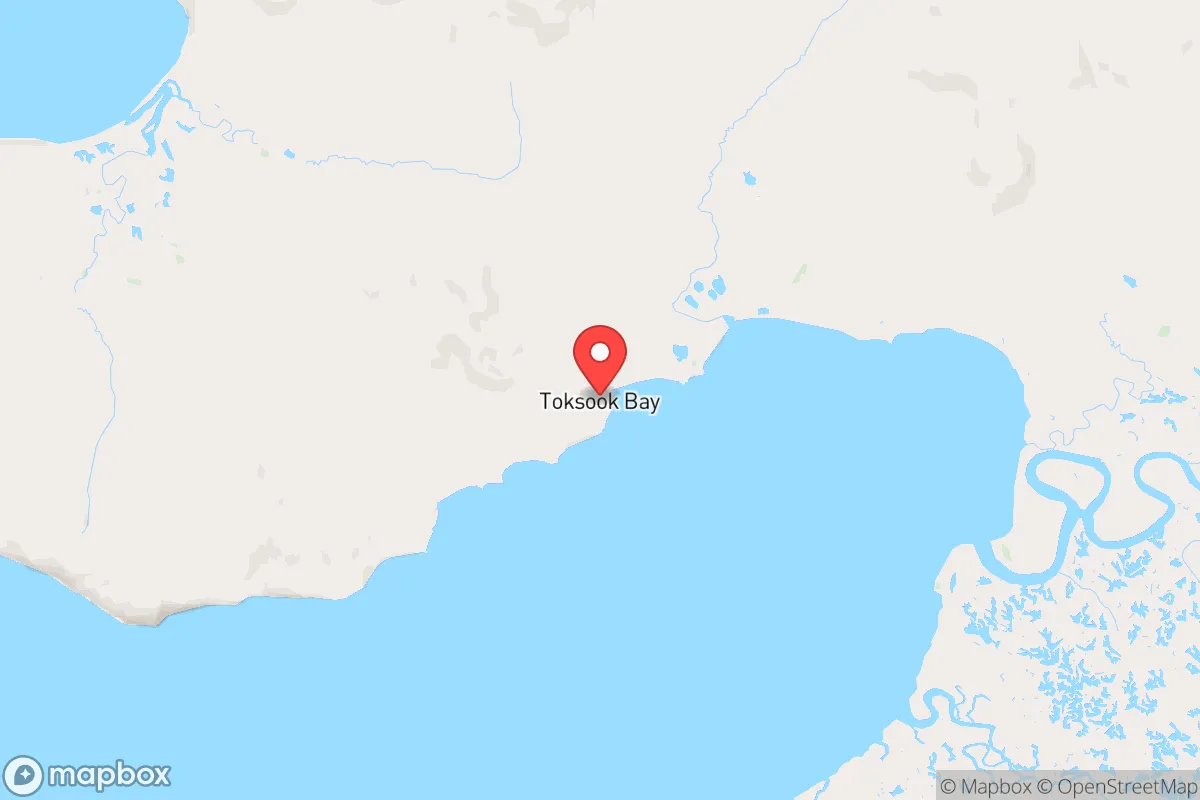
Photo: Wikipedia
Strategic Assessment of Toksook Bay, AK
Strong survivability profile. Good buffer from population centers, with manageable environmental and tactical risks.
What does the Strategic Assessment tell us?
Our Strategic Assessment grades tactical survivability of an area. Major population centers, military targets, fallout zones, natural disasters, and border exposure all drive risk — lower exposure means a more defensible position in a crisis.
This is heavily inspired by Joel Skousen's Strategic Relocation book. Highly recommended you checkout the book ($)What does this tell us?
Our Strategic Assessment grades tactical survivability of an area. Major population centers, military targets, fallout zones, natural disasters, and border exposure all drive risk — lower exposure means a more defensible position in a crisis.
This is heavily inspired by Joel Skousen's Strategic Relocation book. Highly recommended you checkout the book ($)Strategic Pillars

Key Distances
Regional Safe Places
Below is our recommended "safe zones" in Alaska and the surrounding area based on our strategic heuristics. For most people, it's unrealistic to live in a “safe zone” full-time due to work, family or other personal reasons. They tend to be more rural. However, many of these areas are perfect for second homes and retreat properties that double as a vacation home or even a short-term rental.
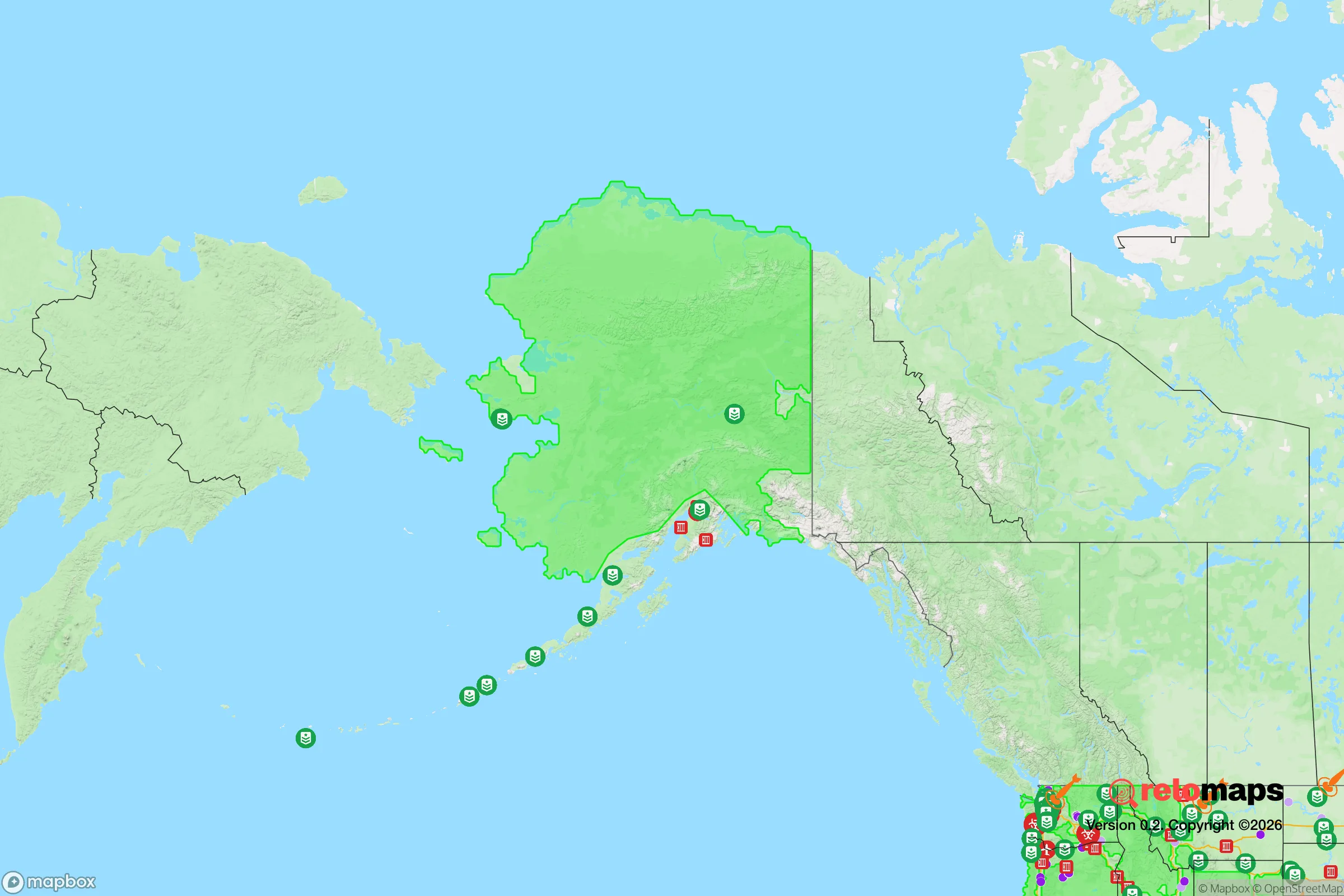
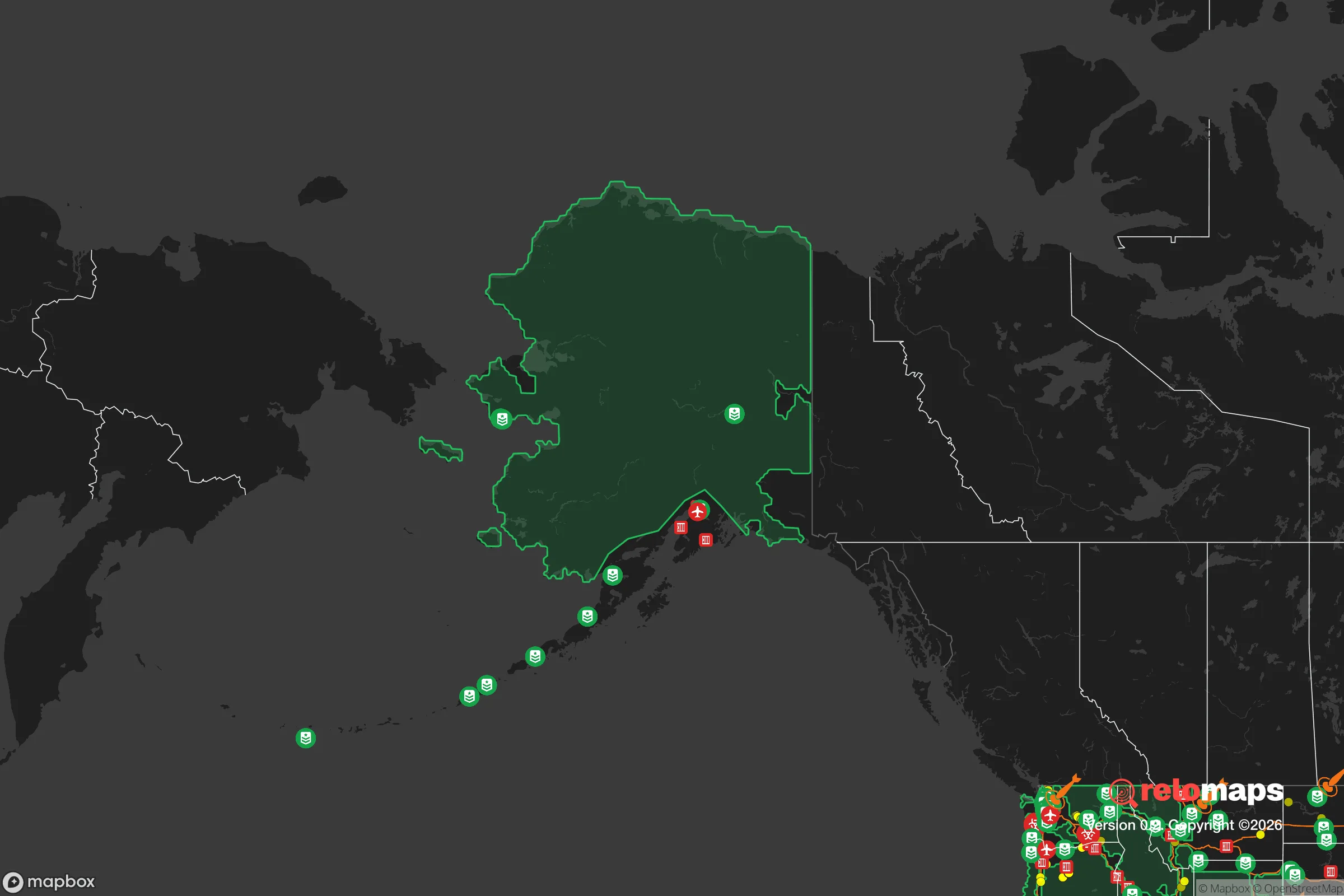


Important Note: For informational purposes only. This does not mean nothing bad ever happens in the green zones. Please use common sense. This is based on public data and modeled with AI. We tried to take a conservative approach but mistakes happen. We update this regularly as new information becomes available.
Solar Generator Recommendations
Backup power matters more here than in safer locations. We've picked three solar generators across budgets and capacity tiers — start with the budget unit if you only need a few essentials, or step up if you want to run a fridge and HVAC for days at a time.

Jackery Portable Power Station Explorer 300
Budget OptionPower on the Go: Weighing only 11 lbs, it's convenient to set up and store with book-sized foldable solar panels

BLUETTI Portable Power Station AC180
Designed for both indoor and outdoor scenarios, AC180 is highly capable as it has a robost capacity and continuous output power.

EF ECOFLOW DELTA Pro Ultra Power Station
Upgraded PickEcoFlow DELTA Pro Ultra is a whole-home energy system designed to grow with your family. Integrated with the Smart Home Panel 2, it scales to meet your evolving energy needs — keeping your home powered, intelligent, and secure through every stage of life.
We earn a commission, at no additional cost to you.
Strategic Assessment Analysis
Toksook Bay, Alaska, sits as one of the most remote and strategically defensible communities in the United States, offering a level of isolation that is nearly impossible to find in the Lower 48. For the conservative-minded relocator who views the world through a lens of potential civic collapse, mass casualty events, or large-scale disasters, this Yup'ik village on Nelson Island presents a unique set of trade-offs. Its primary advantage is simple: there is no road in, no bridge, and no easy way for a hostile or destabilized population to reach you. The community’s resilience is not theoretical—it is a daily necessity, forged by subarctic winters and a subsistence lifestyle that has persisted for centuries. If your relocation strategy prioritizes being far from the grid, far from fallout zones, and far from the chaos of urban collapse, Toksook Bay deserves a hard look, but only if you are prepared for the extreme costs of that isolation.
Geographic position and natural advantages for long-term survival
Toksook Bay’s location is its strongest card. It sits on the Bering Sea coast, roughly 115 miles southwest of Bethel and over 400 miles from Anchorage. There are no connecting roads to any other settlement—access is strictly by air or seasonal barge. This geographic isolation means that in the event of a national-scale disruption—whether from economic collapse, grid failure, or a mass casualty event—Toksook Bay would be effectively invisible to the chaos unfolding in urban centers. The surrounding terrain is tundra and coastal marsh, which is difficult to traverse on foot and impossible for vehicles. The community is also positioned away from any major military or industrial targets. There are no nuclear power plants, no major ports, and no strategic missile silos within hundreds of miles. For someone concerned with fallout from a limited nuclear exchange or a dirty bomb detonated in a major city, Toksook Bay offers a clean slate. The prevailing winds blow from the north and east, meaning any airborne contamination from Anchorage or even Russian Far East incidents would likely be dispersed before reaching this remote pocket. The Bering Sea itself provides a natural barrier to mass migration; no one is walking to Toksook Bay.
Risks, exposures, and proximity to fallout-relevant landmarks
While Toksook Bay is far from the typical targets, it is not without its own risk profile. The most significant exposure is its proximity to Russia—roughly 200 miles across the Bering Sea from the Chukotka Peninsula. In a scenario involving geopolitical conflict, this could become a liability rather than an asset. The Bering Strait region has seen increased military activity from both the U.S. and Russia in recent years, and Toksook Bay sits within the broader zone of potential naval or air engagement. That said, the village itself is not a military target; it is a small, subsistence-based community of roughly 700 people. The real risk is not a direct strike but the secondary effects of regional instability—disrupted supply chains, fuel shortages, or the possibility of being caught between larger powers. Another concern is the lack of medical infrastructure. The local clinic is basic, and serious emergencies require medevac to Bethel or Anchorage. In a mass casualty event or pandemic scenario, the community would be on its own. There is no hospital, no surgical capability, and limited pharmaceutical stockpiles. For a relocator with a prepper mindset, this means you must bring your own medical supplies and training. The isolation that protects you from fallout also cuts you off from help.
Practical resilience for a relocator: food, water, energy, and defensibility
Toksook Bay’s practical resilience is built on a subsistence economy, which is both its greatest strength and its hardest adjustment for an outsider. Food security comes from hunting, fishing, and gathering. The Bering Sea provides salmon, halibut, and crab; the tundra yields berries and greens; and the surrounding waters and land support seal, walrus, and waterfowl. For a relocator willing to learn these skills, the food supply is renewable and independent of grocery store chains. Water is drawn from local wells and treated, but in a grid-down scenario, the community relies on rainwater collection and melting ice. Energy is the weak link. The village runs on diesel generators, with fuel delivered by barge once a year. If that supply chain is disrupted—by a global fuel crisis, a war, or a severe weather event—the community would lose power, heating, and communications. Solar is possible but limited by long winter nights and heavy cloud cover. Wind turbines have been tried but face maintenance challenges. For a serious prepper, this means you need to bring your own renewable energy system—likely a combination of solar panels, a small wind turbine, and a backup generator with a multi-year fuel cache. Defensibility is excellent. The village is compact, with a single airstrip and a small boat harbor. The surrounding terrain offers no cover for an approaching force, and the community is tight-knit—strangers are immediately noticed. In a collapse scenario, this social cohesion is a double-edged sword: you will be accepted only if you contribute and integrate. There is no room for a lone wolf here. The community’s survival depends on mutual aid, and any relocator must be prepared to pull their weight in hunting, maintenance, and communal defense.
The overall strategic picture for Toksook Bay is one of extreme trade-offs. It offers near-total isolation from the cascading failures that would likely devastate urban and suburban America—no riots, no refugee flows, no supply chain collapse that can't be mitigated by subsistence. It is one of the few places in the United States where a determined individual or family could realistically ride out a multi-year disruption without outside support, provided they have the skills and resources to adapt. But the costs are severe: brutal winters, limited medical care, dependence on annual fuel deliveries, and a cultural barrier that requires genuine integration into a Yup'ik community. For the conservative relocator who values self-reliance, community bonds, and distance from the crumbling infrastructure of the Lower 48, Toksook Bay is a viable option—but only if you are willing to trade modern convenience for genuine security. It is not a retreat for the faint of heart or the unprepared. It is a strategic outpost for those who understand that true resilience means being willing to live like the people who have been here for thousands of years, long before the grid existed.

* Values derived from national, state, county, city and local statistics and may differ in a specific area. Last updated: 2026-04-19T19:39:04.000Z
Narrative content on this page is AI-generated and may contain mistakes. Verify any details that matter before acting on them.
ReloMaps may earn a commission from affiliate links at no extra cost to you.

