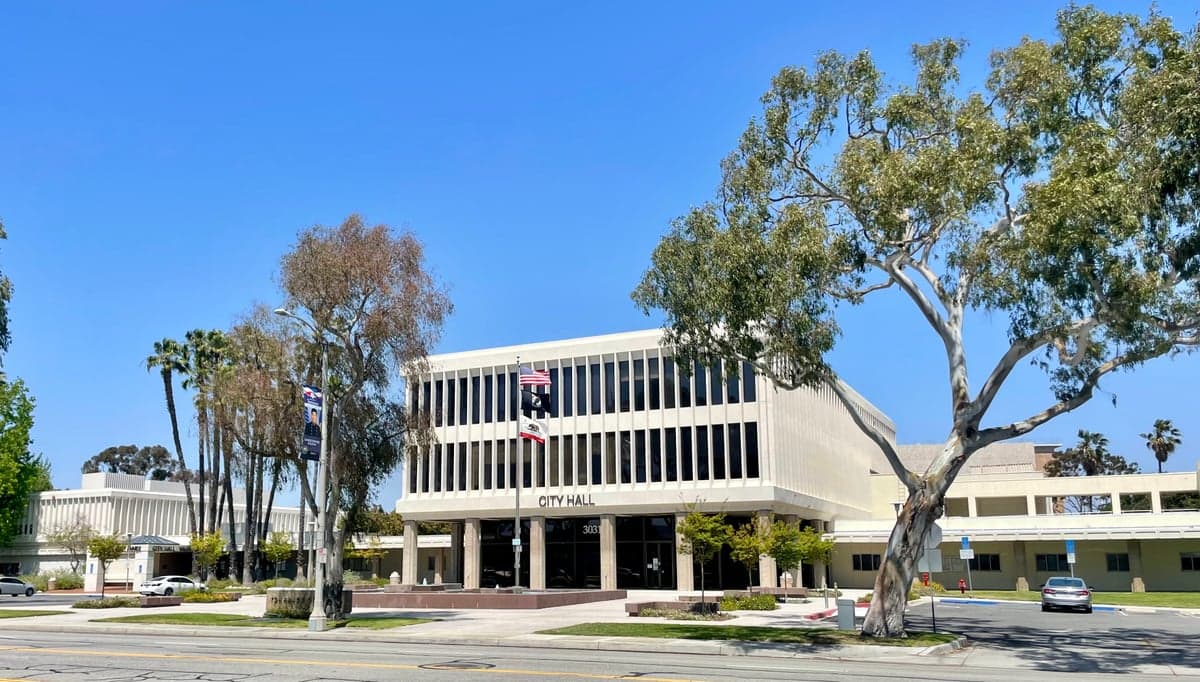
Photo: Wikipedia
Demographics of Torrance, CA
Affluence Level in Torrance, CA
An upper-middle-class area. Household wealth, education levels, and homeownership run ahead of national benchmarks.
People of Torrance, CA
The people of Torrance, California, today form a notably diverse and well-educated population of 143,499, where no single ethnic group holds a majority. The city is characterized by a large East and Southeast Asian community at 34.0%, a significant White population at 32.2%, and a substantial Hispanic presence at 19.3%, alongside smaller Black (3.4%) and Indian (4.2%) communities. With 53.0% of adults holding a college degree, Torrance is a highly educated, middle-to-upper-middle-class suburb that blends its post-war aerospace roots with a modern, multiethnic identity. Its distinctive character is one of stable, family-oriented neighborhoods where distinct ethnic enclaves have formed without the intense segregation seen in larger cities.
How the city was settled and grew
Torrance was a planned industrial city, founded in 1911 by real estate developer Jared Sidney Torrance on former Spanish and Mexican rancho land. The original population was drawn by the promise of jobs at the new Union Tool Company and later, during World War II, by the massive expansion of the aerospace industry. The earliest residential areas, such as Old Torrance near the original downtown, were built for white, middle-class managers and skilled workers. The post-war boom of the 1950s and 1960s brought a massive wave of domestic migrants—primarily white families from the Midwest and other parts of California—who filled the newly built tract homes in neighborhoods like North Torrance and Southwood. These areas were deliberately planned with single-family homes, parks, and schools, cementing Torrance’s identity as a stable, family-oriented suburb. A smaller but significant Japanese American community, many of whom had been incarcerated during the war, resettled in Torrance during this period, particularly in the Seaside and Walteria neighborhoods, establishing a foundation for the later Asian influx.
Modern era (post-1965)
The Immigration and Nationality Act of 1965 fundamentally reshaped Torrance’s population. The city’s proximity to Los Angeles International Airport and its reputation for good schools and safe streets attracted a wave of immigrants from East and Southeast Asia. Japanese and Korean families were the first to arrive in significant numbers, followed by Chinese and Filipino communities. These groups concentrated in the Seaside and Walteria neighborhoods, where they established a dense network of Asian-owned businesses, supermarkets, and churches along Artesia Boulevard and Pacific Coast Highway. By the 1990s, Torrance had one of the largest Japanese American populations of any U.S. city. Simultaneously, the Hispanic population grew steadily, drawn by service-sector and light-industrial jobs, settling primarily in North Torrance and the El Camino Village area. The White population, which had been over 80% in 1970, declined to its current 32.2% as older families aged out and were not replaced at the same rate. The Indian subcontinent community, while smaller at 4.2%, has grown more recently, with families settling in the Southwood and West Torrance areas, drawn by the same school quality and safety that attracted earlier waves.
The future
Torrance’s population is likely to continue its trend toward greater diversity, but the pace of change is slowing. The East and Southeast Asian share, now the largest single group, appears to be plateauing as younger generations assimilate and some families move to newer suburbs in Orange County or the Inland Empire. The Hispanic population is growing steadily, driven by both domestic births and continued immigration, and is expected to eventually surpass the White population in share. The Indian community, though small, is growing faster than any other group, drawn by tech and healthcare jobs in the broader South Bay region. The city is not homogenizing into a single melting pot; rather, it is tribalizing into distinct, stable enclaves. Seaside and Walteria remain heavily East and Southeast Asian, North Torrance is increasingly Hispanic, and Southwood and West Torrance are the most mixed, with significant White, Asian, and Indian populations. Over the next 10-20 years, Torrance will likely remain a highly desirable, well-educated suburb, but its character will continue to shift toward a majority-minority population where no single group dominates, and where distinct ethnic neighborhoods persist.
For someone moving in now, Torrance offers a stable, safe, and highly educated environment with excellent schools and a strong sense of community. The city is becoming a place where Asian and Hispanic cultures are increasingly central to its identity, while still retaining a significant white and Indian presence. It is not a city of rapid change or upheaval, but one of gradual, orderly demographic evolution—a place where newcomers can find an established ethnic niche or a genuinely diverse neighborhood, depending on their preference.

* Values derived from national, state, county, city and local statistics and may differ in a specific area. Last updated: 2026-04-24T11:34:32.000Z
Narrative content on this page is AI-generated and may contain mistakes. Verify any details that matter before acting on them.
ReloMaps may earn a commission from affiliate links at no extra cost to you.

