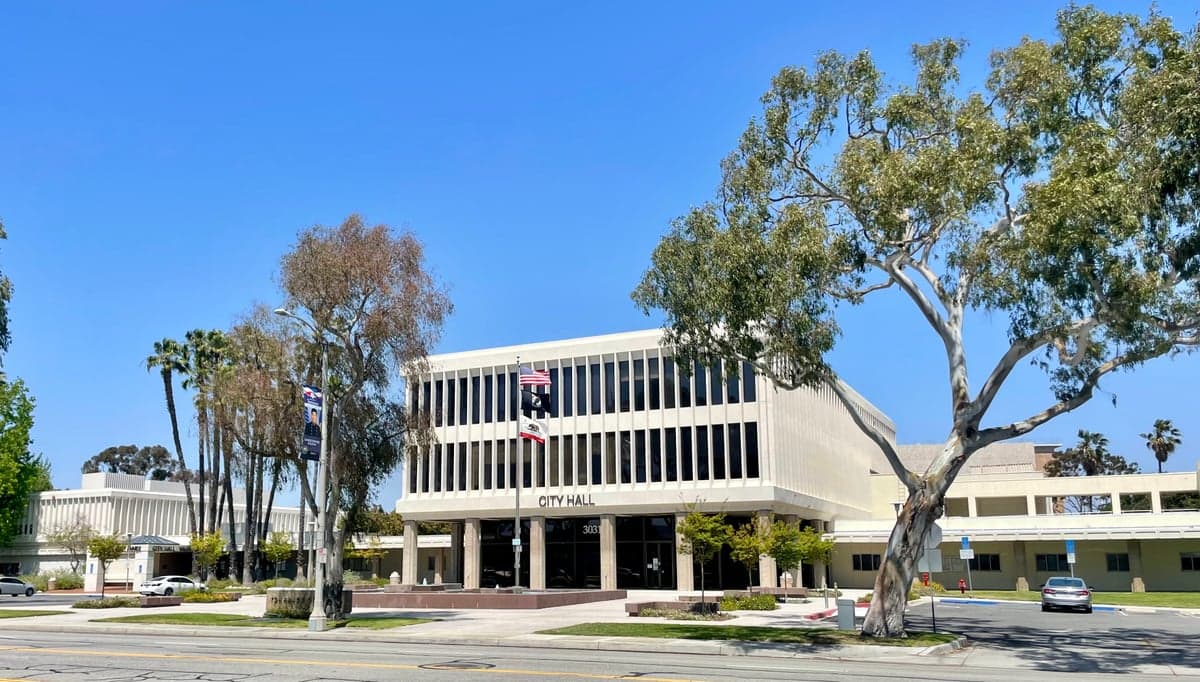
Photo: Wikipedia
Political ClimatePolitical Climate in Torrance, CA
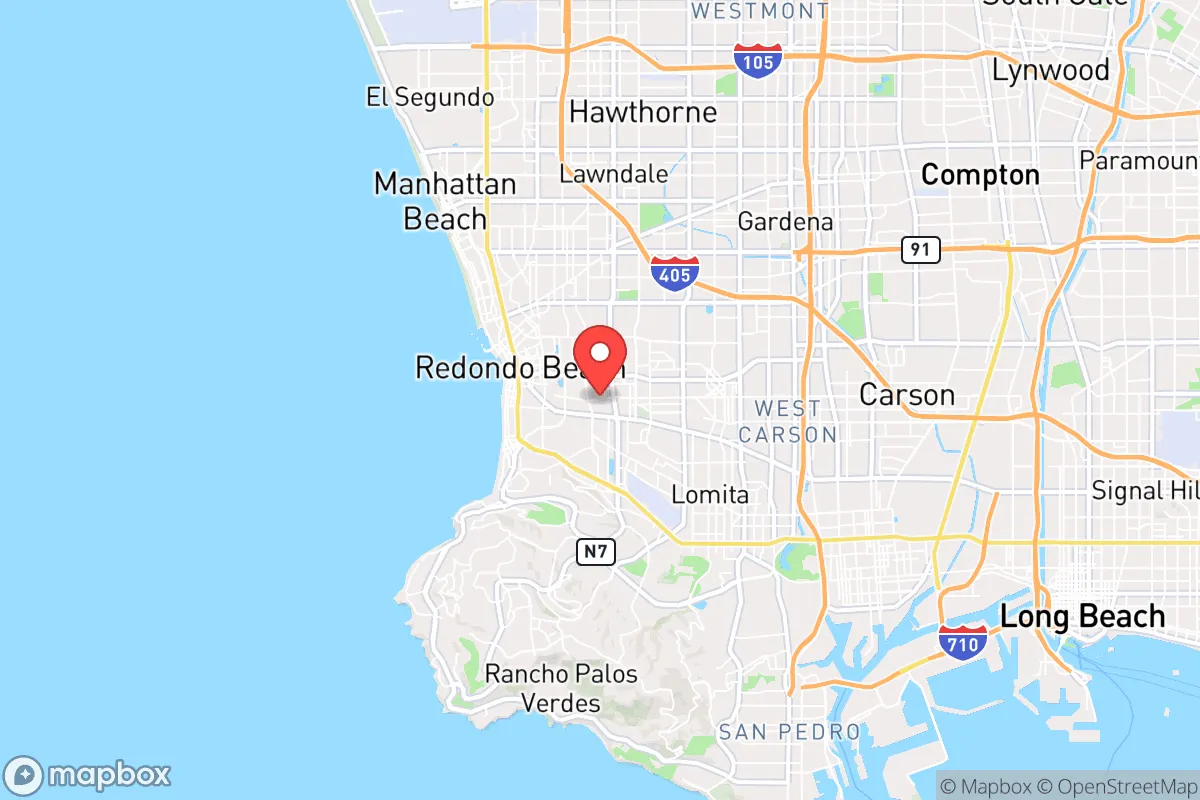
District shown is the primary district for this city’s centroid. Cities may span multiple districts.
Local Political AnalysisPolitical Analysis of Torrance, CA
Torrance has long been a bit of an outlier in Los Angeles County, a place where the old-school, middle-class values that built the South Bay still hold on, even as the rest of the region shifts hard left. With a Cook PVI of D+21, the city is solidly blue on paper, but that number doesn't tell the full story. It masks a deep, quiet conservative streak that runs through the neighborhoods east of Hawthorne Boulevard and around the old oil refineries—folks who work with their hands, own their homes, and remember when Torrance was a place where you didn't need a permit to put a new fence up. The trajectory, though, is concerning: each election cycle brings a little more progressive pressure, especially from the newer transplants moving into the luxury apartments near the Del Amo mall, and the city council has started to feel that pull.
How it compares
Drive ten minutes north to Inglewood or fifteen minutes east to Compton, and you're in deep-blue territory where the politics are almost entirely focused on social justice and government programs. Torrance, by contrast, still has a noticeable libertarian streak. It's not like the deep-red exurbs of Santa Clarita or Simi Valley, but it's a world away from the progressive strongholds of Santa Monica or West Hollywood. The real contrast is with neighboring Redondo Beach and Hermosa Beach, which have gone full-on coastal progressive in recent years, with plastic bag bans, rent control measures, and a general "the government knows best" attitude. Torrance residents tend to roll their eyes at that. They'd rather keep their property rights, their gas-powered leaf blowers, and their ability to park an RV in the driveway without a neighbor filing a complaint. The city's large Asian-American and older white populations have historically voted more moderate, but the rising tide of young renters is slowly eroding that balance.
What this means for residents
For a long-time resident, the biggest red flag is the slow creep of government overreach into everyday life. The city council has been flirting with "sensitive use" zoning that could restrict where you can open a business or even what you can do on your own property. There's been talk of mandatory composting and stricter water-use rules that go beyond state mandates. The school board, once a bastion of common sense, is now debating things like "equity audits" and critical race theory curriculum, which would have been unthinkable twenty years ago. Property taxes are already high thanks to Prop 13 loopholes being chipped away at, and there's a growing push for a local "mansion tax" on home sales over $5 million, which would hit the older, established neighborhoods hard. If you value the freedom to live your life without a bureaucrat telling you how to sort your trash or what your kids can read, these are trends worth watching closely.
Culturally, Torrance still has its head on straight in a few key ways. The city is one of the few in LA County that still allows oil drilling—a reminder of its industrial roots and a middle finger to the environmental activists who want to shut it all down. The annual Armed Forces Day Parade is a big deal here, not a source of controversy. But the long-term outlook is cloudy. As the older generation passes on and their homes get sold to younger, more progressive families from the coast, the political center of gravity will keep shifting. The best hope for conservatives is that the city's strong sense of local identity and its resistance to becoming another generic, over-regulated suburb will slow that tide. For now, it's a holding action—a place where you can still have a beer at a dive bar and complain about the city council without being called a bigot. Enjoy it while it lasts.

State Political ClimatePolitical Climate in California
State Political AnalysisPolitical Environment in the State
California is a deep blue state where Democrats hold every statewide office and supermajorities in both legislative chambers, but that monolithic label hides a far more fractured reality. The state’s overall partisan lean has shifted from a competitive purple in the 1990s to a solid Democratic stronghold today, driven almost entirely by the massive population centers of Los Angeles, the San Francisco Bay Area, and Sacramento. Over the last 10-20 years, the Republican share of registered voters has dropped from roughly 35% to under 24%, while Democrats have held steady around 46%, and the fastest-growing group is “No Party Preference” at over 22%. For a conservative considering relocation, the key takeaway is that California’s political trajectory is not uniform—your experience will vary dramatically depending on whether you land in Bakersfield, San Diego, or Redding.
Urban vs. rural divide
The political map of California is a stark checkerboard of deep blue coastal metros and deep red inland valleys. The San Francisco Bay Area (Alameda, San Francisco, Santa Clara counties) and Los Angeles County alone produce enough Democratic votes to outweigh the entire rest of the state. In 2024, Los Angeles County gave Kamala Harris a 2.1 million vote margin, while the Central Valley and inland counties went heavily for Trump. The Inland Empire (Riverside and San Bernardino counties) has become a key battleground—Riverside County flipped from +5 R in 2016 to +3 D in 2020, then back to +2 R in 2024, reflecting its rapid growth of moderate Latino and working-class voters. Orange County, once a Republican stronghold, has trended blue since 2018, now reliably Democratic in presidential races. The real red islands are Bakersfield (Kern County, +27 R in 2024), Redding (Shasta County, +35 R), and the Central Valley farm communities like Fresno and Visalia, where oil, agriculture, and water rights dominate local politics. The divide isn’t just urban vs. rural—it’s coastal vs. interior, and the interior is growing faster.
Policy environment
California’s policy environment is defined by aggressive state-level intervention that conservatives find deeply concerning. The state has the highest income tax rate in the nation (13.3% for top earners), a 7.25% sales tax floor (with local add-ons pushing it to 10.25% in many cities), and some of the highest gas taxes ($0.68/gallon). Property taxes are capped at 1% of assessed value under Prop 13, but annual increases and transfer taxes in cities like San Francisco and Los Angeles add significant burdens. Education policy is dominated by the California Teachers Association, with mandatory ethnic studies and LGBTQ+ inclusive curricula from K-12. Healthcare is heavily regulated, with the state running its own exchange (Covered California) and pushing toward a single-payer system. Election laws are among the most liberal: universal mail-in voting (since 2021), same-day registration, and no voter ID requirement—a flashpoint for conservatives concerned about election integrity. The state also has some of the nation’s strictest environmental regulations (CARB, CEQA), which drive up housing and energy costs.
Trajectory & freedom
On the freedom scale, California is moving decisively less free across multiple dimensions. The 2024 legislative session saw the passage of SB 403, which effectively bans caste discrimination but was used to target Hindu communities, and AB 1955, which prohibits school districts from requiring parental notification when a child changes gender identity—a direct blow to parental rights. Gun rights have been systematically eroded: the state’s “may-issue” concealed carry regime was tightened further by SB 2 (2023), which bans carry in nearly all public places, and the roster of approved handguns continues to shrink. Medical autonomy took a hit with SB 525, raising the minimum wage for healthcare workers to $25/hour, which forced rural hospitals to cut services. Property rights are under constant pressure from rent control expansions (AB 1482 caps annual increases at 5% plus inflation) and the ongoing battle over single-family zoning. On the positive side for conservatives, Proposition 36 (2024) rolled back some of the soft-on-crime policies of Prop 47, reclassifying theft of items under $950 as a felony for repeat offenders—a rare win for law-and-order advocates.
Civil unrest & political movements
California has been a hotbed of civil unrest and political activism, with visible flashpoints that any new resident will notice. The 2020 George Floyd protests in Los Angeles, Oakland, and San Francisco resulted in over $1 billion in property damage and widespread looting, with many businesses still boarded up years later. The “Recall Newsom” movement in 2021 gathered over 1.7 million signatures and came within 4 points of ousting the governor, driven by frustration with COVID lockdowns, school closures, and homelessness. Immigration politics are front and center: California is a sanctuary state (SB 54), prohibiting local law enforcement from cooperating with federal immigration authorities, and the border crisis has overwhelmed cities like San Diego and El Centro. The “Calexit” secession movement has faded but still has a vocal fringe. Election integrity remains a live issue—the 2022 and 2024 elections saw widespread reports of ballot harvesting and mail-in ballot irregularities, though no major court cases succeeded. The homelessness crisis in San Francisco’s Tenderloin and Los Angeles’s Skid Row is a daily visible reminder of failed progressive policies, with open drug use and encampments tolerated under the 9th Circuit’s Martin v. Boise ruling.
Projection
Over the next 5-10 years, California’s political trajectory points toward continued one-party rule at the state level, but with growing internal fractures. Demographic shifts are working against Democrats: the state’s population has declined for three consecutive years (2020-2023), with net out-migration of over 700,000 people, many of them middle-class families and conservatives fleeing to Texas, Arizona, and Idaho. The remaining population is older, more diverse, and more polarized. The Central Valley and Inland Empire will continue to grow and trend redder, while coastal metros will double down on progressive policies. Expect more ballot initiatives like Prop 36 that push back on crime, but also more tax increases (a wealth tax is being discussed for 2026). The housing crisis will force some zoning liberalization, but environmental regulations will keep supply constrained. For a conservative moving in now, the realistic expectation is that California will remain a high-tax, high-regulation state where your personal freedoms are increasingly limited by Sacramento, but where you can find like-minded communities in the interior counties—if you can afford the cost of living.
Bottom line for a new resident: If you’re a conservative considering California, don’t expect the state to change its stripes anytime soon. You’ll be paying some of the highest taxes in the nation, dealing with a government that actively undermines parental rights and gun ownership, and living in a state where your vote for president is essentially meaningless. However, if you choose your location carefully—Bakersfield, Redding, or Visalia—you can find a community that shares your values, with lower crime and more affordable housing than the coastal cities. Just be prepared for a constant political fight at the local level, and keep an eye on the exit door if things get worse.
* Values derived from national, state, county, city and local statistics and may differ in a specific area. Last updated: 2026-04-24T11:34:32.000Z
Narrative content on this page is AI-generated and may contain mistakes. Verify any details that matter before acting on them.
ReloMaps may earn a commission from affiliate links at no extra cost to you.

