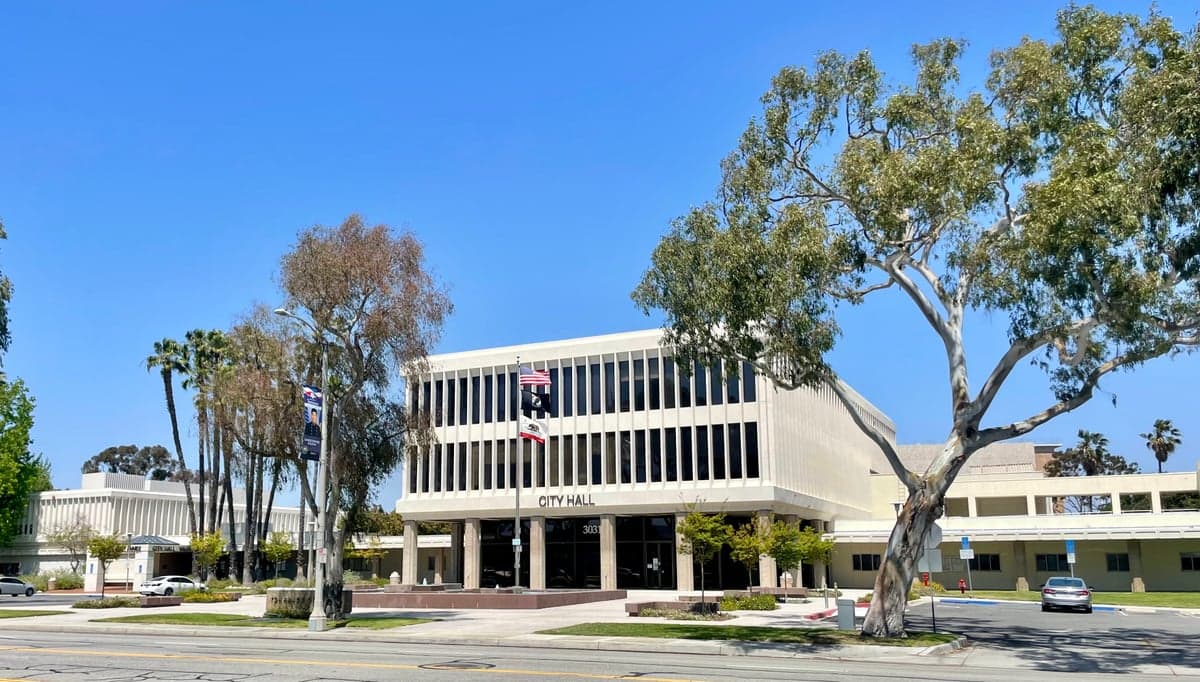
Photo: Wikipedia
Personal Sovereignty in Torrance, CA
Moderate friction. Expect trade-offs in some aspect of personal liberty and independence.
What does Personal Sovereignty tell us?
Personal Sovereignty measures your capacity for self-reliance and independence with minimal government friction. Higher scores mean fewer barriers between you and the way you want to live... but it assumes you have the space you need and good neighbors.
What does this tell us?
Personal Sovereignty measures your capacity for self-reliance and independence with minimal government friction. Higher scores mean fewer barriers between you and the way you want to live... but it assumes you have the space you need and good neighbors.
State Policy
Energy independence: Importer (33% of energy produced in-state)
Personal Liberty
Homesteading

Personal Liberty Analysis
For the strategic relocation researcher operating from a survivalist or prepper mindset, Torrance, California presents a complex calculus of personal sovereignty. While the city itself offers a relatively stable, middle-to-upper-middle-class environment with strong local governance, it sits squarely within a state that has aggressively asserted its authority over individual autonomy in areas from taxation to self-defense. The net effect is that Torrance provides a high baseline of safety and economic opportunity, but at the cost of significant regulatory overhead and a legal framework that often prioritizes collective mandates over personal liberty. For the individual or family seeking maximum freedom from government overreach, this is not a sanctuary; it is a managed environment where sovereignty must be exercised carefully within defined boundaries.
Tax burden and regulatory posture in a high-cost state
California’s tax posture is a primary concern for anyone prioritizing financial autonomy. The state imposes a progressive income tax with a top marginal rate of 13.3%, one of the highest in the nation, and a state sales tax rate of 7.25%, which in Torrance rises to 9.5% after local add-ons. Property taxes, while capped at 1% of assessed value under Proposition 13, are based on purchase price, meaning recent buyers face a substantial fixed cost. For a prepper or self-reliant individual, this tax burden directly reduces the capital available for land, supplies, and long-term storage. Regulatory posture is equally aggressive: California’s building codes, environmental regulations (e.g., California Environmental Quality Act reviews), and energy mandates (like Title 24) make any significant property modification—such as adding a backup generator, installing a septic system, or building a root cellar—a costly and time-consuming permitting process. Torrance’s city government adds its own layer of zoning and business license requirements, meaning even a home-based side hustle or small-scale food preservation operation can trigger compliance headaches. The state’s regulatory environment is designed to centralize control, not to empower individual initiative.
Self-defense and gun law specifics in Torrance
For the survivalist, the right to keep and bear arms is non-negotiable, and California’s legal landscape here is among the most restrictive in the nation. Torrance, as a city within Los Angeles County, is subject to the state’s may-issue concealed carry permitting system, which was effectively gutted by the 2022 Bruen decision but has been replaced by a new set of “sensitive places” restrictions that make carrying in most public areas legally risky. The state bans standard-capacity magazines (over 10 rounds), requires a 10-day waiting period for all firearm purchases, mandates a Firearm Safety Certificate, and maintains a roster of approved handguns that excludes many modern models. For the prepper, this means building a robust personal arsenal is legally cumbersome and expensive. Self-defense law is also tilted against the defender: California has no “Stand Your Ground” statute, instead imposing a “duty to retreat” in public spaces, and the state’s Castle Doctrine only applies inside one’s home. In Torrance, a city with relatively low violent crime (violent crime rate around 250 per 100,000, below the national average), the practical risk of needing a firearm for self-defense is lower than in many urban areas, but the legal environment still punishes proactive preparation. For the individual who views firearms as a fundamental right, this is a significant sovereignty deficit.
Self-reliance and homesteading viability in a suburban grid
Torrance is a dense, fully suburbanized city with an average lot size of roughly 6,000 to 7,500 square feet, typical of post-war development. This severely limits homesteading potential. Chickens are permitted in Torrance with a permit and specific setback requirements, but larger livestock, beekeeping, or any agricultural activity is effectively banned. Zoning is strictly residential, and the city’s municipal code prohibits “nuisance” activities, which can include composting, rainwater harvesting beyond 200 gallons (per state law), or any structure not approved by the building department. Off-grid feasibility is virtually zero: the city requires connection to municipal water and sewer, and solar panels must be grid-tied under net metering rules. For the prepper seeking to reduce dependence on supply chains, Torrance offers little room for food production, water independence, or energy autonomy. The soil is often contaminated from decades of industrial activity (Torrance is home to a major oil refinery and aerospace manufacturing), making gardening a challenge without raised beds and imported soil. The best a determined individual can do is a small vegetable garden, a few fruit trees, and a well-stocked pantry—but true self-reliance is not achievable within city limits.
Personal liberties: parental rights, medical autonomy, speech, and property
California’s progressive governance extends deeply into personal liberties. Parental rights are significantly curtailed by state law: the California Education Code mandates comprehensive sexual health education (the California Healthy Youth Act) without an opt-out for parents, and the state has passed laws that allow minors to consent to certain medical treatments (including gender-affirming care) without parental notification. For the conservative parent, this represents a direct challenge to family sovereignty. Medical autonomy is also constrained: California has some of the strictest vaccine mandates in the country, including for school attendance (though a personal belief exemption exists for some vaccines, it is being narrowed), and the state’s public health orders during the COVID-19 pandemic—including mask mandates and business closures—were among the most prolonged and enforced in the nation. Free speech is protected under the First Amendment, but California’s “hate speech” laws and workplace harassment statutes create a chilling effect on certain political or religious expressions, particularly in a corporate-heavy city like Torrance. Property rights are strong in theory but heavily regulated in practice: you can own a home, but you cannot freely modify it, rent it out (rent control applies to some units), or use it for business without extensive permitting. The state’s landlord-tenant laws heavily favor tenants, making property ownership a less secure investment for those seeking to build generational wealth.
In the final analysis, Torrance offers a paradox: a safe, well-managed city with good schools and low crime, but at the cost of surrendering significant personal sovereignty to state and local authorities. For the survivalist or prepper, this is not a location where one can build a self-sufficient compound or exercise unencumbered rights. It is a place to live if you prioritize stability and are willing to navigate a dense regulatory environment, but it is not a bastion of individual freedom. Compared to states like Texas, Idaho, or Montana, where tax burdens are lower, gun laws are permissive, and local zoning allows for genuine homesteading, Torrance represents a managed existence. For the strategic relocator, the question is whether the city’s economic and safety benefits outweigh the constant friction of living under a government that views personal autonomy as a privilege to be granted, not a right to be protected.

* Values derived from national, state, county, city and local statistics and may differ in a specific area. Last updated: 2026-04-24T11:34:32.000Z
Narrative content on this page is AI-generated and may contain mistakes. Verify any details that matter before acting on them.
ReloMaps may earn a commission from affiliate links at no extra cost to you.

