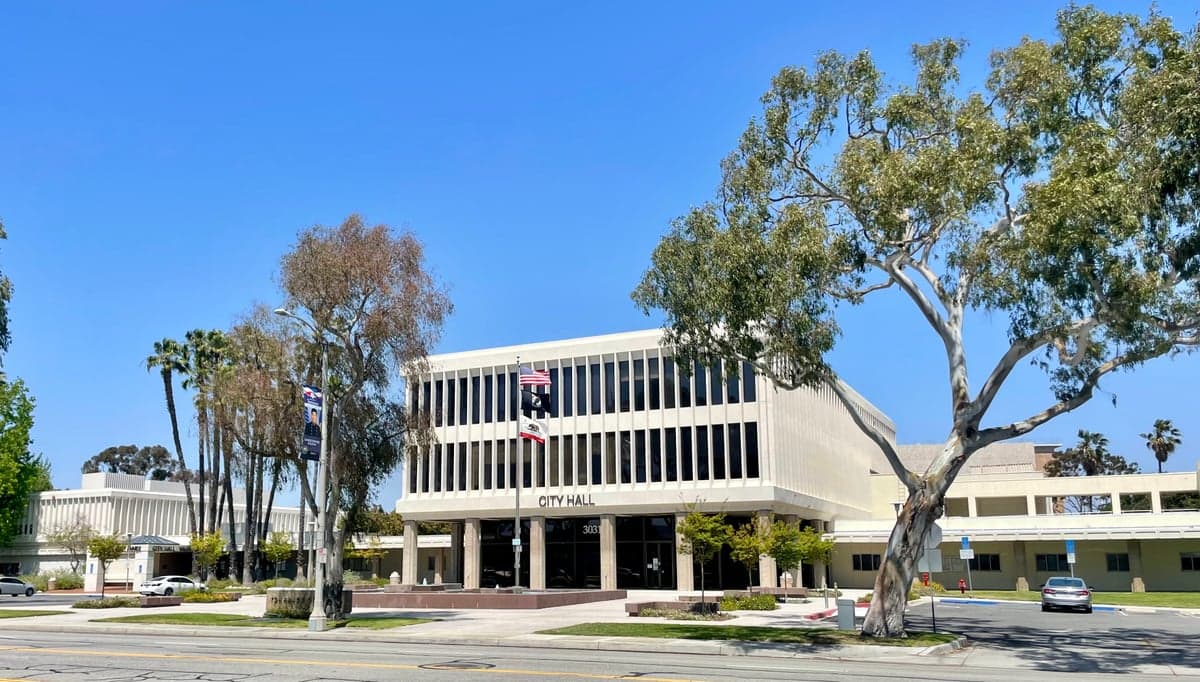
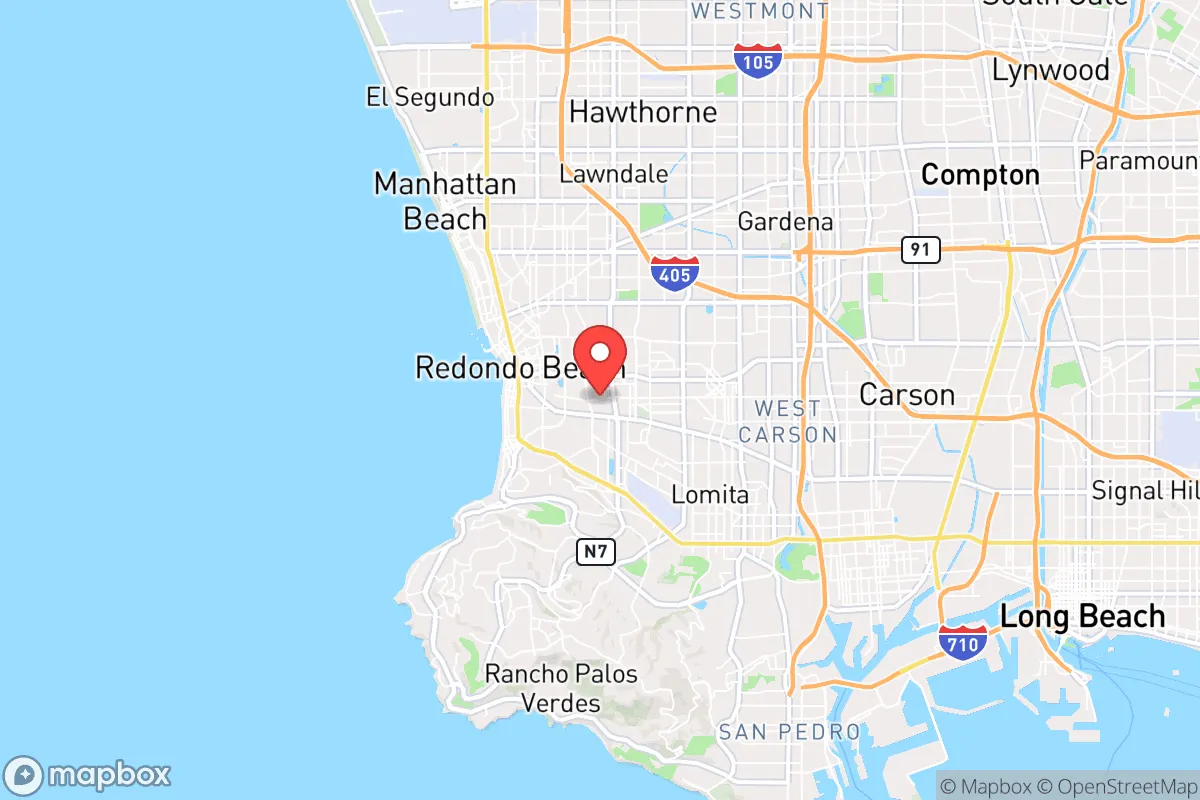
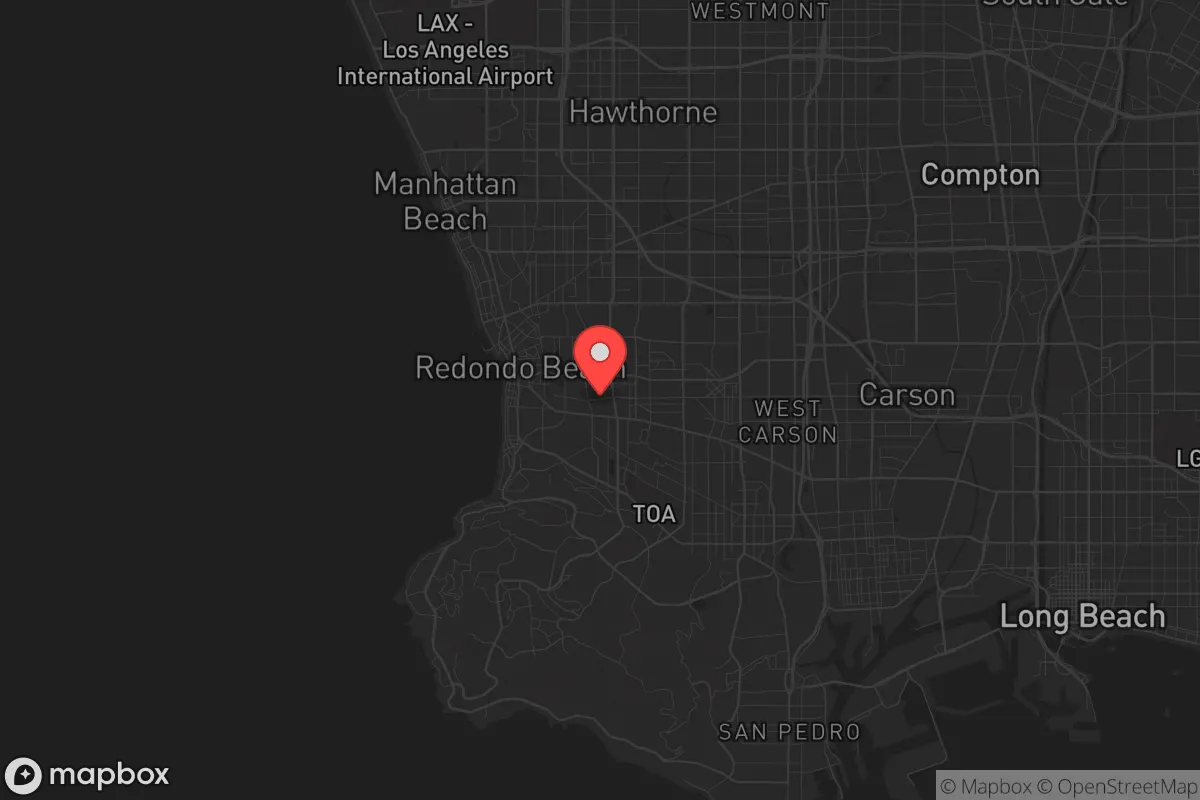
Photo: Wikipedia
Strategic Assessment of Torrance, CA
High tactical risk. This location is likely close to major population centers, strategic targets, or sits in a high-disaster corridor. A retreat property and careful exit planning is required.
What does the Strategic Assessment tell us?
Our Strategic Assessment grades tactical survivability of an area. Major population centers, military targets, fallout zones, natural disasters, and border exposure all drive risk — lower exposure means a more defensible position in a crisis.
This is heavily inspired by Joel Skousen's Strategic Relocation book. Highly recommended you checkout the book ($)What does this tell us?
Our Strategic Assessment grades tactical survivability of an area. Major population centers, military targets, fallout zones, natural disasters, and border exposure all drive risk — lower exposure means a more defensible position in a crisis.
This is heavily inspired by Joel Skousen's Strategic Relocation book. Highly recommended you checkout the book ($)Strategic Pillars

Key Distances
Regional Safe Places
Below is our recommended "safe zones" in California and the surrounding area based on our strategic heuristics. For most people, it's unrealistic to live in a “safe zone” full-time due to work, family or other personal reasons. They tend to be more rural. However, many of these areas are perfect for second homes and retreat properties that double as a vacation home or even a short-term rental.

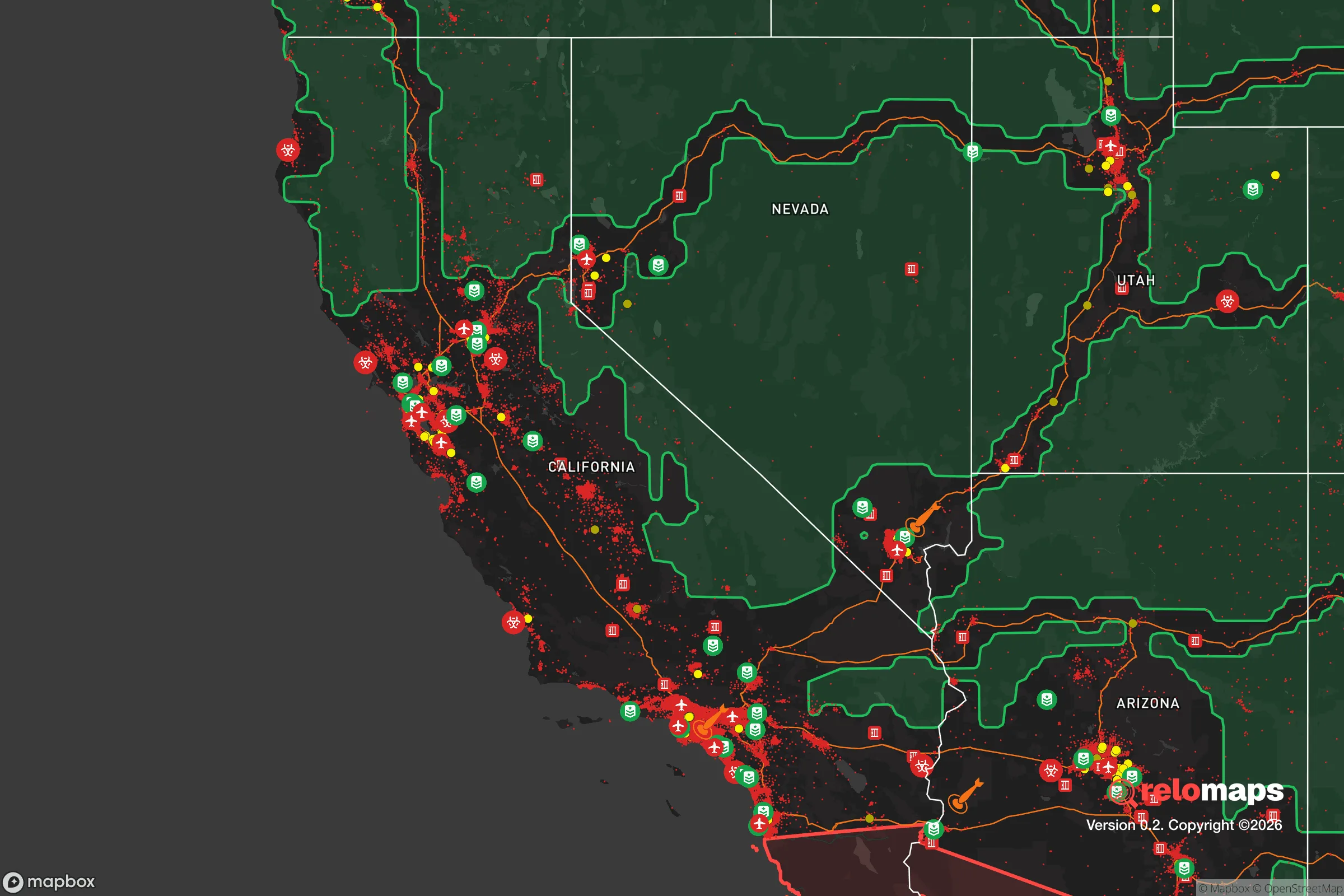


Important Note: For informational purposes only. This does not mean nothing bad ever happens in the green zones. Please use common sense. This is based on public data and modeled with AI. We tried to take a conservative approach but mistakes happen. We update this regularly as new information becomes available.
Solar Generator Recommendations
Backup power matters more here than in safer locations. We've picked three solar generators across budgets and capacity tiers — start with the budget unit if you only need a few essentials, or step up if you want to run a fridge and HVAC for days at a time.

Jackery Portable Power Station Explorer 300
Budget OptionPower on the Go: Weighing only 11 lbs, it's convenient to set up and store with book-sized foldable solar panels

BLUETTI Portable Power Station AC180
Designed for both indoor and outdoor scenarios, AC180 is highly capable as it has a robost capacity and continuous output power.

EF ECOFLOW DELTA Pro Ultra Power Station
Upgraded PickEcoFlow DELTA Pro Ultra is a whole-home energy system designed to grow with your family. Integrated with the Smart Home Panel 2, it scales to meet your evolving energy needs — keeping your home powered, intelligent, and secure through every stage of life.
We earn a commission, at no additional cost to you.
Strategic Assessment Analysis
Torrance, California, presents a deeply contradictory picture for the strategic relocator. On one hand, its position within the South Bay offers a rare combination of coastal access, a robust local economy, and a municipal government that has historically maintained a degree of fiscal independence from Los Angeles County’s worst excesses. On the other hand, its location in the heart of the Los Angeles Basin—a primary target for both natural disasters and man-made disruption—means that any serious assessment must weigh these advantages against the very real risks of being trapped in a high-density, high-target zone when things go sideways. For the conservative prepper, Torrance is not a retreat; it is a forward operating base with a short shelf life.
Geographic position and natural advantages for long-term stability
Torrance sits on a relatively stable coastal plain, which is a genuine plus in earthquake-prone Southern California. The area is not directly on the San Andreas Fault, and the local soil composition is less prone to the liquefaction that plagues parts of Santa Monica or Long Beach. This gives it a modest structural advantage over many neighboring cities. The city’s proximity to the Port of Los Angeles and Los Angeles International Airport (LAX) is a double-edged sword, but for the relocator focused on supply chains, it means that Torrance is a logistical node. In a crisis where national distribution networks falter, being near a major port could mean earlier access to containerized goods—if you have the means to secure them. The climate is also a strategic asset: mild temperatures year-round reduce the need for extreme heating or cooling, lowering energy dependency and making outdoor survival more viable. The Pacific Ocean provides a massive, if saline, water source, and the prevailing westerly winds mean that airborne contaminants from a major urban disaster would likely blow inland, not toward the coast.
Risks, exposures, and proximity to fallout-relevant landmarks
This is where the assessment turns grim. Torrance is within a 15-mile radius of several high-value targets: the Port of Los Angeles, LAX, the Chevron refinery in El Segundo, and the sprawling defense and aerospace complexes in Redondo Beach and Hawthorne (including SpaceX and Northrop Grumman). In a scenario involving state-level conflict or a coordinated terrorist attack, these are Tier 1 targets. A conventional strike on the refinery alone would produce a toxic cloud that could render large portions of the South Bay uninhabitable for days. Furthermore, Torrance is directly under the approach path for LAX and is adjacent to the 405 and 110 freeways—two of the most congested evacuation routes in the country. In a mass casualty event or a sudden evacuation order, these roads will become parking lots. The city’s population density, at roughly 6,500 people per square mile, means that civil unrest in Los Angeles will spill over quickly. The 1992 riots demonstrated that the South Bay is not immune; Torrance saw its own looting and fires. For the prepper, the calculus is simple: you are living in the blast radius of a major metropolitan area, and your egress options are limited to a handful of choked corridors heading south toward San Diego or east toward the desert.
Practical resilience for a relocator: food, water, energy, and defensibility
Torrance’s municipal water supply comes from the Metropolitan Water District, which imports water from the Colorado River and the State Water Project. Both are vulnerable to drought, earthquake damage, and political manipulation. A serious seismic event could sever the aqueducts for weeks. The city does have groundwater wells, but they are not sufficient for the entire population. For the relocator, this means that water storage is non-negotiable. A minimum of two weeks of supply per person is the baseline here, and a Berkey or similar filtration system is essential for any local surface water you might collect. Food security is marginally better than in inland areas: Torrance has a strong farmers’ market culture and is close to agricultural areas in Ventura and Oxnard, but those supply lines will be cut first in a crisis. The city’s energy grid is part of the Southern California Edison system, which has a poor track record for wildfire-related shutoffs and general reliability. Solar panels with battery storage are a wise investment, but be aware that HOA restrictions in many Torrance neighborhoods can make installation difficult. Defensibility is the weakest link. Torrance is a suburban grid of single-family homes and strip malls, with no natural chokepoints or high ground. A determined group of looters from Compton or Inglewood—both a 15-minute drive away—could overwhelm a single street. The best strategy is to harden your immediate property with reinforced doors, window film, and a visible security presence, and to cultivate a neighborhood watch network that is more than just a Facebook group. Community is your force multiplier here; a lone wolf will not last long in a grid-down scenario.
The overall strategic picture for the conservative relocator
Torrance offers a high quality of life under normal conditions, with good schools, a strong local police force, and a city council that has historically resisted the most radical elements of California’s progressive agenda. But for the strategic relocator who is serious about surviving a major disruption, it is a high-risk, medium-reward location. You are betting that the disaster will be localized enough that you can ride it out in place, or that you have the resources to execute a rapid evacuation to a secondary location—ideally a rural property in Kern or San Luis Obispo County. If you are a single individual with a well-stocked vehicle and a bug-out plan, Torrance can work as a base of operations. If you are a parent with young children, the risks of being trapped in a post-disaster urban environment with limited medical infrastructure and no safe egress route are likely too high. Torrance is not a survivalist destination; it is a place to live well while preparing to leave. The prudent conservative relocator will treat it as a temporary staging ground, not a final redoubt.

* Values derived from national, state, county, city and local statistics and may differ in a specific area. Last updated: 2026-04-24T11:34:32.000Z
Narrative content on this page is AI-generated and may contain mistakes. Verify any details that matter before acting on them.
ReloMaps may earn a commission from affiliate links at no extra cost to you.

