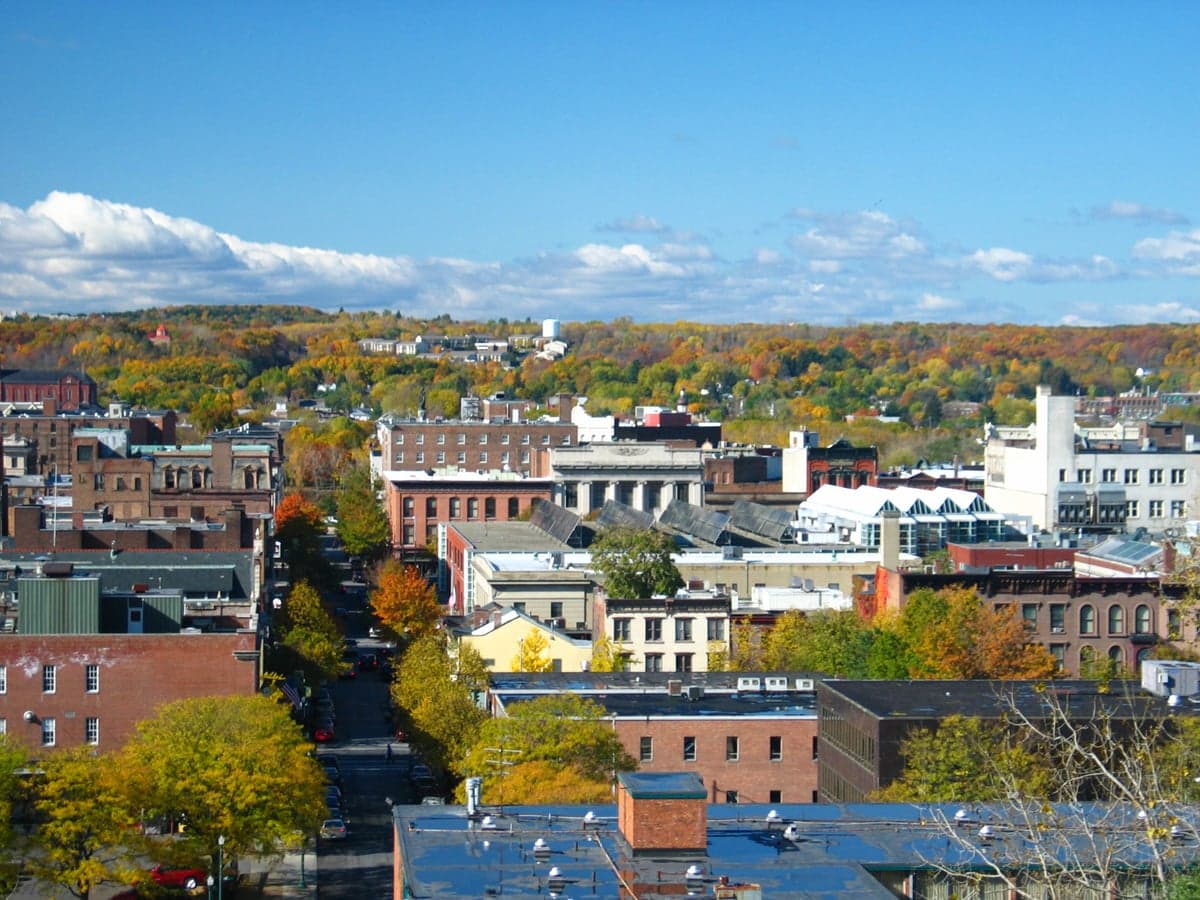
Photo: Wikipedia
Strategic Assessment of Troy, NY
Multiple tactical vulnerabilities. Population density, target proximity, or disaster risk are likely compounding. A retreat property and exit planning is required.
What does the Strategic Assessment tell us?
Our Strategic Assessment grades tactical survivability of an area. Major population centers, military targets, fallout zones, natural disasters, and border exposure all drive risk — lower exposure means a more defensible position in a crisis.
This is heavily inspired by Joel Skousen's Strategic Relocation book. Highly recommended you checkout the book ($)What does this tell us?
Our Strategic Assessment grades tactical survivability of an area. Major population centers, military targets, fallout zones, natural disasters, and border exposure all drive risk — lower exposure means a more defensible position in a crisis.
This is heavily inspired by Joel Skousen's Strategic Relocation book. Highly recommended you checkout the book ($)Strategic Pillars

Key Distances
Regional Safe Places
Below is our recommended "safe zones" in New York and the surrounding area based on our strategic heuristics. For most people, it's unrealistic to live in a “safe zone” full-time due to work, family or other personal reasons. They tend to be more rural. However, many of these areas are perfect for second homes and retreat properties that double as a vacation home or even a short-term rental.
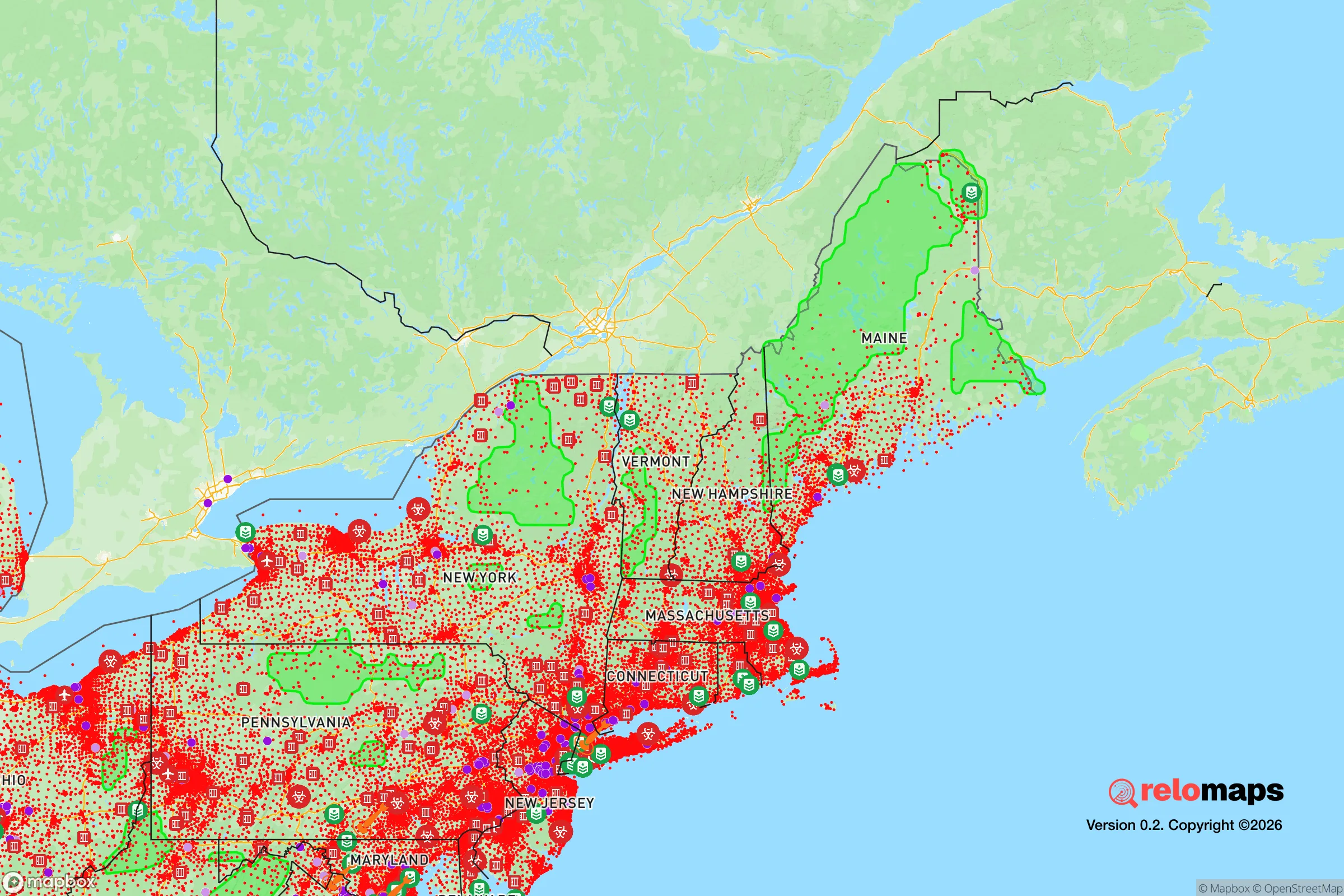
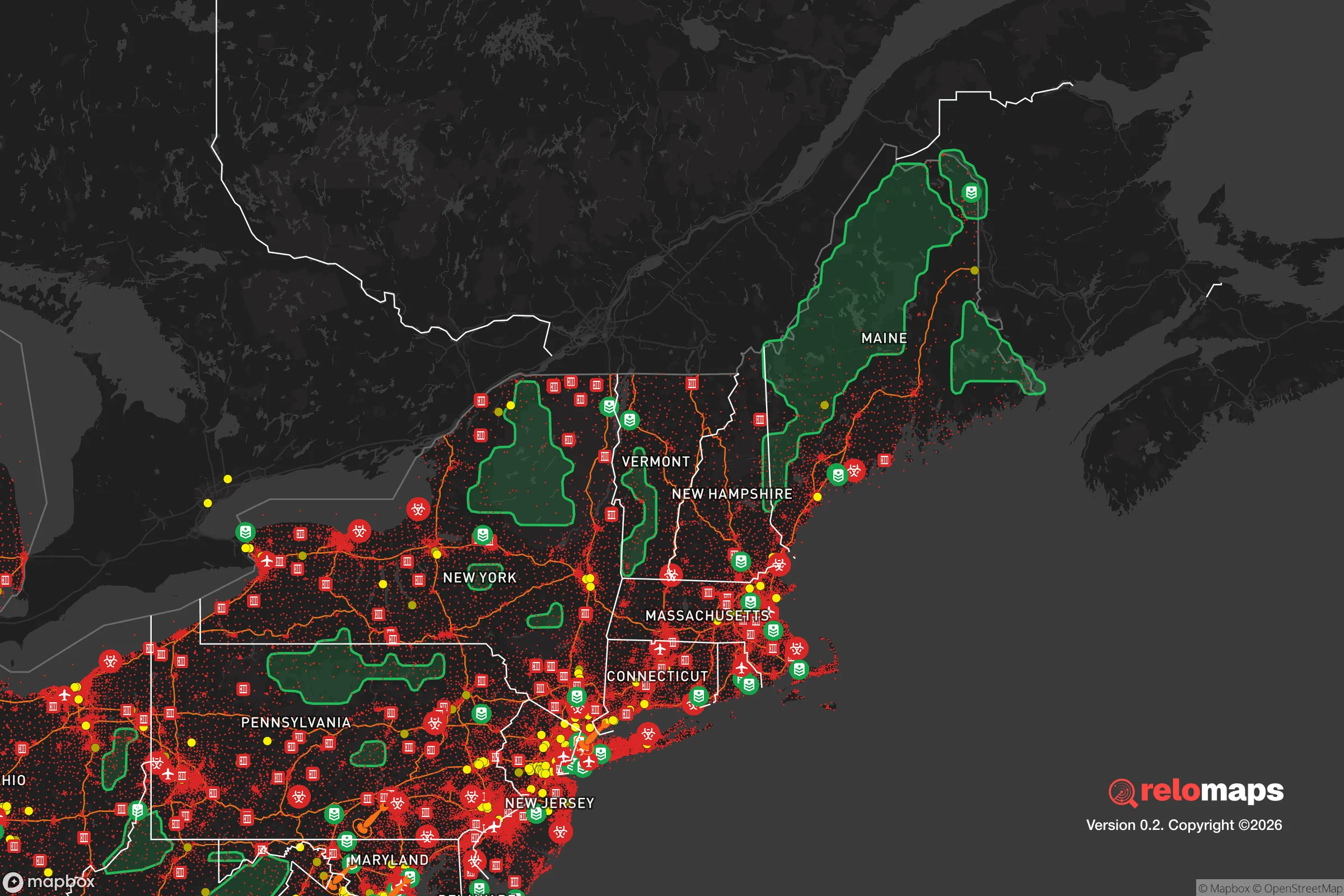


Important Note: For informational purposes only. This does not mean nothing bad ever happens in the green zones. Please use common sense. This is based on public data and modeled with AI. We tried to take a conservative approach but mistakes happen. We update this regularly as new information becomes available.
Solar Generator Recommendations
Backup power matters more here than in safer locations. We've picked three solar generators across budgets and capacity tiers — start with the budget unit if you only need a few essentials, or step up if you want to run a fridge and HVAC for days at a time.

Jackery Portable Power Station Explorer 300
Budget OptionPower on the Go: Weighing only 11 lbs, it's convenient to set up and store with book-sized foldable solar panels

BLUETTI Portable Power Station AC180
Designed for both indoor and outdoor scenarios, AC180 is highly capable as it has a robost capacity and continuous output power.

EF ECOFLOW DELTA Pro Ultra Power Station
Upgraded PickEcoFlow DELTA Pro Ultra is a whole-home energy system designed to grow with your family. Integrated with the Smart Home Panel 2, it scales to meet your evolving energy needs — keeping your home powered, intelligent, and secure through every stage of life.
We earn a commission, at no additional cost to you.
Strategic Assessment Analysis
Troy, New York, presents a mixed bag for the strategic relocator. Its location along the Hudson River and the Erie Canal offers a historical backbone of trade and transport, but its proximity to the Albany-Schenectady metropolitan area introduces significant vulnerabilities. For the conservative prepper, Troy’s resilience is less about natural fortification and more about leveraging its industrial past and regional access—provided you can mitigate the risks of being within the blast radius of a major population and government center.
Geographic position and natural advantages for long-term survival
Troy sits at the confluence of the Hudson River and the Mohawk River, a position that has historically made it a transportation and industrial hub. For the survival-minded, this means access to a major navigable waterway—the Hudson—which connects to the Atlantic via New York City, and the Mohawk River/Erie Canal corridor, which provides a route west to the Great Lakes. This water network is a double-edged sword: it offers potential for trade, transport, and water supply, but it also makes Troy a natural chokepoint that could be contested in a crisis. The surrounding terrain is hilly, with the Rensselaer Plateau to the east and the Helderberg Escarpment to the west, offering some natural defensibility and elevation for observation. The area is within the Hudson Valley, which has fertile soil and a moderate climate—enough for subsistence farming, though the growing season is short (roughly 150 days). The nearby Adirondack Park, about an hour north, provides a vast wilderness buffer and potential retreat area, but Troy itself is firmly in the suburban-rural fringe of the Capital District.
Risks, exposures, and proximity to fallout-relevant landmarks
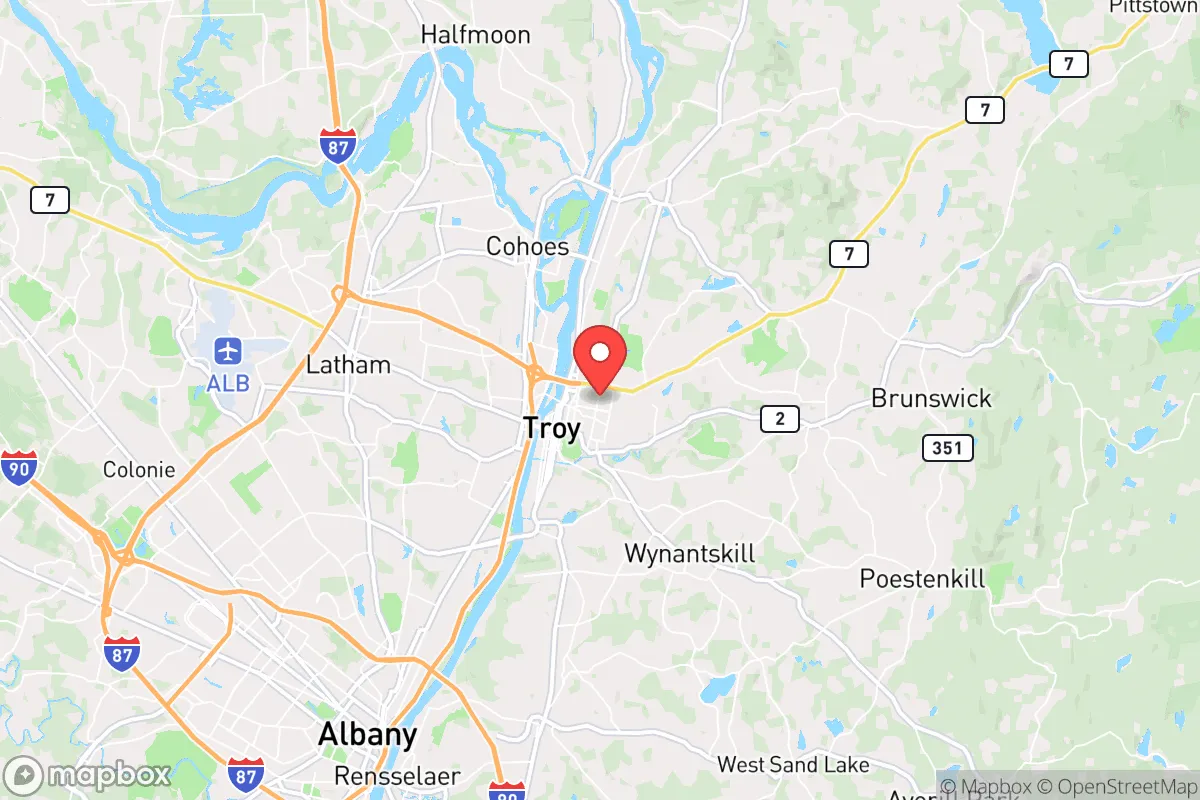
The primary strategic liability for Troy is its proximity to Albany, the state capital, which is less than 10 miles south. Albany is a high-value target for any scenario involving civil unrest, cyberattacks, or kinetic conflict—it houses the New York State Capitol, the state government apparatus, and major infrastructure like the Albany International Airport and the Port of Albany. A mass casualty event or disaster in Albany would likely spill over into Troy, bringing refugees, supply chain disruptions, and potential martial law. Additionally, Troy is within 15 miles of the Knolls Atomic Power Laboratory in Niskayuna, a U.S. Navy nuclear research facility. While not a commercial reactor, any incident there—whether accidental or targeted—could create a localized fallout zone. The city itself is built on a floodplain along the Hudson, with low-lying areas like South Troy and the downtown waterfront prone to flooding from storm surges or dam failures upstream (e.g., the Federal Dam at Troy). The risk of a cascading failure—a cyberattack on the power grid, followed by flooding, followed by civil unrest—is real. For the prepper, Troy’s location is too close to too many targets to be considered a safe haven; it’s a staging area at best.
Practical resilience for a relocator: food, water, energy, and defensibility
For a single individual or family looking to establish a resilient outpost, Troy offers some practical advantages but requires significant work. Water access is excellent: the Hudson River is a reliable surface water source, though it requires heavy filtration and treatment due to industrial pollution (PCBs, heavy metals) from decades of manufacturing. The city’s municipal water comes from the Tomhannock Reservoir, about 10 miles east, which is a protected watershed but vulnerable to contamination or sabotage. A well on a property outside the city core is preferable. Food production is feasible but not easy. The region has a strong agricultural tradition—Rensselaer County has numerous farms and farmers’ markets—but the short growing season and clay-heavy soils mean you’ll need greenhouses, cold frames, and seed stockpiles. The Capital District has a robust network of local food co-ops and CSAs, but in a collapse scenario, those supply lines would vanish. Energy resilience is a weak point. The grid is aging and prone to outages from winter storms (ice, snow) and summer heat waves. Solar is viable, but Troy’s latitude and frequent cloud cover reduce efficiency; you’d need a large battery bank and possibly a backup generator. Natural gas is available in the city, but pipelines are a single point of failure. Defensibility is moderate. The city’s historic core has narrow streets and brick row houses that could be fortified, but the sprawl of suburbs and strip malls (e.g., along Hoosick Street) creates vulnerable chokepoints. The hills to the east offer better retreat options—properties in Brunswick or Poestenkill provide elevation and distance from the urban core. For a relocator, the best strategy is to buy land outside Troy proper (e.g., in the Rensselaer County hill towns) and use the city as a resource hub for supplies, medical care, and information, not as a primary residence.
The overall strategic picture for Troy is one of calculated risk. It is not a bug-out location—it’s too close to Albany, too flood-prone, and too dependent on fragile infrastructure. But for the relocator who wants to stay within striking distance of the Northeast’s economic and political centers while maintaining a prepper mindset, Troy offers a foothold. The key is to treat it as a forward operating base: secure a rural property within 30 minutes east or north, stockpile supplies for 90 days minimum, and develop relationships with local farmers and tradesmen. The city’s industrial history means there are skilled machinists, welders, and mechanics in the area—valuable allies in a long-term scenario. The Hudson River corridor is a strategic asset for movement, but it’s also a vector for threats. If you can manage the proximity to fallout risks and build a network outside the city limits, Troy can work as part of a larger resilience plan. If you’re looking for a standalone fortress, look further north or west.

* Values derived from national, state, county, city and local statistics and may differ in a specific area. Last updated: 2026-04-24T15:14:18.000Z
Narrative content on this page is AI-generated and may contain mistakes. Verify any details that matter before acting on them.
ReloMaps may earn a commission from affiliate links at no extra cost to you.

