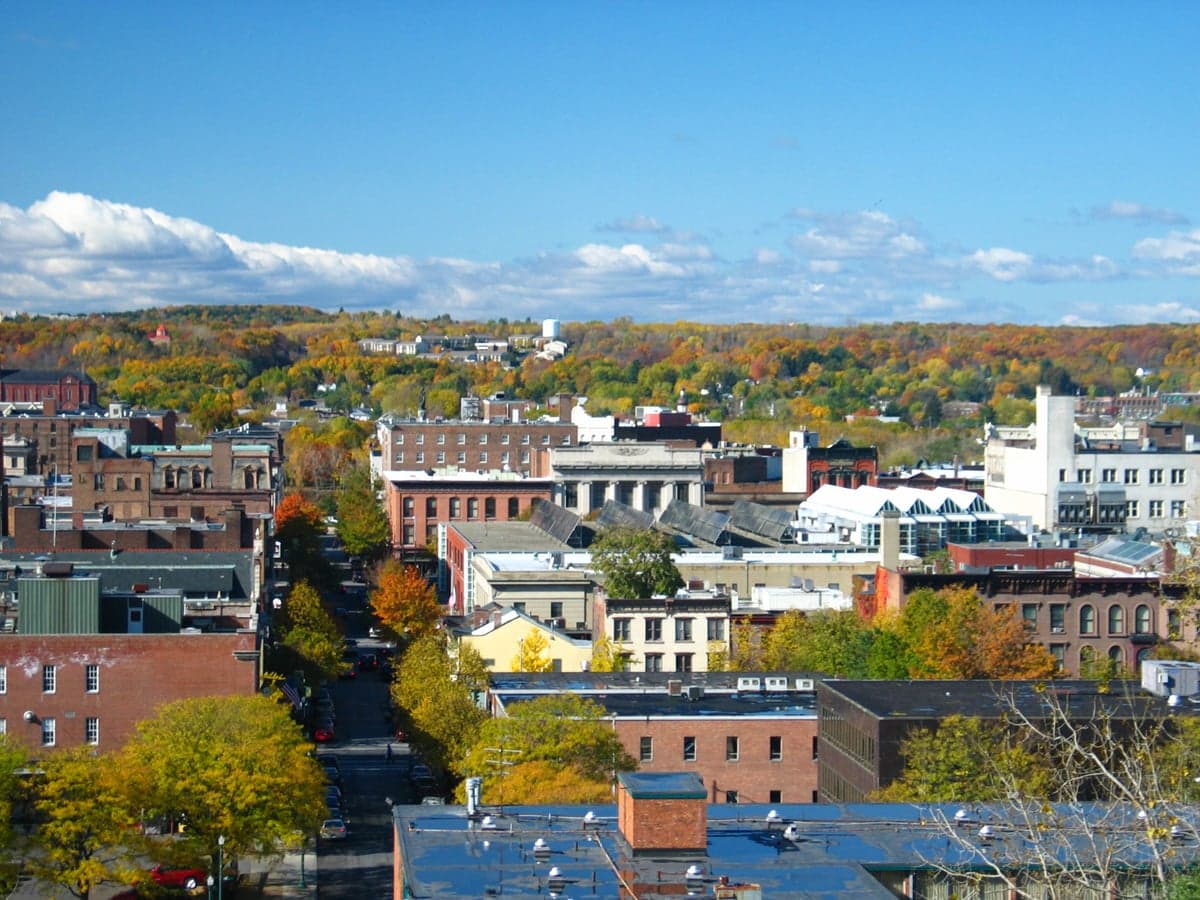
Photo: Wikipedia
Political ClimatePolitical Climate in Troy, NY
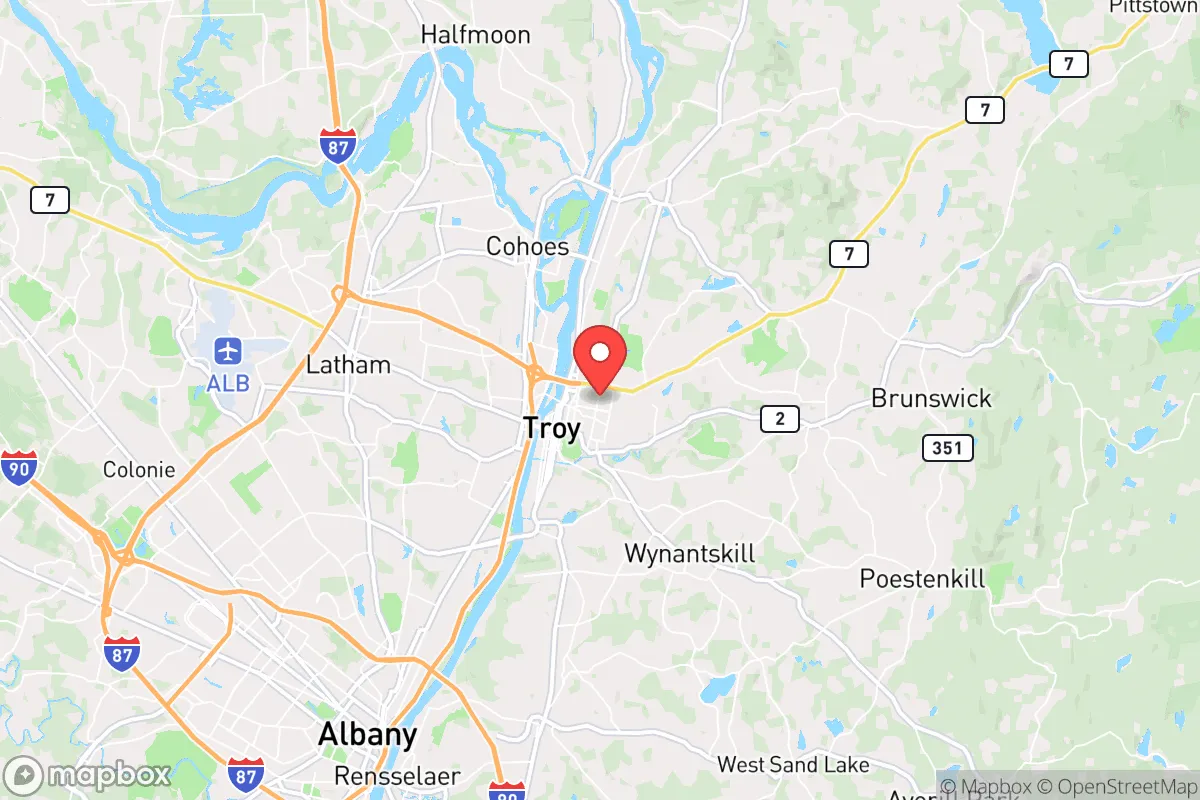
District shown is the primary district for this city’s centroid. Cities may span multiple districts.
Local Political AnalysisPolitical Analysis of Troy, NY
Troy, New York, has a Cook PVI of D+8, meaning it leans significantly more Democratic than the nation as a whole, and that shift has accelerated over the past decade. If you’ve been around here long enough, you remember when the Collar City had a more balanced, working-class political identity—union Democrats and old-school Republicans who both believed in keeping government out of your backyard. Today, the city council and county legislature are dominated by progressive Democrats, and the local agenda has moved away from the practical, common-sense governance that used to define this place. It’s not just about party labels anymore; it’s about a growing willingness to impose top-down solutions on everything from housing to business regulations, and that’s a real concern for anyone who values personal freedom and local control.
How it compares
Drive ten minutes in any direction, and you’ll see a completely different political landscape. Rensselaer County as a whole is a swing county that voted for Trump in 2020 and 2024, but Troy’s urban core pulls the county’s numbers hard to the left. Head east into Brunswick or north into Lansingburgh—the more suburban and rural parts of the county—and you’ll find a mix of independents and conservatives who are skeptical of the progressive wave. Even closer, the city of Rensselaer across the river is more moderate, while Albany to the south is even further left than Troy. The contrast is stark: Troy’s city government is pushing policies like rent control expansions and sanctuary city measures, while the surrounding towns are fighting to keep property taxes low and local police funded. If you’re looking for a place where your vote actually balances out the regional politics, Troy is not it—you’re swimming against a strong current here.
What this means for residents
For the average person, the political tilt in Troy translates into a few concrete realities. Property taxes are already among the highest in the state, and the city’s progressive leadership has shown little interest in cutting spending or reducing the tax burden. Instead, you see more fees, more mandates, and a growing list of local ordinances that tell you how to run your business or maintain your property. The push for “equity” in zoning and land use has made it harder to get permits for simple home improvements without jumping through new bureaucratic hoops. If you value the right to make your own choices about your home, your business, or your children’s education, you’ll find yourself increasingly at odds with city hall. The school board has also moved left, with curriculum changes and diversity initiatives that some parents feel prioritize ideology over academics. It’s not a place where you can quietly live your life without the government getting involved in your decisions.
Culturally, Troy has become a haven for artists and young professionals from Albany and New York City, which has brought new energy but also a shift in values. The old Troy—the one with tight-knit neighborhoods, volunteer fire departments, and a “mind your own business” attitude—is fading. You’ll see more “Black Lives Matter” signs than “Support Our Troops” signs in downtown windows, and the city has embraced policies like defunding police alternatives and creating a civilian review board. The long-term trajectory is concerning: as the progressive majority solidifies, there’s less room for dissenting voices, and the cost of living—both in taxes and lost freedoms—keeps climbing. If you’re considering a move here, look closely at the local elections and the candidates’ records on property rights and government overreach. Troy is a beautiful, historic city with great bones, but its political direction is something to watch carefully if you value your personal liberties.

State Political ClimatePolitical Climate in New York
State Political AnalysisPolitical Environment in the State
New York State has been a solidly Democratic stronghold for decades, but don't let the statewide numbers fool you—the real story is a brutal urban-versus-rural civil war that's only getting worse. The five boroughs of New York City and its inner suburbs (Nassau, Westchester) drive the state's blue lean, while vast stretches of Upstate—places like Oneida County, Steuben County, and the North Country—vote reliably red. Over the last 20 years, the state has lurched leftward on nearly every policy lever, but the 2022 gubernatorial race (Kathy Hochul beat Lee Zeldin by just 6 points) showed the GOP is within striking distance if they can turn out the suburbs. If you're a conservative looking at New York, you're not moving into a monolith—you're picking a battlefield.
Urban vs. rural divide
The political map of New York is a tale of two states. New York City (population 8.4 million) votes about 75-80% Democratic, powered by its massive union, immigrant, and progressive activist base. The five boroughs alone deliver a 2-million-vote margin for Democrats before the rest of the state even starts counting. Buffalo and Rochester are also deep blue, though less extreme, while Albany is a government-town stronghold. Meanwhile, the Southern Tier (counties like Chemung, Steuben, and Allegany) votes 60-65% Republican, as does the North Country (Jefferson, St. Lawrence counties). The real battleground is the Hudson Valley—places like Dutchess County and Orange County have flipped from swing to lean-Republican in recent cycles, while Westchester and Rockland remain blue but are drifting right among Asian and Orthodox Jewish voters. If you're a conservative, you're looking at the Finger Lakes wine country or the Adirondack foothills for like-minded neighbors.
Policy environment
New York's policy climate is aggressively progressive and expensive. The state has the highest combined state and local tax burden in the nation (12.7% of income), with a progressive income tax topping out at 10.9% for earners over $25 million. Property taxes are brutal—median effective rate is 1.72%, among the highest nationally. The Green New Deal for New York (Climate Leadership and Community Protection Act) mandates 100% zero-emission electricity by 2040, which has driven up energy costs and driven out manufacturing. Education policy is dominated by the teachers' unions; the state spends over $26,000 per pupil (second in the nation) but ranks middling on outcomes. Healthcare is heavily regulated, with a state-run exchange and a push toward single-payer (the New York Health Act, repeatedly introduced but not yet passed). Election laws are among the most liberal: no-excuse absentee voting, early voting, automatic voter registration, and same-day registration. The New York SAFE Act (2013) remains the strictest gun law in the Northeast, requiring universal background checks, an assault weapons ban, and a pistol permit system that can take months.
Trajectory & freedom
New York is becoming less free by almost any measure, and the trend is accelerating. The SAFE Act was just the beginning; in 2022, the state passed a concealed carry "sensitive places" law that effectively bans guns in most public spaces (currently being litigated). Parental rights took a hit with the Gender Expression Non-Discrimination Act (GENDA) and the state's sanctuary policy for minors seeking gender-affirming care without parental consent—a flashpoint for conservative families. Medical autonomy was curtailed during COVID with some of the nation's strictest mandates (vaccine passports, indoor dining bans, school mask mandates that lasted into 2023). Property rights are under pressure from rent control expansions in NYC and the Housing Stability and Tenant Protection Act (2019), which gutted vacancy decontrol and made it nearly impossible to evict problem tenants. On the plus side, the state has not passed a "bump stock" ban or red flag law as extreme as some other blue states, but the overall trajectory is toward more regulation, higher taxes, and less individual discretion.
Civil unrest & political movements
New York City was ground zero for the 2020 George Floyd protests, with an estimated $1 billion in property damage and a surge in anti-police sentiment that led to the defunding of the NYPD by $1 billion (later partially restored). The Black Lives Matter movement remains highly organized, especially in the city and Albany. On the right, the New York State Rifle & Pistol Association and local 2A groups are the most visible opposition, with massive rallies in Albany and lawsuits that have blocked some of the SAFE Act's provisions. Immigration politics are a live wire: New York is a sanctuary state (Executive Order 170, 2017), and the influx of over 100,000 asylum seekers to NYC since 2022 has strained shelters and schools, creating a backlash in working-class neighborhoods of Staten Island and Queens. Election integrity remains contested—the state's 2020 vote-by-mail expansion was challenged in court, and the 2022 gubernatorial race saw allegations of ballot harvesting in NYC. Secession talk is mostly a rural fantasy (the "New York State of Mind" movement to split off Upstate has no real traction), but the cultural divide is real: a conservative moving to Oneonta or Corning will feel the tension with the state capital.
Projection
Over the next 5-10 years, New York will likely become more progressive, more expensive, and more polarized. The demographic trends are brutal for conservatives: the state is losing population (down 600,000 since 2020), but the losses are concentrated in Upstate and the Southern Tier, while NYC and its suburbs are growing or stable. In-migration from abroad (especially Asia and Latin America) is overwhelmingly Democratic-leaning. The 2024 presidential election saw Trump improve his margin in the state by 3 points compared to 2020, but he still lost by 12—the ceiling for a Republican in New York is probably around 45-47% of the vote. The state legislature is safely Democratic and will likely pass a public option for health insurance, further rent control expansion, and a "millionaire's tax" increase. The one wild card is the suburban shift: if crime in NYC continues to dominate headlines, and if the asylum-seeker crisis worsens, the outer suburbs (Suffolk, Orange, Putnam) could flip red, making statewide races competitive again. But for now, a conservative moving to New York should expect to pay high taxes, navigate a regulatory maze, and live in a state where their vote is a minority voice—unless they choose their county carefully.
Bottom line for a conservative new resident: New York is a beautiful state with world-class natural amenities (the Adirondacks, the Finger Lakes, the Hudson Valley) and strong local communities in the red counties. But you are moving into a state government that is actively hostile to your values on guns, taxes, education, and parental rights. If you can afford the tax hit and are willing to fight for your local school board and county legislature, you'll find plenty of allies in places like Chautauqua County or Madison County. If you want a state that reflects your politics, look west or south. New York is not going to flip red anytime soon—but it's not going to become a liberal utopia either. It's a battleground, and you'll have to choose your trench.
* Values derived from national, state, county, city and local statistics and may differ in a specific area. Last updated: 2026-04-24T15:14:18.000Z
Narrative content on this page is AI-generated and may contain mistakes. Verify any details that matter before acting on them.
ReloMaps may earn a commission from affiliate links at no extra cost to you.

