Photo: Wikipedia
Political ClimatePolitical Climate in Tullahoma, TN
District shown is the primary district for this city’s centroid. Cities may span multiple districts.
Local Political AnalysisPolitical Analysis of Tullahoma, TN
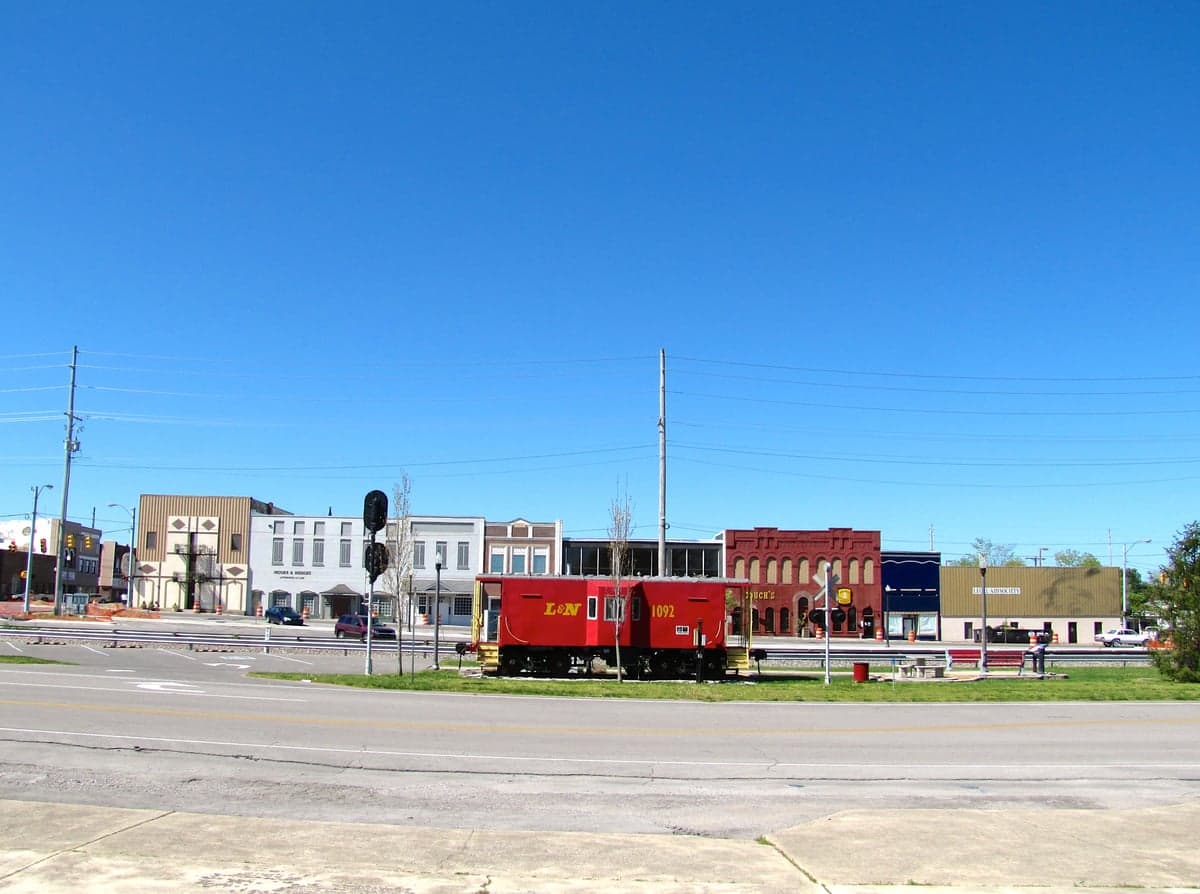
Tullahoma is about as solidly conservative as they come, and it's been that way for as long as anyone can remember. The Cook PVI sits at R+21, which means the area votes about 21 points more Republican than the national average—a number that's held steady even as some other parts of the state have started to wobble. If you look at the 2024 presidential results, Coffee County went heavily for the Republican ticket, and Tullahoma itself mirrors that trend. The real story, though, is that this isn't just a voting pattern; it's a way of life. People here still believe in limited government, personal responsibility, and the Second Amendment, and they're not shy about it.
How it compares
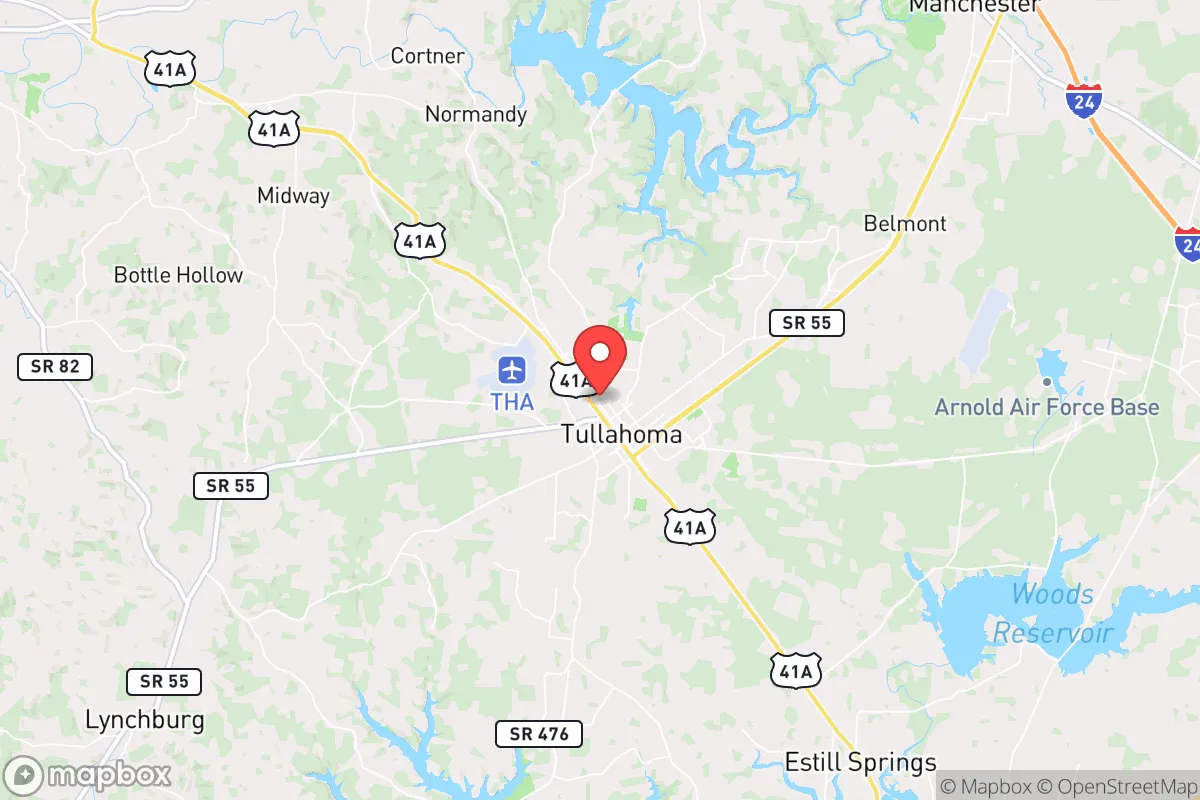
Drive thirty minutes north to Manchester, and you'll find a similar vibe—conservative, rural, with a strong military presence from Arnold Air Force Base. But head south toward Lynchburg or even further to Shelbyville, and you start to see a different picture. Lynchburg is still conservative, but it's more of a tourist-driven, "keep the town pretty" kind of conservatism, while Tullahoma is more blue-collar and no-nonsense. The real contrast, though, is with Murfreesboro, about 45 minutes north. That city has been growing fast, and with it has come a noticeable shift toward progressive policies—higher taxes, more zoning restrictions, and a general feeling that the government knows best. Tullahoma hasn't gone down that road, and most folks here are determined to keep it that way. The nearby city of Winchester also leans conservative, but it's smaller and quieter, without the industrial base that gives Tullahoma its working-class backbone.
What this means for residents
For someone moving here, the political climate means you can expect a government that stays out of your business. Property taxes are low, there's no city income tax, and the local leadership generally believes that the best government is the one that governs least. That's a big deal if you're tired of overreach—whether it's mask mandates, business closures, or heavy-handed zoning laws. You won't find a lot of red tape here. The city council and county commission are dominated by conservatives who take a "live and let live" approach, as long as you're not hurting anyone. That said, there's a growing concern among long-time residents about the direction of the state as a whole. Nashville's influence is creeping south, and with it comes more state-level pressure on local control. Some worry that if Tullahoma grows too fast, it might attract the kind of progressive transplants who want to change things. So far, though, the community has held the line.
One thing that sets Tullahoma apart is its strong military and aerospace heritage, thanks to Arnold Air Force Base and the nearby AEDC. That brings in a lot of folks who are used to discipline, order, and a certain respect for traditional values. It also means the local economy is stable, with good-paying jobs that don't depend on government handouts. Culturally, you'll find a lot of churches, a strong sense of community, and a general distrust of anything that smells like federal overreach. The local schools are decent, but there's a healthy skepticism about curriculum changes that push progressive social agendas. In short, Tullahoma is a place where you can still raise a family without feeling like the government is looking over your shoulder. The trajectory is stable, but it requires vigilance—because once that conservative foundation starts to crack, it's hard to rebuild.

State Political ClimatePolitical Climate in Tennessee
State Political AnalysisPolitical Environment in the State
Tennessee has been a reliably red state for decades, with a strong Republican trifecta controlling the governorship and both legislative chambers since 2011. The state’s political lean is solidly conservative, driven by a coalition of rural and suburban voters who prioritize low taxes, gun rights, and traditional values. Over the past 20 years, the GOP’s grip has tightened significantly—Donald Trump won the state by 30 points in 2020 and 2024, up from George W. Bush’s 14-point margin in 2004. This shift reflects a broader realignment as culturally conservative voters in places like Nashville’s suburbs and Knoxville’s exurbs have moved right, while the state’s few urban centers have become more Democratic.
Urban vs. rural divide
The political map of Tennessee is a stark contrast between its major cities and the rest of the state. Nashville (Davidson County) and Memphis (Shelby County) are deep blue strongholds, with Democrats winning these counties by 30-40 points in recent elections. Chattanooga (Hamilton County) and Knoxville (Knox County) are more competitive but still lean Republican, with the GOP winning by 10-15 points in 2024. The real engine of Tennessee’s conservatism is the vast rural and suburban expanse: counties like Williamson (south of Nashville), Rutherford (east of Nashville), and Blount (south of Knoxville) vote Republican by 30-50 points. The Tri-Cities region (Johnson City, Kingsport, Bristol) is among the most reliably conservative areas in the country, with Washington County voting +35 R in 2024. This urban-rural split means that while Nashville and Memphis dominate headlines, they are politically isolated—the state legislature has aggressively preempted their local ordinances on issues like sanctuary policies and housing regulations.
Policy environment
Tennessee’s policy environment is a model of limited government for conservatives. There is no state income tax on wages, and the sales tax rate is high (7% state, plus local add-ons) but avoids taxing groceries. The regulatory posture is business-friendly, with right-to-work laws and no state-level minimum wage above the federal $7.25. Education policy has shifted toward school choice: the state expanded its Education Savings Account program in 2023 to cover all counties, and Governor Bill Lee signed a universal school voucher bill in 2025. Healthcare remains a mixed bag—Tennessee did not expand Medicaid under the Affordable Care Act, leaving a coverage gap, but the state has a robust private insurance market. Election laws are strict: voter ID is required, early voting is limited to 14 days, and the state purges inactive voters regularly. The legislature also passed a law in 2024 banning ranked-choice voting statewide, a preemptive strike against progressive electoral reforms.
Trajectory & freedom
Tennessee is becoming more free in several key areas, particularly on gun rights and parental rights. In 2021, the state enacted permitless carry of handguns, allowing any law-abiding adult to carry without a license. The 2023 “Tennessee Freedom Act” prohibits enforcement of federal gun laws that conflict with state law, a direct challenge to federal overreach. On parental rights, the 2022 “Parental Bill of Rights” gives parents control over their children’s medical decisions and school curriculum, and the 2023 law banning gender-transition procedures for minors is one of the strictest in the nation. However, there are concerning trends: the state’s medical marijuana program remains nonexistent, and a 2024 law criminalizing public camping has been criticized as targeting the homeless. Property rights are strong, with no statewide zoning mandates, but local governments in Nashville and Memphis have imposed rent control and inclusionary zoning, which the legislature has tried to preempt. The overall trajectory is toward more personal liberty on guns and family matters, but with a heavy hand on social issues and drug policy.
Civil unrest & political movements
Tennessee has seen its share of political flashpoints. The 2023 Nashville Covenant School shooting sparked massive protests at the state capitol, with thousands of activists demanding gun control—but the legislature responded by passing a law allowing teachers to carry firearms on campus. The “Tennessee Three” expulsions in 2023 (two Democratic lawmakers removed for protesting on the House floor) became a national symbol of partisan conflict, but the GOP base largely supported the move. Immigration politics are heated: the state passed a law in 2024 requiring local law enforcement to cooperate with ICE, and Nashville’s sanctuary city ordinance was preempted by the state in 2023. Election integrity controversies have been minimal, though the 2020 audit found no widespread fraud. The most visible movement is the rise of “Moms for Liberty” chapters in Williamson County and Rutherford County, which have successfully pushed for book bans and curriculum transparency. On the left, the “Indivisible” network remains active in Memphis and Nashville, but their influence is limited to city councils.
Projection
Over the next 5-10 years, Tennessee will likely become more conservative, not less. In-migration from blue states like California and New York is accelerating—the state gained over 500,000 new residents between 2020 and 2025—but these newcomers are disproportionately conservative or libertarian, drawn by low taxes and gun rights. The Nashville metro area is growing fastest, but its suburbs (Franklin, Brentwood, Murfreesboro) are voting more Republican as they fill with families fleeing high-tax states. The state’s Republican supermajority is unlikely to be threatened, as Democratic strength is concentrated in shrinking urban cores. Expect further preemption of local progressive ordinances, expansion of school choice, and continued resistance to federal overreach on guns and immigration. The wildcard is the growing Hispanic population in Nashville and Memphis, which could shift the electorate if they naturalize and vote Democratic—but for now, they are a small share of the vote.
For a new resident, Tennessee offers a stable, conservative environment where your rights to keep and bear arms, direct your children’s education, and keep more of your paycheck are protected by state law. The political climate is reliably red, with no serious threat of a blue shift in the near future. You’ll find a state that respects personal liberty on most fronts, though you’ll need to accept strict drug laws and limited healthcare options. If you’re moving from a high-tax, high-regulation state, Tennessee will feel like a breath of fresh air—just be prepared for the culture war battles that play out in the legislature and local school boards. The bottom line: Tennessee is a safe bet for conservatives who want a state that will stay the course for the next decade.
* Values derived from national, state, county, city and local statistics and may differ in a specific area. Last updated: 2026-05-01T11:46:04.000Z
Narrative content on this page is AI-generated and may contain mistakes. Verify any details that matter before acting on them.
ReloMaps may earn a commission from affiliate links at no extra cost to you.

