Photo: Wikipedia
Demographics of Tulsa, OK
Affluence Level in Tulsa, OK
A below-average socioeconomic profile. Incomes, home values, and educational attainment trail the U.S., with higher poverty and unemployment.
People of Tulsa, OK
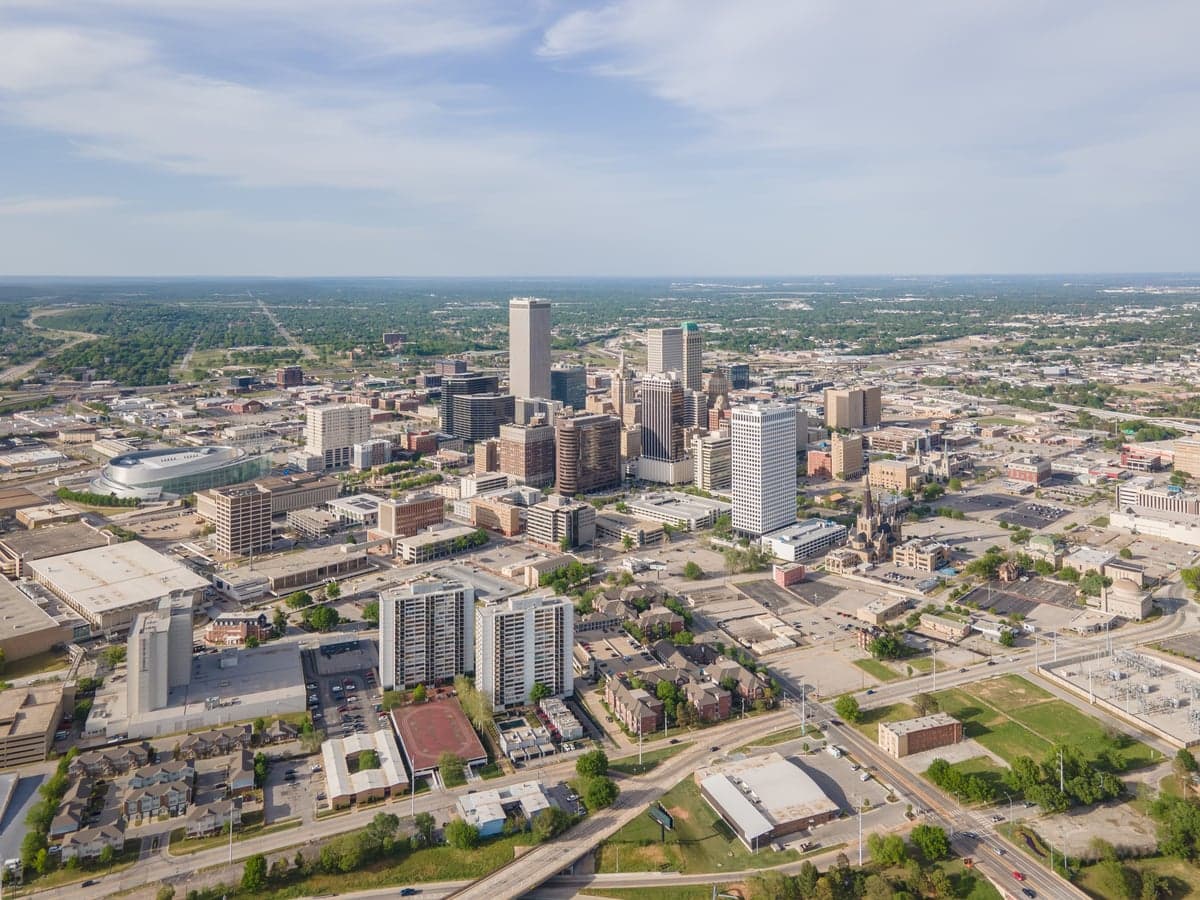
The people of Tulsa, Oklahoma today number 412,322, forming a city with a distinctive character shaped by its oil-boom roots, racial history, and recent diversification. The population is 51.4% White, 19.2% Hispanic, 14.0% Black, 2.7% East/Southeast Asian, and 0.7% Indian (subcontinent), with 8.2% foreign-born and 33.3% college-educated. Tulsans are notably more ethnically diverse than the surrounding region, yet the city remains spatially divided along racial and economic lines, with distinct neighborhoods reflecting different eras of settlement and migration. This is a city where the legacy of the 1921 Tulsa Race Massacre still shapes residential patterns, even as newer immigrant communities and suburban growth are slowly redrawing the demographic map.
How the city was settled and grew
Tulsa’s population history begins with the forced relocation of the Muscogee (Creek) and Cherokee nations in the 1830s, who established settlements along the Arkansas River. The modern city was formally founded in 1836 by the Lochapoka Band of the Creek Nation, who named it "Tulsey Town" after their ancestral town in Alabama. The first major population wave came after the 1901 discovery of oil at the nearby Glenn Pool field, which transformed Tulsa from a small trading post into the "Oil Capital of the World" within a decade. This boom drew thousands of white entrepreneurs, roughnecks, and speculators, who built the mansions of Maple Ridge and the commercial core of downtown. Simultaneously, Black settlers fleeing Jim Crow in the Deep South arrived to work in the oil fields and service industries, establishing the prosperous Greenwood District—known as "Black Wall Street"—which was destroyed in the 1921 race massacre. The massacre and subsequent rebuilding efforts concentrated Tulsa’s Black population in the Greenwood and North Tulsa neighborhoods, a pattern that persists today. By 1930, Tulsa’s population had surged past 140,000, with a small but growing Mexican immigrant community working in railroads and agriculture, settling initially in the West Tulsa industrial corridor.
Modern era (post-1965)
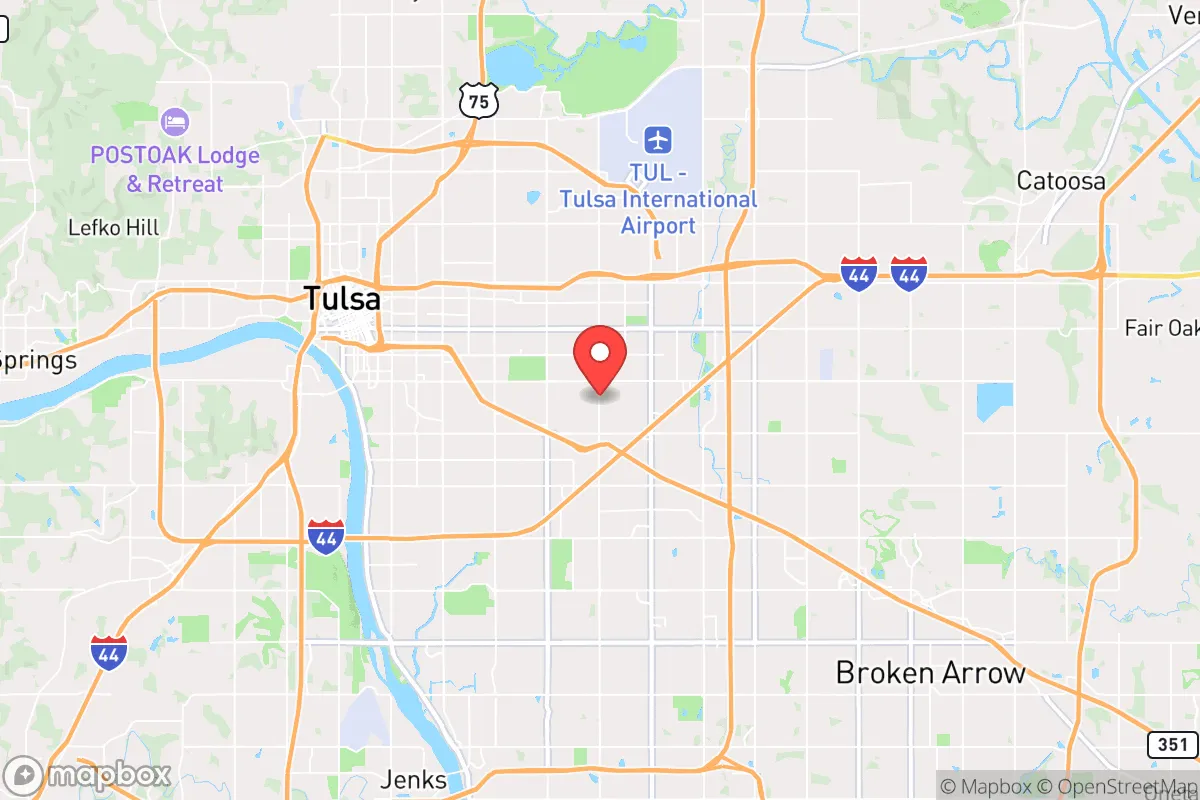
The 1965 Hart-Cellar Immigration Act and subsequent reforms reshaped Tulsa’s demographics more gradually than in coastal cities. The most significant post-1965 shift has been the growth of the Hispanic population, which rose from under 2% in 1980 to 19.2% today. This wave began with Mexican immigrants drawn to construction, meatpacking, and oil-field labor, and later expanded to include Central American arrivals. The Hispanic community is concentrated in East Tulsa—particularly along 11th Street and Memorial Drive—where Spanish-language businesses, churches, and taquerias now define the commercial landscape. The East/Southeast Asian population (2.7%) grew primarily through refugee resettlement programs: Vietnamese and Hmong families arrived after the Vietnam War, followed by Burmese and Karen refugees in the 2000s, many settling in the East Tulsa and Midtown areas near refugee-support nonprofits. The Indian-subcontinent population (0.7%) is smaller and more recent, largely composed of tech and medical professionals working at Saint Francis Hospital, the University of Tulsa, and the growing aerospace sector, with clusters in South Tulsa and Bixby suburbs. Meanwhile, domestic in-migration has been dominated by white families moving to the southern suburbs—South Tulsa, Jenks, and Broken Arrow—while North Tulsa has experienced population decline and disinvestment, maintaining its majority-Black character. The city’s foreign-born share of 8.2% is modest by national standards but represents a doubling since 2000, driven almost entirely by Hispanic and Asian immigration.
The future
Tulsa’s population trajectory points toward continued diversification, but at a slower pace than Sun Belt peers like Dallas or Houston. The Hispanic share is projected to rise to roughly 25-28% by 2040, driven by both immigration and higher birth rates, while the White share will continue its gradual decline. The Black population share has been stable at 14-15% for two decades, suggesting neither significant in-migration nor out-migration. The East/Southeast Asian community is likely to grow modestly through continued refugee resettlement and a small but steady stream of tech workers attracted by Tulsa’s low cost of living and the Tulsa Remote program, which offers $10,000 to remote workers who relocate. The Indian-subcontinent population, while small, is growing faster proportionally due to the H-1B visa pipeline and local university recruitment. Geographically, the city is tribalizing rather than homogenizing: East Tulsa is becoming a solidly Hispanic and Asian corridor, North Tulsa remains predominantly Black, and South Tulsa and the suburbs are overwhelmingly White and increasingly conservative. The downtown and Blue Dome District are attracting a younger, more college-educated and racially mixed population, but this remains a thin layer atop the city’s entrenched residential segregation. The overall population growth rate has slowed to under 1% annually, with Tulsa County adding about 4,000 residents per year—mostly in the suburbs rather than the city proper.
For someone moving to Tulsa now, the city offers a clear choice: live in the diversifying, walkable core neighborhoods where demographic change is most visible, or settle in the predominantly white, family-oriented suburbs that remain culturally and politically conservative. The city is becoming more ethnically varied but not necessarily more integrated, and the economic divide between North and South Tulsa remains the defining feature of local life. A newcomer should expect a place where community identity is still strongly tied to neighborhood and race, but where the cost of living and job opportunities in aerospace, energy, and healthcare provide real stability for those who choose their location carefully.

* Values derived from national, state, county, city and local statistics and may differ in a specific area. Last updated: 2026-04-13T06:21:49.000Z
Narrative content on this page is AI-generated and may contain mistakes. Verify any details that matter before acting on them.
ReloMaps may earn a commission from affiliate links at no extra cost to you.

