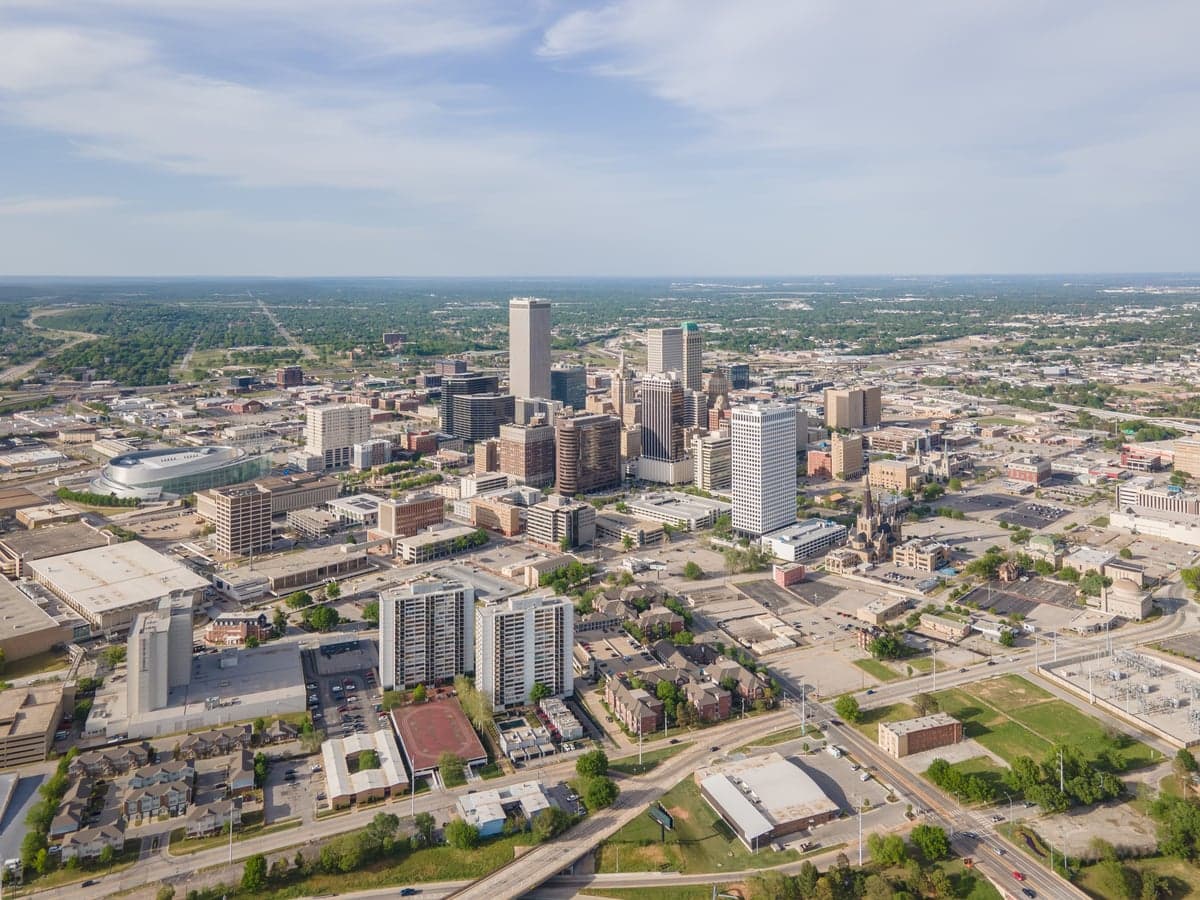
Photo: Wikipedia
Quality of Life in Tulsa, OK
A livable area that tracks near national norms for affordability, walkability, and neighborhood health.
What does Quality of Life tell us?
Quality of Life blends cost of living, nearby amenities, socioeconomic signals, and neighborhood character. City-level scores represent the whole municipality; individual neighborhoods can differ.
What does this tell us?
Quality of Life blends cost of living, nearby amenities, socioeconomic signals, and neighborhood character. City-level scores represent the whole municipality; individual neighborhoods can differ.
Cost of Living
22% below national average
The Real Cost of Living in Tulsa, OK for 2026
| Tier | Individual | Family (4) |
|---|---|---|
| Survival | $40k | $75k |
| Comfortable | $75k | $110k |
| Luxury | $106k+ | $164k+ |
| Elite (Top 5%) | $157k+ | $243k+ |
53%
The Area Signal
A metric tracking the socioeconomic signals of the area.


Hobbies
Explore the areaGroceries
4 within 10 miles
Gas
0 within 10 miles
Hospital
3 within 20 miles
Airport
MCI — Kansas City International
Post Office
USPS — Tulsa, OK
Critical Amenities
Quality-of-Life Analysis
Tulsa offers a distinctly affordable quality of life that attracts a mix of young professionals, remote workers, and families seeking a lower cost of living without sacrificing urban amenities. With a cost of living index of 78—22 points below the national average—the city provides a financial cushion that allows residents to own homes, save, and enjoy a comfortable lifestyle. The population skews toward pragmatic, community-oriented individuals, many drawn by the city’s growing arts scene, historic architecture, and the presence of major employers like the University of Oklahoma’s Schusterman Center and the aerospace firm Spirit AeroSystems.
How Tulsa’s cost of living and housing compare to nearby cities
Tulsa’s affordability is a standout feature, especially when compared to larger regional hubs like Dallas or Oklahoma City. The median home value sits at $189,600, roughly half the national median, while the median rent is $998—well below the $1,200+ averages seen in many Sun Belt metros. This low housing cost is the primary driver of the city’s 78 COL index. The average commute of 18.7 minutes is notably shorter than the national average of 26 minutes, meaning residents spend less time in traffic and more time at home or at local attractions. For context, a similar home in Oklahoma City might cost 5-10% more, while in Dallas-Fort Worth, prices can be double. This affordability extends to utilities, groceries, and healthcare, making Tulsa a practical choice for those looking to stretch their income.
What daily life is like for families and professionals in Tulsa
Daily life in Tulsa balances urban convenience with a relaxed, community-focused pace. The city’s school system includes highly rated options like Booker T. Washington High School and Jenks Public Schools, which consistently rank among Oklahoma’s best. For professionals, the downtown area has seen a resurgence, with co-working spaces, breweries, and the Gathering Place—a 100-acre riverfront park that rivals any in the region—serving as a central gathering spot. The arts scene is anchored by the Philbrook Museum of Art and the Tulsa Ballet, while outdoor enthusiasts enjoy the Turkey Mountain Urban Wilderness Area for hiking and mountain biking. The short commute means families can easily attend evening events or weekend festivals, such as the Mayfest arts fair or the Blue Dome Arts Festival, without the hassle of long drives. However, public transit is limited, so a car is essential for most errands.
Who thrives in Tulsa? The city is ideal for budget-conscious families who want good schools and a safe, walkable downtown, as well as remote workers seeking a low-cost base with reliable internet and a growing café culture. Young professionals will find a tight-knit startup community and affordable housing near the Arts District, while retirees appreciate the low property taxes and access to healthcare at the St. Francis Health System. Those who prioritize nightlife or extensive public transit may find Tulsa too quiet, but for anyone valuing financial freedom and a strong sense of place, it’s a compelling option. The city’s affordability, combined with its cultural depth and short commutes, makes it a hidden gem for those willing to look beyond coastal metros.

Crime in Tulsa, OK
Significantly higher crime rates than 77% of comparable U.S. locations.
Violent CrimeViolent Crime Analysis
Property CrimeProperty Crime Analysis
Crime Analysis
Tulsa's overall safety picture is significantly worse than national averages, with violent crime rates nearly double the U.S. figure and property crime rates roughly 50% higher. The city recorded a violent crime rate of 817.8 incidents per 100,000 residents and a property crime rate of 3,404.3 per 100,000 in the most recent data. These figures place Tulsa among the more dangerous mid-sized cities in the country, a reality shaped by both socioeconomic factors and the local justice system's approach to prosecution and sentencing.
Crime in context
Compared to the national violent crime rate of approximately 380 per 100,000, Tulsa's rate is more than double. Property crime in Tulsa also far exceeds the national average of roughly 2,200 per 100,000. While Oklahoma's statewide violent crime rate (around 480 per 100,000) is already elevated, Tulsa's rate is nearly 70% higher than the state average. The city's property crime rate similarly outpaces the state figure of roughly 2,800 per 100,000. These disparities are not accidental. Tulsa County has seen a pattern of progressive district attorneys and judges who have implemented policies emphasizing diversion programs, reduced bond amounts, and lighter sentencing for repeat offenders. This ideological approach, while intended to reduce incarceration, has a documented correlation with higher recidivism and emboldened criminal activity, as offenders face fewer consequences and return to the streets more quickly.
What residents experience
For Tulsa residents, the high crime rates translate into tangible daily risks. Property crime is the most common concern, with vehicle break-ins, residential burglaries, and package thefts occurring frequently across many neighborhoods. Violent crime, while less evenly distributed, includes a notable number of aggravated assaults and robberies, particularly in areas with concentrated poverty and gang activity. Residents often report feeling unsafe walking alone after dark in central and north Tulsa districts. The progressive criminal justice policies in Tulsa County have a direct impact: offenders arrested for property crimes are frequently released on low or no cash bond, and cases are often pled down to lesser charges or dismissed through pretrial diversion programs. This cycle frustrates victims and erodes public confidence in the system's ability to provide justice.
Neighborhood-level variation is stark. South Tulsa and parts of midtown, including areas around the Gathering Place and Brookside, generally see lower violent crime rates but still contend with property crime. North Tulsa, particularly areas north of Interstate 244, experiences the highest concentration of violent crime, with rates in some census tracts exceeding 1,500 per 100,000. The downtown core and the Route 66 corridor see elevated property crime due to foot traffic and tourism. Prospective residents should research specific neighborhood crime maps and consider that the broader county's lenient judicial environment means even "safe" areas are not insulated from property crime spillover. The combination of high base rates and a justice system that prioritizes offender rehabilitation over public safety makes Tulsa a location where vigilance and security measures are strongly advised.
* Values derived from national, state, county, city and local statistics and may differ in a specific area. Last updated: 2026-04-13T06:21:49.000Z
Narrative content on this page is AI-generated and may contain mistakes. Verify any details that matter before acting on them.
ReloMaps may earn a commission from affiliate links at no extra cost to you.

