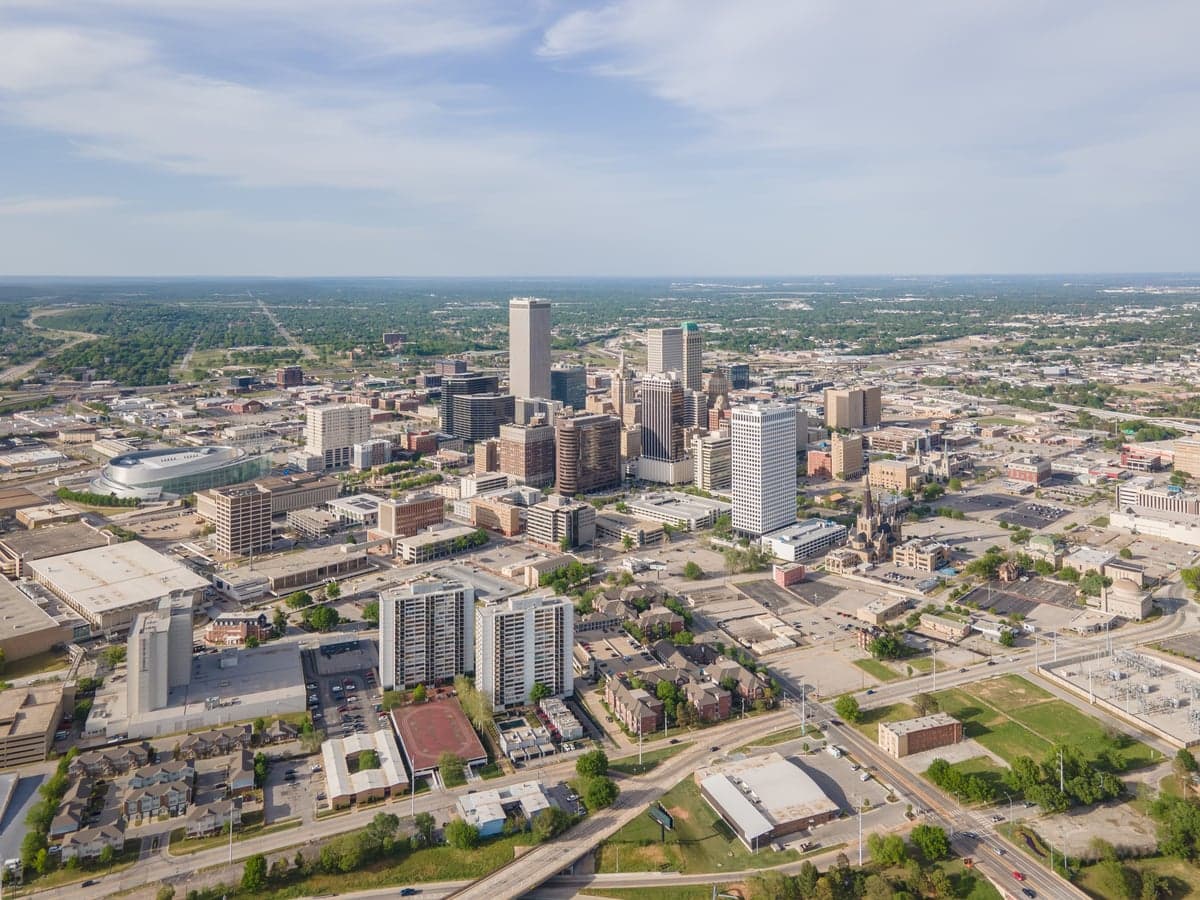
Photo: Wikipedia
Political ClimatePolitical Climate in Tulsa, OK
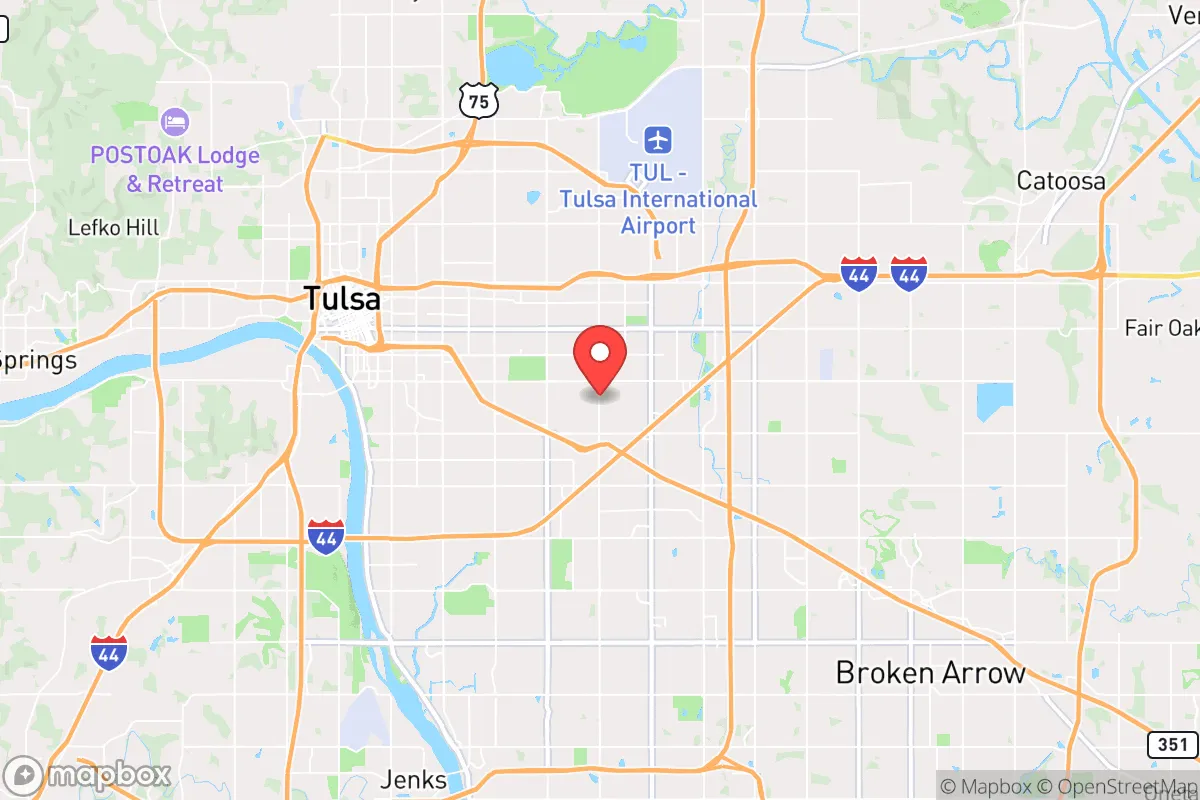
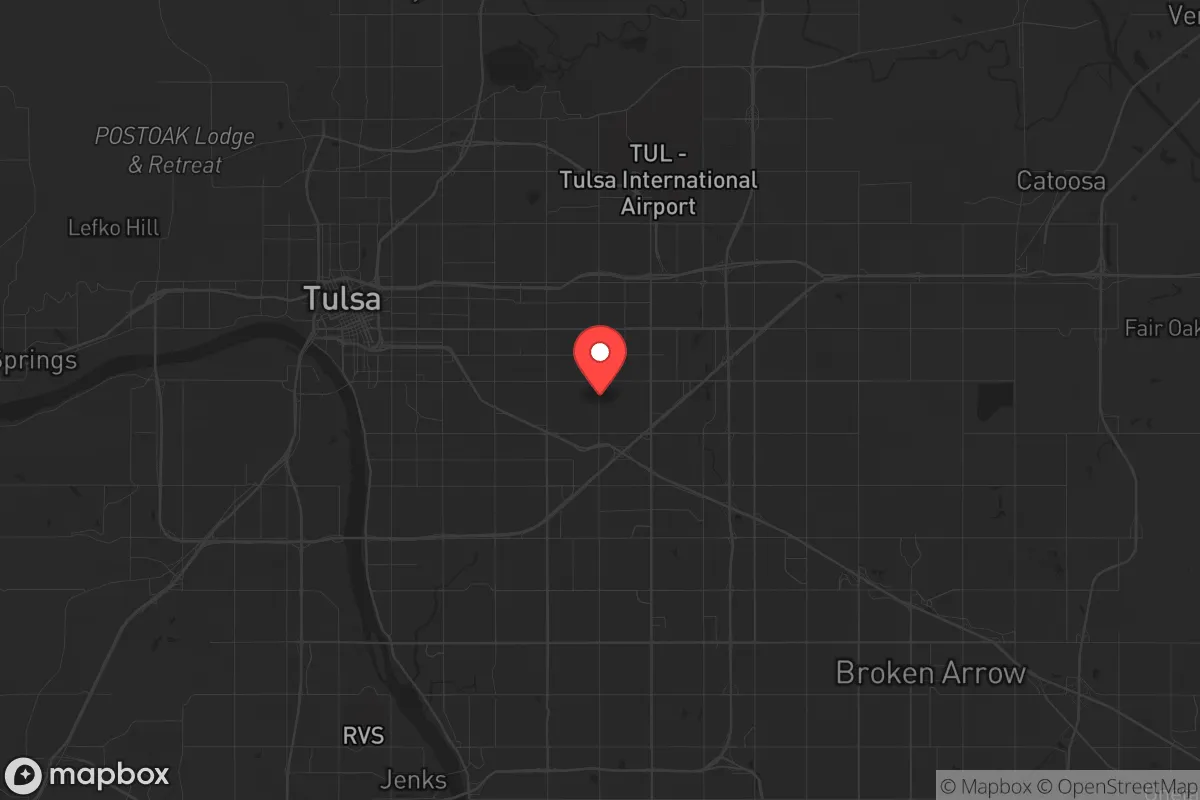
District shown is the primary district for this city’s centroid. Cities may span multiple districts.
Local Political AnalysisPolitical Analysis of Tulsa, OK
Tulsa sits firmly in the red column, with a Cook Partisan Voting Index of R+11, meaning the district votes about 11 points more Republican than the national average. That’s not just a number—it’s a reflection of a place where, for decades, the default assumption has been that government should stay out of your business, your paycheck, and your family’s life. But if you’ve lived here as long as I have, you’ve watched that foundation get chipped at, especially in the last five to ten years. The city itself is still reliably conservative, but the margins have tightened, and you can feel the shift in certain neighborhoods and local elections.
How it compares
Drive 15 minutes south to Broken Arrow or 20 minutes east to Jenks, and you’ll find communities that are even more solidly conservative—places where the R+11 feels like a lowball estimate. Those suburbs vote like it’s still 1995, with school boards and city councils that push back hard on progressive overreach. Head north toward Bartlesville or west to Sand Springs, and you get a similar vibe: folks who remember when Tulsa was a straight-ticket Republican town and aren’t shy about saying they want it back. The contrast is sharpest when you look at the city core versus the outer ring. Downtown Tulsa and the midtown areas near the University of Tulsa have seen an influx of younger, more progressive transplants—people who brought their California and Austin sensibilities with them. That’s where you see the push for things like sanctuary city policies, defunding police rhetoric, and zoning changes that prioritize density over property rights. The surrounding towns? They’re watching that experiment with a wary eye, and they’re not interested in repeating it.
What this means for residents
For the average Tulsan who values personal freedom and limited government, the political climate here is a mixed bag. On the plus side, Oklahoma’s state-level leadership—especially the governor and legislature—has been a bulwark against the worst federal overreach. You’ve got constitutional carry, no state income tax on retirement income, and a general reluctance to impose mask or vaccine mandates that we saw in other states. But locally, the city council has become a battleground. In recent years, you’ve seen proposals for “hate crime” ordinances that go beyond state law, efforts to restrict police discretion, and a push for “equity” programs that sound a lot like government picking winners and losers. The real concern is that these small steps—a zoning change here, a diversity mandate there—add up to a slow erosion of the hands-off culture that made Tulsa a great place to raise a family. If you’re a property owner or a small business operator, you’re already feeling the squeeze from higher permitting fees and more bureaucratic hoops, all justified in the name of “progress.”
The cultural and policy distinctions here are worth noting. Tulsa has a strong libertarian streak—people genuinely believe in minding their own business and expect the same from their government. That’s why you see such fierce opposition to things like red-light cameras (defeated twice) or city-wide plastic bag bans (never even got off the ground). But the progressive wing is persistent, and they’ve learned to work the system: they focus on school board races, neighborhood association votes, and low-turnout municipal elections where a few hundred votes can flip a seat. The long-term trajectory depends on whether the conservative majority stays engaged at the local level. If they do, Tulsa will remain a place where freedom is the default. If they don’t, you’ll see the same pattern that’s played out in Austin, Denver, and Portland—a slow, steady drift toward government control disguised as compassion. For now, the suburbs are holding the line, but the city itself is a battleground, and every election counts.

State Political ClimatePolitical Climate in Oklahoma
State Political AnalysisPolitical Environment in the State
Oklahoma has been a reliably red state for generations, but the political climate here is more layered than the simple "deep red" label suggests. The state leans heavily Republican in statewide elections — Donald Trump won it by 33 points in 2020 and by a similar margin in 2024 — but the coalition driving that majority has shifted noticeably over the last 10-20 years. What was once a solidly conservative, rural-dominated electorate is now seeing a growing suburban and exurban influence, particularly around Oklahoma City and Tulsa, while the rural counties remain deeply Republican and the urban cores have become increasingly Democratic. The overall trajectory is still rightward, but the nature of that conservatism is evolving, with a stronger emphasis on individual liberty, limited government, and cultural conservatism.
Urban vs. rural divide
The political map of Oklahoma is a textbook study in the urban-rural split. Oklahoma City and Tulsa are the two major population centers, and they vote differently than the rest of the state. Oklahoma County (Oklahoma City) has trended purple over the last decade — it voted for Trump by just 8 points in 2020, down from 14 points in 2016, and the city itself has a Democratic mayor and city council. Tulsa County is similar, with Trump winning by 12 points in 2020, but the city of Tulsa has a Democratic mayor and a more liberal city council. The suburbs around both cities — places like Edmond, Norman, Broken Arrow, and Jenks — are where the real political action is. Edmond, a northern suburb of Oklahoma City, is a solidly Republican stronghold, but it's a more educated, professional-class conservatism that sometimes clashes with the rural populist wing. Norman, home to the University of Oklahoma, is a blue dot in a red county, with a Democratic mayor and a city council that has passed progressive ordinances on housing and police reform. The rural counties — like Texas County in the Panhandle, Cimarron County, and Pushmataha County in the southeast — routinely deliver 80-85% of their vote to Republicans. The divide is stark: the two major metros and their inner suburbs are competitive, while the rest of the state is deeply red.
Policy environment
Oklahoma's policy environment is aggressively conservative, with a focus on low taxes, limited regulation, and cultural conservatism. The state has a flat income tax of 4.75% (down from 5% in 2022), and there are ongoing efforts to eliminate the income tax entirely. Property taxes are among the lowest in the nation, and there is no estate tax. The regulatory posture is business-friendly, with a right-to-work law and a tort reform system that caps non-economic damages. On education, Oklahoma has a robust school choice program: the Oklahoma Parental Choice Tax Credit, enacted in 2023, provides up to $7,500 per student for private school tuition, and the state has one of the highest charter school enrollment rates in the country. Healthcare policy is a mixed bag — the state expanded Medicaid under a 2020 ballot initiative (State Question 802), which was a rare progressive victory, but the legislature has since imposed work requirements and premiums on the expansion population. Election laws are strict: voter ID is required, early voting is limited to three days, and absentee ballot applications must be notarized. The state also passed a law in 2021 banning ranked-choice voting and another in 2023 requiring all ballots to be hand-counted in counties with fewer than 10,000 voters. Overall, the policy environment is designed to maximize individual freedom in economic matters while maintaining strong cultural and social conservatism.
Trajectory & freedom
Oklahoma has been on a clear trajectory of expanding personal liberty in several key areas, particularly gun rights, parental rights, and taxation. In 2019, the state passed constitutional carry (permitless carry of firearms), and in 2023, it lowered the age for open carry to 18. Parental rights have been a major focus: the 2022 Oklahoma Parental Rights in Education Act (similar to Florida's "Don't Say Gay" law) prohibits classroom instruction on sexual orientation and gender identity in grades K-5, and a 2023 law requires schools to notify parents of any changes in a student's mental or physical health. On medical autonomy, the state has one of the strictest abortion bans in the country — a near-total ban with no exceptions for rape or incest, enacted in 2022 after the Dobbs decision. Property rights are strong, with a 2021 law limiting the ability of homeowners' associations to restrict solar panels and another law protecting landowners from eminent domain for carbon capture pipelines. The state has also moved to protect free speech on college campuses, with a 2023 law requiring public universities to adopt policies that protect students' First Amendment rights. However, there are areas where freedom has contracted: the state's medical marijuana program, once one of the most liberal in the country, has been heavily regulated since 2022, with a moratorium on new licenses and strict testing requirements. Overall, the trajectory is toward more individual liberty in most areas, with the notable exception of marijuana policy.
Civil unrest & political movements
Oklahoma has seen relatively little civil unrest compared to other states, but there have been notable flashpoints. The 2020 Black Lives Matter protests in Oklahoma City and Tulsa were large but mostly peaceful, though there were some instances of property damage and arrests. The state's political movements are dominated by the conservative grassroots, particularly the Oklahoma Second Amendment Association (OK2A) and the Oklahoma Conservative Political Action Committee (OCPAC). Immigration politics are a hot-button issue, with the state passing a law in 2023 requiring all state agencies to verify the immigration status of applicants for public benefits, and a 2024 law making it a state crime to enter Oklahoma from Mexico illegally. There is no sanctuary city movement in Oklahoma — in fact, Oklahoma City and Tulsa both have policies that cooperate with federal immigration enforcement. Election integrity has been a major concern since 2020, with the state legislature passing multiple bills to tighten voting procedures, including the 2021 law requiring all absentee ballots to be notarized and the 2023 law mandating hand-counting in small counties. There is a small but vocal secessionist movement in the Panhandle, with some residents advocating for the creation of a separate state called "No Man's Land," but it has gained no serious political traction. The most visible flashpoint for a new resident would likely be the ongoing debate over medical marijuana — the industry has been a major economic driver, but the regulatory crackdown has created tension between libertarian-leaning conservatives and social conservatives who want to restrict it further.
Projection
Over the next 5-10 years, Oklahoma is likely to remain solidly Republican, but the nature of that conservatism will continue to evolve. The biggest demographic shift is the influx of new residents from blue states, particularly California and Texas, who are drawn by low taxes and housing costs. These newcomers tend to be more libertarian than traditional Oklahoma conservatives, favoring even lower taxes and less regulation but sometimes clashing on social issues like marijuana and education. The suburban counties around Oklahoma City and Tulsa — especially Canadian County (west of OKC) and Rogers County (northeast of Tulsa) — are growing rapidly and will become even more politically influential. The rural counties will continue to lose population, which will shift the balance of power toward the suburbs. On policy, expect continued pressure to eliminate the state income tax, expand school choice, and further restrict abortion access. The medical marijuana industry will likely face more regulation, but a full repeal is unlikely. The biggest wildcard is the state's education funding — the school choice tax credit has been popular, but it has also strained rural school districts, and there will be ongoing battles over funding. A new resident moving in now should expect to find a state that is becoming more suburban, more libertarian, and more culturally conservative, but also more diverse and more politically engaged.
For a new resident, the bottom line is that Oklahoma offers a high degree of personal freedom in most areas — low taxes, strong gun rights, parental control over education, and a business-friendly environment. The trade-offs are a limited social safety net, a healthcare system that is still catching up after Medicaid expansion, and a political culture that can be intensely partisan. If you value individual liberty and cultural conservatism, you'll find a lot to like here. If you're looking for a place where the government stays out of your life and your wallet, Oklahoma is one of the best bets in the country. Just be prepared for the summer heat and the occasional political dust-up over marijuana.
* Values derived from national, state, county, city and local statistics and may differ in a specific area. Last updated: 2026-04-13T06:21:49.000Z
Narrative content on this page is AI-generated and may contain mistakes. Verify any details that matter before acting on them.
ReloMaps may earn a commission from affiliate links at no extra cost to you.

