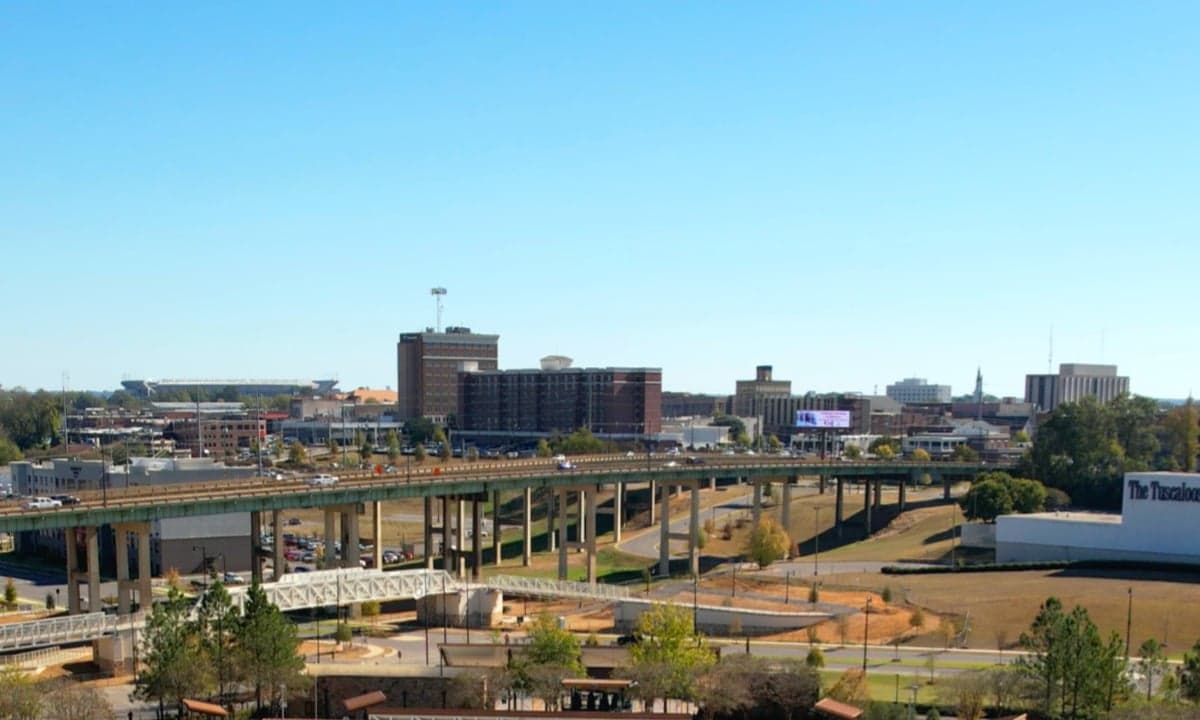
Photo: Wikipedia
Quality of Life in Tuscaloosa, AL
A high quality of life with strong walkability, manageable living costs, healthy neighborhood signals, and solid amenity access.
What does Quality of Life tell us?
Quality of Life blends cost of living, nearby amenities, socioeconomic signals, and neighborhood character. City-level scores represent the whole municipality; individual neighborhoods can differ.
What does this tell us?
Quality of Life blends cost of living, nearby amenities, socioeconomic signals, and neighborhood character. City-level scores represent the whole municipality; individual neighborhoods can differ.
Cost of Living
15% below national average
The Real Cost of Living in Tuscaloosa, AL for 2026
| Tier | Individual | Family (4) |
|---|---|---|
| Survival | $16k | $30k |
| Comfortable | $46k | $68k |
| Luxury | $88k+ | $136k+ |
| Elite (Top 5%) | $141k+ | $219k+ |
72%
The Area Signal
A metric tracking the socioeconomic signals of the area.


Hobbies
Explore the areaGroceries
5 within 10 miles
Gas
0 within 10 miles
Hospital
3 within 20 miles
Airport
ATL — Hartsfield–Jackson Atlanta International
Post Office
USPS — Tuscaloosa, AL
Critical Amenities
Quality-of-Life Analysis
Tuscaloosa, Alabama, presents a quality of life defined by its dual identity as a major university town and a regional economic hub, attracting a diverse population of students, academics, healthcare professionals, and manufacturing workers. The city’s affluence is notably stratified, with a median household income of approximately $52,000 that is buoyed by the University of Alabama and its associated research and medical sectors, while a significant student population keeps the overall cost of living well below the national average. This creates a unique environment where a lower cost of living coexists with pockets of high economic activity, making it an accessible option for a wide range of residents.
Cost of living, housing affordability, and how Tuscaloosa compares to Birmingham
Tuscaloosa’s cost of living index sits at 85, a full 15 points below the U.S. average, making it a notably affordable place to live compared to the national baseline and even to nearby Birmingham, which typically registers an index around 90. The housing market is the primary driver of this affordability, with a median home value of $236,600—a figure that is roughly 30% lower than the national median and significantly less than Birmingham’s median of around $280,000. Renters also benefit, with a median rent of $1,005, which is about $200 less per month than the national median and competitive with other mid-sized Alabama cities. The average commute time of just 18 minutes is a major quality-of-life advantage, far shorter than the national average of 26 minutes and notably less than the 22-minute average in Birmingham, allowing residents more time for family, recreation, or work. While property taxes in Tuscaloosa County are low (around 0.4% of assessed value), the city’s sales tax is relatively high at 9%, which can offset some housing savings for frequent shoppers.
What daily life is like for families: schools, amenities, and the university effect
Daily life in Tuscaloosa is heavily shaped by the University of Alabama, which acts as the city’s largest employer and cultural anchor. The Tuscaloosa City Schools system serves most of the city proper, with standout schools like Rock Quarry Elementary and Tuscaloosa Magnet School consistently earning high marks, though families often seek out the Tuscaloosa County School System for options in suburban areas like Northport. Amenities are concentrated around the university, with the Riverwalk along the Black Warrior River providing a popular corridor for walking, biking, and dining, while the Druid City Arts District offers galleries and live music venues. The university’s presence means a constant stream of events—from SEC football games that transform the city on fall Saturdays to lectures and performances at the Moody Music Building—creating a rhythm that is both vibrant and, at times, disruptive due to game-day traffic. For families, the city offers a mix of suburban neighborhoods like Lake View and Taylorville with larger lots and quieter streets, while the downtown area near the Strip caters more to students and young professionals. The DCH Regional Medical Center provides comprehensive healthcare, and the city’s parks system, including the 1,200-acre Lake Lurleen State Park just north of town, offers outdoor recreation within a short drive.
Who would thrive here? Tuscaloosa is an ideal fit for those who value a low cost of living, a short commute, and the energy of a major university town without the high price tag of a traditional college city. It particularly suits families seeking affordable housing in a community with strong public schools and a slower pace of life, as well as professionals in education, healthcare, and manufacturing who can leverage the city’s economic stability. However, those seeking a dense urban environment with extensive public transit or a highly diverse culinary scene may find the city’s offerings limited, as the economy and culture remain closely tied to the university’s academic calendar and the rhythms of SEC sports. For anyone prioritizing financial breathing room and a community-oriented lifestyle with access to big-time college sports and culture, Tuscaloosa offers a compelling and affordable package.

Crime in Tuscaloosa, AL
Higher crime rates than 65% of comparable U.S. locations.
Violent CrimeViolent Crime Analysis
Property CrimeProperty Crime Analysis
Crime Analysis
Tuscaloosa reports a violent crime rate of 471.7 incidents per 100,000 residents and a property crime rate of 2,369.9 per 100,000, figures that place the city above both Alabama state averages and national benchmarks. While the University of Alabama campus and its immediate surroundings benefit from dedicated police patrols and security infrastructure, broader citywide statistics reflect persistent challenges common to mid-sized Southern cities with a significant student population and economic disparities. The local criminal justice system's approach to prosecution and sentencing plays a direct role in these outcomes, and residents should weigh this context carefully when evaluating safety.
Crime in context
Tuscaloosa's violent crime rate is roughly 20% higher than the national average and significantly exceeds the Alabama state rate of approximately 440 per 100,000. Property crime, at nearly 2,370 per 100,000, is about 30% above the national median and well above the state figure of roughly 2,100 per 100,000. These numbers place Tuscaloosa in a tier with other college towns like Columbia, SC, and Knoxville, TN, where transient populations and concentrated nightlife districts drive elevated incident counts. However, unlike some peer cities, Tuscaloosa's crime is not uniformly distributed; the downtown entertainment corridor and areas near apartment complexes popular with students account for a disproportionate share of thefts and assaults. The presence of progressive-leaning judges and district attorneys in Tuscaloosa County has been cited by local law enforcement as a factor in repeat-offender cycling, with critics arguing that lenient plea deals and reduced sentencing for non-violent property crimes contribute to the elevated property crime rate.
What residents experience
For non-student residents, daily safety concerns center on property crime—particularly vehicle break-ins, package theft, and burglary—rather than random violent encounters. The city's violent crime is largely concentrated in specific corridors, including portions of Martin Luther King Jr. Boulevard and 15th Street east of McFarland Boulevard, where drug-related disputes and domestic incidents drive the numbers. University-area neighborhoods like the Strip and areas near Bryant-Denny Stadium see spikes in alcohol-fueled altercations and theft during football weekends and academic breaks. Families living in established subdivisions such as Lake View, Taylorville, and the North River area report significantly lower incident rates, often comparable to suburban Birmingham communities. The Tuscaloosa Police Department maintains a public crime mapping tool that allows residents to filter incidents by type and location, a resource that reveals stark block-by-block variation.
Neighborhood-level safety varies dramatically. The historic Forest Lake and Cherokee Hills areas experience property crime rates roughly half the city average, while the West End and Rosedale neighborhoods report violent crime rates double the citywide figure. Proximity to the University of Alabama campus does not guarantee safety; the Alberta City neighborhood, adjacent to the university, has seen a 15% increase in burglaries since 2022. For prospective residents, consulting the Tuscaloosa Police Department's annual crime report and speaking with local real estate agents about specific street-level conditions is essential before committing to a lease or purchase. The city's ongoing investment in shotspotter technology and community policing initiatives has yielded modest reductions in gun-related incidents since 2023, but the overall crime trajectory remains closely tied to broader judicial and socioeconomic factors.
* Values derived from national, state, county, city and local statistics and may differ in a specific area. Last updated: 2026-04-19T19:11:40.000Z
Narrative content on this page is AI-generated and may contain mistakes. Verify any details that matter before acting on them.
ReloMaps may earn a commission from affiliate links at no extra cost to you.

