Photo: Wikipedia
Political ClimatePolitical Climate in Tuscaloosa, AL
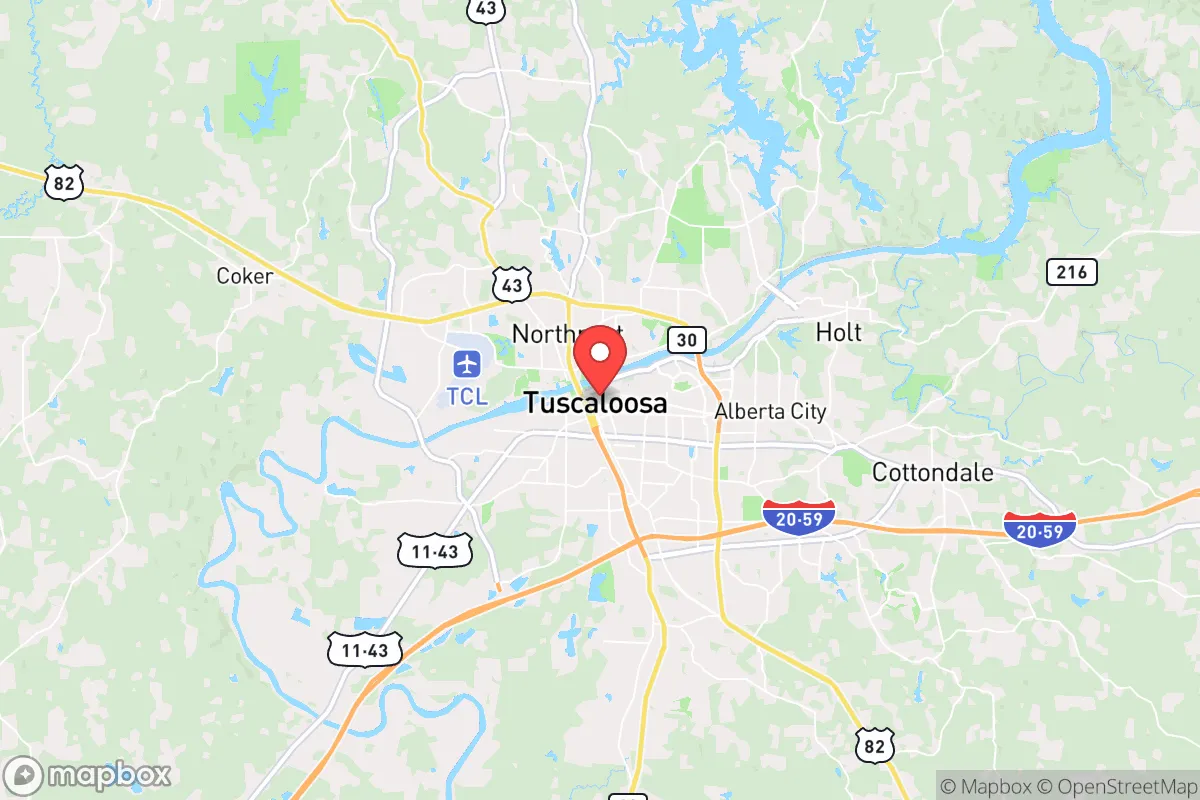
District shown is the primary district for this city’s centroid. Cities may span multiple districts.
Local Political AnalysisPolitical Analysis of Tuscaloosa, AL
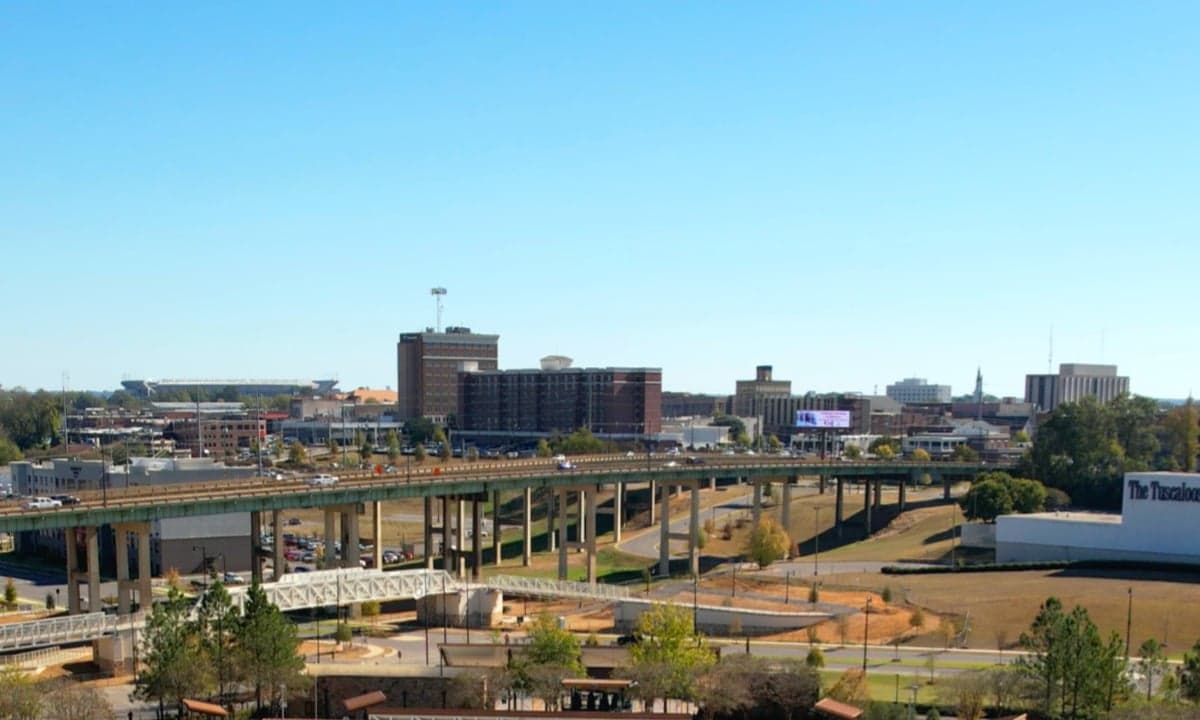
Tuscaloosa has always been a bit of an odd duck politically, and if you've lived here as long as I have, you've watched it drift. The Cook PVI of D+13 tells the story: this is a solidly Democratic city, driven largely by the University of Alabama's massive student and faculty population. But that number doesn't capture the whole picture. The city itself votes blue, but drive ten minutes outside the city limits into Northport or the unincorporated areas of Tuscaloosa County, and you'll find a reliably red, conservative electorate that's been holding the line for decades. The real tension here isn't between Democrats and Republicans—it's between the transient, progressive-leaning university crowd and the long-time locals who remember when this town was a lot more straightforward about its values.
How it compares
If you're coming from Birmingham, you'll notice the difference immediately. Birmingham's Jefferson County is D+30 territory—a full-blown progressive stronghold. Tuscaloosa, by contrast, still has a conservative backbone in its county commission and local law enforcement. The surrounding towns like Coker, Gordo, and Reform are deeply red, and they vote like it. Even Northport, which shares a border with Tuscaloosa, leans more conservative on local issues. The political contrast is stark: you can be in a neighborhood where folks fly "Don't Tread on Me" flags and then cross the river into downtown and see "Black Lives Matter" banners on sorority houses. That split is real, and it's getting wider every election cycle.
What this means for residents
For those of us who value personal freedoms and limited government, the trend in Tuscaloosa proper is concerning. The city council has been increasingly willing to wade into areas that used to be left to families and churches—things like zoning restrictions that affect property rights, or public health mandates that go beyond what the state requires. The university's influence means a constant push for "equity" initiatives that often translate into more bureaucracy and less local control. On the flip side, the county government remains a check on that impulse. The sheriff's office and county commission are still run by folks who understand that government's job is to protect your rights, not manage your life. If you live inside the city limits, you'll feel the progressive pressure more; if you're in the county, you'll breathe a little easier.
One thing that hasn't changed much is the gun culture. Alabama is a constitutional carry state, and you'll see open carry in Tuscaloosa County without anyone batting an eye. The city tried a few years back to pass stricter local ordinances on firearms, but state preemption laws shut that down fast. That's a win for personal liberty. But the cultural battles are heating up—school board meetings, library boards, and city planning commissions are where the real fights happen now. The long-term trajectory depends on whether the university's influence continues to grow or whether the surrounding conservative communities can keep the city from sliding too far left. For now, it's a place where you can still have a conversation with your neighbor about politics without it turning into a shouting match, but that's getting harder every year.

State Political ClimatePolitical Climate in Alabama
State Political AnalysisPolitical Environment in the State
Alabama has been a reliably red state for decades, but the political climate here is more layered than the simple "deep red" label suggests. The state leans Republican by about 25 points in presidential elections, with Donald Trump winning 62% of the vote in 2024. But the real story is the slow, steady shift in the suburbs and the persistent, deep conservatism of the rural counties. Over the last 10-20 years, the GOP has consolidated power at every level, but there are growing tensions between the old-guard business conservatives and a newer, more populist, freedom-focused wing.
Urban vs. rural divide
The political map of Alabama is a study in contrasts. The rural Black Belt counties, like Lowndes and Greene, vote overwhelmingly Democratic, driven by a legacy of civil rights and a predominantly African American population. Meanwhile, the rural white counties in the north and southeast, such as DeKalb and Geneva, are among the most Republican in the nation. The major metros tell a different story. Birmingham (Jefferson County) is a blue island in a red sea, with its urban core and close-in suburbs like Mountain Brook trending left, while the outer suburbs like Hoover and Vestavia Hills remain reliably Republican but are showing cracks. Huntsville (Madison County) is the fastest-growing and most politically interesting metro. It used to be a conservative stronghold, but the influx of aerospace and tech workers from blue states has made it a purple battleground—Madison County went for Trump by only 8 points in 2024, down from 15 in 2020. Mobile and Baldwin County on the Gulf Coast are solidly red, with Baldwin being one of the fastest-growing and most conservative counties in the state. Auburn-Opelika (Lee County) is a classic college town—the university campus leans left, but the surrounding area is deeply conservative.
Policy environment
Alabama’s policy environment is a mixed bag for a conservative. On the plus side, the state has no state income tax on retirement income, a flat 5% income tax on wages, and a low property tax rate (averaging 0.4% of home value). The regulatory climate is generally business-friendly, with right-to-work laws and a tort reform system that limits lawsuits. Education policy is a flashpoint. The state has a school choice program (the Alabama Accountability Act) that provides tax credits for private school tuition and scholarships, but it’s limited and under constant attack from the teachers' union. The state also passed a universal school choice expansion in 2024, allowing any family to use state funds for private or homeschool expenses—a major win for parental rights. Healthcare is a mess: Alabama is one of the 10 states that has not expanded Medicaid, which keeps taxes low but leaves a coverage gap for low-income adults. Election laws are solid—voter ID is required, and the state has clean voter rolls, though there’s ongoing debate about absentee ballot security. The state legislature is firmly Republican, but it’s often more aligned with the Chamber of Commerce than with grassroots conservatives.
Trajectory & freedom
Alabama is on a trajectory of expanding personal freedom in some areas, but contracting it in others. On the plus side, the state passed constitutional carry (permitless carry) in 2022, allowing law-abiding citizens to carry a concealed firearm without a permit. This was a major win for Second Amendment rights. The state also passed a near-total abortion ban in 2019, with no exceptions for rape or incest, which is currently tied up in court. On the parental rights front, Alabama passed the Alabama Parental Rights Protection Act in 2022, which requires schools to notify parents of any medical or mental health services offered to their children and prohibits classroom instruction on sexual orientation or gender identity in K-5. This is a strong law, but it’s being challenged in court. On the negative side, the state has a high sales tax rate (averaging 9.2% combined state and local), which is regressive and hits low-income families hard. There’s also a growing concern about property rights—the state has a history of using eminent domain for private development, and there’s no strong constitutional protection against it. The Alabama Medical Cannabis Commission has been a bureaucratic nightmare, with licensing delays and lawsuits, showing that even when the state tries to expand medical freedom, the government gets in the way.
Civil unrest & political movements
Alabama has a relatively low level of visible civil unrest compared to other states, but there are undercurrents. The Black Lives Matter protests in 2020 were concentrated in Birmingham and Montgomery, with some property damage and clashes with police, but they were smaller and shorter than in other cities. The state has a strong immigration enforcement posture—the 2011 HB 56 law was one of the toughest in the nation, though parts were struck down. There’s no sanctuary city movement to speak of. On the right, there’s a growing constitutional sheriff movement, with sheriffs in counties like St. Clair and Blount publicly refusing to enforce federal gun laws they see as unconstitutional. The Alabama Sovereignty Commission was revived in 2023 to push back against federal overreach, though it’s mostly symbolic. Election integrity is a hot topic—the 2022 law requiring curbside voting to be available only for those with a medical need was controversial, and there’s ongoing debate about the security of mail-in ballots. You won’t see daily protests, but the political energy is real, especially in rural areas where people feel the federal government is increasingly out of touch.
Projection
Over the next 5-10 years, Alabama is likely to become more politically divided, not less. The in-migration from blue states, particularly to Huntsville and the Gulf Coast, will continue to shift the suburbs leftward. The Huntsville metro is the key battleground—if it flips blue, the state could become competitive at the statewide level within a decade. The rural areas will remain deeply red, but they’re losing population. The state legislature will likely remain Republican, but the internal fight between the business wing and the populist wing will intensify. Expect more fights over school choice, tax reform (specifically eliminating the income tax), and property rights. The biggest wildcard is the 2026 gubernatorial race—if a populist conservative wins, expect a push for a flat income tax elimination and stronger Second Amendment protections. If a moderate wins, the state will continue its slow drift toward the center.
Bottom line for a new resident: If you’re moving to Alabama for the freedom and conservative values, you’ll find a state that’s generally on your side, but you’ll need to be engaged. The suburbs are changing, and the fight for the soul of the state is real. Pick your county carefully—Baldwin, Shelby, or Elmore for a solid red experience; Madison or Lee if you want a more mixed environment. The state is still a great place for low taxes, gun rights, and parental control, but don’t expect it to stay exactly the same. The next decade will be a tug-of-war between the old Alabama and the new one.
* Values derived from national, state, county, city and local statistics and may differ in a specific area. Last updated: 2026-04-19T19:11:40.000Z
Narrative content on this page is AI-generated and may contain mistakes. Verify any details that matter before acting on them.
ReloMaps may earn a commission from affiliate links at no extra cost to you.

