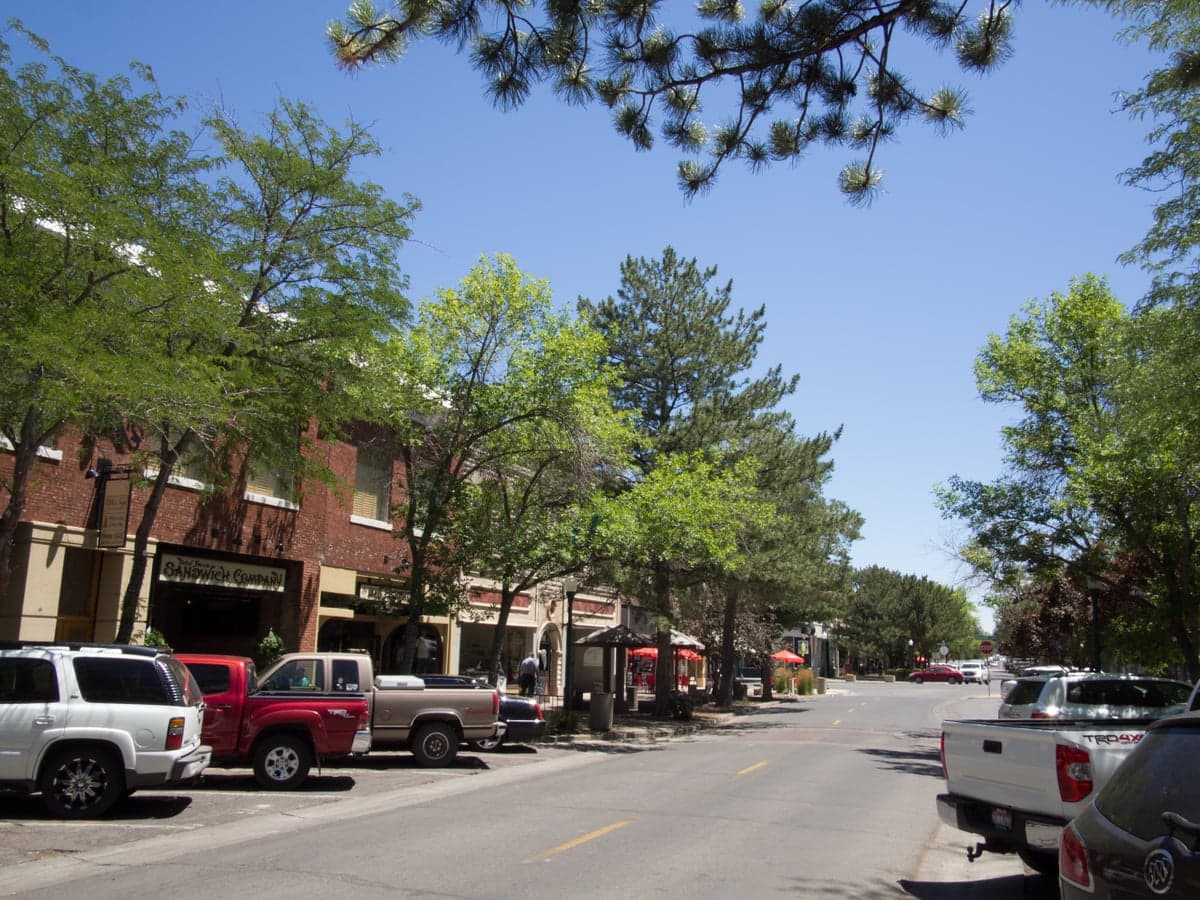
Photo: Wikipedia
Personal Sovereignty in Twin Falls, ID
Moderate friction. Expect trade-offs in some aspect of personal liberty and independence.
What does Personal Sovereignty tell us?
Personal Sovereignty measures your capacity for self-reliance and independence with minimal government friction. Higher scores mean fewer barriers between you and the way you want to live... but it assumes you have the space you need and good neighbors.
What does this tell us?
Personal Sovereignty measures your capacity for self-reliance and independence with minimal government friction. Higher scores mean fewer barriers between you and the way you want to live... but it assumes you have the space you need and good neighbors.
State Policy
Energy independence: Importer (25% of energy produced in-state)
Personal Liberty
Homesteading

Personal Liberty Analysis
Twin Falls, Idaho, offers a personal sovereignty environment that stands in stark contrast to the coastal and urban jurisdictions many conservatives are fleeing. The city sits in a state that has deliberately constructed legal and cultural barriers against federal overreach, creating a practical buffer for individuals who prioritize self-determination. For the survivalist or prepper, this isn't just about politics—it's about the tangible ability to live by your own rules, keep what you earn, and defend what you own without the state breathing down your neck. The question isn't whether Twin Falls is perfect, but whether it gives you the legal and practical room to build the autonomous life you want, and the answer is a qualified yes.
Tax burden and regulatory posture for individuals and small operations
Idaho's tax structure is a primary draw for those seeking to minimize government extraction from their labor. The state levies a flat income tax rate of 5.8%, which is moderate but predictable—no progressive brackets that punish success. There is no state-level estate or inheritance tax, meaning your property and savings pass to your heirs without the government taking a cut. Property taxes in Twin Falls County average around 0.7% of assessed value, which is below the national average and manageable for most homeowners. More importantly, the regulatory climate in Twin Falls is light. The city does not impose onerous business licensing for home-based operations, and there are no county-level health department inspections for small-scale food production (like selling eggs or honey) as long as you stay under certain thresholds. Zoning is generally permissive for home occupations, and the city's planning department is known for practical, not ideological, enforcement. For the prepper running a side hustle or a small farm, this means less paperwork and fewer surprise inspections.
Self-defense and gun law specifics in Twin Falls and Idaho
Idaho is a constitutional carry state, meaning no permit is required to carry a concealed firearm for anyone legally allowed to possess one. Twin Falls does not have any local ordinances that override state preemption—city council cannot ban magazines, restrict carry in parks, or impose waiting periods. The state has also passed a Second Amendment Preservation Act that prohibits state and local law enforcement from enforcing federal gun laws that violate the Idaho Constitution. In practice, this means that if federal agents come for your legally owned firearms, local sheriff's deputies are not required to assist. Stand Your Ground laws are fully in effect, with no duty to retreat in any place you have a legal right to be. Castle Doctrine protections extend to your vehicle and workplace, not just your home. For the survivalist, this legal framework is as close to a free hand as you'll find in the lower 48. The local gun culture is strong—there are multiple ranges within 20 minutes of town, and private land shooting is common with landowner permission.
Self-reliance and homesteading viability: lot sizes, zoning, and off-grid feasibility
The ability to actually live self-sufficiently depends on land use rules, and Twin Falls County is generally favorable. Within city limits, standard residential lots are 6,000 to 10,000 square feet, which is enough for a substantial garden and a few chickens, but not for livestock or serious food production. The real opportunity lies in the unincorporated county, where zoning is minimal. You can find parcels from 1 to 20 acres within a 15-minute drive of downtown, with no HOA restrictions. Raising goats, pigs, or cattle is legal on parcels over 2 acres, and there are no county-level bans on beekeeping or hunting on your own land. Off-grid feasibility is mixed: the county requires a septic system and a building permit for a dwelling, but there is no requirement to connect to municipal water or power. Solar panels are common, and the county does not restrict rainwater collection. However, the city of Twin Falls does enforce building codes for structures within its jurisdiction, so true off-grid living is easier outside city limits. The Snake River aquifer provides abundant groundwater, and well drilling is permitted on parcels over 1 acre with a simple permit.
Personal liberties: parental rights, medical autonomy, speech, and property
Idaho has been at the forefront of protecting parental rights in education. The state passed the Parental Rights in Education Act, which requires schools to notify parents of any curriculum involving sexuality or gender identity and prohibits schools from keeping secrets from parents about their children's health or well-being. Twin Falls School District has complied without legal challenge, meaning parents have real transparency. Medical autonomy is strong: Idaho has banned vaccine passports and prohibits discrimination based on vaccination status. The state also passed a law allowing doctors to prescribe ivermectin and hydroxychloroquine without fear of board discipline, and it has a broad religious and philosophical exemption to all vaccine mandates. Speech protections are robust—Idaho has no hate speech laws that criminalize political or religious expression, and the city of Twin Falls has not attempted to restrict public assembly or protest. Property rights are protected by the Idaho Property Rights Act, which requires the government to prove a compelling interest before restricting land use, and compensation for any regulatory taking. For the prepper, this means you can stockpile supplies, build a root cellar, or install a fence without a parade of permits.
In the broader landscape of American sovereignty, Twin Falls ranks among the top tier of locations for those who value personal autonomy over government convenience. The combination of constitutional carry, light taxation, permissive zoning, and strong parental rights creates a legal environment where a determined individual can build a genuinely independent life. It is not a libertarian utopia—there are still property taxes, building codes in town, and the occasional overzealous code enforcement officer. But compared to the regulatory thicket of the Pacific Northwest, California, or the Northeast, Twin Falls offers breathing room. For the conservative who sees the country sliding toward centralized control, this is a place where you can still draw a line and say, "This far and no further." The state's political leadership is actively hostile to federal overreach, and the local culture rewards self-reliance. If your goal is to live free, raise your kids without state interference, and be ready for whatever comes, Twin Falls is a serious contender.

* Values derived from national, state, county, city and local statistics and may differ in a specific area. Last updated: 2026-04-29T23:27:09.000Z
Narrative content on this page is AI-generated and may contain mistakes. Verify any details that matter before acting on them.
ReloMaps may earn a commission from affiliate links at no extra cost to you.

