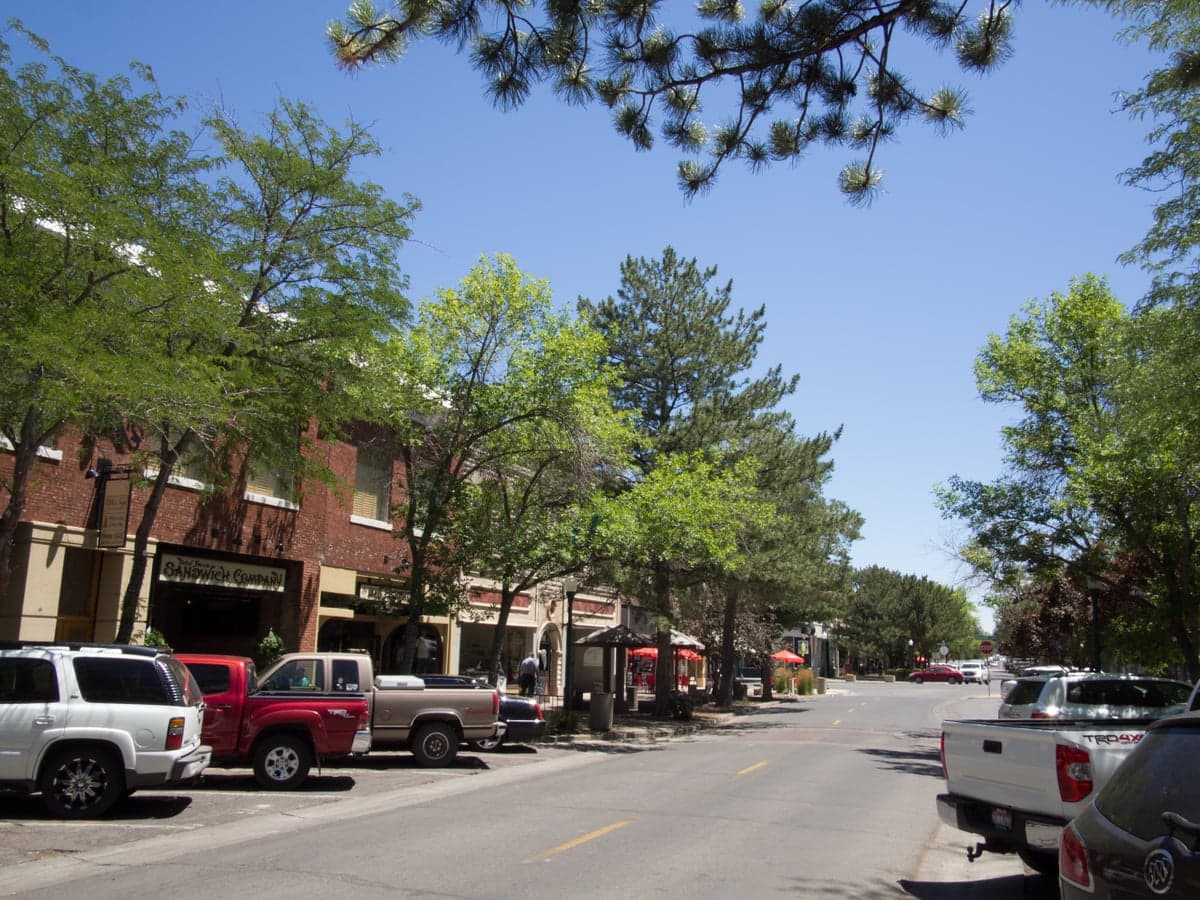
Photo: Wikipedia
Political ClimatePolitical Climate in Twin Falls, ID
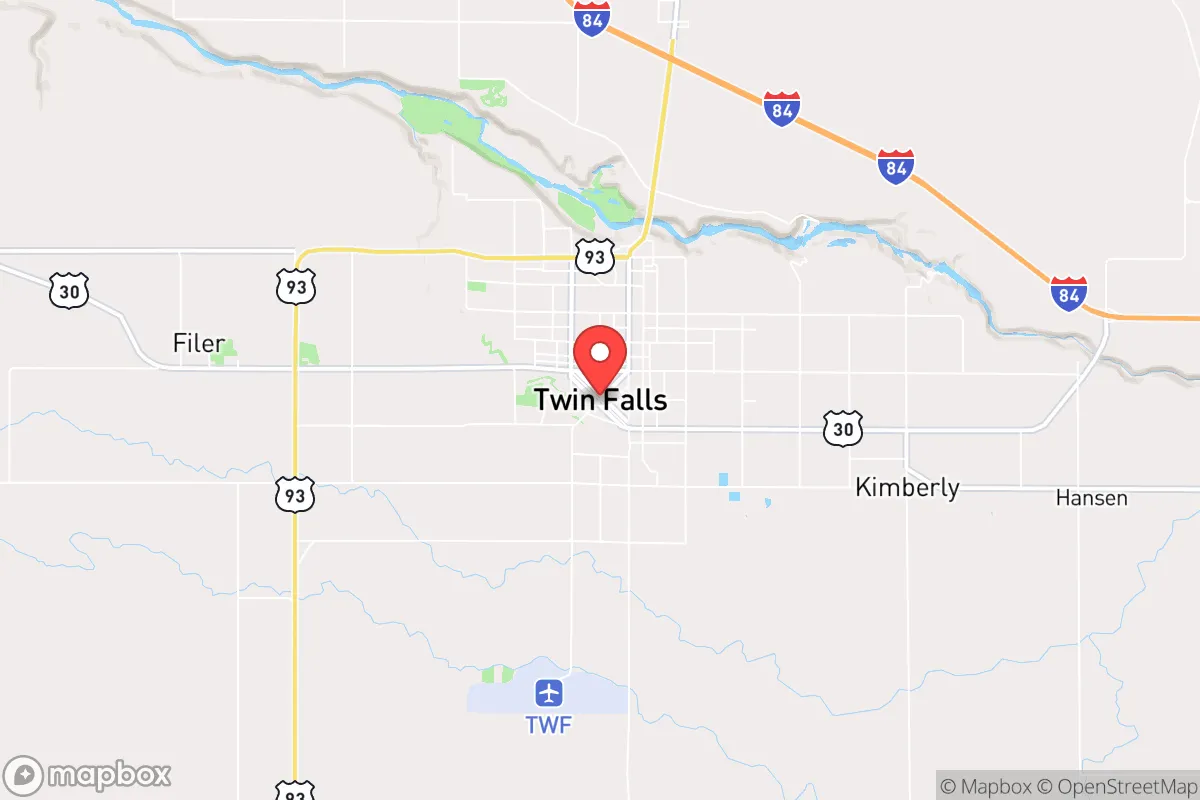
District shown is the primary district for this city’s centroid. Cities may span multiple districts.
Local Political AnalysisPolitical Analysis of Twin Falls, ID
Twin Falls is about as solidly conservative as it gets in Idaho, and that’s not changing anytime soon. The Cook PVI of R+13 tells you the math, but the real story is the culture—this is a place where folks still believe in minding your own business and keeping government out of your backyard. The political lean here is deeply Republican, with a strong libertarian streak that’s been the backbone of the Magic Valley for decades. If you’re looking for a place where progressive ideology hasn’t taken root, this is it—but there are some subtle shifts worth watching, especially as more people move in from blue states.
How it compares
Compared to Boise’s Ada County, which has been trending purple and even blue in some precincts, Twin Falls feels like a time capsule of old-school Idaho values. Drive an hour north to Hailey or Ketchum, and you’re in a completely different world—those towns vote reliably Democratic, with a heavy emphasis on environmental regulations and social programs that would never fly here. Even nearby Burley and Rupert, though conservative, have a more agricultural, less independent vibe. Twin Falls stands out because it’s the economic hub of the region, but the politics stay grounded in personal responsibility and limited government. The contrast is stark: while Boise debates bike lanes and zoning overlays, Twin Falls is still focused on property rights, Second Amendment protections, and keeping taxes low.
What this means for residents
For the average person living here, the political climate means you’re not constantly fighting overreach from the county or city. Zoning is minimal, business licenses are straightforward, and you won’t find a lot of red tape when you want to build a shop on your land or run a home-based operation. The school board leans conservative, so curriculum fights over critical race theory or gender ideology are rare—parents still have a strong voice. That said, the influx of out-of-state transplants—especially from California and Washington—has started to nudge local elections. In 2022, a few city council races were closer than they’ve been in years, with candidates pushing for more “inclusive” policies and public transit expansions. It’s not a takeover yet, but it’s a warning sign. Long-term residents are paying attention, because once those progressive footholds get in, they’re hard to root out.
Culturally, Twin Falls still holds onto distinctions that matter: the county sheriff refuses to enforce federal gun laws he sees as unconstitutional, and the city has repeatedly rejected proposals for sanctuary city status. The local paper, the Times-News, leans center-right, and community events like the Magic Valley Fair and the Western Days parade reinforce traditional values. But the biggest policy distinction is the lack of a city income tax—Idaho’s flat income tax is low, and Twin Falls keeps property taxes reasonable. If you value freedom from government meddling in your daily life, this is still a safe bet. Just keep an eye on those city council meetings, because the fight to keep it that way is ongoing.

State Political ClimatePolitical Climate in Idaho
State Political AnalysisPolitical Environment in the State
Idaho has long been one of the most reliably conservative states in the nation, with a Republican trifecta controlling the governorship, supermajorities in both legislative chambers, and a solidly red congressional delegation. Over the past 20 years, the state has shifted from a more libertarian-leaning Western conservatism to a more culturally assertive, Trump-aligned posture, driven largely by an influx of out-of-state transplants from California, Washington, and Oregon. The 2024 election saw Donald Trump carry Idaho by over 30 points, and every statewide office remains in GOP hands, but the nature of that conservatism is evolving as new residents reshape the political landscape.
Urban vs. rural divide
The political map of Idaho is starkly divided between its fast-growing urban corridors and its vast rural expanse. The Treasure Valley, anchored by Boise, Meridian, and Nampa, is the state’s population center and the epicenter of its political tension. Ada County (Boise) has trended purple in recent cycles — Trump won it by only 4 points in 2024, down from 12 in 2020 — driven by younger, more moderate transplants and a growing tech sector. Meanwhile, Canyon County (Nampa, Caldwell) remains deeply red, voting +28 for Trump, and is a key battleground for conservative activists. The rural north, including Coeur d’Alene and Sandpoint, is fiercely conservative but increasingly split between longtime libertarian-leaning locals and newer, more culturally conservative arrivals. The eastern farming communities like Idaho Falls and Rexburg are among the most reliably Republican areas in the country, with Rexburg’s Brigham Young University-Idaho anchoring a heavily LDS population that votes overwhelmingly GOP. The only blue dots are small pockets in Boise’s North End and around the University of Idaho in Moscow, but they have no statewide influence.
Policy environment
Idaho’s policy environment is a mixed bag for conservatives. On the plus side, the state has a flat income tax rate of 5.8% (down from 6.5% in 2022), no estate tax, and relatively low property taxes compared to the West Coast. The legislature has passed permitless carry for firearms, banned nearly all abortions (trigger law effective at conception), and enacted strong parental rights in education, including a 2024 law requiring schools to notify parents of any curriculum involving sexuality. However, the state’s regulatory posture is less friendly than its reputation suggests. Boise’s city government has imposed strict growth boundaries and zoning rules that drive up housing costs, and the state’s education funding per pupil remains among the lowest in the nation — a concern for families moving in. Election laws are solid: voter ID is required, same-day registration is not allowed, and the 2024 session passed a law banning ranked-choice voting and requiring hand-count audits in some counties. Still, the state’s health insurance market is thin, with only one major carrier on the exchange, and Medicaid expansion (passed by ballot initiative in 2018) remains a sore point for fiscal conservatives who see it as government overreach.
Trajectory & freedom
Idaho is arguably becoming more free in several key areas, but with caveats. The 2023 passage of the Idaho Freedom Act (HB 154) explicitly prohibits any state or local enforcement of federal gun control measures, including red flag laws and bans on certain firearms — a strong statement of Second Amendment sovereignty. The 2024 Parental Rights in Education Act (HB 93) requires schools to obtain parental consent before any instruction on sexual orientation or gender identity, and bans school employees from concealing a child’s gender identity from parents. On medical freedom, the state passed a 2023 law prohibiting COVID-19 vaccine mandates by private employers and government entities, and a 2024 law banning mRNA vaccine mandates for children. However, property rights are under pressure: the state’s rapid growth has led to increased use of eminent domain for infrastructure projects, and the 2023 Water Rights Adjudication Act tightened state control over groundwater — a concern for rural landowners. The biggest red flag for liberty-minded residents is the growing influence of the Church of Jesus Christ of Latter-day Saints in state policy, which has pushed for stricter alcohol laws and Sunday business closures in some areas, though these efforts have largely failed in recent sessions.
Civil unrest & political movements
Idaho has seen relatively little civil unrest compared to coastal states, but the political temperature is rising. The most visible flashpoint is the Boise State Capitol, which has been the site of large, organized protests since 2020 — both from the right (anti-lockdown, anti-mandate rallies drawing thousands) and the left (Black Lives Matter and pro-abortion rights demonstrations). The 2022 “People’s Rights” movement, led by Ammon Bundy, staged a high-profile occupation of the statehouse over COVID mandates, resulting in arrests and a lasting distrust of state government among some rural conservatives. Immigration politics are less heated than in border states, but the 2023 HB 200 banned “sanctuary city” policies and required local law enforcement to cooperate with ICE, drawing protests from immigrant advocacy groups in Boise’s Hispanic community. Election integrity remains a live issue: the 2024 HB 124 required all ballots to be hand-counted in counties with fewer than 10,000 residents, a move that sparked lawsuits and accusations of voter suppression from the left. A new resident will notice the prevalence of “Don’t Tread on Me” flags and pro-Trump signage in rural areas, while Boise’s suburbs show more “Let’s Go Brandon” and local GOP yard signs — a subtle but real cultural divide.
Projection
Over the next 5-10 years, Idaho will likely become more conservative in policy but more divided in culture. The in-migration from California and the Pacific Northwest shows no signs of slowing — the state added over 100,000 new residents between 2020 and 2024 — and these newcomers are disproportionately moderate Republicans or independents who favor low taxes and gun rights but are less enthusiastic about social conservatism. This will create a growing tension between the Boise-Meridian corridor, which will continue to trend purple, and the rural north and east, which will remain deep red. The legislature will likely pass further tax cuts (a flat income tax of 4.5% is on the table by 2027) and expand school choice through education savings accounts, but may face pushback on social issues like abortion and LGBTQ rights as the urban population diversifies. The biggest wildcard is housing: if the state fails to address skyrocketing costs (median home prices in Boise have doubled since 2020), it could price out the very families that conservative policy aims to attract. A new resident moving in now should expect a state that remains a conservative stronghold, but with an increasingly visible urban-rural split and a political class that is more responsive to business interests than to grassroots activism.
Bottom line for a new resident: Idaho offers a genuinely conservative policy environment — low taxes, strong gun rights, parental control in schools, and a culture that values self-reliance. But don’t expect a libertarian paradise; the state government is active in areas like water rights, land use, and education mandates, and the growing population is bringing the same political tensions that plague the rest of the country. If you’re moving here for freedom, you’ll find plenty of it — but you’ll also find a state that is still figuring out how to balance its traditional values with the demands of rapid growth. Choose your county carefully: Kootenai County (Coeur d’Alene) and Madison County (Rexburg) are among the most reliably conservative, while Ada County (Boise) is where the cultural battles will be fought for the next decade.
* Values derived from national, state, county, city and local statistics and may differ in a specific area. Last updated: 2026-04-29T23:27:09.000Z
Narrative content on this page is AI-generated and may contain mistakes. Verify any details that matter before acting on them.
ReloMaps may earn a commission from affiliate links at no extra cost to you.

