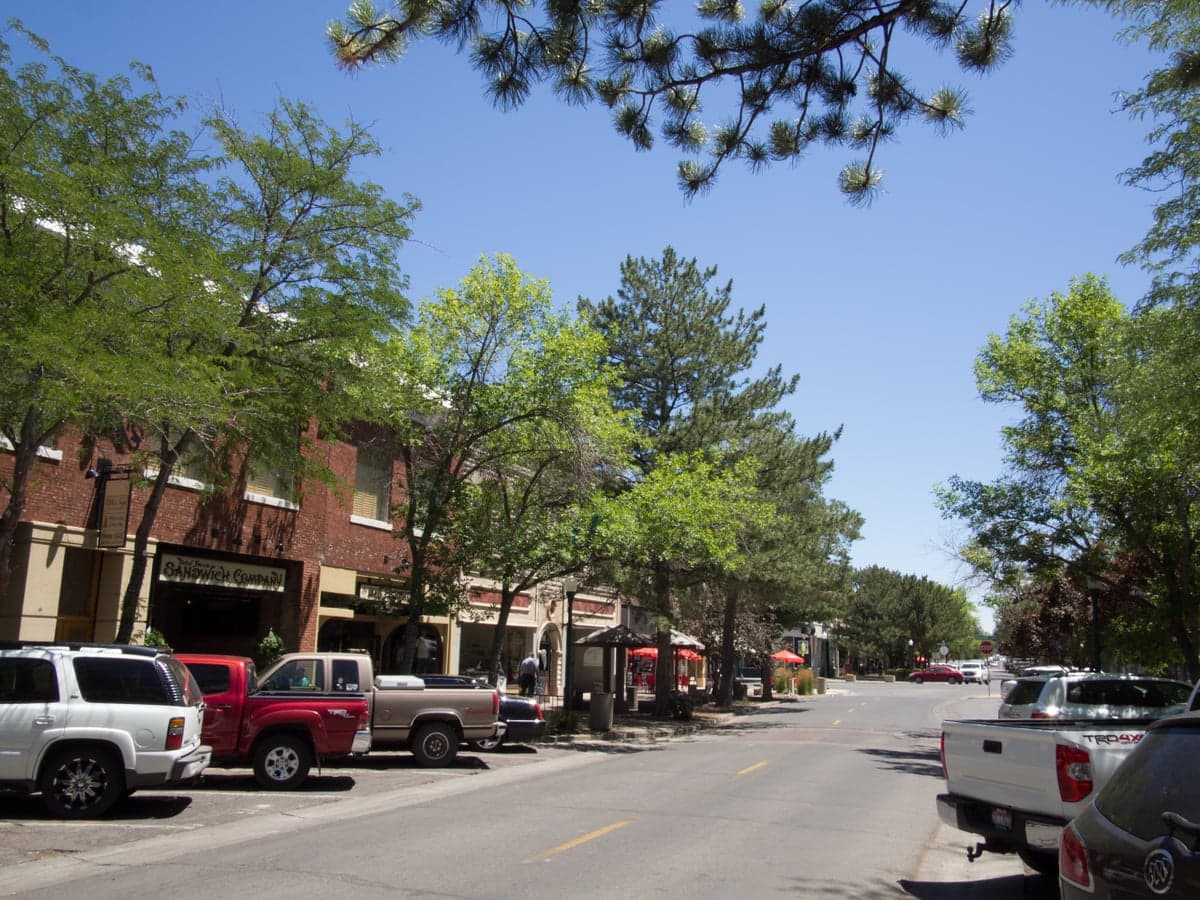
Photo: Wikipedia
Strategic Assessment of Twin Falls, ID
Workable tactical position. Some exposure to population density or targets, but generally defensible in a crisis.
What does the Strategic Assessment tell us?
Our Strategic Assessment grades tactical survivability of an area. Major population centers, military targets, fallout zones, natural disasters, and border exposure all drive risk — lower exposure means a more defensible position in a crisis.
This is heavily inspired by Joel Skousen's Strategic Relocation book. Highly recommended you checkout the book ($)What does this tell us?
Our Strategic Assessment grades tactical survivability of an area. Major population centers, military targets, fallout zones, natural disasters, and border exposure all drive risk — lower exposure means a more defensible position in a crisis.
This is heavily inspired by Joel Skousen's Strategic Relocation book. Highly recommended you checkout the book ($)Strategic Pillars

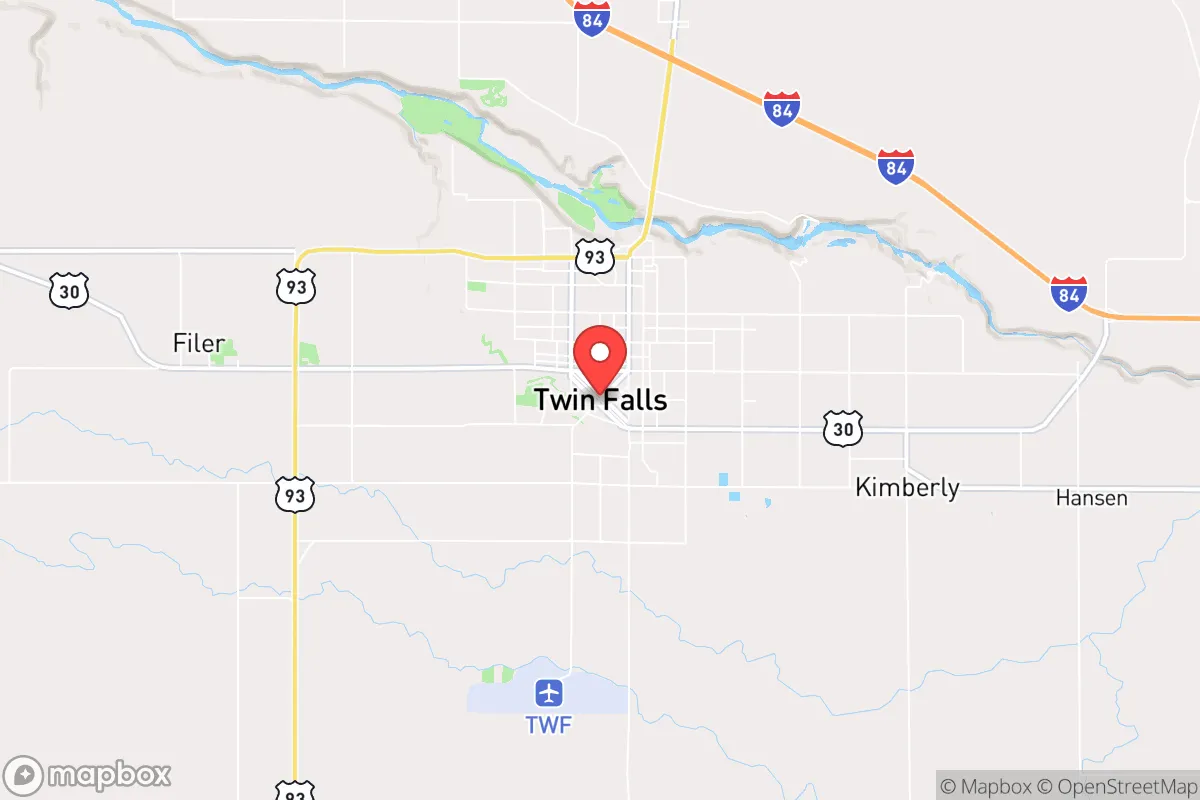
Key Distances
Regional Safe Places
Below is our recommended "safe zones" in Idaho and the surrounding area based on our strategic heuristics. For most people, it's unrealistic to live in a “safe zone” full-time due to work, family or other personal reasons. They tend to be more rural. However, many of these areas are perfect for second homes and retreat properties that double as a vacation home or even a short-term rental.
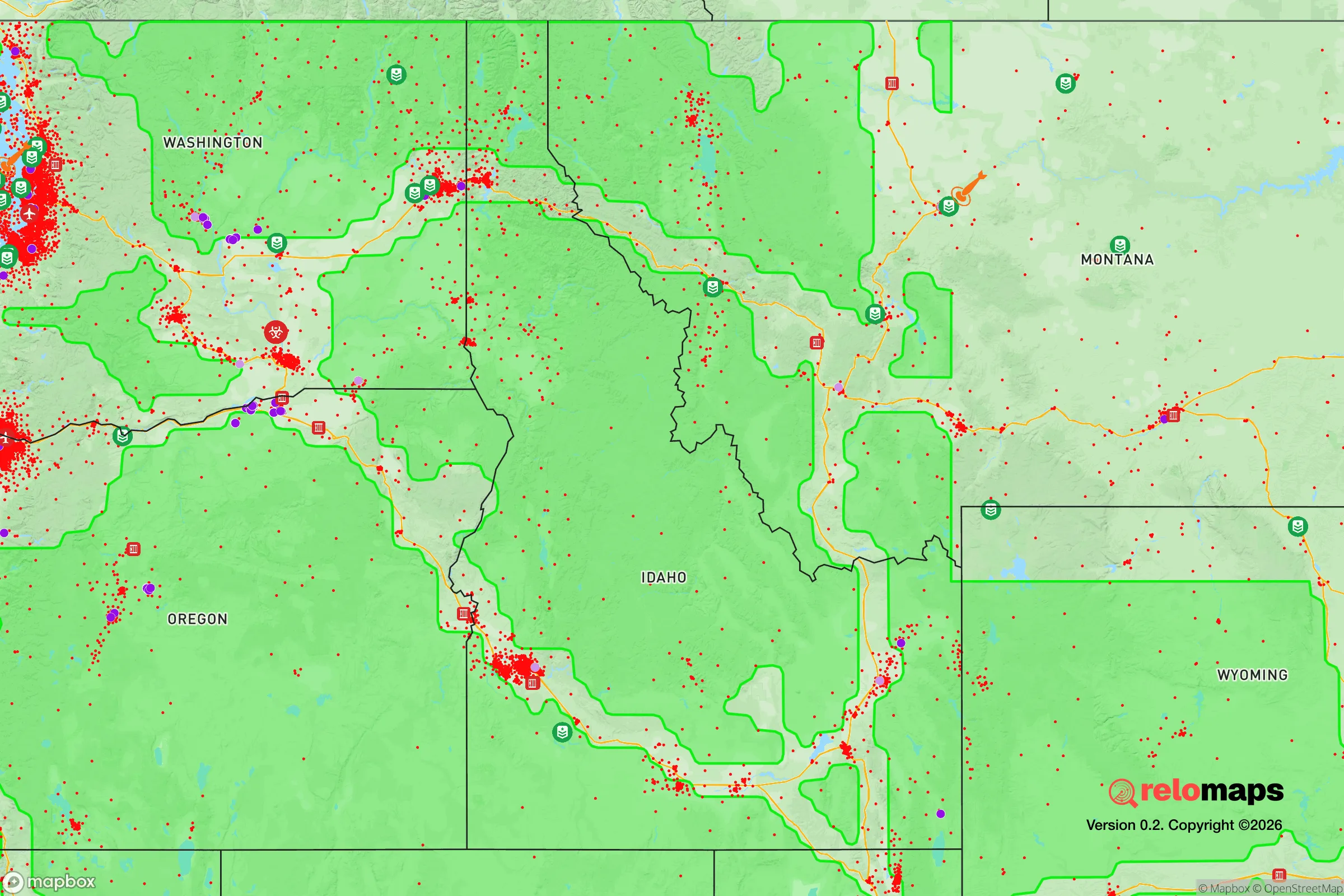
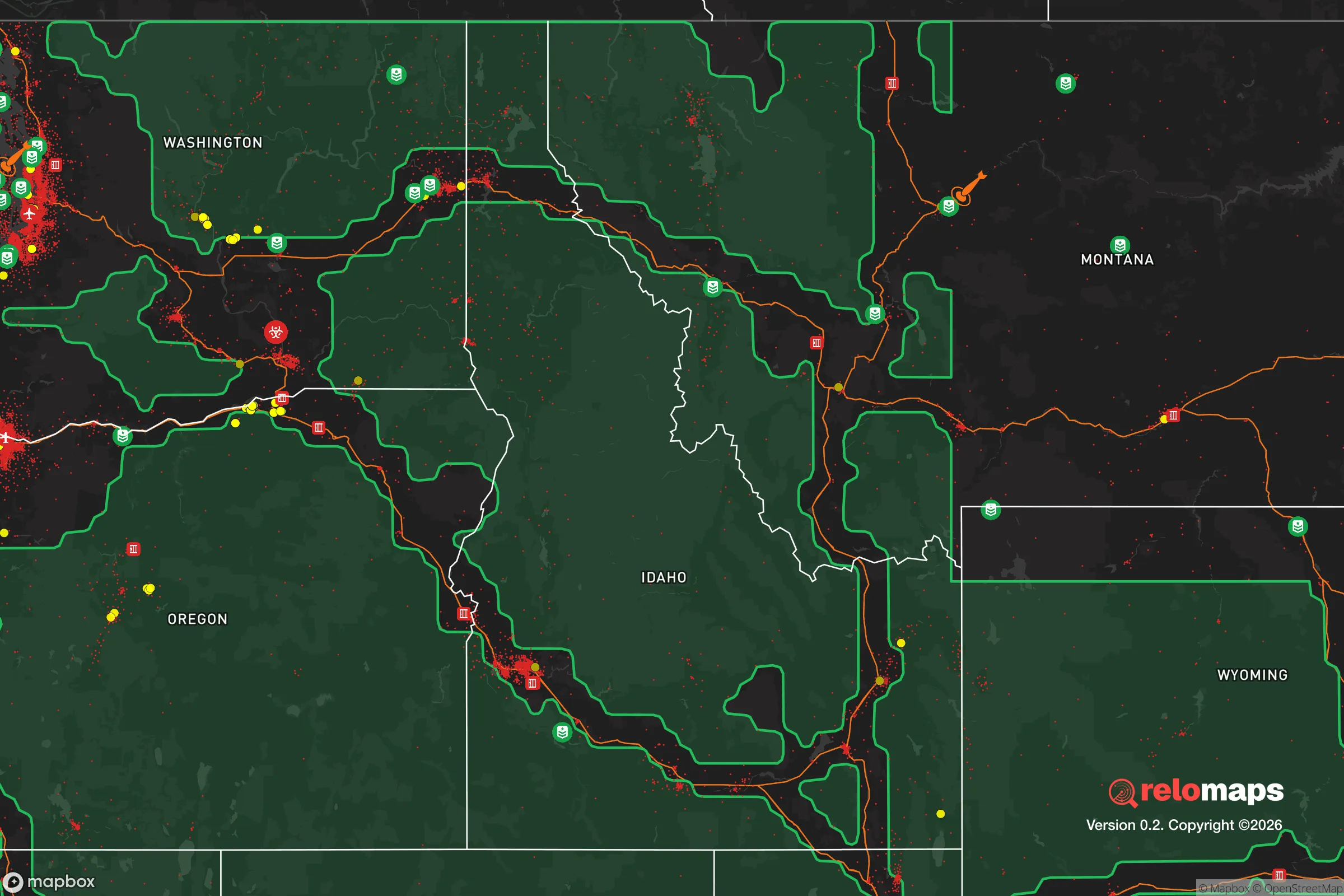


Important Note: For informational purposes only. This does not mean nothing bad ever happens in the green zones. Please use common sense. This is based on public data and modeled with AI. We tried to take a conservative approach but mistakes happen. We update this regularly as new information becomes available.
Solar Generator Recommendations
Backup power matters more here than in safer locations. We've picked three solar generators across budgets and capacity tiers — start with the budget unit if you only need a few essentials, or step up if you want to run a fridge and HVAC for days at a time.

Jackery Portable Power Station Explorer 300
Budget OptionPower on the Go: Weighing only 11 lbs, it's convenient to set up and store with book-sized foldable solar panels

BLUETTI Portable Power Station AC180
Designed for both indoor and outdoor scenarios, AC180 is highly capable as it has a robost capacity and continuous output power.

EF ECOFLOW DELTA Pro Ultra Power Station
Upgraded PickEcoFlow DELTA Pro Ultra is a whole-home energy system designed to grow with your family. Integrated with the Smart Home Panel 2, it scales to meet your evolving energy needs — keeping your home powered, intelligent, and secure through every stage of life.
We earn a commission, at no additional cost to you.
Strategic Assessment Analysis
Twin Falls, Idaho, occupies a strategic position that combines genuine geographic isolation with surprising logistical reach, making it a serious contender for those prioritizing resilience over convenience. The Magic Valley region sits roughly 130 miles from Boise and 150 miles from Salt Lake City, far enough to avoid the immediate fallout of urban collapse but close enough to access major supply routes if they remain functional. The Snake River Canyon provides a natural defensive barrier on the city's southern flank, while the surrounding agricultural land offers something increasingly rare in the Lower 48: a genuine food surplus within a short drive of a population center. For a relocator weighing long-term stability against the risks of coastal or metropolitan living, Twin Falls presents a compelling, if not perfect, case.
Geographic position and natural advantages for long-term security
The most underappreciated asset of Twin Falls is its position within the Snake River Plain, a volcanic basin that provides both fertile soil and a reliable water source from the Snake River aquifer. Unlike much of the arid West, this region has irrigation infrastructure that supports over 200,000 acres of farmland, producing potatoes, sugar beets, alfalfa, and dairy products at industrial scale. The city itself sits at an elevation of 3,745 feet, which moderates summer temperatures and reduces wildfire risk compared to lower-elevation Idaho towns. The surrounding topography—canyons, lava fields, and sagebrush steppe—creates natural chokepoints that would slow any large-scale movement of people or goods, whether from civil unrest or a cascading disaster. The Sawtooth National Forest and the Jarbidge Wilderness lie within a two-hour drive, offering remote retreat options for those with the means to preposition supplies. For a conservative-leaning relocator, the area's low population density (about 40 people per square mile in Twin Falls County) means fewer neighbors to compete with for resources in a crisis, but also fewer hands to help if things go sideways.
Risks, exposures, and proximity to fallout-relevant landmarks
No strategic assessment is honest without acknowledging the liabilities. Twin Falls is within 200 miles of the Idaho National Laboratory (INL), a 890-square-mile nuclear research facility near Idaho Falls that houses test reactors and radioactive waste storage. While INL has a strong safety record, a major accident or targeted attack could produce a fallout plume that, depending on wind patterns, might reach the Magic Valley within hours. The city also sits along the Snake River Plain seismic zone, which has produced magnitude 6.0 earthquakes historically, though major events are rare. The nearby Minidoka Intermountain Power Project, a coal-fired plant, and the Milner Dam are both potential single points of failure for the regional grid and irrigation system. On the human threat side, Twin Falls is a regional hub for the southern Idaho refugee resettlement program, which has brought cultural tensions but also a steady flow of federal funding. For a prepper, the presence of a sizable refugee community (roughly 10% of the city's population) could be viewed either as a strain on local resources or as a potential source of labor and skills, depending on your outlook. The city's location on Interstate 84, while useful for commerce, also makes it a natural corridor for any mass migration from the West Coast during a crisis—a scenario that local law enforcement has privately acknowledged as a concern.
Practical resilience for a relocator: food, water, energy, and defensibility
Water is the single most important factor in any long-term survival scenario, and Twin Falls has it in abundance. The Snake River aquifer provides over 3 million acre-feet of water annually, and the city's municipal supply comes from deep wells that are less vulnerable to surface contamination than many Western towns. For those willing to drill a private well, the water table sits at around 100-200 feet in most parts of the valley, making it feasible for a determined homesteader. Food security is equally strong: the Magic Valley produces over 60% of Idaho's dairy output and is a major exporter of potatoes, wheat, and beef. Local farmers' markets operate year-round in a limited capacity, and the presence of large-scale food processors (like Glanbia and McCain Foods) means that even a partial disruption to the national supply chain would leave local shelves stocked longer than in most places. Energy is a mixed bag: the grid is served by Idaho Power, which relies heavily on hydroelectricity from the Snake River dams, making it vulnerable to drought but less dependent on natural gas pipelines than the East Coast. Solar potential is excellent, with over 200 sunny days per year, and the city's building codes are lenient enough that off-grid setups are feasible without bureaucratic pushback. Defensibility is where Twin Falls falls short of an ideal retreat. The city is not a natural fortress—it's a valley town with multiple approach routes—but the Snake River Canyon to the south and the surrounding farmland to the north create a semi-contained basin. A determined group could secure the main bridges and highway interchanges with modest effort, but it would require coordination and pre-planning that most relocators won't have.
The overall strategic picture for Twin Falls is one of trade-offs. It offers genuine food and water security, a low-risk natural disaster profile, and enough distance from major population centers to avoid the worst of any cascading collapse. But it is not a bunker—it's a working agricultural town with real exposure to nuclear infrastructure, seismic risk, and the possibility of becoming a refugee corridor. For a conservative relocator who values self-sufficiency over total isolation, Twin Falls provides a solid foundation that can be improved with private well drilling, solar installation, and a well-stocked pantry. The key is to treat it as a base of operations rather than a final redoubt, and to have a secondary plan for retreat into the surrounding high desert or mountains if the valley becomes compromised. In a world where most American cities are one supply chain disruption away from chaos, that's more than most places can offer.

* Values derived from national, state, county, city and local statistics and may differ in a specific area. Last updated: 2026-04-29T23:27:09.000Z
Narrative content on this page is AI-generated and may contain mistakes. Verify any details that matter before acting on them.
ReloMaps may earn a commission from affiliate links at no extra cost to you.

