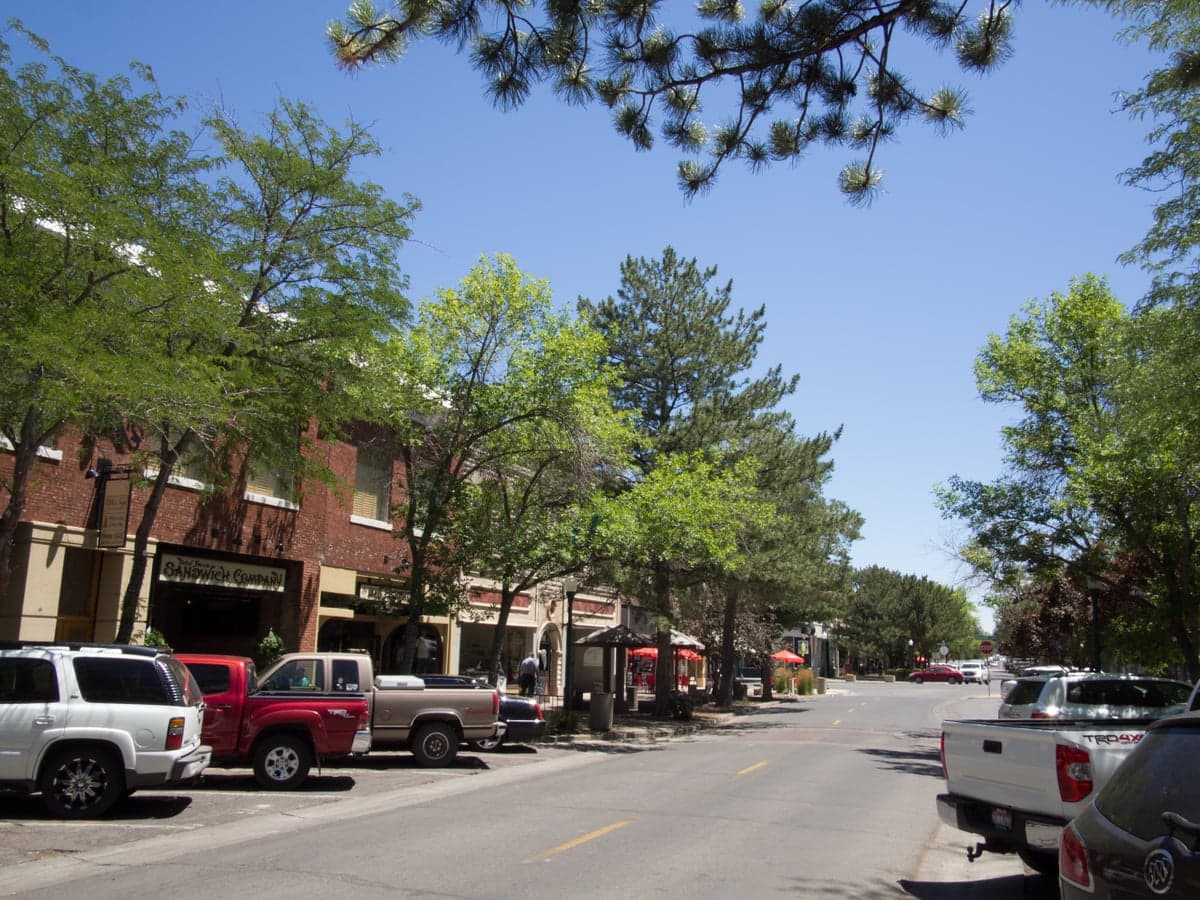
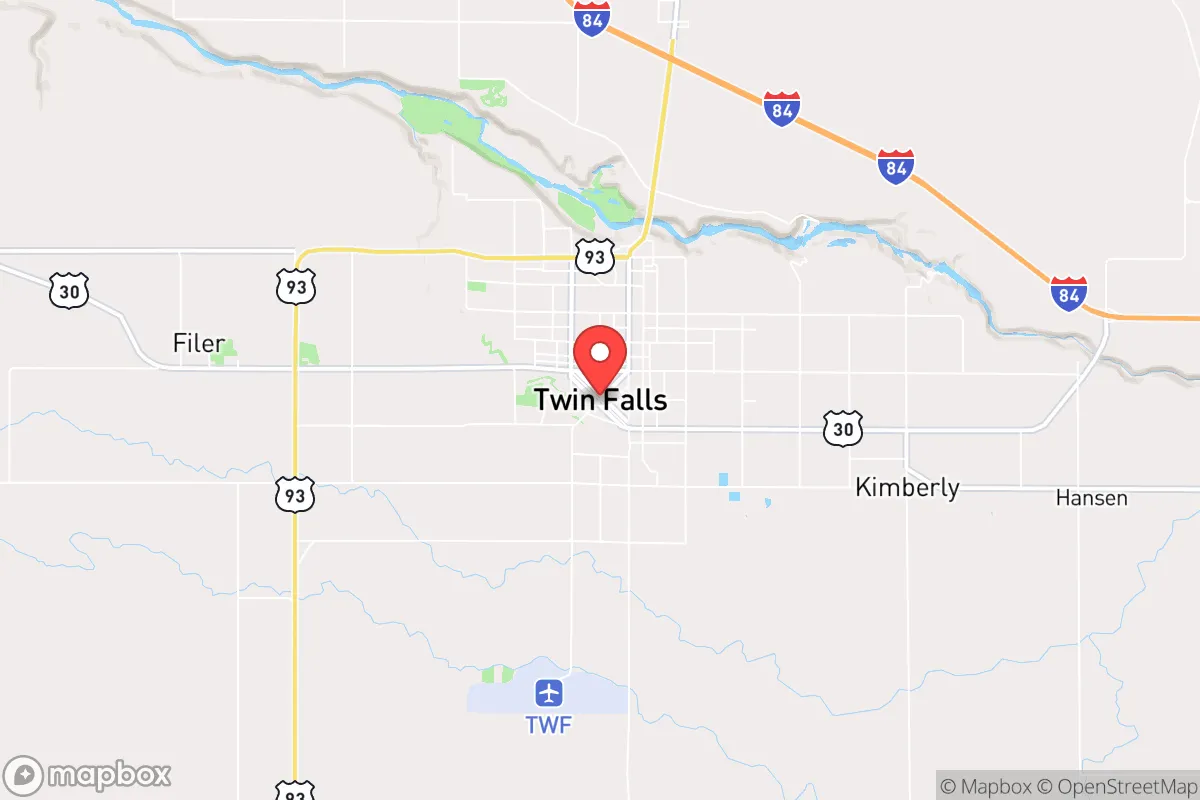
Photo: Wikipedia
Quality of Life in Twin Falls, ID
A high quality of life with strong walkability, manageable living costs, healthy neighborhood signals, and solid amenity access.
What does Quality of Life tell us?
Quality of Life blends cost of living, nearby amenities, socioeconomic signals, and neighborhood character. City-level scores represent the whole municipality; individual neighborhoods can differ.
What does this tell us?
Quality of Life blends cost of living, nearby amenities, socioeconomic signals, and neighborhood character. City-level scores represent the whole municipality; individual neighborhoods can differ.
Cost of Living
8% below national average
The Real Cost of Living in Twin Falls, ID for 2026
| Tier | Individual | Family (4) |
|---|---|---|
| Survival | $16k | $30k |
| Comfortable | $54k | $80k |
| Luxury | $101k+ | $157k+ |
| Elite (Top 5%) | $119k+ | $185k+ |
76%
The Area Signal
A metric tracking the socioeconomic signals of the area.
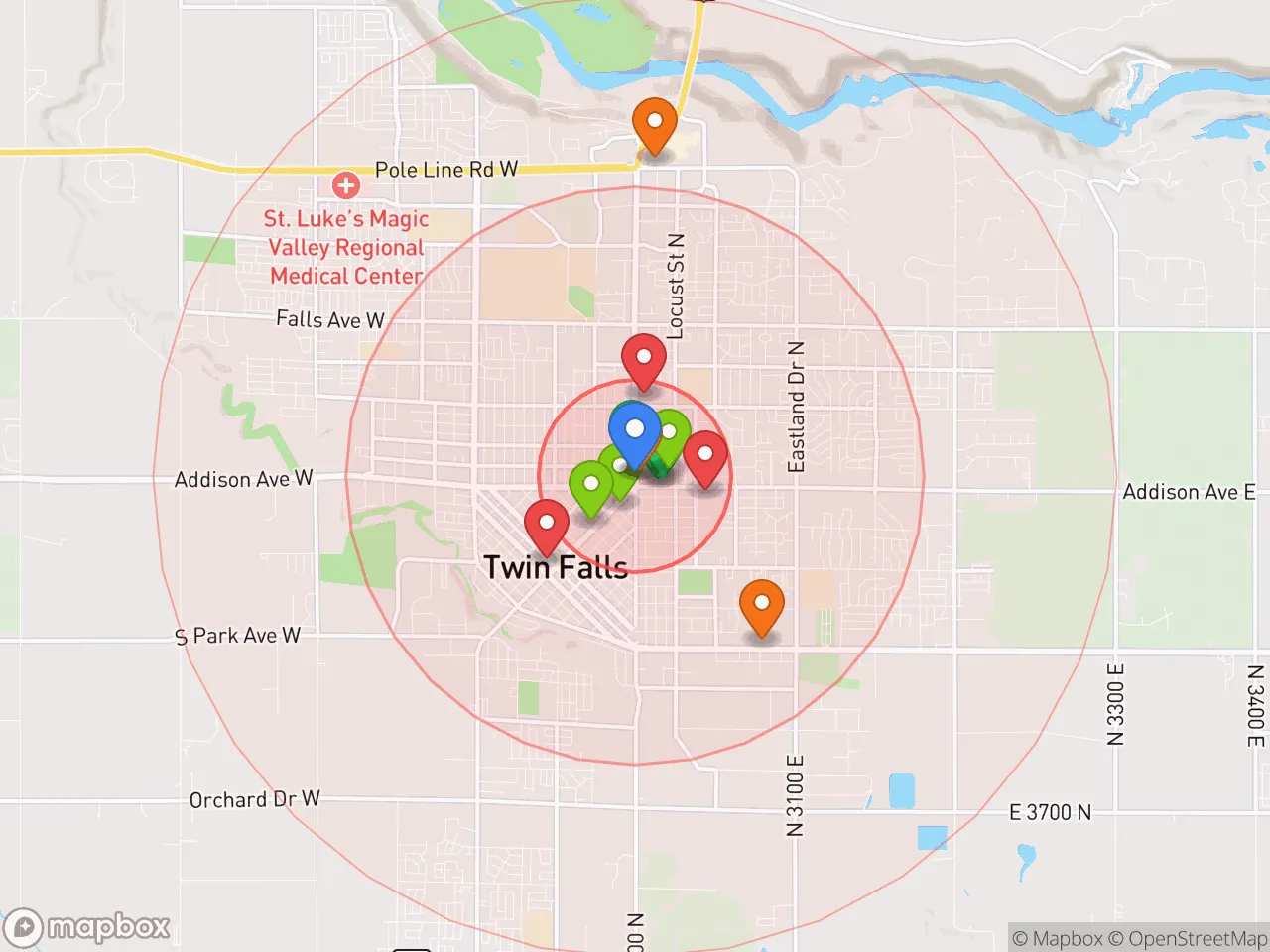
Hobbies
Explore the areaGroceries
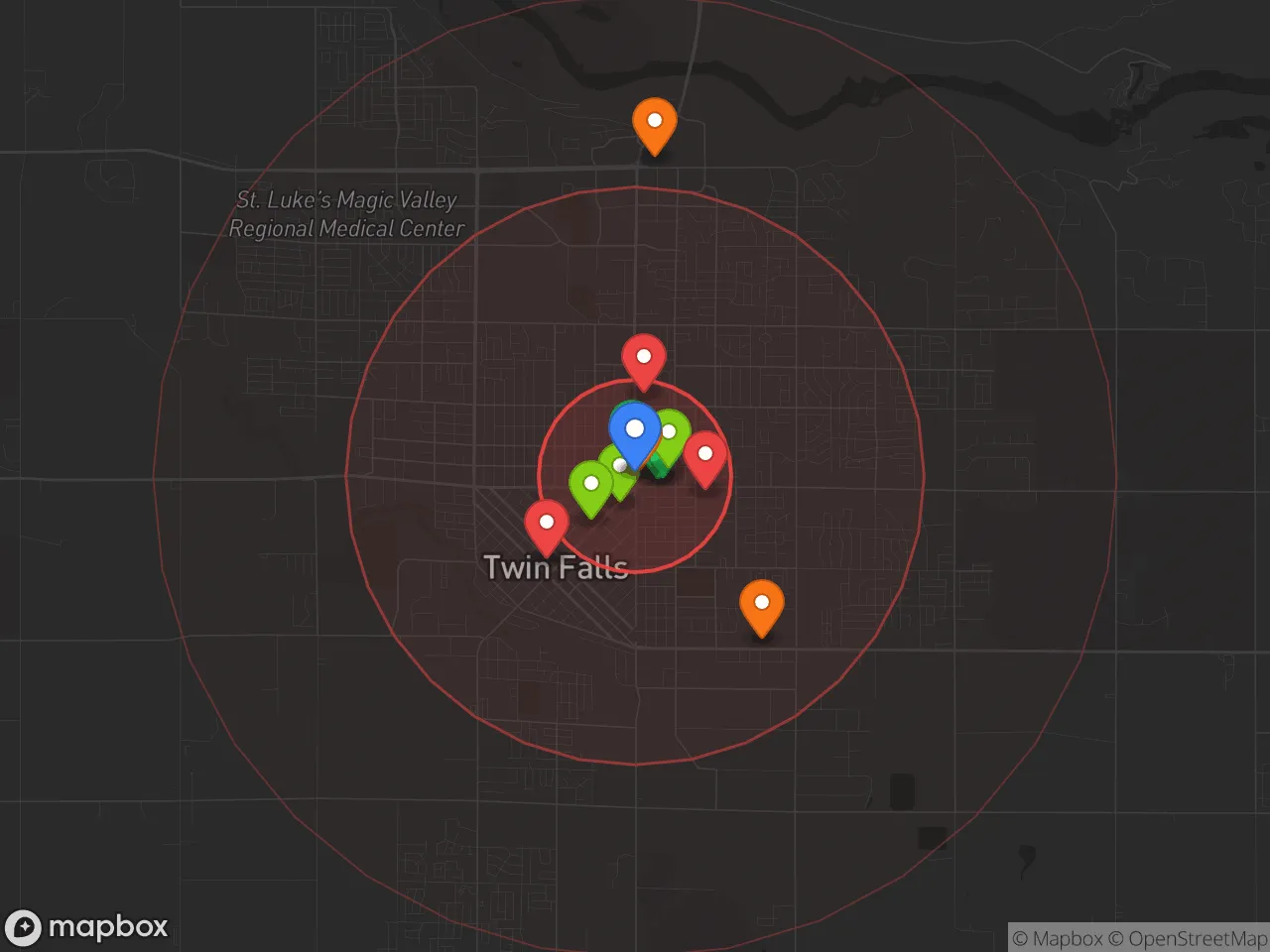
8 within 10 miles
Gas
20 within 10 miles
Hospital
3 within 20 miles
Airport
SLC — Salt Lake City International
Post Office
USPS — Twin Falls, ID
Critical Amenities
Quality-of-Life Analysis
Twin Falls, Idaho, presents a quality of life defined by solid middle-class stability and a notably lower cost of living than the national average, attracting a demographic mix of young families, outdoor enthusiasts, and remote workers seeking a slower pace. With a cost-of-living index of 92 (8% below the U.S. average), the city offers genuine financial breathing room compared to Boise (index ~105) or Salt Lake City (~110). The population skews slightly younger and more family-oriented than the state average, with a median age around 34, and the local economy is anchored by agriculture, manufacturing (notably Clif Bar and Glanbia), and a growing healthcare sector at St. Luke’s Magic Valley Medical Center.
How housing costs and affordability compare to Boise and Pocatello
The most tangible advantage of living in Twin Falls is housing affordability. The median home value sits at $279,400, roughly $150,000 less than the Boise metro area and about $30,000 below Pocatello. This price point allows a household earning the local median income (~$62,000) to comfortably afford a mortgage without being cost-burdened. Renters also benefit: the median rent of $1,011 is nearly $400 per month cheaper than comparable units in Boise’s suburbs. The average commute of just 15.9 minutes further reduces transportation costs, as most residents can reach work, schools, and shopping along the Blue Lakes Boulevard corridor in under 20 minutes. Property taxes remain low by national standards (roughly 0.6% of assessed value), and Idaho’s state income tax is a flat 5.8%, keeping more money in residents’ pockets compared to neighboring states like Oregon or Utah.
What daily life is like for families: schools, parks, and local amenities
Daily life in Twin Falls revolves around a compact, car-dependent layout with a strong community focus on outdoor recreation and local events. The Twin Falls School District serves roughly 8,500 students, with Twin Falls High School and the newer Canyon Ridge High School both offering dual-credit programs through the College of Southern Idaho (CSI). CSI itself is a major asset, providing affordable associate degrees and vocational training that feed directly into local employers. For families, the city’s crown jewel is the Shoshone Falls park complex—often called the “Niagara of the West”—along with the Snake River Canyon Trail system for hiking and biking. The Magic Valley Mall and a growing number of chain restaurants (Cracker Barrel, Texas Roadhouse) anchor retail, while the Twin Falls Farmers Market (May–October) and the Magic Valley Symphony provide cultural touchpoints. The rhythm is unhurried: most errands are done by 6 p.m., and weekend mornings are often spent at the Perrine Bridge watching BASE jumpers or kayaking on the river.
This quality of life best suits people who value financial predictability, outdoor access, and a low-stress commute over urban nightlife or career maximalism. Remote workers, early retirees, and tradespeople will find the housing costs freeing, while families will appreciate the short school commutes and safe neighborhoods. Those seeking a vibrant arts scene, high-end dining, or a walkable downtown should look elsewhere—Twin Falls is a blue-collar and agricultural hub that prioritizes space, affordability, and nature over density and convenience. For the right person, it offers a rare combination: a genuine small-city lifestyle with the financial stability to actually enjoy it.

Crime in Twin Falls, ID
Lower crime rates than 75% of comparable U.S. locations.
Violent CrimeViolent Crime Analysis
Property CrimeProperty Crime Analysis
Crime Analysis
Twin Falls, Idaho, presents a mixed safety profile. The city's violent crime rate of 407.1 per 100,000 residents is significantly higher than the national average, while its property crime rate of 1,028.4 per 100,000 sits closer to the national median. Residents and prospective movers should weigh these figures carefully, as the city's status as a regional economic hub in the Magic Valley brings both opportunity and the crime pressures typical of a growing urban center.
Crime in context
When compared to Idaho's statewide averages, Twin Falls stands out as a higher-crime community. The state's violent crime rate is roughly 240 per 100,000, making Twin Falls nearly 70% more violent than the rest of Idaho. Property crime in Twin Falls also exceeds the state average of about 900 per 100,000. Nationally, the violent crime rate hovers around 380 per 100,000, meaning Twin Falls is slightly above that benchmark. The city's crime index places it in a tier where approximately 1 in 240 residents can expect to be a victim of violent crime each year, and about 1 in 97 face property crime. These numbers are driven largely by theft and burglary, but aggravated assault accounts for the majority of violent incidents.
What residents experience
Daily life in Twin Falls involves a noticeable contrast between the city's safe-feeling downtown and its higher-risk areas. The city's police department has been proactive with community policing and crime prevention programs, but resource constraints are a recurring issue. Residents frequently cite vehicle break-ins and package theft as common nuisances. A more systemic concern is the influence of progressive judicial philosophies in the broader region. Twin Falls County, like many areas in the Intermountain West, has seen a shift toward lenient sentencing and diversion programs for property and drug offenders. This approach, while intended to reduce incarceration rates, has resulted in repeat offenders cycling through the system quickly, undermining public confidence in the justice system and contributing to a perception that crime has few real consequences. For victims, this can mean that stolen property is rarely recovered and that offenders face minimal accountability.
Neighborhood-level variation
Safety in Twin Falls is not uniform. The area around the College of Southern Idaho and newer subdivisions on the south side generally report lower crime rates. In contrast, the downtown core and older neighborhoods near the Snake River Canyon see higher concentrations of property crime and drug-related incidents. The city's recent annexations have also brought in some rural pockets with very low crime, while denser apartment complexes near Blue Lakes Boulevard experience more frequent police calls. Prospective residents should research specific block-level data through the Twin Falls Police Department's online crime map and consider that the city's overall statistics may not reflect the experience of living in a well-maintained, family-oriented subdivision on the city's periphery.
* Values derived from national, state, county, city and local statistics and may differ in a specific area. Last updated: 2026-04-29T23:27:09.000Z
Narrative content on this page is AI-generated and may contain mistakes. Verify any details that matter before acting on them.
ReloMaps may earn a commission from affiliate links at no extra cost to you.

