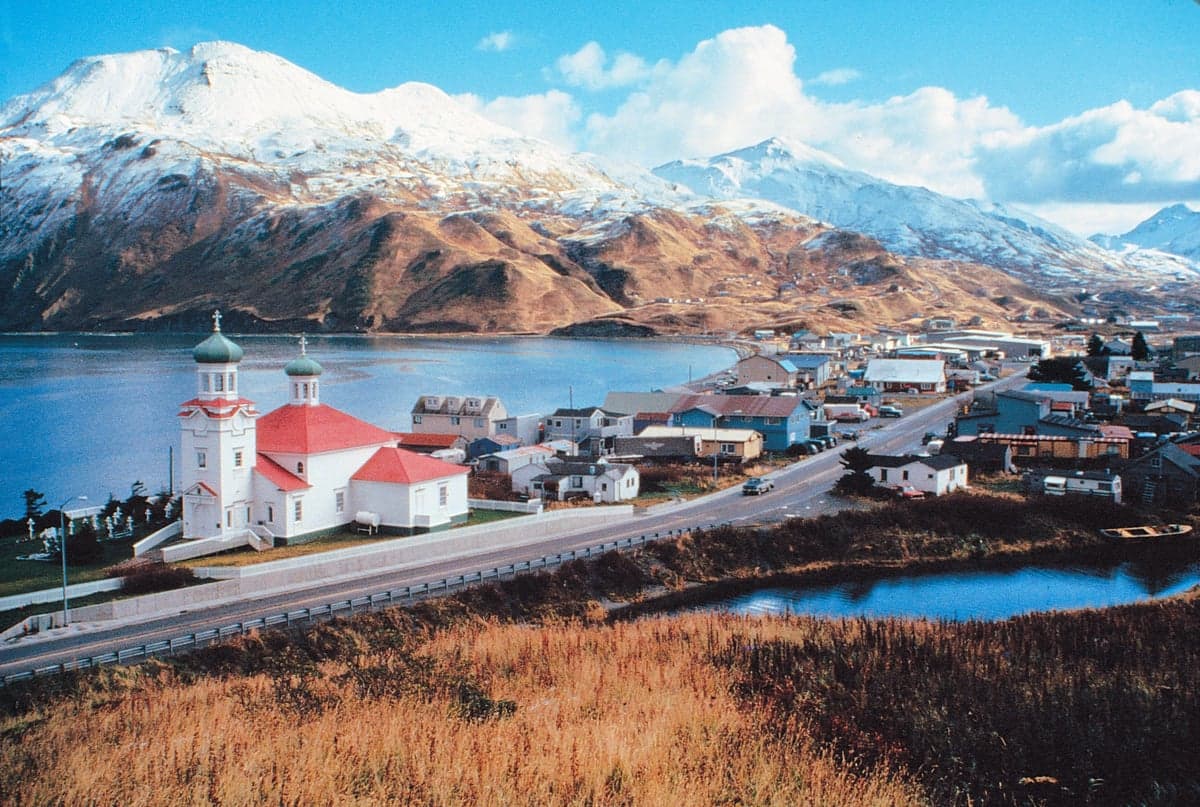
Photo: Wikipedia
Political ClimatePolitical Climate in Unalaska, AK
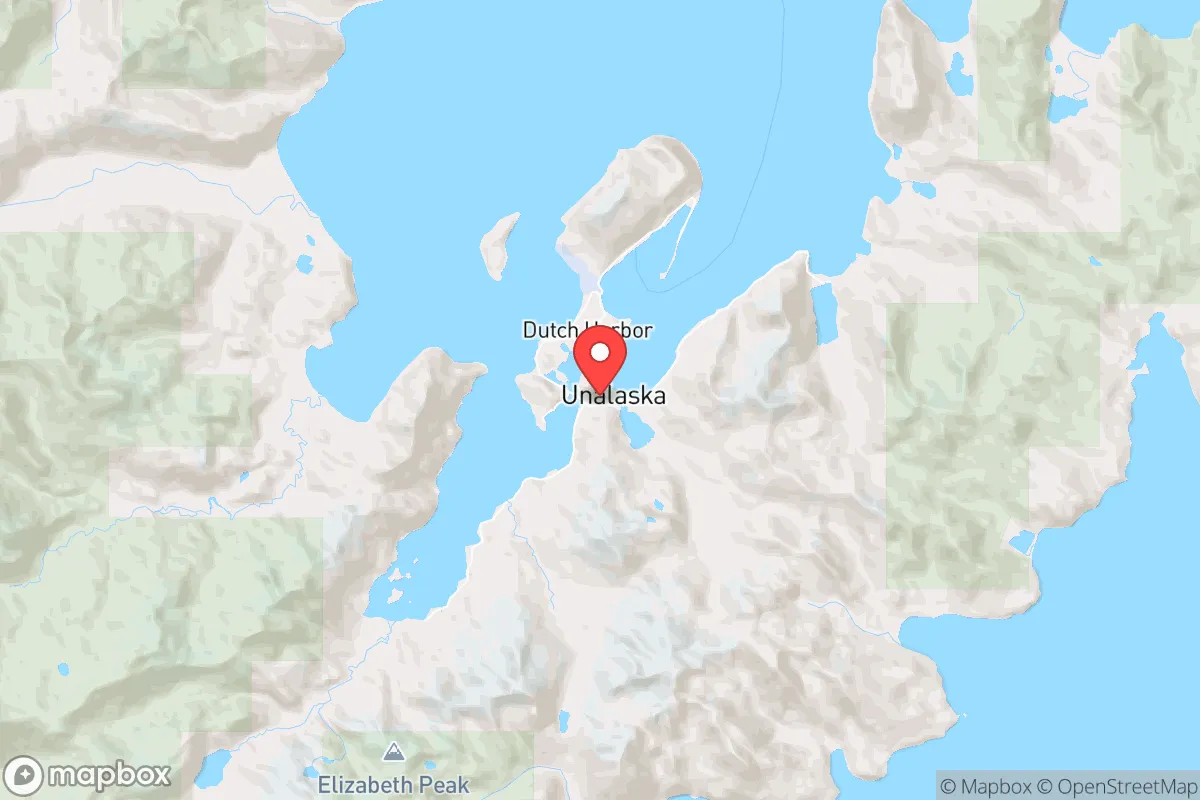
District shown is the primary district for this city’s centroid. Cities may span multiple districts.
Inherited from parent state — no local data available.
Local Political AnalysisPolitical Analysis of Unalaska, AK
Unalaska has long been a place where folks value their independence and self-reliance, and that’s reflected in its politics. The Cook Partisan Voting Index (PVI) rates the area at R+6, meaning it leans Republican by a solid six points compared to the rest of the country. But if you’ve lived here a while, you know that number doesn’t tell the whole story—there’s been a noticeable shift in recent years, with more progressive voices creeping into local conversations, especially around resource management and social issues. It’s not the deep red stronghold it once was, and that’s got some of us watching closely.
How it compares
When you look at the political landscape around here, Unalaska stands out as a bit of a moderate outlier compared to the surrounding areas. Head over to Dutch Harbor—which is technically part of the same island but feels like its own world—and you’ll find a more libertarian streak, with folks who are fiercely protective of their fishing rights and wary of any government meddling. In contrast, Anchorage, about 800 miles northeast, has seen a stronger push toward progressive policies in recent years, especially on environmental regulations and social programs. Kodiak, another fishing hub, leans more conservative overall, with a PVI around R+8, but even there, you’re seeing younger residents pushing for change. Unalaska sits right in the middle—still conservative at its core, but with a growing undercurrent of progressive activism that’s starting to influence local elections and town hall debates. It’s a far cry from the days when everyone pretty much agreed on keeping government out of our lives.
What this means for residents
For those of us who’ve been here for decades, the biggest concern is how this shift affects our daily freedoms. The fishing industry is the lifeblood of Unalaska, and any move toward stricter environmental regulations or labor mandates feels like a direct threat to our way of life. We’ve already seen debates over commercial fishing quotas and fuel taxes that some of us worry are just the first steps toward more government overreach. On the social side, there’s been chatter about expanding LGBTQ+ protections and diversity initiatives in local schools—things that might sound good on paper but often come with mandates that limit parental choice and local control. The real worry is that these progressive ideas, once they take root, tend to snowball. It’s not about being against change; it’s about making sure the change doesn’t come at the cost of the personal freedoms that make this place worth living in.
One thing that hasn’t changed much is the cultural pride here. Unalaska has a strong Aleut (Unangax̂) heritage, and that community tends to lean conservative on issues like land use and subsistence rights, which aligns with the older, more traditional values. You’ll still see plenty of folks flying the Alaska state flag and talking about the importance of self-sufficiency. But there’s a growing divide between the old guard and the newcomers—often younger people drawn by the remote lifestyle or jobs in the Bering Sea fisheries—who bring more left-leaning ideas with them. If you’re thinking about moving here, just know that the political climate is in flux. The R+6 rating gives you a snapshot, but the real picture is a community wrestling with how much change it can stomach without losing its soul. Keep an eye on local elections and school board meetings—that’s where the future of Unalaska’s freedoms will be decided.

State Political ClimatePolitical Climate in Alaska
State Political AnalysisPolitical Environment in the State
Alaska has long been a bastion of independent-minded conservatism, but the political landscape is more complex than a simple red-state label suggests. The state leans Republican in most statewide elections, with the GOP holding the governor’s mansion and both U.S. Senate seats, yet it has a strong libertarian streak and a history of electing moderate or even Democratic figures like the late Senator Ted Stevens. Over the last 10-20 years, the trajectory has been a slow but noticeable shift: the old-school, resource-extraction-focused conservatism of the 2000s is being challenged by a growing urban progressive movement in Anchorage and Juneau, while rural and suburban areas have hardened their conservative stance. The result is a state that feels politically bifurcated, with the freedom-loving ethos of the frontier clashing against the bureaucratic impulses of the state capital.
Urban vs. rural divide
The political map of Alaska is a textbook study in geographic polarization. Anchorage, home to roughly 40% of the state’s population, is the epicenter of the blue-leaning vote, particularly in its core neighborhoods like Spenard and downtown, where progressive candidates often win city council seats. The Mat-Su Borough (Wasilla, Palmer) is the conservative counterweight—a fast-growing suburban and exurban region that votes Republican by margins of 60-70% and is the heart of the state’s gun rights and anti-tax movements. Fairbanks is a mixed bag: the city itself leans slightly left due to the university presence, but the surrounding Interior is deeply red. Juneau, the capital, is a progressive stronghold thanks to state government workers and environmental activists, while Kenai and Soldotna on the Kenai Peninsula are reliably conservative, driven by oil and fishing interests. The rural villages of the Bush—like Barrow (Utqiaġvik) and Nome—tend to vote Democratic due to tribal affiliations and reliance on federal programs, but their turnout is low and their influence is waning. The real story is the Mat-Su boom: it’s the fastest-growing region in the state, and its conservative voters are pulling the overall political center of gravity to the right.
Policy environment
Alaska’s policy environment is a mixed bag for a conservative. On the plus side, there is no state income tax and no statewide sales tax, which is a huge draw for those fleeing high-tax states. The state’s Permanent Fund Dividend (PFD) is a unique cash payment to every resident, funded by oil revenues, and it’s a sacred cow that both parties protect—though progressives have tried to means-test it. The regulatory posture is generally light, especially for resource extraction: oil, gas, and mining are the lifeblood, and the state government has historically been pro-development. However, the education system is a point of tension. Alaska has no school choice program and no charter school law worth mentioning, leaving parents with few options outside of expensive private schools or the public system, which ranks near the bottom nationally in test scores. Healthcare is dominated by a few large providers like Providence Health & Services, and the state has expanded Medicaid under the Affordable Care Act, a move that rankles fiscal conservatives. Election laws are relatively clean: Alaska uses a top-four primary system and ranked-choice voting for general elections, which was passed by ballot initiative in 2020. This system has been controversial among conservatives, who argue it dilutes the power of the majority and allows moderate Republicans to win over more conservative ones.
Trajectory & freedom
On the freedom front, Alaska is a mixed bag trending in the wrong direction. Gun rights are still strong—Alaska is a constitutional carry state, and there are no magazine capacity limits or red flag laws. The state legislature has repeatedly blocked attempts to impose waiting periods or universal background checks. However, the ranked-choice voting system is a clear contraction of political freedom, as it forces voters into a complex, multi-round ballot that often produces outcomes that don’t reflect the majority’s first choice. On parental rights, Alaska has been relatively quiet, but there’s no statewide law requiring schools to notify parents about curriculum changes or medical services—a gap that progressive school boards in Anchorage have exploited. Medical autonomy is a bright spot: Alaska has no vaccine mandates for adults and no COVID-19 passport system, and the state’s response to the pandemic was among the least restrictive in the nation. Property rights are generally respected, but the state’s vast federal land holdings (over 60% of Alaska is federally owned) create constant friction with local control. The most concerning trend is the growing influence of environmental groups, who have successfully blocked major resource projects like the Pebble Mine and restricted oil drilling in the Arctic National Wildlife Refuge, directly limiting economic freedom for residents.
Civil unrest & political movements
Alaska hasn’t seen the kind of street-level civil unrest common in the Lower 48, but there are simmering political movements. The Alaska Independence Party (AIP) has a long history of advocating for secession or greater autonomy, though its influence has waned in recent years. The most visible flashpoint is the Pebble Mine controversy, which has pitted pro-development conservatives and union workers against environmental activists and tribal groups. Protests in Anchorage and Juneau have been frequent but small, usually numbering in the hundreds. Immigration politics are a non-issue here—Alaska’s foreign-born population is tiny, and the state has no sanctuary city policies. Election integrity has been a hot topic since the 2020 ranked-choice voting experiment: conservatives in the Mat-Su Borough have pushed for a repeal of the system, and a ballot initiative to do so is likely in 2026. The most visible activist movement on the right is the Second Amendment preservation movement, with groups like the Alaska Gun Owners Association holding regular rallies in Wasilla and Fairbanks. On the left, the Alaska Environmental Network is well-funded and influential, particularly in Juneau, where they’ve successfully lobbied for stricter emissions standards on cruise ships and oil tankers.
Projection
Over the next 5-10 years, Alaska’s political trajectory will be shaped by two forces: in-migration from blue states and the decline of oil revenue. The Mat-Su Borough is absorbing a steady stream of conservatives from California and Washington, which will reinforce the state’s rightward tilt in the suburbs. However, Anchorage is becoming more progressive, driven by younger, college-educated transplants and a growing homeless population that demands government intervention. The real wildcard is the state budget: as oil production declines (it’s down 50% from its peak in the 1980s), the state will face pressure to either cut services or impose a state income tax. A tax would be a political earthquake, likely triggering a mass exodus of the very conservatives who moved here for the low-tax environment. The ranked-choice voting system is likely to survive, but it will continue to produce moderate Republican winners like Senator Lisa Murkowski, frustrating the conservative base. The biggest threat to freedom is the federal government: if the Biden administration or a future progressive White House tightens restrictions on federal lands, Alaska’s economy could be crippled, and the state’s autonomy will be further eroded.
For a new resident, the bottom line is this: Alaska still offers a level of personal freedom—especially on taxes and guns—that is rare in the United States. But the state is not immune to the cultural and political battles of the Lower 48. If you move to the Mat-Su or Kenai, you’ll find a community that shares your values. If you land in Anchorage or Juneau, expect to encounter progressive politics that will feel familiar from any coastal city. The key is to choose your location carefully and to get involved in local politics early, because the fight for Alaska’s soul is far from over.
* Values derived from national, state, county, city and local statistics and may differ in a specific area. Last updated: 2026-04-19T19:40:13.000Z
Narrative content on this page is AI-generated and may contain mistakes. Verify any details that matter before acting on them.
ReloMaps may earn a commission from affiliate links at no extra cost to you.

