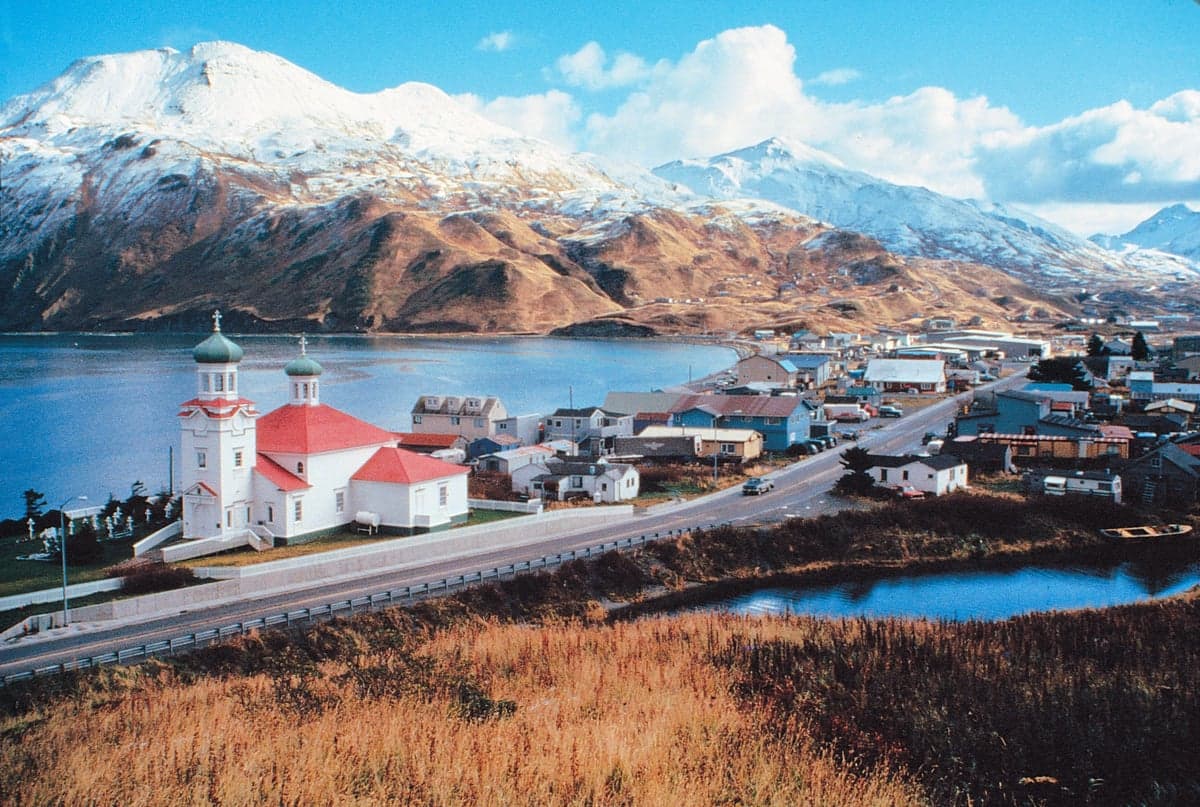
Photo: Wikipedia
Strategic Assessment of Unalaska, AK
Workable tactical position. Some exposure to population density or targets, but generally defensible in a crisis.
What does the Strategic Assessment tell us?
Our Strategic Assessment grades tactical survivability of an area. Major population centers, military targets, fallout zones, natural disasters, and border exposure all drive risk — lower exposure means a more defensible position in a crisis.
This is heavily inspired by Joel Skousen's Strategic Relocation book. Highly recommended you checkout the book ($)What does this tell us?
Our Strategic Assessment grades tactical survivability of an area. Major population centers, military targets, fallout zones, natural disasters, and border exposure all drive risk — lower exposure means a more defensible position in a crisis.
This is heavily inspired by Joel Skousen's Strategic Relocation book. Highly recommended you checkout the book ($)Strategic Pillars

Key Distances
Regional Safe Places
Below is our recommended "safe zones" in Alaska and the surrounding area based on our strategic heuristics. For most people, it's unrealistic to live in a “safe zone” full-time due to work, family or other personal reasons. They tend to be more rural. However, many of these areas are perfect for second homes and retreat properties that double as a vacation home or even a short-term rental.
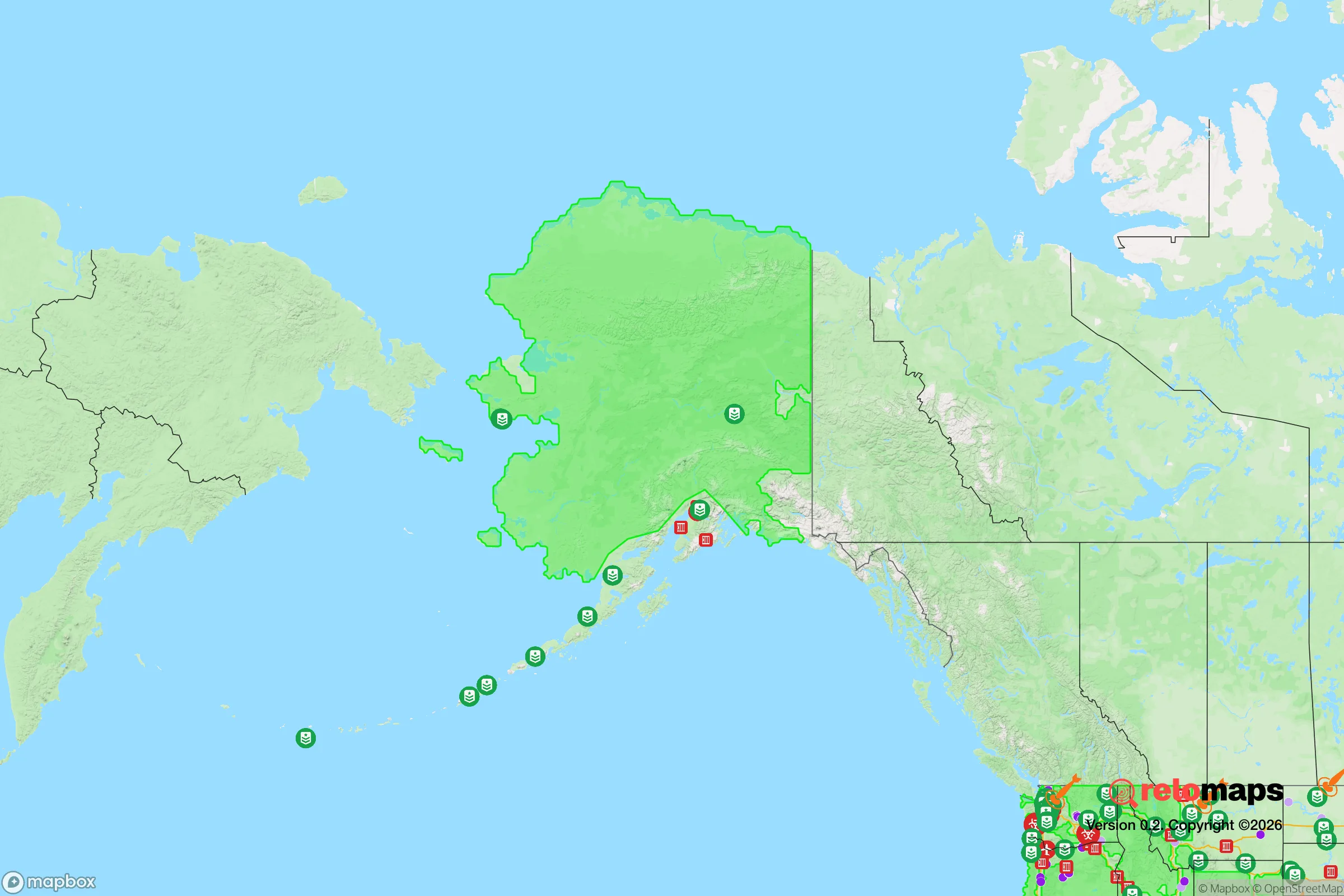
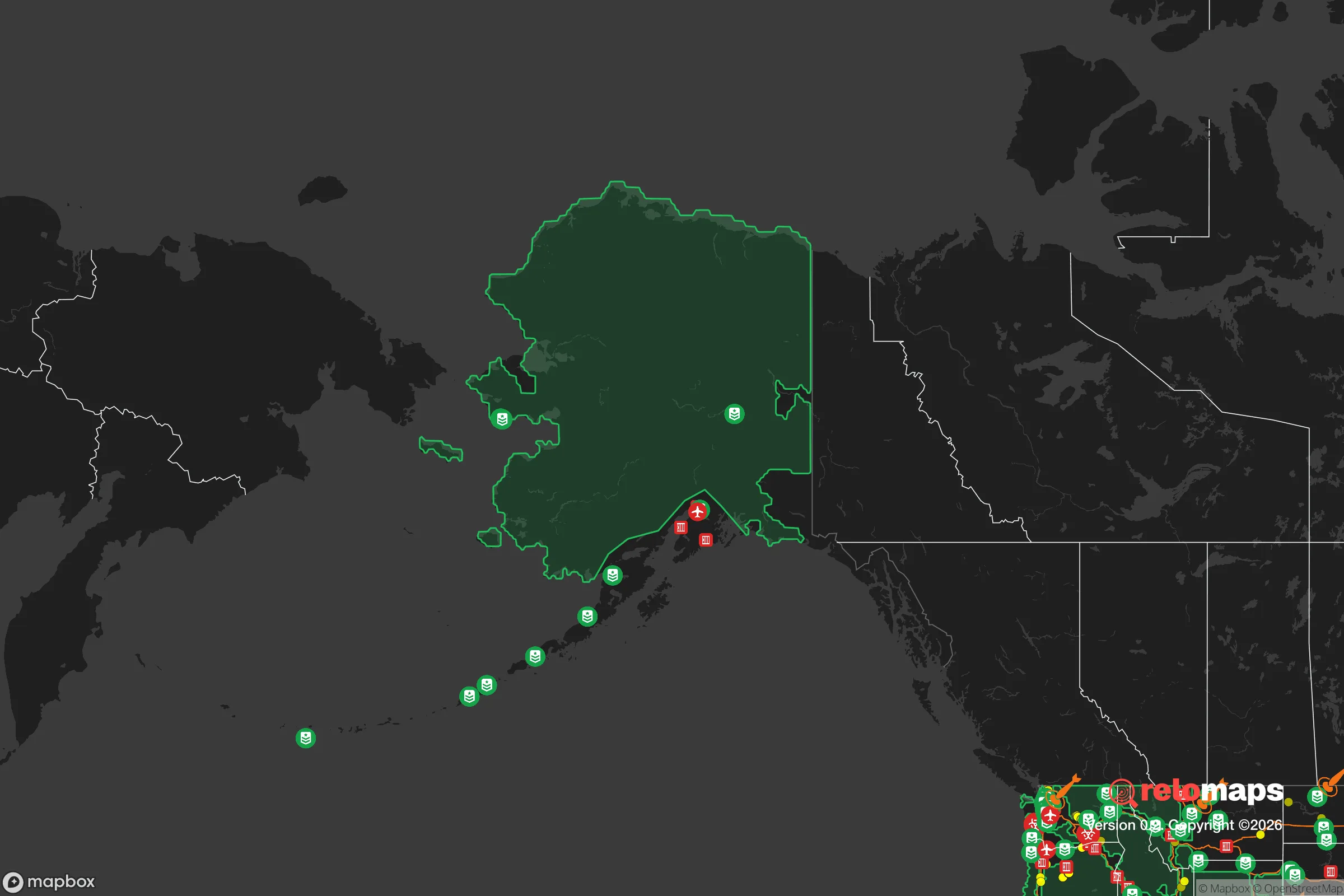


Important Note: For informational purposes only. This does not mean nothing bad ever happens in the green zones. Please use common sense. This is based on public data and modeled with AI. We tried to take a conservative approach but mistakes happen. We update this regularly as new information becomes available.
Solar Generator Recommendations
Backup power matters more here than in safer locations. We've picked three solar generators across budgets and capacity tiers — start with the budget unit if you only need a few essentials, or step up if you want to run a fridge and HVAC for days at a time.

Jackery Portable Power Station Explorer 300
Budget OptionPower on the Go: Weighing only 11 lbs, it's convenient to set up and store with book-sized foldable solar panels

BLUETTI Portable Power Station AC180
Designed for both indoor and outdoor scenarios, AC180 is highly capable as it has a robost capacity and continuous output power.

EF ECOFLOW DELTA Pro Ultra Power Station
Upgraded PickEcoFlow DELTA Pro Ultra is a whole-home energy system designed to grow with your family. Integrated with the Smart Home Panel 2, it scales to meet your evolving energy needs — keeping your home powered, intelligent, and secure through every stage of life.
We earn a commission, at no additional cost to you.
Strategic Assessment Analysis
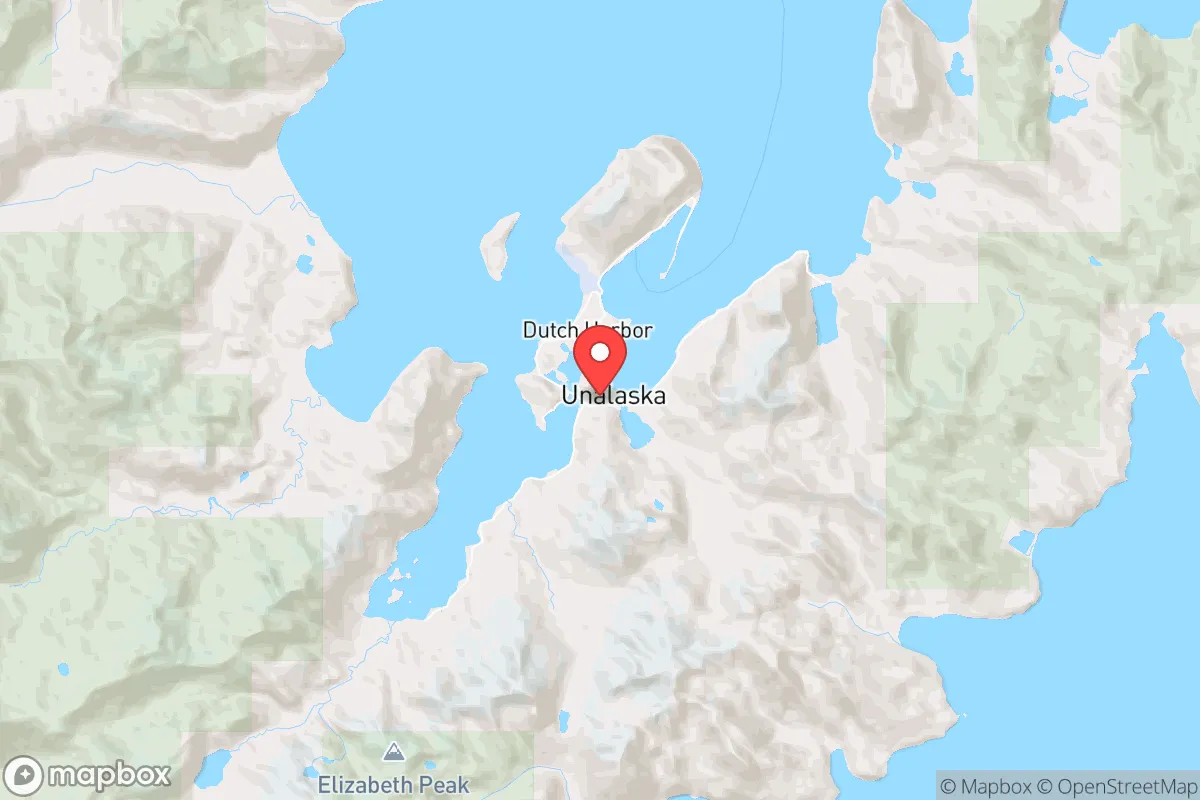
Unalaska, Alaska, offers a strategic relocation option for those prioritizing resilience and geographic isolation in an increasingly uncertain world. Situated in the Aleutian Islands, this remote fishing port is over 800 miles southwest of Anchorage, placing it far from the urban corridors and potential fallout zones that concern preppers and survivalists. Its location provides a natural buffer against the cascading effects of civic unrest, supply chain disruptions, and mass casualty events that could destabilize the Lower 48, making it a unique asset for those seeking a hardened, self-reliant lifestyle.
Geographic position and natural defensive advantages of Unalaska
Unalaska’s primary strategic advantage is its extreme remoteness. The town sits on Unalaska Island, part of the Aleutian chain, and is accessible only by air or sea. The nearest major city, Anchorage, is a 3-hour flight away, and the Bering Sea to the north and the Pacific Ocean to the south create a natural moat. This isolation means that in the event of a national emergency—whether a pandemic, economic collapse, or widespread civil disorder—Unalaska would be largely insulated from the chaos. The surrounding waters are treacherous, with frequent storms and fog, which would deter any large-scale movement of people or supplies. The terrain itself is rugged, with volcanic peaks and tundra, offering few easy approaches for outsiders. For a relocator, this translates into a defensible position where you control the access points: the airport and the harbor. The local population is small—around 4,500 year-round residents—which reduces the risk of resource competition and makes community cohesion more manageable. The Bering Sea’s bounty also provides a natural food source, with one of the world’s richest fisheries right at your doorstep.
Risks, exposures, and proximity to fallout-relevant landmarks
While Unalaska’s isolation is a strength, it also comes with specific vulnerabilities that a prepper must weigh. The area is seismically active, sitting on the Pacific Ring of Fire. The 1957 Andreanof Islands earthquake (magnitude 8.6) and the 1964 Good Friday earthquake (magnitude 9.2) both generated tsunamis that affected the Aleutians. A major quake could disrupt infrastructure, including the port and airport, which are lifelines for resupply. Volcanic activity is another concern; Mount Makushin, just 15 miles from town, is an active stratovolcano. An eruption could blanket the area in ash, disrupting air travel and contaminating water sources. In terms of fallout from human-caused events, Unalaska is far from any major nuclear targets—no large cities, military bases, or strategic industrial sites within hundreds of miles. The nearest potential fallout-relevant landmark is the Joint Base Elmendorf-Richardson in Anchorage, but prevailing winds and distance make significant contamination unlikely. However, the town’s reliance on imported fuel and goods means that a global supply chain collapse would hit hard. The port handles massive volumes of seafood exports, but almost all other necessities—from construction materials to medical supplies—arrive by barge or plane. A relocator must plan for extended periods without resupply, as weather can shut down transport for weeks at a time.
Practical resilience for a relocator: food, water, energy, and defensibility
For a survivalist, Unalaska’s practical resilience hinges on its natural resources and community dynamics. Food security is exceptional: the Bering Sea provides year-round access to salmon, halibut, cod, and crab. Residents with a boat or even a shoreline permit can harvest significant protein. The short growing season (June to August) limits gardening, but hardy crops like potatoes, kale, and root vegetables can be cultivated in raised beds or greenhouses. Water is abundant from rainfall and snowmelt, but treatment is essential—the town’s municipal system draws from Summit Lake, and a backup well exists. A prepper should invest in a high-quality filtration system and storage tanks, as power outages can disrupt pumping. Energy is the weak link. Unalaska relies on diesel generators for electricity, with fuel shipped in by barge. The cost is high—around $0.30 per kWh—and a disruption in fuel deliveries could leave the town without power for weeks. Solar is viable only in summer (long daylight hours), but winter brings near-constant darkness and cloud cover. Wind power is abundant but requires robust turbine systems. A relocator should plan for off-grid energy storage, such as a battery bank paired with a small diesel generator, and consider wood or pellet stoves for heating. Defensibility is high due to the limited access points. The airport and harbor are the only practical entryways, and the local population is tight-knit, with a strong sense of community. The Unalaska Police Department has about 10 officers, and there is no National Guard presence, but the remote nature means that any external threat would be easily detected. The terrain—steep hills, tundra, and rocky coastline—offers natural cover and chokepoints. For a single individual or family, the key is to integrate into the community early; outsiders are viewed with suspicion, but those who contribute to the fishing industry or local services are accepted.
Overall, Unalaska presents a mixed strategic picture for the conservative prepper. Its isolation is a double-edged sword: it offers unparalleled protection from the fallout of urban collapse and mass casualty events, but it demands a high degree of self-sufficiency and tolerance for harsh conditions. The climate is brutal—frequent storms, cold temperatures, and 24-hour darkness in winter—and the cost of living is steep, with groceries often 50-100% higher than in Anchorage. However, for those willing to adapt, the trade-offs are clear. You are far from the political and social turmoil of the Lower 48, with a reliable food source from the sea and a community that values hard work and resilience. The key is to prepare for the specific risks: seismic events, volcanic ash, and supply chain interruptions. If you can secure your own power, water, and food storage, Unalaska becomes a fortress. If not, it’s a trap. For the strategic relocator, this is a high-risk, high-reward option—best suited for those who are serious about long-term survival and willing to embrace the Aleutian way of life.

* Values derived from national, state, county, city and local statistics and may differ in a specific area. Last updated: 2026-04-19T19:40:13.000Z
Narrative content on this page is AI-generated and may contain mistakes. Verify any details that matter before acting on them.
ReloMaps may earn a commission from affiliate links at no extra cost to you.

