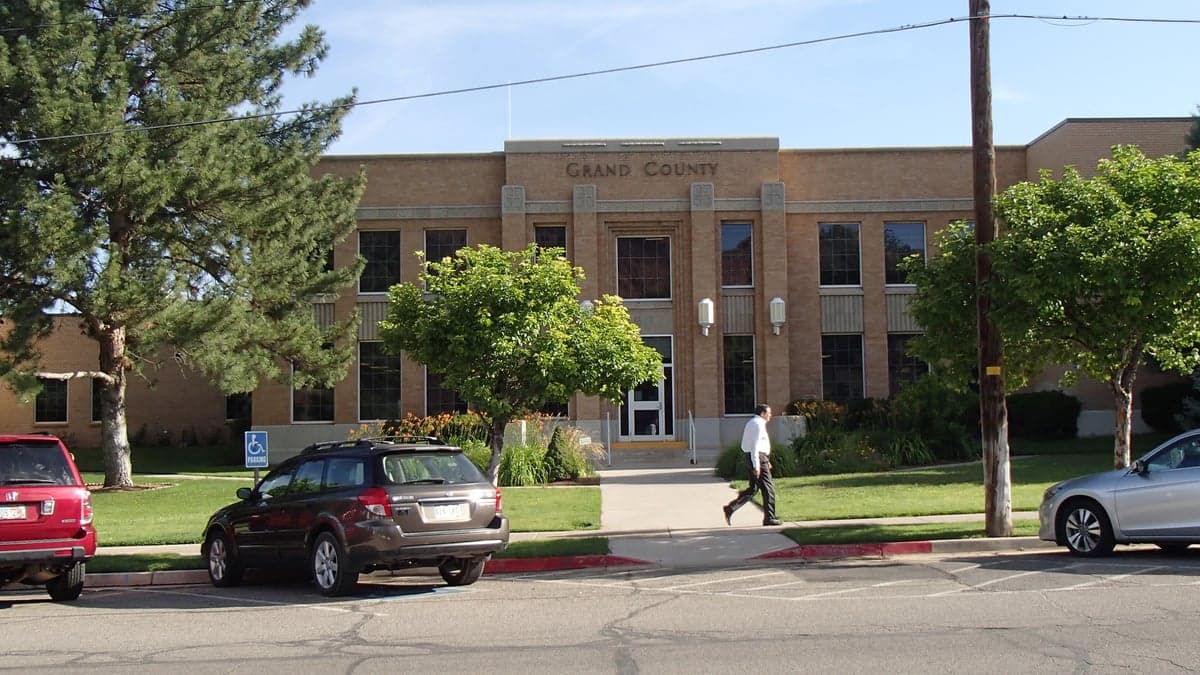
Photo: Wikipedia
Quality of Life in Grand County
A livable area that tracks near national norms for affordability, walkability, and neighborhood health.
What does Quality of Life tell us?
Quality of Life measures an area by evaluating factors like cost of living, nearby amenities, country club access, airport proximity, socioeconomic signals and neighborhood character. For large states, this is a general average — quality of life can vary dramatically between metro areas, suburbs, and rural communities within the same state.
What does this tell us?
Quality of Life measures an area by evaluating factors like cost of living, nearby amenities, country club access, airport proximity, socioeconomic signals and neighborhood character. For large states, this is a general average — quality of life can vary dramatically between metro areas, suburbs, and rural communities within the same state.
Cost of Living
21% above national average
52%
The Real Cost of Living in Grand County for 2026
| Tier | Individual | Family (4) |
|---|---|---|
| Survival | $16k | $31k |
| Comfortable | $82k | $120k |
| Luxury | $113k+ | $175k+ |
| Elite (Top 5%) | $141k+ | $219k+ |
Quality-of-Life Analysis
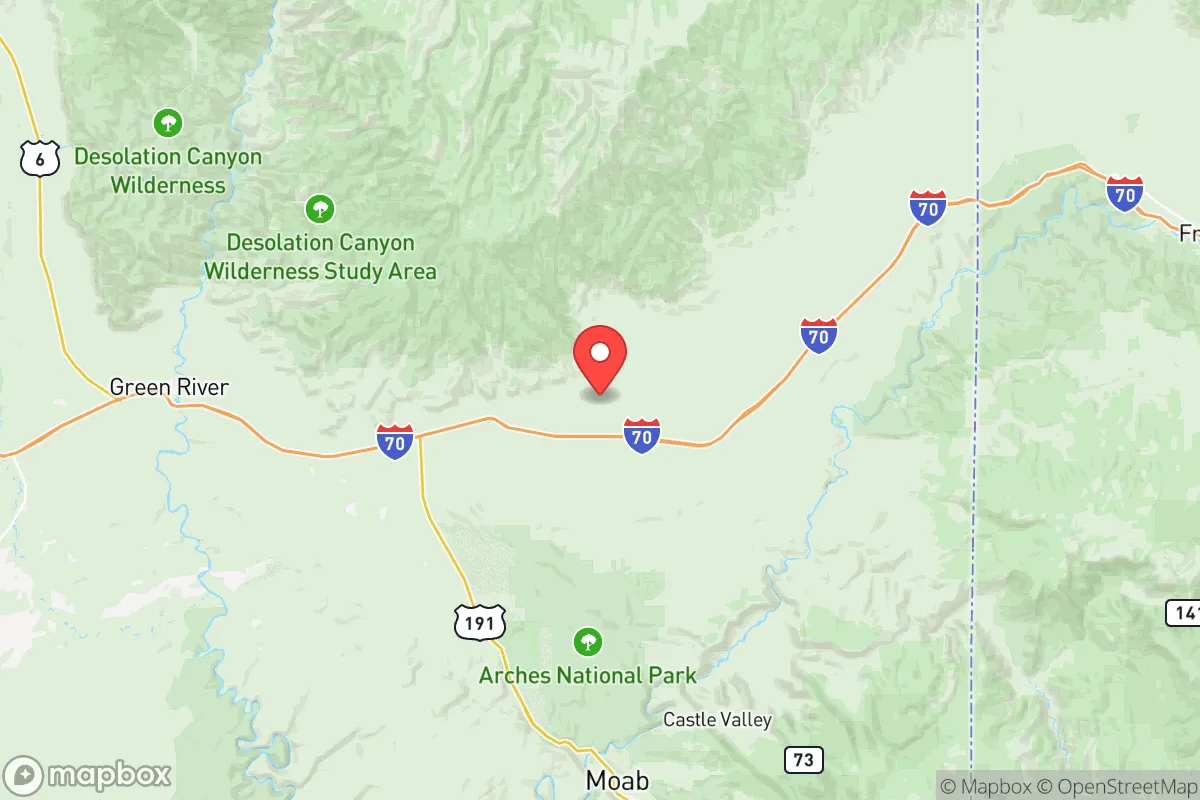
Grand County, Utah, offers a spectrum of quality-of-life options that range from the amenity-rich, tourism-driven hub of Moab to remote, off-grid homesteads in the county's vast backcountry. The county's character is defined by its dramatic red-rock landscapes and the Colorado River corridor, drawing outdoor recreationists, seasonal workers, retirees seeking solitude, and entrepreneurs serving the adventure tourism economy. Daily life varies dramatically depending on whether one lives in the walkable historic district of Moab, a small unincorporated community like Castle Valley, or a dispersed rural property near the La Sal Mountains.
Largest town(s) & population centers
Moab is the county seat and by far the largest population center, home to roughly 5,500 of the county's 9,700 residents. Daily life in Moab revolves around the visitor economy, with downtown Main Street lined with bike shops, guide services, restaurants, and art galleries. The town provides the county's only full-service grocery store, hospital, and public high school. Residents here enjoy walkable access to Arches National Park (entrance just north of town) and Canyonlands National Park (40 minutes southwest), but also contend with seasonal traffic congestion, summer crowds, and a housing market heavily influenced by short-term rentals. The average commute of 22 minutes reflects the compact nature of the town, though many workers commute from outlying areas into Moab for jobs in hospitality, guiding, and retail. Spanish Valley, immediately south of Moab, functions as a residential suburb with larger lots and newer single-family homes, offering a quieter alternative while still within a 10-minute drive of downtown amenities.
Smaller towns & rural pockets
Beyond Moab, Grand County contains several distinct smaller communities. Castle Valley, about 20 miles northeast of Moab, is a scenic residential area of roughly 400 residents, known for its iconic red-rock spires and larger, more private properties. It has no commercial services—no gas station or grocery store—so residents commute to Moab for all errands. Thompson Springs, a former railroad town along I-70 in the county's northern reaches, is a tiny unincorporated community with fewer than 50 year-round residents, offering extreme isolation and very low property costs relative to Moab. La Sal, near the county's southeastern edge at the base of the La Sal Mountains, provides a cooler, forested environment distinct from the desert floor, with a mix of ranchettes and seasonal cabins. The unincorporated area of Cisco, once a ghost town, has seen a small revival with a handful of off-grid residents and artists. These rural pockets lack municipal services like water and sewer, requiring residents to haul water or maintain wells and septic systems.
Cost & lifestyle range
The cost of living in Grand County is significantly above the national average, with a cost-of-living index of 121 (100 = U.S. average), driven almost entirely by housing. The median home value of $480,900 is high for rural Utah, reflecting Moab's desirability as a recreation destination. At the high end, Moab's historic district and newer subdivisions in Spanish Valley command prices well above $600,000, with many properties marketed as vacation rentals. At the lower end, median rent of $1,021 is relatively affordable compared to home prices, but rental availability is tight and seasonal. The most affordable housing options are found in the rural pockets: older mobile homes and fixer-upper houses in Thompson Springs or Cisco can be found for under $200,000, though these often lack modern utilities and require significant investment. Lifestyle differences are stark: Moab offers restaurants, a library, a movie theater, and year-round events, while rural residents trade those amenities for privacy, dark skies, and direct access to public lands. The county's average commute of 22 minutes masks a wide range—Moab residents may walk to work, while those in Castle Valley or La Sal face a 30- to 45-minute drive each way.
Grand County best suits individuals and families who prioritize outdoor recreation and natural beauty over urban convenience. The county works well for remote workers with stable internet (available in Moab and parts of Spanish Valley, but limited in rural areas), retirees seeking a slower pace, and those employed in the tourism or service industries. Families should weigh the limited school options—Grand County High School serves the entire county—and the seasonal economic volatility. Those who thrive here are self-sufficient, comfortable with limited services, and deeply connected to the surrounding red-rock landscape.

Crime in Grand County
Generally safer than 67% of comparable U.S. locations.
Violent CrimeViolent Crime Analysis
Property CrimeProperty Crime Analysis
Crime Analysis
Grand County, Utah, reports a violent crime rate of 217.9 per 100,000 residents and a property crime rate of 1,276.6 per 100,000, placing it above the state average for both categories but below the national average for violent offenses. The county’s overall safety picture is shaped by its small population (roughly 10,000), a tourism-driven economy centered on Moab, and a justice system that operates under state-level conservative judicial oversight. While the numbers suggest a moderate risk environment, the distribution of crime is uneven, with certain areas and seasonal factors significantly influencing the data.
Crime in context
Grand County’s violent crime rate of 217.9 per 100,000 is roughly 40% lower than the national average of 367 per 100,000, but it is about 60% higher than the Utah state average of 136 per 100,000. Property crime, at 1,276.6 per 100,000, exceeds both the national average (1,954 per 100,000) and the Utah average (1,100 per 100,000), driven largely by thefts and vehicle break-ins tied to the area’s heavy tourist traffic. By comparison, neighboring San Juan County reports a violent crime rate near 150 per 100,000, while Carbon County sits closer to 200 per 100,000, making Grand County’s violent crime rate the highest in the southeastern Utah region. The presence of a progressive-leaning district attorney in the 7th Judicial District, which covers Grand County, has been a point of concern for residents, as critics argue that lenient sentencing policies—such as reduced charges for property offenses and diversion programs for repeat offenders—contribute to a revolving-door effect that undermines public confidence in the justice system.
What residents experience
For those living in Grand County, the day-to-day safety experience varies sharply between the county’s main population centers. Moab, the county seat and primary tourist hub, accounts for the majority of reported incidents, with property crimes spiking during peak visitation months (March–May and September–October). Residents in Moab’s downtown core and along Main Street report frequent vehicle break-ins and thefts from unlocked cars, while violent crimes—mostly simple assaults and domestic incidents—are concentrated in the area around 100 West and 200 South. In contrast, the smaller communities of Castle Valley and Thompson Springs see far fewer incidents, with violent crime rates below 50 per 100,000 and property crime rates under 300 per 100,000. The unincorporated area of Spanish Valley, just south of Moab, experiences moderate property crime but very low violent crime, making it a relatively safer residential option. Residents in these outlying areas often cite the lack of a visible law enforcement presence—the Grand County Sheriff’s Office covers over 3,600 square miles with fewer than 20 deputies—as a concern, though the isolation also deters opportunistic crime.
Neighborhood-level variation
Neighborhood-level data reveals that crime in Grand County is heavily concentrated in Moab’s tourist corridor and a few specific blocks. The area around the Moab City Police Department’s jurisdiction (roughly bounded by 100 North, 400 East, 100 South, and 400 West) sees the highest density of calls for service, with property crime rates exceeding 2,500 per 100,000 during peak months. By contrast, the residential neighborhoods of Pack Creek Ranch and the Rim Village subdivision report violent crime rates below 100 per 100,000 and property crime rates under 500 per 100,000. The county’s judicial district, which includes Grand, Carbon, and Emery counties, has faced criticism for a progressive approach to sentencing—including a focus on restorative justice and reduced incarceration for non-violent offenders—which some residents believe emboldens repeat property criminals. For those considering relocation, the safest bets are the outlying communities of Castle Valley and Thompson Springs, where the combination of low population density and limited tourist traffic keeps crime rates well below county averages.
* Values derived from national, state, county, city and local statistics and may differ in a specific area. Last updated: 2026-06-05T03:25:14.000Z
Narrative content on this page is AI-generated and may contain mistakes. Verify any details that matter before acting on them.
ReloMaps may earn a commission from affiliate links at no extra cost to you.

