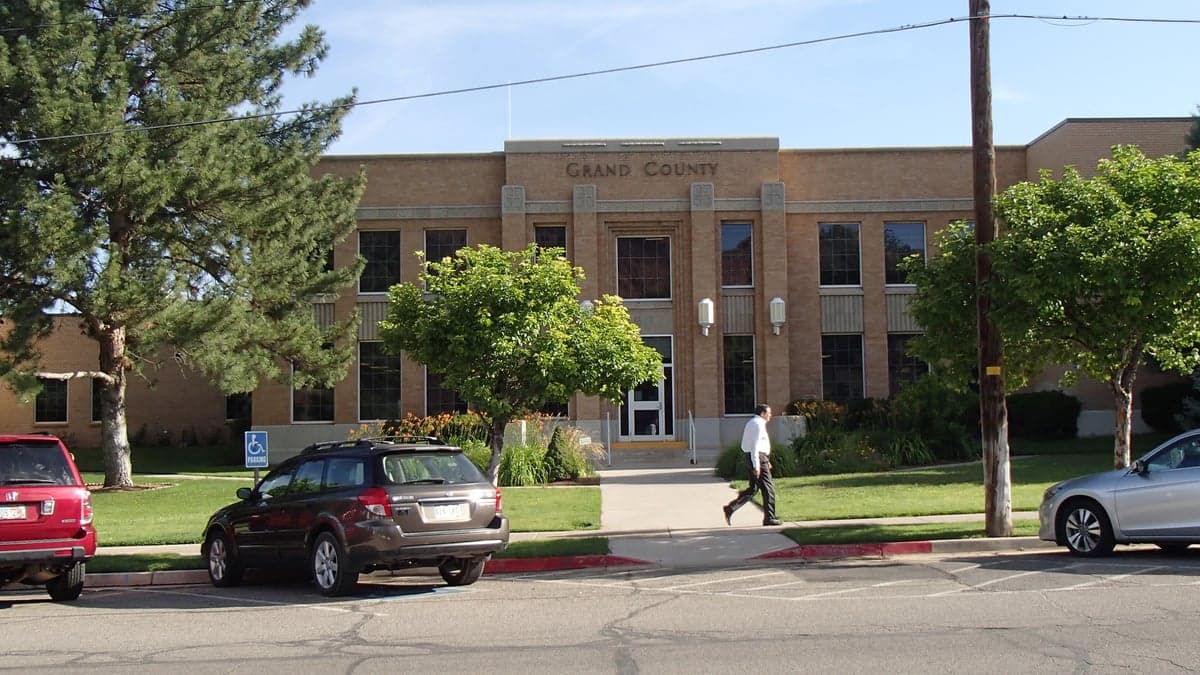
Photo: Wikipedia
Political ClimatePolitical Climate in Grand County
Showing district-level results — no local-only data available.
Local Political AnalysisPolitical Analysis of Grand County
Grand County, Utah, has historically been a reliable conservative stronghold, but like much of the West, it's seeing some subtle shifts. The county's Cook Partisan Voting Index (PVI) of R+10 is nearly identical to the state's R+11, meaning it's still solidly red, but the margin is a bit thinner than you might expect for a rural Utah county. The real story here isn't a blue wave, but a quiet tug-of-war between the traditional, libertarian-leaning conservative ranchers and a growing influx of outdoor recreationists and second-home owners, especially around Moab, who tend to lean more moderate or even left on certain environmental and land-use issues.
How it compares
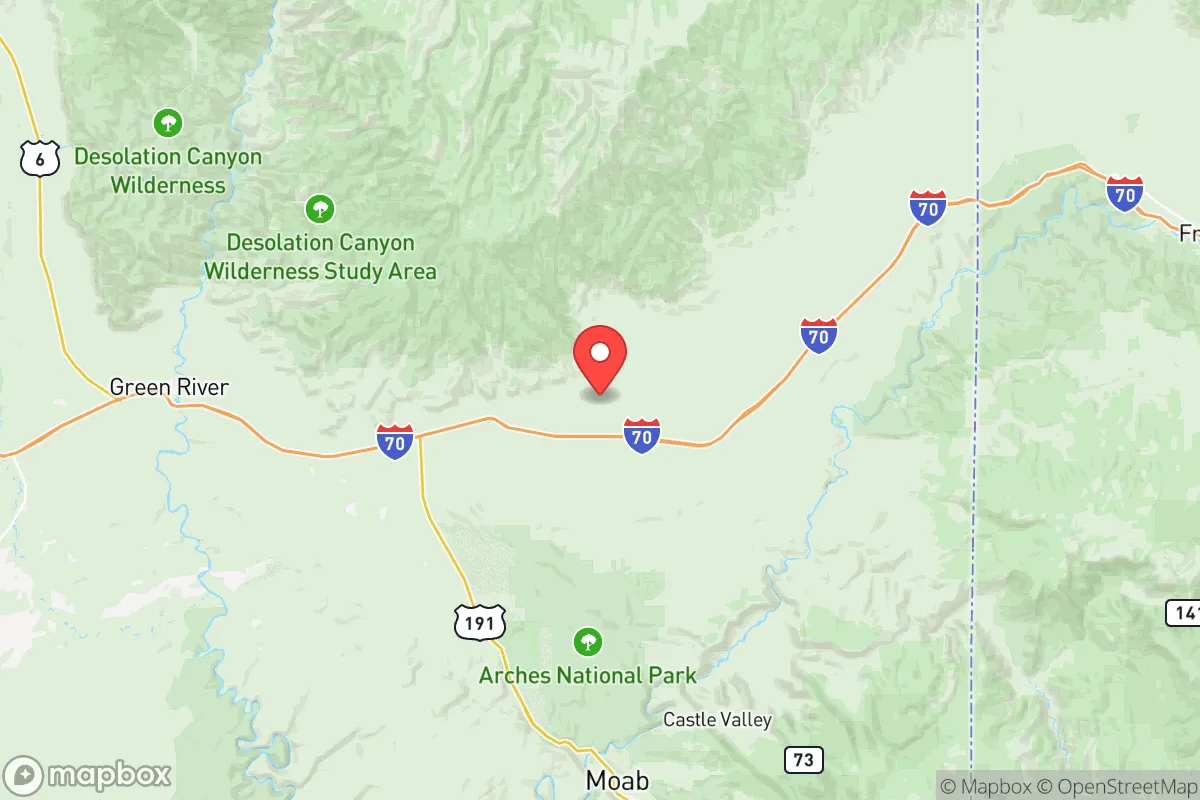
On paper, Grand County and Utah state are political twins, both sitting at R+10 and R+11 respectively. But the lived experience is different. In the rest of Utah, especially along the Wasatch Front, you see a more uniform, church-influenced conservatism that often supports larger government programs and zoning. Here in Grand County, the conservative streak is more of a "leave me alone" variety. You'll find folks in Castle Valley and Thompson Springs who are deeply skeptical of federal land management and any hint of government overreach into property rights. Meanwhile, Moab itself is the swing precinct. It's not a liberal stronghold by any stretch, but it's where you see the most political diversity, with a noticeable minority of residents who are more aligned with progressive environmental policies. The rural precincts outside Moab, like La Sal and Spanish Valley, are where the R+10 number really gets its weight—those areas vote overwhelmingly red, often by margins of 70% or more.
What this means for residents
For a conservative who values personal freedoms and limited government, the trend in Moab is something to keep an eye on. The biggest concern isn't that the county will flip blue overnight—it won't—but that the cultural and policy drift in the county seat could lead to more local regulations that feel like overreach. We're already seeing it with increased zoning restrictions and debates over short-term rental caps, which are classic examples of government telling you what you can do with your own property. The state legislature in Utah, which is deeply conservative, often steps in to preempt these local ordinances, which is a double-edged sword: it protects property rights but also undermines local control. For now, the balance holds, but the trajectory in Moab is concerning for anyone who believes that the best government is the one closest to the people and the least intrusive.
Culturally, Grand County still feels like the Old West in a way the more suburban parts of Utah don't. The dominant ethos is self-reliance, and there's a healthy skepticism of any authority that tries to tell you how to live your life. That's the core of the conservative appeal here. The policy distinction that matters most is land use. While the rest of Utah is grappling with growth and water rights in a more urban context, Grand County's battles are about federal land designations, off-road vehicle access, and grazing rights. If you're a conservative who values personal liberty and distrusts government overreach, Grand County is still a good place to be, but you'll want to pay attention to local elections in Moab, because that's where the fight for the soul of the county is happening. The rural precincts are holding the line, but the margins are getting tighter every cycle.

State Political ClimatePolitical Climate in Utah
State Political AnalysisPolitical Environment in the State
Utah is one of the most reliably Republican states in the nation, with a Cook Partisan Voting Index of R+11, meaning it votes about 11 points more Republican than the country as a whole. The dominant coalition is a blend of socially conservative Latter-day Saint (LDS) voters, fiscally conservative independents, and a growing population of out-of-state transplants who often lean right on economic issues. Over the last 10-20 years, the state has shifted from a near-monolithic Republican stronghold to a more nuanced landscape, with the Wasatch Front’s urban core becoming more competitive while rural and suburban areas have only deepened their red hue.
Urban vs. rural divide
The political map of Utah is a study in contrasts. The Wasatch Front—home to Salt Lake City, Provo, and Ogden—is where the state’s political battles are fought. Salt Lake County, once reliably red, has trended purple over the past decade; in 2020, Joe Biden won it by about 7 points, a stark shift from 2012 when Mitt Romney carried it by 16 points. This is driven by the city’s growing secular, younger, and more diverse population. Meanwhile, Utah County, anchored by Provo and home to Brigham Young University, remains deeply conservative—Trump won it by 30 points in 2020. The rural expanse—counties like Duchesne, Uintah, and San Juan—votes 70-80% Republican, fueled by energy extraction, ranching, and a strong gun culture. The divide is stark: drive 20 minutes south of Salt Lake City into Sandy or Draper, and you’re back in deep-red territory where Trump flags still fly on pickup trucks.
Policy environment
Utah’s policy environment is a model of conservative governance, but with a pragmatic twist. The state has a flat income tax rate of 4.65% (down from 5% in 2022), no state-level property tax on vehicles, and a sales tax that averages around 6.1%. Regulatory burden is low—Utah ranks in the top 10 for business freedom by the Cato Institute. Education policy is a mixed bag: the state passed a universal school choice voucher program in 2023 (HB 215), allowing families to use up to $8,000 in state funds for private or homeschool expenses, a huge win for parental rights. However, the state also mandates a controversial “sensitive materials” review in school libraries (HB 374), which conservatives see as protecting kids from explicit content but critics call censorship. Healthcare is largely market-driven, with no Medicaid expansion beyond the 2019 partial expansion. Election laws are solid: voter ID is required, and the state has a robust mail-in ballot system with signature verification. No evidence of widespread fraud has surfaced, but the system is transparent enough that most conservatives trust it.
Trajectory & freedom
Utah is trending more free in several key areas, but there are warning signs. On the plus side, the state passed constitutional carry (permitless concealed carry) in 2021 (SB 115), a major win for Second Amendment advocates. Parental rights were strengthened with the 2023 “Utah Fits All” scholarship program and a law requiring schools to notify parents of curriculum changes (HB 261). Property rights are generally respected, with no statewide rent control and minimal zoning restrictions outside of Salt Lake City. However, the state’s growing population has led to increased government overreach in water rights and land use—the 2023 “Great Salt Lake” legislation (SB 277) gave the state unprecedented authority to restrict water usage, which some see as a slippery slope. On medical freedom, Utah banned COVID-19 vaccine mandates for state employees and students (SB 2004, 2023), but the state still requires some childhood vaccinations for school entry. The trajectory is cautiously positive, but the influx of Californians and other transplants could shift the balance toward more progressive policies over time.
Civil unrest & political movements
Utah is not known for civil unrest, but there are visible flashpoints. The most notable was the 2020 protests in Salt Lake City, where Black Lives Matter demonstrations turned violent, with property damage and clashes with police. This was an outlier—most Utahns are law-abiding and community-oriented. On the right, the “Utah Patriot” movement is active, with groups like the Utah Tenth Amendment Center pushing for nullification of federal gun laws and marijuana prohibition. Immigration politics are relatively calm: Utah has a “compact” with the federal government (HB 116, 2011) that allows local law enforcement to enforce immigration laws, but sanctuary city rhetoric is minimal. Election integrity controversies are rare—the 2020 election was certified without major drama, though some rural counties passed resolutions questioning the results. The most visible political movement is the “Save Our Schools” group, which mobilized against critical race theory and LGBTQ+ curriculum in schools, successfully pushing for the 2023 “Parental Rights in Education” law (HB 261). A new resident would notice the polite but firm political discourse—Utahns debate issues without the screaming matches you see in other states.
Projection
Over the next 5-10 years, Utah will likely remain red but with a shrinking margin. The state is growing fast—about 1.5% annually—driven by in-migration from California, Colorado, and the Pacific Northwest. These newcomers tend to be more moderate or libertarian, not hard-left, but they often support higher spending on infrastructure and environmental protections. The Wasatch Front will continue to trend purple, with Salt Lake County potentially becoming a swing county by 2030. Rural areas will stay deep red, but their political power will diminish as the population concentrates along the I-15 corridor. The biggest wildcard is the LDS Church’s influence: younger members are less politically monolithic, and the church itself has become more cautious on hot-button issues like LGBTQ+ rights. Expect more ballot initiatives on education funding and tax reform, and a slow but steady push toward legalizing medical marijuana (already in place) and possibly recreational use. For a conservative moving in now, the state will feel familiar for at least another decade, but the cultural and political center of gravity is shifting northward toward Salt Lake City.
For a new resident, the bottom line is this: Utah offers a high degree of personal freedom, low taxes, and a culture that respects traditional values—but it’s not immune to the national trends. If you’re moving here for the conservative climate, you’ll find it strongest in the suburbs and rural areas, not the urban core. Keep an eye on Salt Lake County elections and school board races, as those will be the battlegrounds for the state’s future direction. For now, it’s one of the best places in the country to raise a family without the government breathing down your neck, but that could change if the transplants keep coming.
* Values derived from national, state, county, city and local statistics and may differ in a specific area. Last updated: 2026-06-05T03:25:14.000Z
Narrative content on this page is AI-generated and may contain mistakes. Verify any details that matter before acting on them.
ReloMaps may earn a commission from affiliate links at no extra cost to you.

