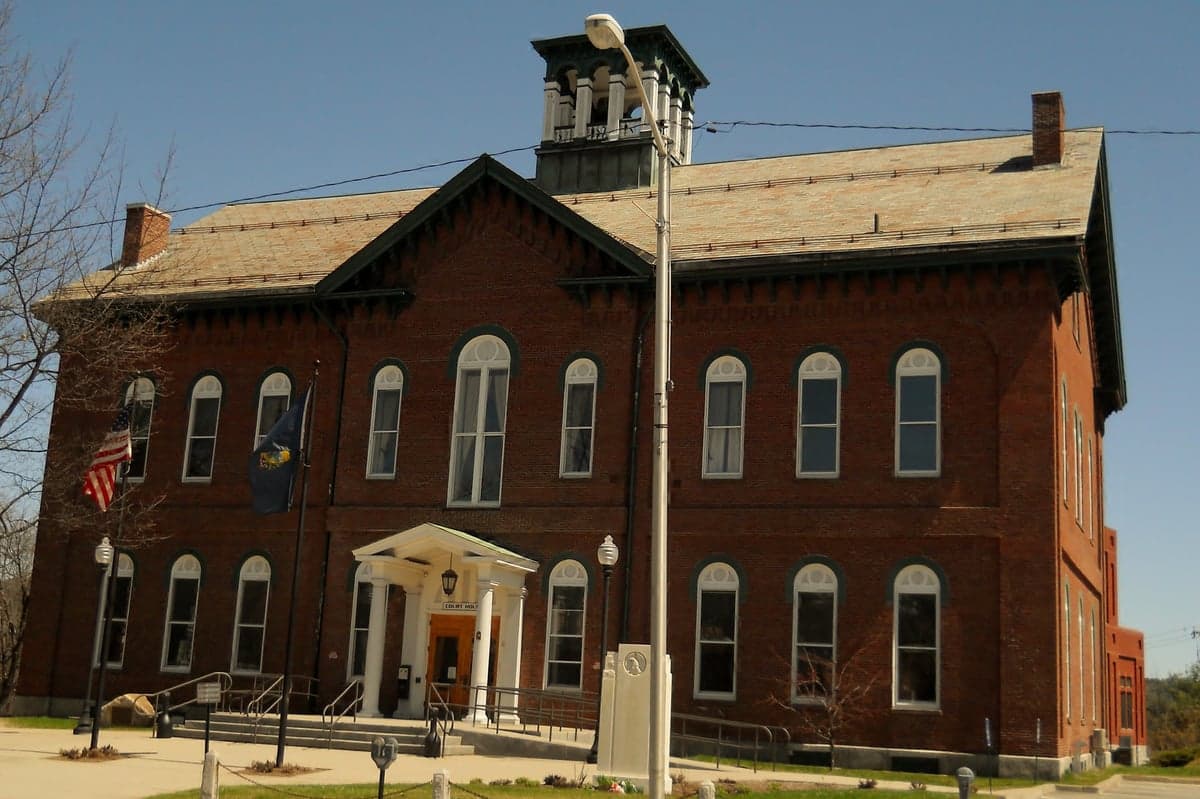
Photo: Wikipedia
Strategic Assessment of Caledonia County
Workable tactical position. Some exposure to population density or targets, but generally defensible in a crisis.
What does the Strategic Assessment tell us?
Our Strategic Assessment grades tactical survivability of an area. Major population centers, military targets, fallout zones, natural disasters, and border exposure all drive risk — lower exposure means a more defensible position in a crisis.
This is heavily inspired by Joel Skousen's Strategic Relocation book. Highly recommended you checkout the book ($)What does this tell us?
Our Strategic Assessment grades tactical survivability of an area. Major population centers, military targets, fallout zones, natural disasters, and border exposure all drive risk — lower exposure means a more defensible position in a crisis.
This is heavily inspired by Joel Skousen's Strategic Relocation book. Highly recommended you checkout the book ($)Strategic Pillars

Key Distances
Strategic Assessment Analysis
Caledonia County, Vermont, sits over 100 miles from the closest major city—Burlington—and more than 150 miles from Boston and Montreal, providing a significant geographic buffer against the fallout of urban unrest, mass casualty events, and supply chain collapse that preppers and survivalists prioritize. The county's largest town, St. Johnsbury, along with Lyndonville, Hardwick, and the village of Danville, anchor a region of roughly 60 people per square mile, where dense forests, working farms, and a strongly independent local culture create a practical foundation for long-term resilience. For a relocator looking to put real distance between their household and the instability radiating from America's population centers, this corner of the Northeast Kingdom deserves a hard look.
How geographic isolation makes Caledonia County a buffer against urban collapse
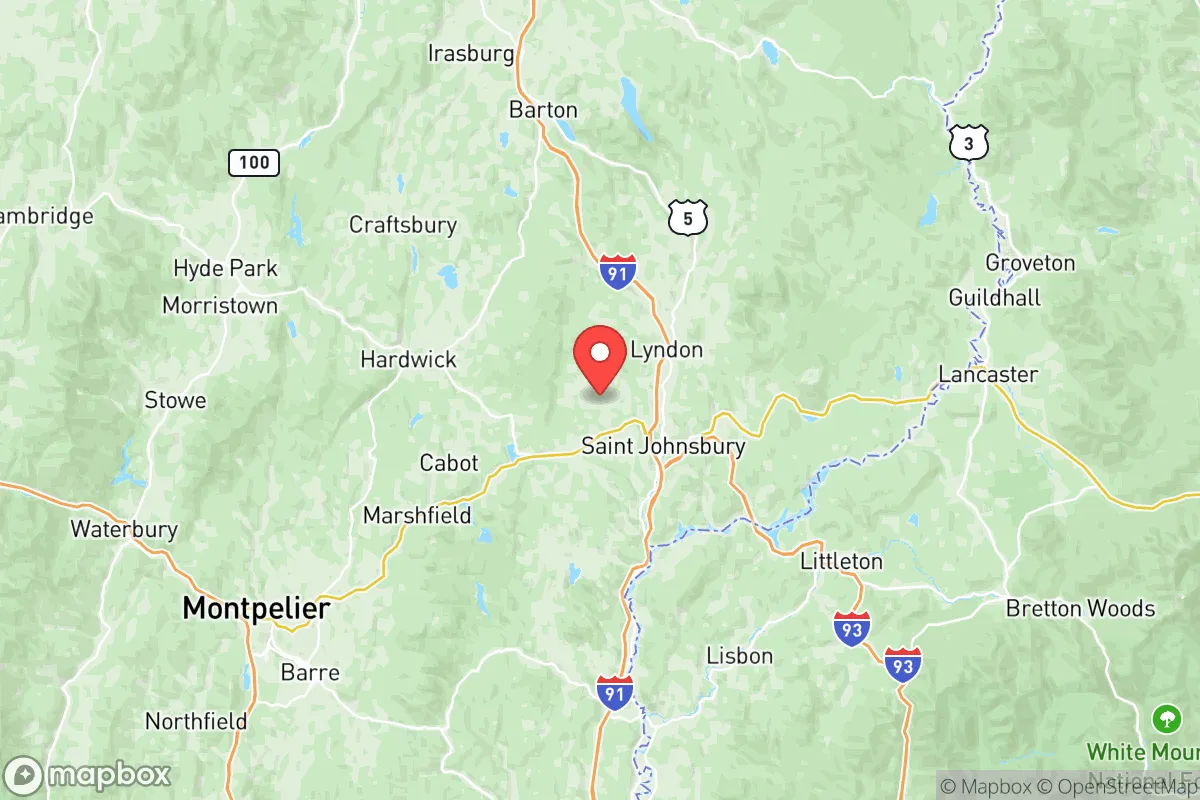
Caledonia County occupies a sweet spot on the map: remote enough to avoid the primary blast zones of a major event, but connected enough to maintain resupply and communication during normal times. The county is bordered by the Connecticut River to the east, which separates it from New Hampshire's North Country, and the spine of the Green Mountains to the west. This terrain naturally funnels traffic through a limited number of routes—primarily Interstate 91 and U.S. Route 2—meaning a handful of chokepoints control access into the area. Peacham and Burke Mountain, both within Caledonia, sit on elevated ridgelines that offer observation and defensible positions, a consideration for those who think about security in depth. The nearest military installation of any size is the Vermont National Guard's Camp Johnson in Colchester, near Burlington, over an hour's drive away. There are no active nuclear power plants, refineries, or major ports within the county or its immediate neighbors. The decommissioned Vermont Yankee plant in Vernon, roughly 130 miles south, is the closest nuclear site of note, and its spent fuel is stored on-site—a long-term liability, but not a near-term blast hazard for Caledonia. The county's position behind the Green Mountains also provides some shielding from prevailing weather patterns that could carry airborne contaminants from events elsewhere in the Northeast.
What risks actually threaten Caledonia County and which ones don't apply
The most realistic risks for a relocator in Caledonia County are weather-driven and infrastructure-related, not the sort of immediate mass casualty threats that define life near major targets. Winter storms can drop three feet of snow in a single event, and power outages lasting a week or more are not uncommon, especially in the more rural corners like Barnet or Sheffield. This makes a backup heating source and a week's worth of stored water non-negotiable, not optional. On the positive side, the county is far from any known earthquake fault lines, has no history of tornado activity worth mentioning, and sits well above sea level along the Connecticut River valley, so flooding is limited to low-lying areas near the river itself. The civil unrest risk is low: Vermont has the second-lowest violent crime rate in the nation, and Caledonia County's rates are lower still. That said, the political environment at the state level trends sharply progressive, which can create friction for relocators with a conservative worldview. Gun laws remain favorable—Vermont permits constitutional carry, no permit needed for open or concealed carry, and has no magazine capacity restrictions or assault weapon bans as of 2026. However, state legislature dynamics bear watching. The broader point: the threats that keep a prepper up at night—urban riots, supply chain collapse, nuclear fallout from a targeted city—are dramatically attenuated by the distance between Caledonia County and any plausible ground zero. Boston is 165 miles south. Montreal is 120 miles north. Neither is a short-term walking distance, and both are separated by significant stretches of rural terrain that would act as a buffer zone during a breakdown.
Can you live off the grid in Caledonia County — food, water, energy, and defensibility
The practical answer is yes, and the county has the natural resources to support it. Surface water is abundant: the Connecticut River forms the entire eastern border, and numerous streams and ponds—including Joe's Pond in West Danville and Harvey's Lake in Barnet—provide reliable year-round freshwater sources. Groundwater is also generally good across the county, though well depth and yield vary by elevation. For food, the Northeast Kingdom still has a working agricultural base: dairy farms, maple sugaring operations, and small vegetable producers are everywhere, and the soils in the Connecticut River valley are among the best in Vermont. The growing season is short—roughly 100 to 120 frost-free days—but cold-hardy crops, root vegetables, and high-tunnel growing can extend it. Hunting is a serious local tradition; white-tailed deer, turkey, and small game are plentiful, and the extensive public lands in and around Victory Basin Wildlife Management Area and the nearby Groton State Forest provide legal access. For energy, wood is the dominant off-grid heat source, and the county is heavily forested. A property with 5-10 wooded acres can provide firewood indefinitely with proper management. Solar potential is moderate—Vermont gets about 50% more cloud cover than the national average—but modern panels still produce usable power, and net metering is available for grid-tied setups. Defensibility comes from the terrain and low population density: limited road access, high ridges, and a culture where neighbors watch out for each other but generally respect your privacy. The local population skews older and independent-minded, which in a crisis means fewer unknowns than a suburban or urban environment.
The overall picture for Caledonia County is one of strong strategic value for a relocator serious about resilience, with manageable trade-offs. The isolation that protects against external threats also means limited local employment, a harsh winter that tests unprepared newcomers, and a long drive to reach specialty medical care or major supply centers. For a single individual or a family willing to invest in self-sufficiency—wood heat, water storage, gardening skills, and a vehicle suited to snow—the county offers a defensible, resource-rich position that is unlikely to be on anyone's target list. The Northeast Kingdom remains one of the few places in the lower 48 where you can be three hours from a major city and feel like you're in a different country. For the audience that sees that as a feature, not a bug, Caledonia County warrants a site visit before the next cycle of instability makes the move more crowded or more complicated.

* Values derived from national, state, county, city and local statistics and may differ in a specific area. Last updated: 2026-06-01T15:15:49.000Z
Narrative content on this page is AI-generated and may contain mistakes. Verify any details that matter before acting on them.
ReloMaps may earn a commission from affiliate links at no extra cost to you.

