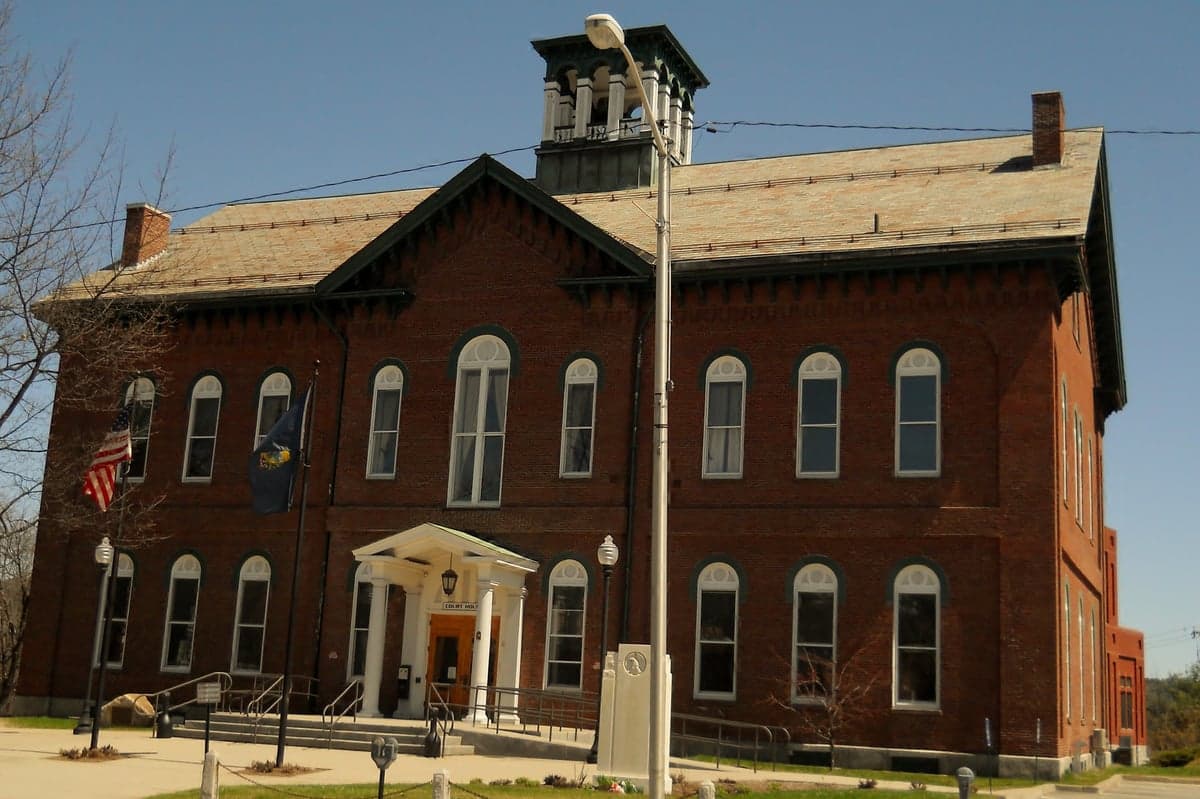
Photo: Wikipedia
Political ClimatePolitical Climate in Caledonia County
Showing state-level results — no local-only data available.
Local Political AnalysisPolitical Analysis of Caledonia County
Caledonia County has historically been a place where folks value their independence and don't take kindly to being told how to live their lives, but the political winds have shifted noticeably over the past decade. The county now carries a Cook PVI of D+17, which puts it in the same deep-blue category as the rest of Vermont, but that number doesn't tell the whole story. While the statewide average leans heavily Democratic, Caledonia still has pockets of traditional, live-and-let-live conservatism that stand out against the progressive tide sweeping the rest of the state. The trajectory here is concerning for anyone who values limited government and personal freedom, because the local culture is slowly being reshaped by outside influences and top-down mandates.
How it compares
On paper, Caledonia County and Vermont share the exact same D+17 PVI, but the lived reality is different. In towns like St. Johnsbury and Lyndonville, you'll find a mix of old-school Yankees and newer transplants who lean blue, and those areas reliably vote Democratic. But head east to Barnet or Waterford, and you'll see precincts that still break for Republican candidates, often by double digits. The swing precincts are in places like Danville and Peacham, where a strong independent streak and skepticism of Burlington's agenda can tip the balance in local races. The key difference from the rest of Vermont is that Caledonia still has a working-class backbone—logging, farming, and small manufacturing—that resists the progressive orthodoxy on issues like gun rights, property taxes, and land use regulations. In Chittenden County, you're surrounded by people who think government knows best; here, you can still find neighbors who remember when the town meeting meant something real, not just a rubber stamp for Montpelier's latest mandate.
What this means for residents
For someone who values personal freedom, living in Caledonia County means constantly pushing back against policies that feel like they're designed in a vacuum. The state's push for universal school meal programs sounds nice, but it comes with strings attached—more reporting, more oversight, and less say for local school boards. The same goes for energy mandates: Vermont's renewable energy goals mean you might see solar arrays popping up on prime farmland, and the state's carbon tax proposals keep creeping back into conversation. Property taxes are already among the highest in the nation, and every new social program from Montpelier adds another layer of cost. The silver lining is that Caledonia's rural character makes it harder for the state to enforce its will uniformly—you can still drive a gas-powered truck, heat with wood, and keep a firearm without a permission slip, but for how long is anyone's guess.
The cultural divide here is real and growing. In St. Johnsbury, you'll see pride flags and "Hate Has No Home Here" signs in storefronts, while just down the road in Barnet, you'll find "Don't Tread on Me" flags and pickup trucks with gun racks. The newcomers—remote workers from Boston and New York who bought up properties during the pandemic—tend to bring their politics with them, and they're often the loudest voices at town meetings pushing for zoning changes and environmental restrictions. Longtime residents, meanwhile, are getting priced out and feeling like their voice doesn't matter anymore. The near-term future looks like more of the same: a slow erosion of local control and a steady march toward policies that prioritize collective goals over individual rights. If you're thinking of moving here, come for the scenery and the quiet, but keep one eye on Montpelier—because what happens there will shape your freedom to live as you see fit.

State Political ClimatePolitical Climate in Vermont
State Political AnalysisPolitical Environment in the State
Vermont appears deep blue on the map with a Cook PVI of D+17, but that number flattens a very rugged political landscape. The state has drifted steadily left over the past two decades, driven largely by an influx of out-of-state transplants to Chittenden County and college towns like Burlington and Montpelier. Meanwhile, native-born Vermonters in the Northeast Kingdom and southern rural counties have been losing ground, making the overall partisan lean more progressive than the lived experience of many longtime residents might suggest.
Urban vs. rural divide
Chittenden County – anchored by Burlington and South Burlington – generates the lion’s share of Democratic and Progressive votes. Burlington’s City Council has been controlled by the Progressive Party for years, and the county routinely delivers 70%+ margins for statewide Democratic candidates. On the other end, the Northeast Kingdom counties of Essex, Orleans, and Caledonia lean Republican, often voting +10 to +15 points red in statewide races. Towns like Newport and St. Johnsbury still elect conservative legislators, but their populations are stagnant or declining. Rutland City has become a purple swing zone, while Stowe and Middlebury are liberal-leaning enclaves thanks to resort wealth and Middlebury College’s influence. Brattleboro in Windham County is another deep-blue pocket that punch above its population, driven by an activist counterculture that has been there for decades.
Policy environment
Vermont’s policy environment is where conservative concerns really start to surface. Property taxes are among the highest in the nation, and the state’s income tax is progressive with top rates around 8.75%. Sales tax is moderate, but localities add local option taxes. Education policy has been overhauled by Act 46, which forced small school districts to consolidate – a move critics say eroded local control and increased costs. More recently, Act 76 (2023) imposed a 0.44% payroll tax to fund universal childcare, adding a new employer cost. Act 250, the state’s sprawling land-use law, remains a powerful tool for environmental regulation, often blocking development and raising housing costs. On healthcare, Vermont has pursued a single-payer system multiple times and maintains a strict vaccine mandate for schoolchildren. Election laws are among the most permissive in the country: universal mail-in ballots, same-day registration, and no voter ID requirement. Bills to require proof of citizenship to vote have died every year.
Trajectory & freedom
Measured by any objective metric of personal liberty, Vermont is becoming less free. Gun rights have been steadily curtailed: Act 55 (2025) expanded the state’s “red flag” law, S.30 (2023) banned magazines over 10 rounds and raised the purchase age to 21, and a waiting period is in effect. Parental rights took a hit with Act 1 (2023), which removed the requirement that minors notify parents before receiving an abortion or obtaining gender-affirming care. The state also became a “sanctuary” for transgender youth by shielding them from out-of-state subpoenas. Medical autonomy is constrained by a heavy-handed vaccine mandate for healthcare workers and schoolchildren, with the state refusing to buckle even after the pandemic waned. Property rights are under persistent pressure from Act 250 and municipal exclusionary zoning policies – a 2024 legislative effort to preempt local zoning for denser housing failed, leaving town-by-town restrictions in place. Taxation continues to climb: the statewide property tax increased 6% in 2025, and a new per-mile road usage charge for electric vehicles is on the table.
Civil unrest & political movements
Vermont has seen its share of activism on both sides, but the left dominates the streets. During summer 2020, Burlington experienced weeks of Black Lives Matter protests, including vandalism of the downtown pedestrian mall. The state’s sanctuary policies have made headlines: Senate Bill 147 (2024) declared Vermont a sanctuary for abortion providers and patients, directly challenging federal (potential) restrictions. Immigration politics are relatively quiet because the foreign-born population is small, but the state has a “Truly Welcoming” initiative that includes municipal ID cards for undocumented residents. There was a small anti-lockdown protest at the Statehouse in 2021, but it fizzled. More recently, school board meetings in Essex and Rutland have been flashpoints over library books and transgender policies, with parents organizing against curriculum they see as ideological. No secession or nullification movement has traction – Vermont’s “Second Vermont Republic” movement peaked in the 2000s and has faded. Election integrity is an ongoing concern for conservatives: the universal mail-in system has been criticized for lax signature verification, but no major scandal has emerged.
Projection
Looking ahead five to ten years, Vermont will likely continue its leftward trajectory. The in-migration pattern is filtering toward Chittenden County and the ski towns – new arrivals are disproportionately young progressives from the Boston and New York metro areas, often remote workers with liberal values and higher incomes. The rural Republican strongholds will continue to lose population and political influence. Expect more tax increases to fund expanded government programs, tighter gun laws (a proposed “assault weapons” ban is already being discussed for 2026), and further erosion of parental rights. The housing crisis will drive even more state intervention in land use and zoning, likely reducing property rights further. A conservative moving to Vermont now should expect to be in a permanent political minority, with little chance of reversing the trend at the state level. The only realistic counterweight would be a sustained exodus of progressive newcomers – but that’s not in the data.
Bottom line for a new resident: If you value low taxes, robust gun rights, parental control over children’s medical decisions, and a voice in local education policy, Vermont is a difficult fit today and will become harder over the next decade. The natural beauty and quiet lifestyle remain, but they come with a government that is increasingly comfortable leveraging taxes and regulations to enforce a progressive vision. Visit for a week in autumn – but think carefully before you sign a property deed.
* Values derived from national, state, county, city and local statistics and may differ in a specific area. Last updated: 2026-06-01T15:15:49.000Z
Narrative content on this page is AI-generated and may contain mistakes. Verify any details that matter before acting on them.
ReloMaps may earn a commission from affiliate links at no extra cost to you.

