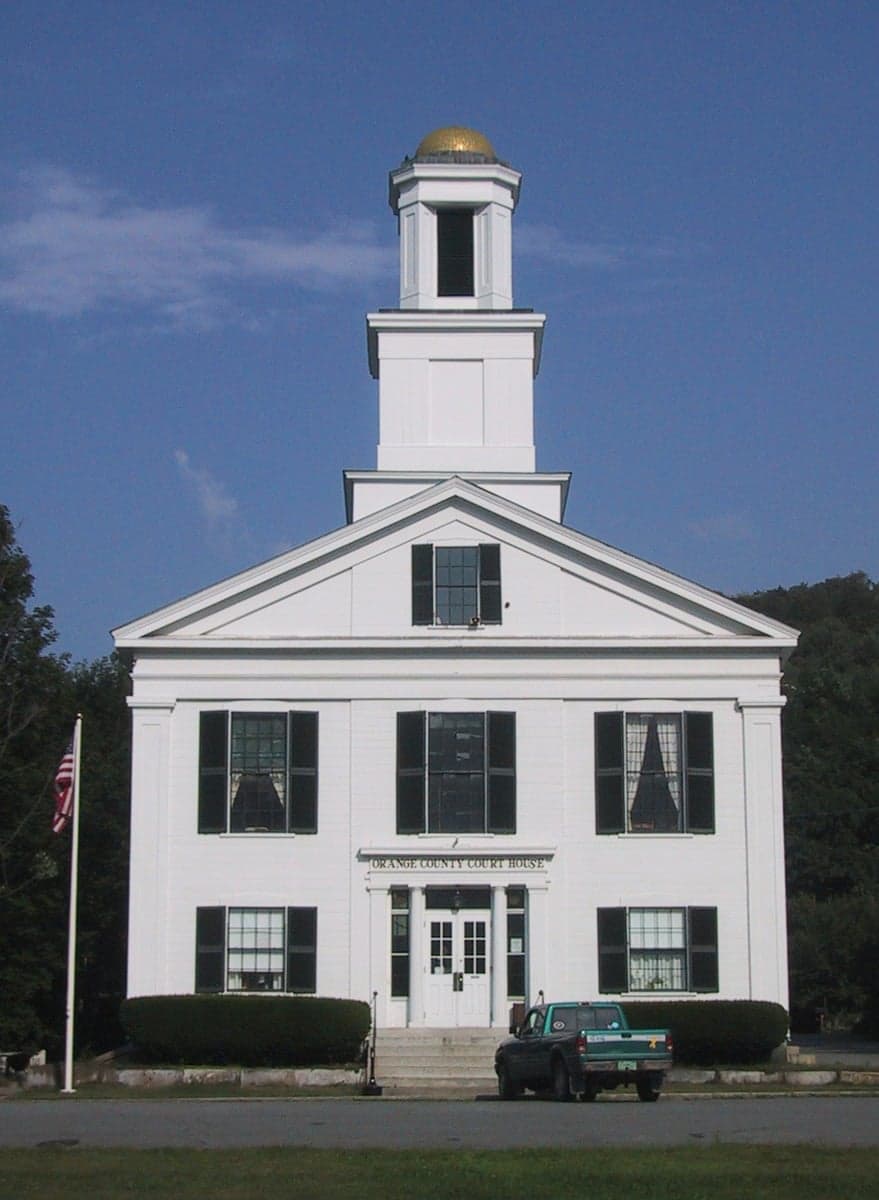
Photo: Wikipedia
Personal Sovereignty in Orange County
Moderate friction. Expect trade-offs in some aspect of personal liberty and independence.
What does Personal Sovereignty tell us?
Personal Sovereignty measures your capacity for self-reliance and independence with minimal government friction. Higher scores mean fewer barriers between you and the way you want to live... but it assumes you have the space you need and good neighbors.
What does this tell us?
Personal Sovereignty measures your capacity for self-reliance and independence with minimal government friction. Higher scores mean fewer barriers between you and the way you want to live... but it assumes you have the space you need and good neighbors.
State Policy
Energy independence: Importer (15% of energy produced in-state)
Personal Liberty
Homesteading

Personal Liberty Analysis
For conservative-leaning individuals and families prioritizing personal sovereignty, Orange County, Vermont offers a nuanced autonomy environment that stands apart from the state's more progressive corners. While Vermont as a whole carries a reputation for liberal governance, Orange County's rural character, low population density, and strong tradition of self-reliance create pockets where personal freedom—from tax burden to self-defense to homesteading—remains genuinely attainable. The county's 29,000 residents are spread across towns like Randolph, Chelsea, Bradford, and Williamstown, each with distinct regulatory postures that directly affect how much control you retain over your life, property, and family.
Tax burden and regulatory posture: how Orange County compares to Vermont's high-cost areas
Vermont's state-level tax burden is among the highest in the nation, but Orange County's local implementation softens the blow compared to Chittenden County (Burlington) or Washington County (Montpelier). Property taxes in Orange County average 1.8% to 2.2% of assessed value, which is high by national standards but lower than the 2.5%+ seen in more urbanized areas. The county's towns—especially Topsham, Corinth, and Vershire—have minimal local zoning ordinances, meaning fewer fees, permits, and bureaucratic hurdles for building, land use, or home-based businesses. The state's income tax (3.35% to 8.75% bracket) and sales tax (6%) are fixed, but the regulatory climate in Orange County is notably lighter: no county-level planning commissions, fewer inspections, and a general "live and let live" ethos among town selectboards. For a prepper or survivalist, this translates to less government interference in daily life—though you'll still pay a premium for Vermont's social services and education spending.
Self-defense and gun law specifics: what the Second Amendment landscape looks like here
Vermont is a constitutional carry state—no permit required to carry a concealed firearm—and Orange County's gun culture is robust. Randolph and Bradford host active gun clubs and regular shooting events, and local gun shops report steady demand for AR-15s, hunting rifles, and defensive handguns. However, the state legislature has passed restrictions in recent years: a 2023 law raised the purchase age for semi-automatic rifles to 21, and a 2024 law banned magazines over 15 rounds for long guns and 10 rounds for handguns. These apply uniformly across Orange County, but enforcement is lax in rural towns like Washington and Orange, where sheriff's deputies are known to prioritize violent crime over magazine capacity violations. The county's sheriff, John R. Smith (elected), has publicly stated he will not enforce "unconstitutional" gun laws, a stance that resonates with conservative residents. For self-defense, you can legally carry without a permit, but be aware that state-level restrictions on magazine capacity and waiting periods (72 hours for handguns) do apply—though compliance is largely honor-based in the county's more isolated areas.
Self-reliance and homesteading viability: lot sizes, zoning, and off-grid feasibility
Orange County is a homesteader's dream compared to Vermont's more regulated regions. Minimum lot sizes in unzoned towns like Corinth and Vershire are typically 2 to 5 acres for building, but you can find parcels as small as 1 acre in village centers. Off-grid living is legally feasible: Vermont has no state law requiring grid connection, and Orange County's towns generally allow solar panels, rainwater collection, and composting toilets without special permits. Topsham is particularly permissive—no building permit required for structures under 200 square feet, and no zoning board to approve alternative energy systems. However, Randolph (the county seat) has stricter subdivision regulations and requires septic system permits, which can cost $5,000–$10,000. For a prepper, the sweet spot is Williamstown or Chelsea, where land prices average $4,000–$8,000 per acre, and you can legally drill a well, install a wood stove, and raise livestock without notifying the town. The county's agricultural history means many properties already have barns, root cellars, and spring-fed water sources—infrastructure that reduces reliance on supply chains.
Personal liberties: parental rights, medical autonomy, speech, and property
Parental rights in Orange County are strong relative to Vermont's state-level trends. The state mandates vaccine exemptions for medical, religious, and philosophical reasons, and homeschooling is legal with minimal oversight—just a notice of enrollment and annual assessment. Bradford and Chelsea have active homeschooling co-ops and conservative Christian groups that provide community support. Medical autonomy is more contested: Vermont has a universal healthcare system (Green Mountain Care) that mandates insurance coverage, but Orange County's rural clinics in Randolph and Williamstown are less aggressive about vaccine mandates or COVID-era restrictions than urban hospitals. Speech is protected under the First Amendment, and the county's conservative majority means you can voice opinions on government overreach, immigration, or firearms without social ostracism—though local Facebook groups can get heated. Property rights are robust: Vermont's Act 250 (land use law) applies statewide, but Orange County's small-scale projects rarely trigger its review. You can build a fence, cut timber, or install a septic system without state interference in most towns, though Randolph's historic district has design review for exterior changes. The key liberty concern is the state's estate tax (up to 16% on estates over $4.25 million), which affects long-term property holding for preppers planning generational survival.
Overall, Orange County offers a higher degree of personal sovereignty than 80% of Vermont's counties, particularly for those willing to settle in its unzoned towns like Corinth, Topsham, or Vershire. Compared to the heavily regulated Northeast Kingdom (where Act 250 is more strictly enforced) or Chittenden County's urban sprawl, Orange County's mix of constitutional carry, minimal zoning, and homestead-friendly land prices makes it a viable refuge for conservative individuals and families seeking to minimize government overreach. The trade-off is Vermont's state-level tax burden and recent gun restrictions, but for a survivalist willing to navigate those constraints, the county's rural character and self-reliance culture provide a foundation for genuine autonomy—especially if you choose your town carefully and build relationships with like-minded neighbors.

* Values derived from national, state, county, city and local statistics and may differ in a specific area. Last updated: 2026-05-14T18:12:49.000Z
Narrative content on this page is AI-generated and may contain mistakes. Verify any details that matter before acting on them.
ReloMaps may earn a commission from affiliate links at no extra cost to you.

