Photo: Wikipedia
Quality of Life in Orange County
A livable area that tracks near national norms for affordability, walkability, and neighborhood health.
What does Quality of Life tell us?
Quality of Life measures an area by evaluating factors like cost of living, nearby amenities, country club access, airport proximity, socioeconomic signals and neighborhood character. For large states, this is a general average — quality of life can vary dramatically between metro areas, suburbs, and rural communities within the same state.
What does this tell us?
Quality of Life measures an area by evaluating factors like cost of living, nearby amenities, country club access, airport proximity, socioeconomic signals and neighborhood character. For large states, this is a general average — quality of life can vary dramatically between metro areas, suburbs, and rural communities within the same state.
Cost of Living
5% below national average
108%
The Real Cost of Living in Orange County for 2026
| Tier | Individual | Family (4) |
|---|---|---|
| Survival | $18k | $34k |
| Comfortable | $49k | $72k |
| Luxury | $116k+ | $180k+ |
| Elite (Top 5%) | $137k+ | $212k+ |
Quality-of-Life Analysis
Orange County, Vermont, offers a quality-of-life spectrum that ranges from the walkable, amenity-rich county seat of Chelsea to the remote, off-grid homesteads of the northern hill towns, all within a 30-minute drive. The county’s overall cost of living index of 95 (100 = U.S. average) and median home value of $251,000 place it well below the state average, attracting a mix of remote workers, second-home buyers, and agricultural families. The character of daily life shifts dramatically depending on whether you settle in the largest population center, a small village, or a rural hollow.
Largest town(s) & population centers
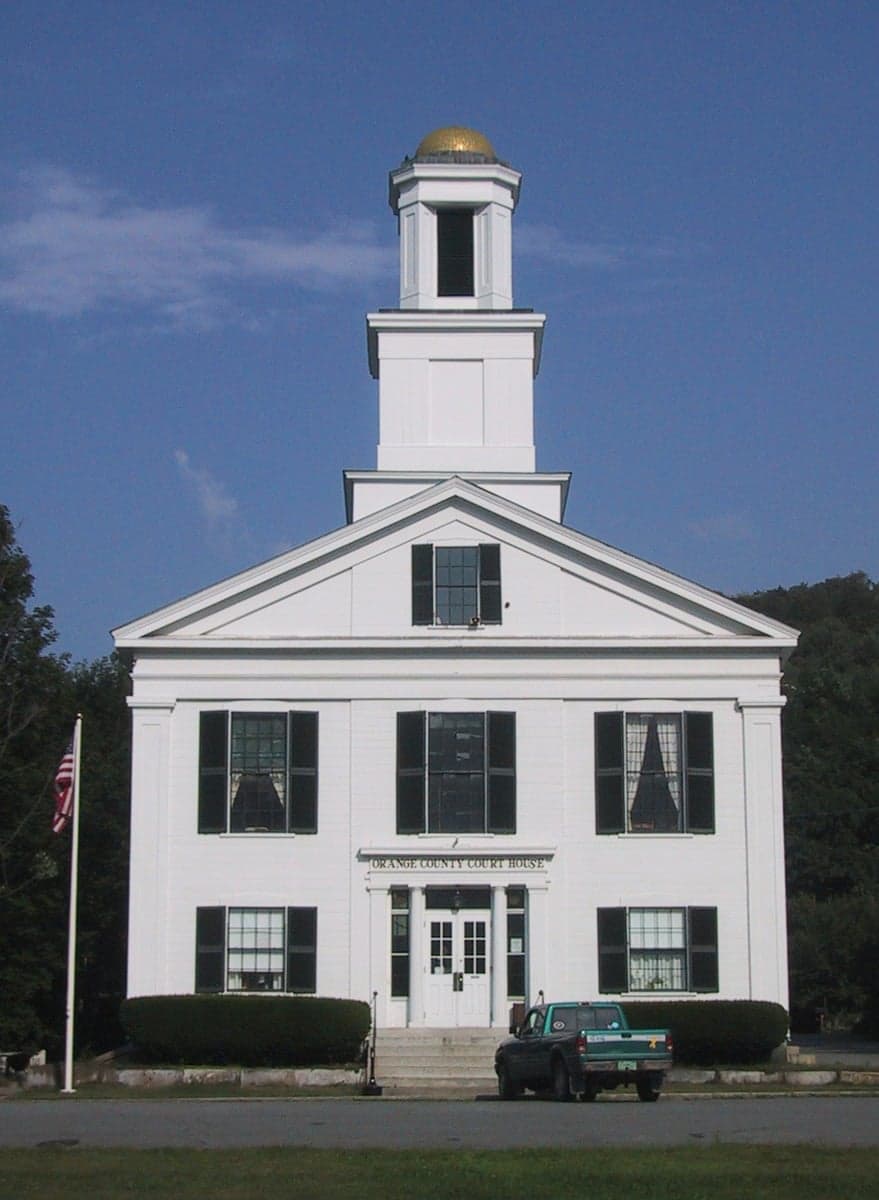
The county’s primary population center is Randolph (pop. ~4,700), which functions as the commercial and transportation hub. Daily life here centers around the downtown strip along Route 66, anchored by the Vermont Technical College campus and the Gifford Medical Center. Residents have access to a full-service grocery store, a hardware store, a public library, and several casual restaurants. The median rent of $1,145 is attainable for many, and the average commute of 25.8 minutes means most workers can reach Montpelier (20 minutes north) or Barre (15 minutes west) without a highway grind. Chelsea (pop. ~1,200), the county seat, offers a quieter, government-anchored lifestyle with a historic village green, the Orange County Courthouse, and a handful of local shops. Both towns provide the most reliable broadband and cell service in the county, making them the default choice for remote workers who need connectivity.
Smaller towns & rural pockets
Outside the two main hubs, Orange County is defined by its small villages and unincorporated areas. Tunbridge (pop. ~1,300) is known for its annual World’s Fair and its tight-knit agricultural community, with a general store and a post office serving as social anchors. South Royalton, a village within Royalton, is home to the Vermont Law and Graduate School, giving it a more educated, transient population than the rest of the county. Further north, Brookfield (pop. ~1,200) features the iconic floating bridge over Sunset Lake and a strong sense of isolation, with no full-service grocery store and limited cell coverage. The most rural pockets are in Washington and Orange towns, where dirt roads, deep valleys, and large forest tracts dominate. These areas attract homesteaders, hunters, and those seeking complete privacy, but they come with trade-offs: long drives to any commercial center, unreliable winter road maintenance on some gravel routes, and property taxes that can still be high relative to the lack of services.
Cost & lifestyle range
The cost of living in Orange County varies more by housing type than by location. The median home value of $251,000 buys a modest three-bedroom ranch in Randolph or a fixer-upper farmhouse in Tunbridge, while a comparable property in Chelsea might run $280,000–$320,000 due to its county-seat prestige. At the low end, Washington and Orange towns offer homes under $200,000, often with acreage but requiring significant renovation or well/septic work. At the high end, South Royalton and the lakefront areas of Brookfield see prices above $400,000 for updated homes with views or water access. Renters face a tight market: the countywide median rent of $1,145 is below the state average, but available units are scarce, especially in smaller towns where most rentals are word-of-mouth. Lifestyle differences are stark: Randolph and Chelsea offer walkable downtowns, public water/sewer, and regular bus service on the Green Mountain Transit system, while rural residents rely entirely on private wells, septic systems, and personal vehicles for every errand.
The people who thrive in Orange County are those who value a specific trade-off: lower housing costs and genuine rural character in exchange for fewer amenities and longer drives. Remote workers and retirees with reliable vehicles do well in the larger towns, while homesteaders, farmers, and those with strong DIY skills find the remote hill towns rewarding. The county’s mix of a college town (South Royalton), a county seat (Chelsea), a commercial hub (Randolph), and deep rural pockets means that nearly any version of Vermont small-town life is available here, as long as you are willing to adapt to the pace and infrastructure of a place where the nearest big-box store is often 30 minutes away.

Crime in Orange County
Generally safer than 71% of comparable U.S. locations.
Violent CrimeViolent Crime Analysis
Property CrimeProperty Crime Analysis
Crime Analysis
Orange County, Vermont, presents a mixed safety profile that is significantly shaped by its rural character and the policies of its local justice system. With a violent crime rate of 213.8 per 100,000 residents and a property crime rate of 1,415.9 per 100,000, the county is safer than the national average but faces challenges that are amplified by a progressive judicial philosophy in the region. Residents in towns like Randolph, Bradford, and Chelsea experience crime differently than those in more remote areas, with property offenses—particularly theft and burglary—being the most common concern.
Crime in context
Orange County’s violent crime rate of 213.8 per 100,000 is roughly 40% lower than the national average of 380 per 100,000, but it sits slightly above the Vermont state average of 200 per 100,000. Property crime, at 1,415.9 per 100,000, is about 20% below the national rate of 1,954 per 100,000, yet it is notably higher than the Vermont state average of 1,200 per 100,000. This disparity is driven by incidents in the county’s more populous towns, such as Randolph (the county seat) and Barre (just outside the county line but influencing regional crime patterns), where higher population density and economic pressures contribute to elevated theft and vandalism rates. By contrast, smaller communities like Topsham and Vershire report far fewer incidents, often with property crime rates below 800 per 100,000. The county’s overall numbers are kept in check by its low population density, but the trend is concerning: property crime has risen by approximately 8% since 2020, while violent crime has remained stable.
What residents experience
For daily life in Orange County, the most tangible safety issue is property crime, particularly vehicle break-ins and theft from outbuildings in towns like Bradford and Williamstown. These offenses are often linked to drug-related activity, with opioid and methamphetamine use driving a cycle of theft to fund addiction. Residents in Chelsea and Randolph report that unlocked cars and sheds are frequent targets, especially near Route 2 and Route 302 corridors. Violent crime is rare but not absent: domestic violence incidents and occasional assaults make up the majority of the 213.8 per 100,000 figure, with Barre City (just outside the county) contributing to a regional perception of risk. The Orange County State’s Attorney’s Office has pursued a progressive, restorative justice approach, emphasizing diversion programs and reduced sentencing for non-violent offenders. While this philosophy aims to reduce recidivism, critics argue it has led to lenient outcomes for repeat property offenders, undermining deterrence and leaving victims feeling that the system prioritizes offender rehabilitation over public safety. For example, in 2024, a Randolph man with multiple theft convictions was placed in a treatment program rather than serving jail time, a decision that sparked local frustration.
Neighborhood-level variation
Safety in Orange County varies sharply by location. The village of Randolph sees the highest concentration of crime, with a property crime rate near 2,000 per 100,000, driven by its role as a commercial hub and transit point. Bradford and Wells River also report above-average incidents, particularly along the I-91 corridor. In contrast, the rural towns of Corinth, Orange, and Washington have violent crime rates near zero and property crime rates below 600 per 100,000, offering a much safer living environment. The progressive judicial policies of the Orange County court system, while well-intentioned, create a higher risk for residents in denser areas where offenders are more likely to be released quickly, potentially re-offending before facing consequences. For those considering relocation, the safest bets are the county’s remote, low-population towns, while families should exercise caution in Randolph and Bradford, where property crime and a lenient justice system intersect.
* Values derived from national, state, county, city and local statistics and may differ in a specific area. Last updated: 2026-05-14T18:12:49.000Z
Narrative content on this page is AI-generated and may contain mistakes. Verify any details that matter before acting on them.
ReloMaps may earn a commission from affiliate links at no extra cost to you.

